Systems Biology, R&D Discovery, Chr. Hansen A/S, Hørsholm, Denmark.
Biochemical Assays, Global Assay Development, Chr. Hansen A/S, Hørsholm, Denmark.
Appl Environ Microbiol. 2022 Aug 23;88(16):e0078022. doi: 10.1128/aem.00780-22. Epub 2022 Aug 4.
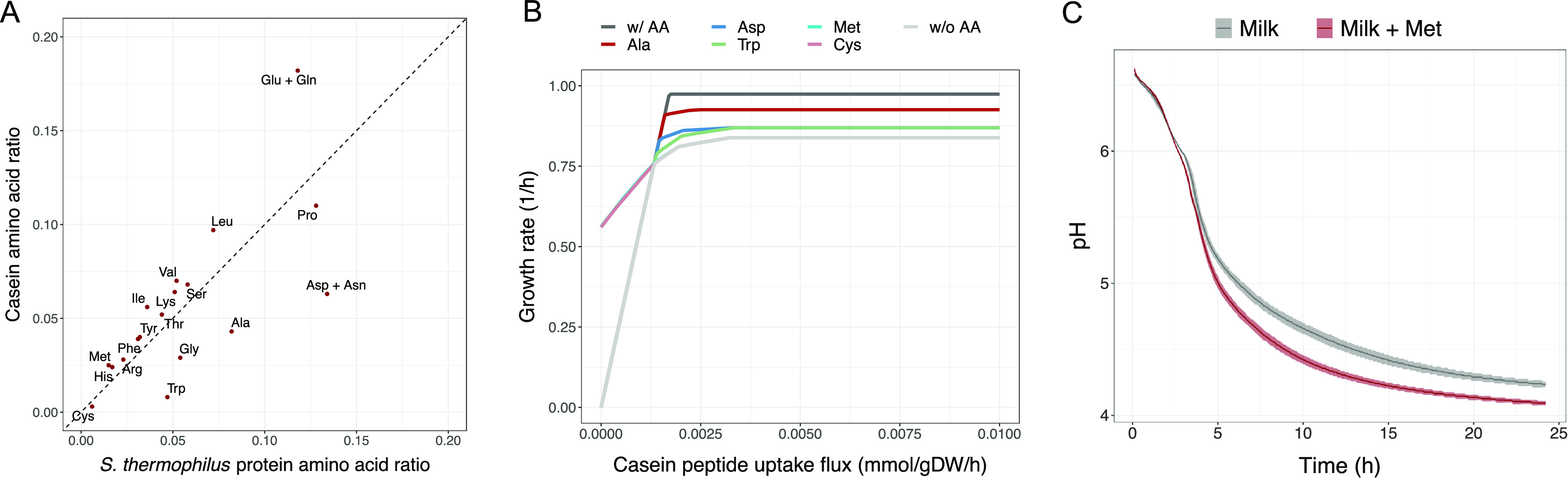
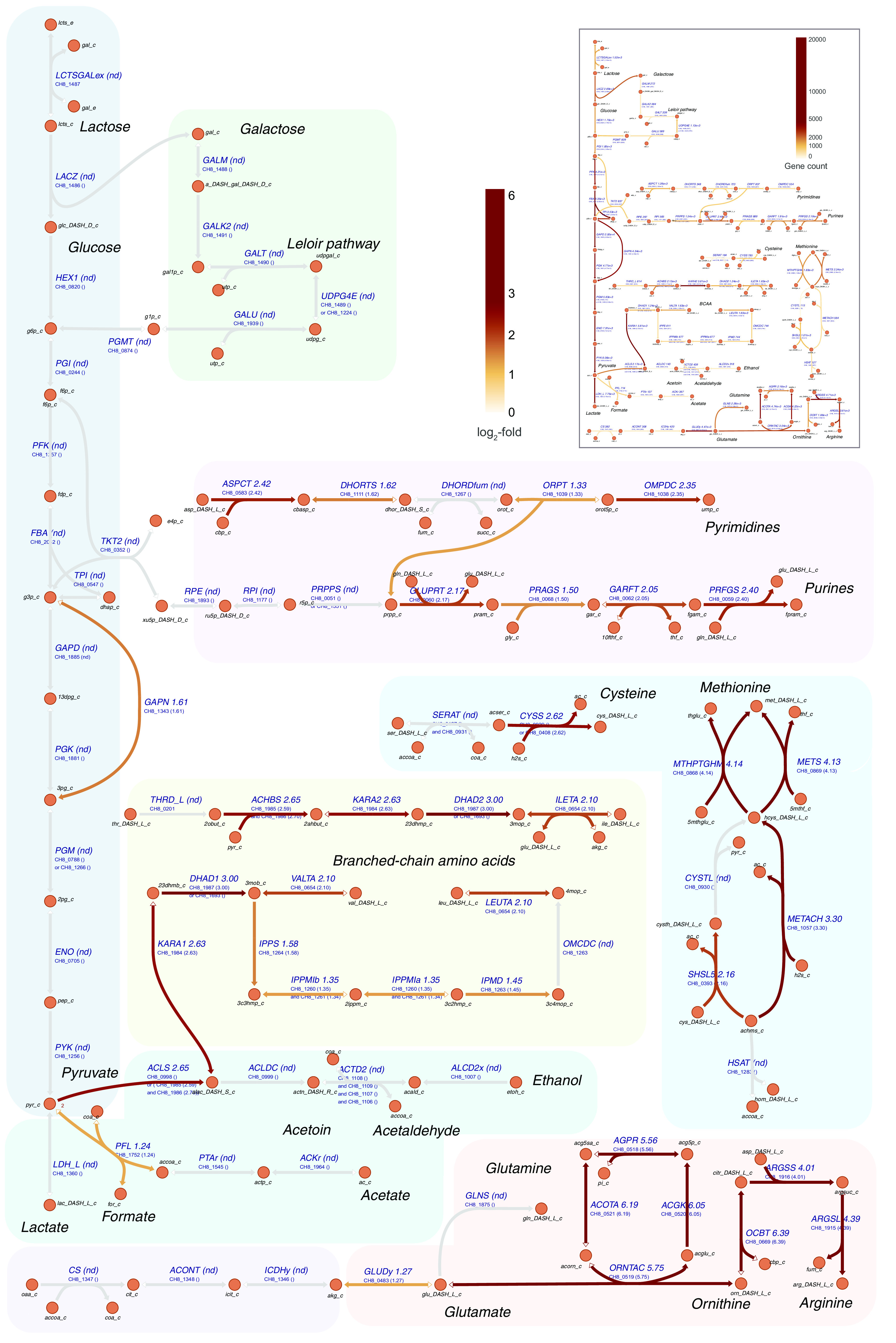
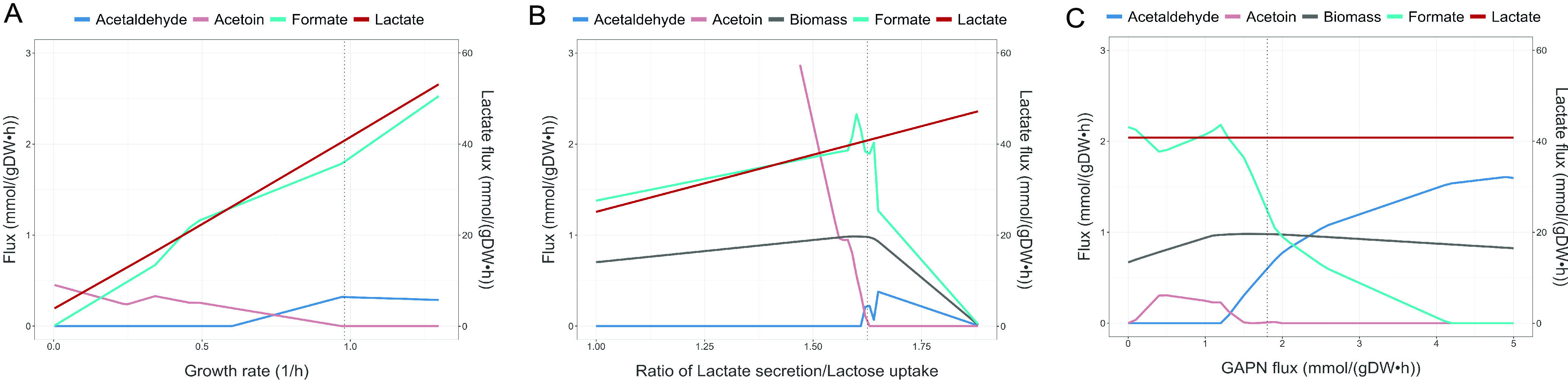
Streptococcus thermophilus is a lactic acid bacterium adapted toward growth in milk and is a vital component of starter cultures for milk fermentation. Here, we combine genome-scale metabolic modeling and transcriptome profiling to obtain novel metabolic insights into this bacterium. Notably, a refined genome-scale metabolic model (GEM) accurately representing S. thermophilus CH8 metabolism was developed. Modeling the utilization of casein as a nitrogen source revealed an imbalance in amino acid supply and demand, resulting in growth limitation due to the scarcity of specific amino acids, in particular sulfur amino acids. Growth experiments in milk corroborated this finding. A subtle interdependency of the redox balance and the secretion levels of the key metabolites lactate, formate, acetoin, and acetaldehyde was furthermore identified with the modeling approach, providing a mechanistic understanding of the factors governing the secretion product profile. As a potential effect of high expression of arginine biosynthesis genes, a moderate secretion of ornithine was observed experimentally, augmenting the proposed hypothesis of ornithine/putrescine exchange as part of the protocooperative interaction between S. thermophilus and Lactobacillus delbrueckii subsp. in yogurt. This study provides a foundation for future community modeling of food fermentations and rational development of starter strains with improved functionality. Streptococcus thermophilus is one the main organisms involved in the fermentation of milk and, increasingly, also in the fermentation of plant-based foods. The construction of a functional high-quality genome-scale metabolic model, in conjunction with in-depth transcriptome profiling with a focus on metabolism, provides a valuable resource for the improved understanding of S. thermophilus physiology. An example is the model-based prediction of the most significant route of synthesis for the characteristic yogurt flavor compound acetaldehyde and identification of metabolic principles governing the synthesis of other flavor compounds. Moreover, the systematic assessment of amino acid supply and demand during growth in milk provides insights into the key challenges related to nitrogen metabolism that is imposed on S. thermophilus and any other organism associated with the milk niche.
嗜热链球菌是一种适应于在牛奶中生长的乳酸菌,是牛奶发酵起始培养物的重要组成部分。在这里,我们结合基因组尺度代谢建模和转录组谱分析,获得了对该细菌的新代谢见解。值得注意的是,开发了一个准确代表嗜热链球菌 CH8 代谢的精细基因组尺度代谢模型 (GEM)。对作为氮源的酪蛋白的利用建模揭示了氨基酸供应和需求之间的不平衡,导致由于特定氨基酸(特别是硫氨基酸)的稀缺而出现生长限制。在牛奶中的生长实验证实了这一发现。建模方法还进一步确定了氧化还原平衡和关键代谢物乳酸、甲酸、乙酰醇和乙醛分泌水平之间的微妙相互依存关系,为控制分泌产物谱的因素提供了机制理解。由于精氨酸生物合成基因的高表达可能会产生潜在影响,因此实验中观察到了鸟氨酸的适度分泌,这增强了鸟氨酸/腐胺交换作为嗜热链球菌和乳酸乳杆菌亚种之间部分合作相互作用的假设。 该研究为未来食品发酵的群落建模和具有改进功能的起始菌株的合理开发提供了基础。 嗜热链球菌是参与牛奶发酵的主要生物体之一,并且越来越多地也参与植物性食品的发酵。结合代谢为重点的功能齐全的高质量基因组尺度代谢模型的构建,为改善对嗜热链球菌生理学的理解提供了有价值的资源。一个例子是基于模型的对特征性酸奶风味化合物乙醛的最主要合成途径的预测,以及确定控制其他风味化合物合成的代谢原则。此外,在牛奶中生长时对氨基酸供应和需求的系统评估深入了解了氮代谢给嗜热链球菌和与牛奶生态位相关的任何其他生物体带来的关键挑战。