Biology Department, Brigham Young University, Provo, UT, United States of America.
National Oceanic and Atmospheric Administration Office of National Marine Sanctuaries - National Marine Protected Areas Center, Silver Spring, MD, United States of America.
PLoS One. 2022 Aug 4;17(8):e0267369. doi: 10.1371/journal.pone.0267369. eCollection 2022.
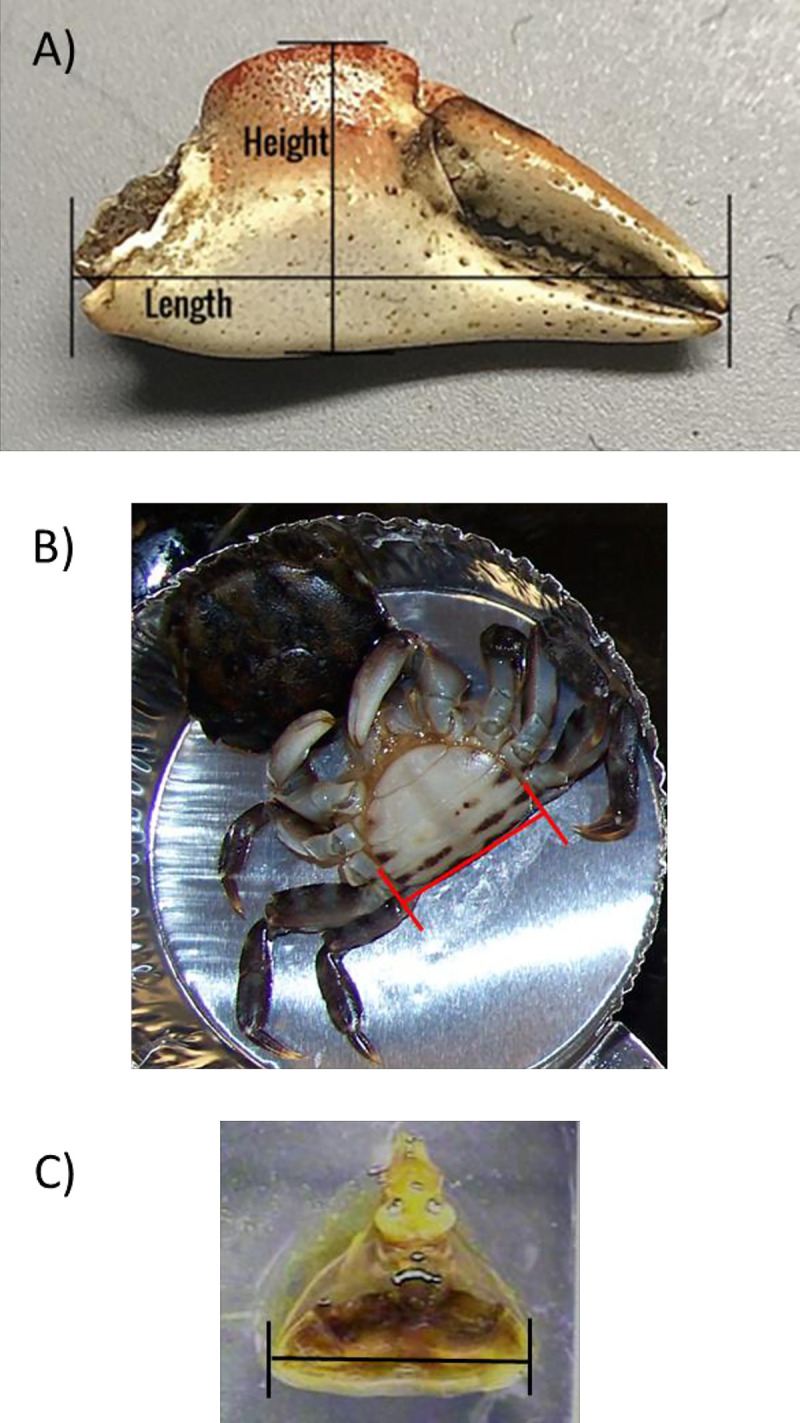
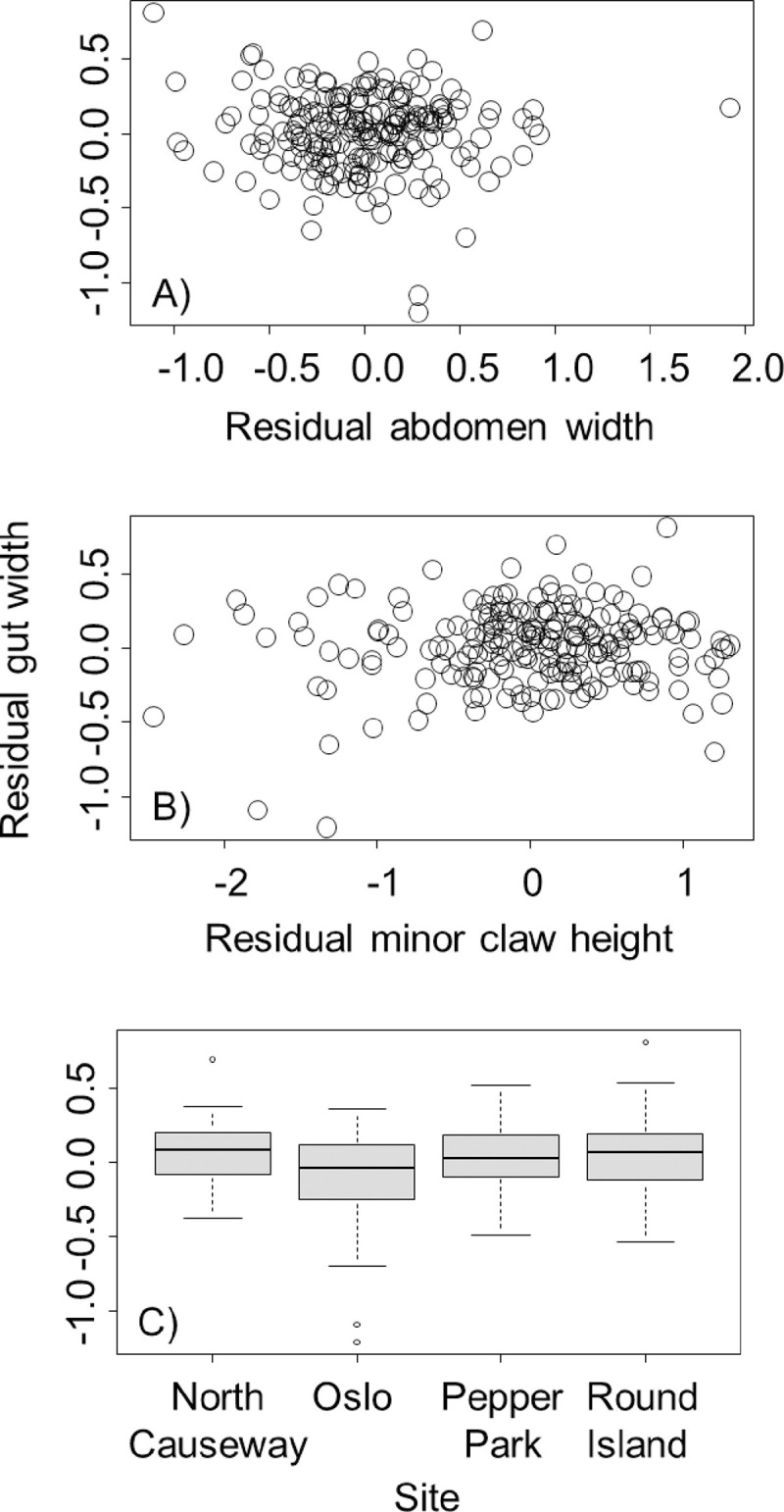
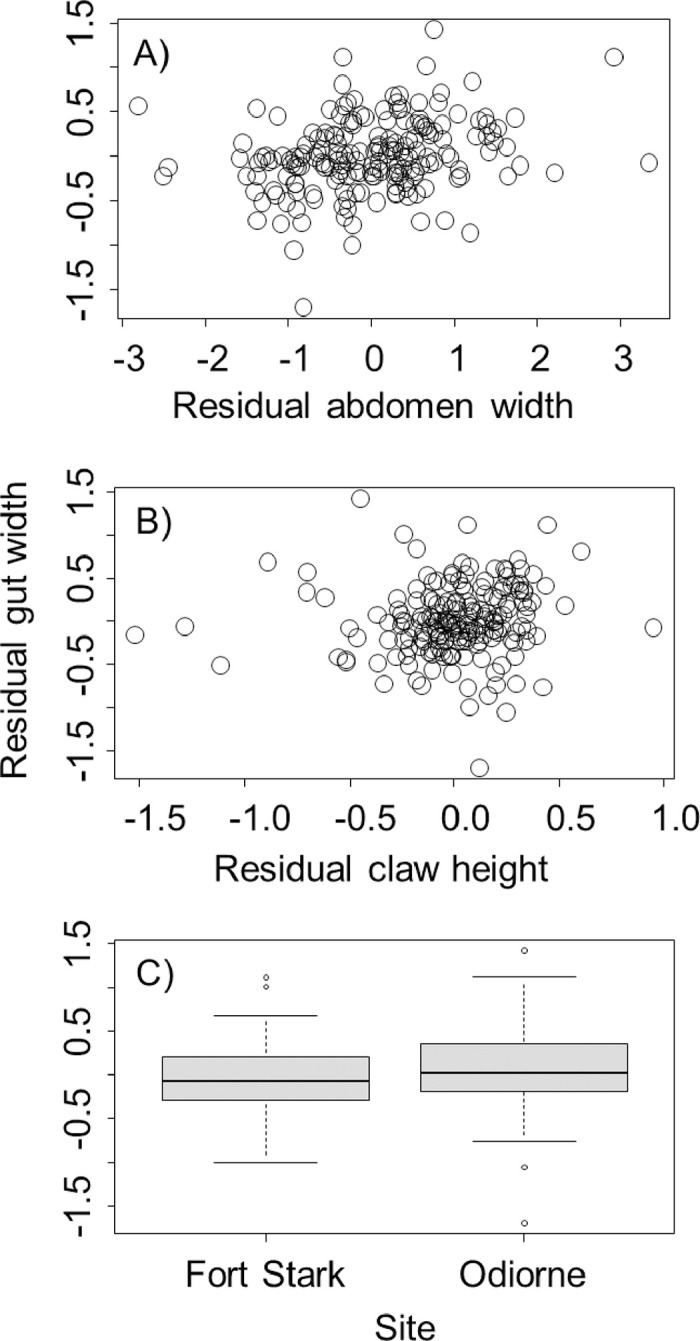
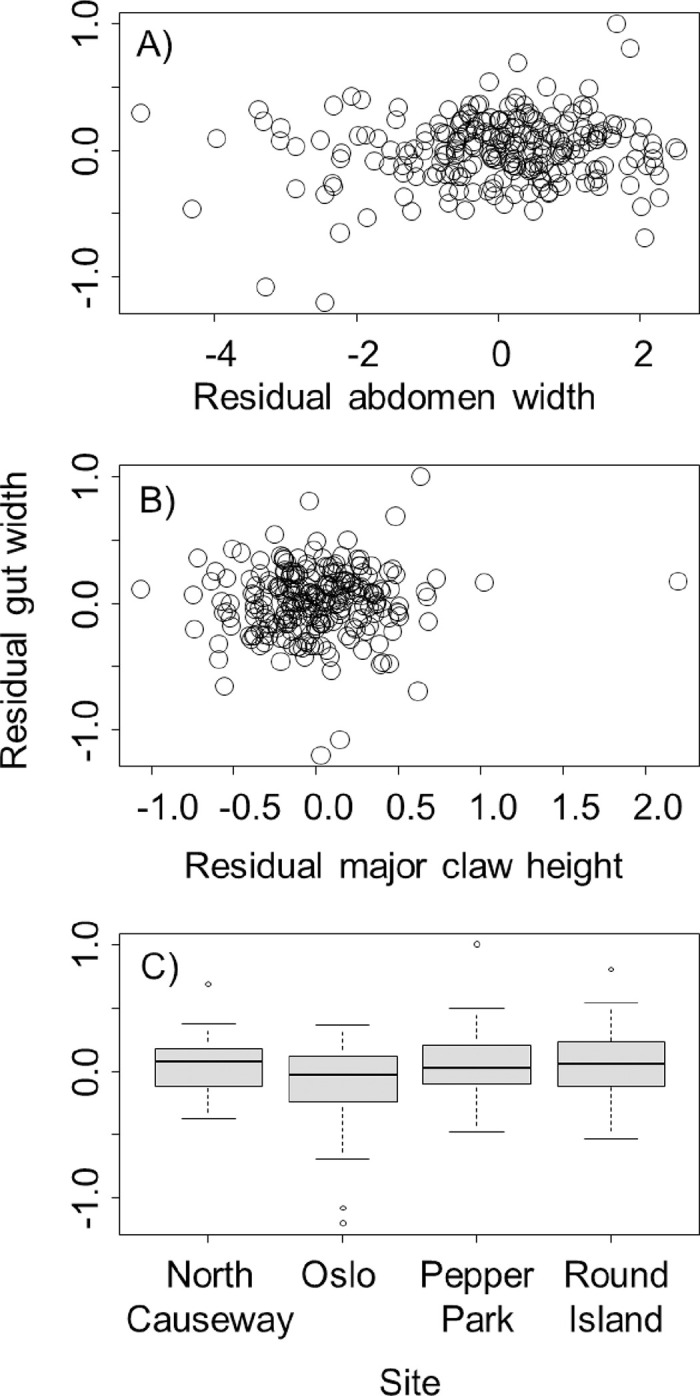
Many animals have flexible morphological traits that allow them to succeed in differing circumstances with differing diets available to them. For brachyuran crabs, claw height and gut size are diet-specific and largely reflect foraging strategies, while abdomen width reflects relative levels of fecundity. However, the link between claw size and diet has largely been documented only for primarily carnivorous crabs, while the link between diet and fecundity is strong in herbivorous crabs. We sought to determine the nature of the intraspecific relationship between claw size, dietary habits, and fecundity for two primarily herbivorous crab species, Hemigrapsus sanguineus and Aratus pisonii. Specifically, we examined whether claw size and/or abdomen width can be used as reliable measures of individual diet strategy. To test these hypotheses, we collected crabs and measured the dimensions of their claws, abdomens, and guts. By comparing these dimensions for each individual, we found that strongly predictive relationships do not exist between these traits for the primarily herbivorous species in our study. Thus, identifying external morphological features that can be used to assess diets of primarily herbivorous crabs remains elusive.
许多动物具有灵活的形态特征,使它们能够在不同的环境中成功生存,并适应不同的饮食。对于短尾类螃蟹来说,蟹爪高度和肠道大小是特定于饮食的,在很大程度上反映了觅食策略,而腹部宽度则反映了相对的繁殖力水平。然而,蟹爪大小与饮食之间的联系主要只在主要以肉食为主的螃蟹中得到了证实,而饮食与繁殖力之间的联系在草食性螃蟹中则非常强烈。我们试图确定两种主要草食性螃蟹(Hemigrapsus sanguineus 和 Aratus pisonii)的蟹爪大小、饮食习惯和繁殖力之间的种内关系的本质。具体来说,我们检查了蟹爪大小和/或腹部宽度是否可以作为个体饮食策略的可靠衡量标准。为了检验这些假设,我们收集了螃蟹并测量了它们的蟹爪、腹部和肠道的尺寸。通过比较每个个体的这些尺寸,我们发现对于我们研究中的主要草食性物种,这些特征之间不存在强预测关系。因此,确定可用于评估主要草食性螃蟹饮食的外部形态特征仍然难以捉摸。