Department of Biology, Brigham Young University, Provo, Utah, United States.
National Oceanic and Atmospheric Administration Office of National Marine Sanctuaries-National Marine Protected Areas Center, Washington DC, United States.
PeerJ. 2023 Apr 10;11:e15224. doi: 10.7717/peerj.15224. eCollection 2023.
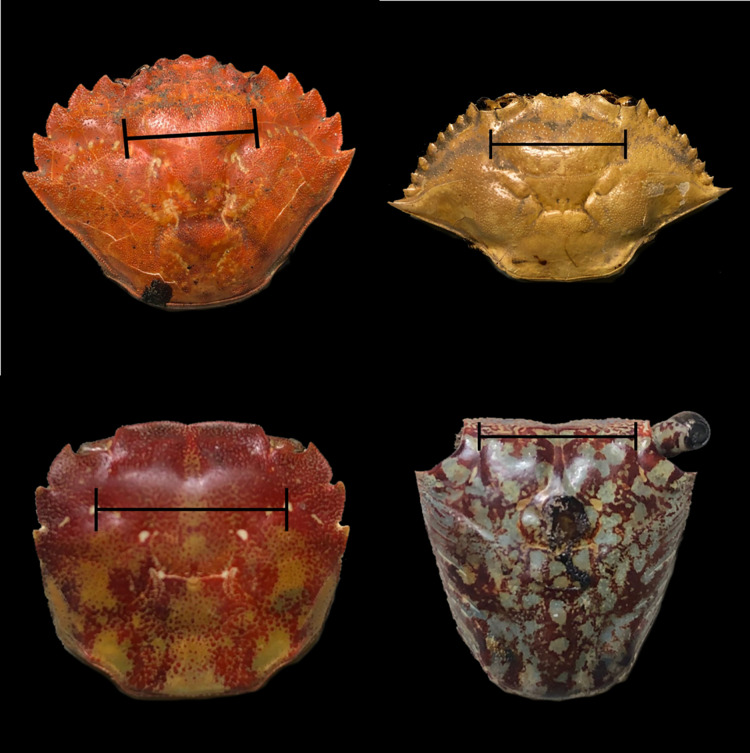
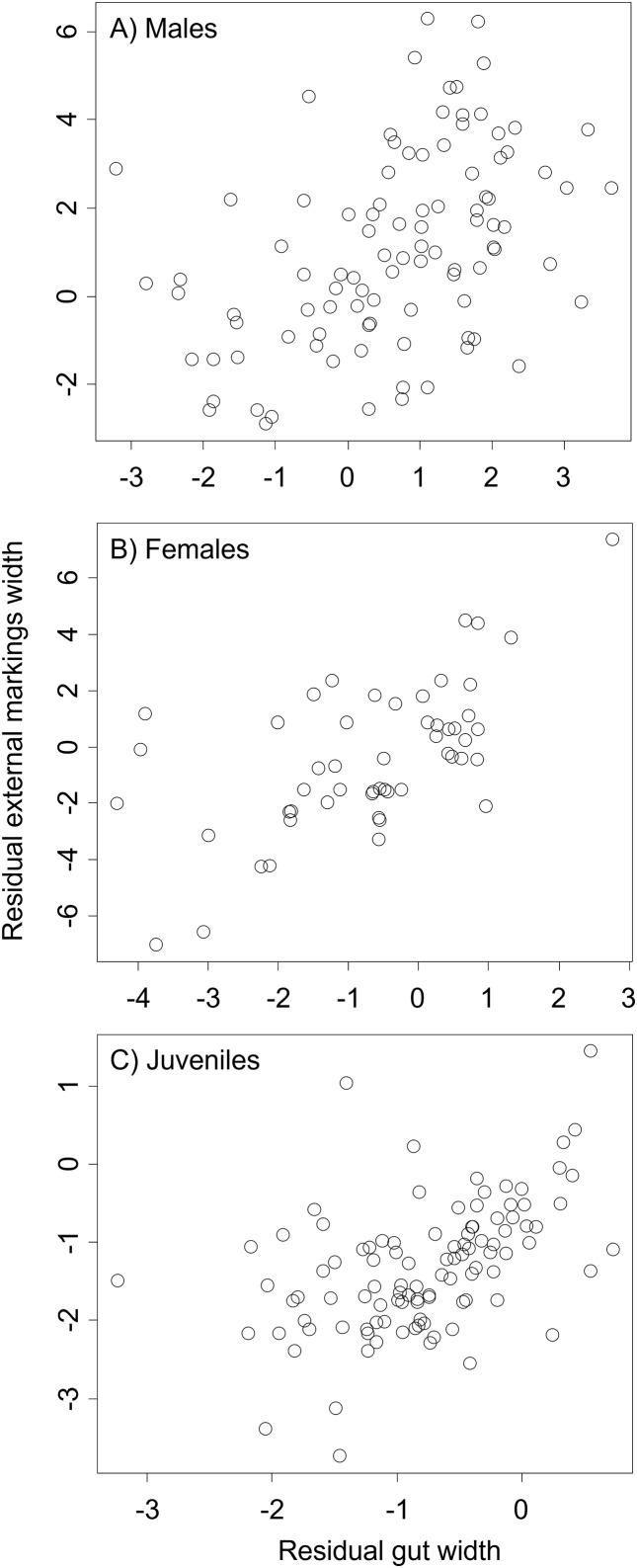
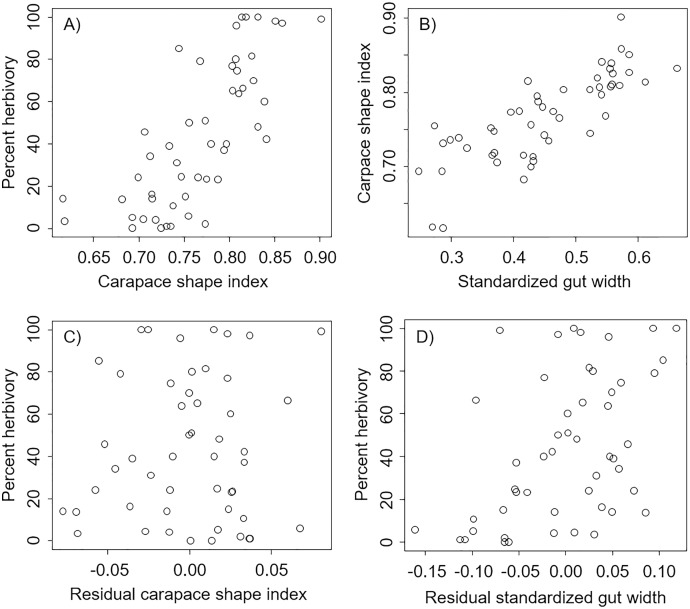
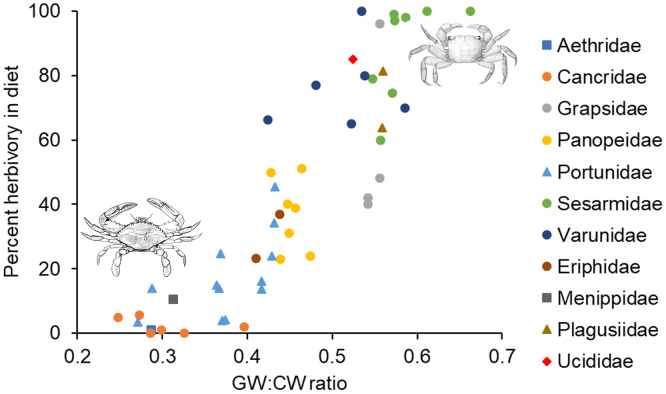
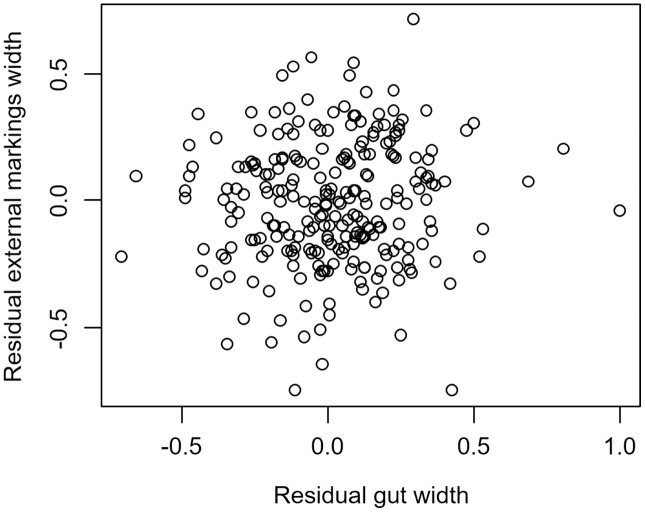
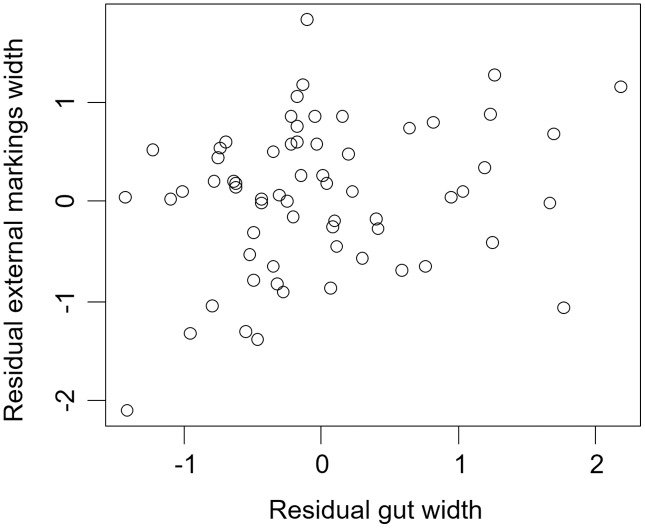
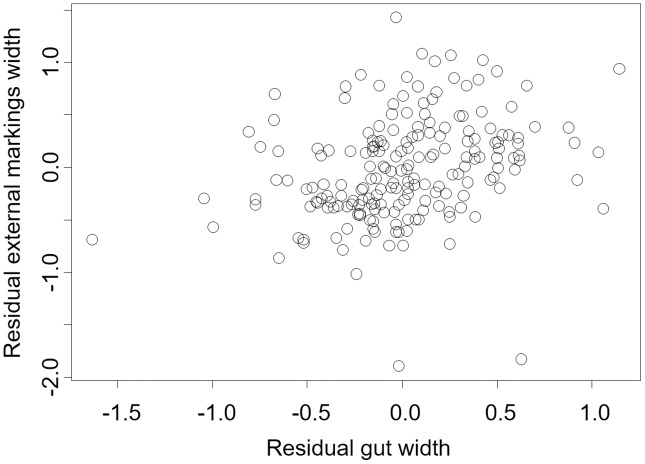
Morphological traits have often been used to predict diet and trophic position of species across many animal groups. Variation in gut size of closely related animals is known to be a good predictor of dietary habits. Species that are more herbivorous or that persist on low-quality diets often have larger stomachs than their carnivorous counterparts. This same pattern exists in crabs and in most species, individuals exhibit external markings on the dorsal side of their carapace that appear to align with the position and size of their gut. We hypothesized that these external markings could be used as an accurate estimate of the crab's cardiac stomach size, allowing an approximation of crab dietary strategies without the need to sacrifice and dissect individual animals. We used literature values for mean diet and standardized external gut size markings taken from crab photographs across 50 species to show that percent herbivory in the diet increases non-linearly across species of brachyuran crab with the external estimate of gut size. We also used data from dissections in four species to show that external gut markings were positively correlated with gut sizes, though the strength of this correlation differed across species. We conclude that when rough approximations of diet quality such as percent herbivory will suffice, measuring external carapace markings in crabs presents a quick, free, non-lethal alternative to dissections. Our results also provide important insights into tradeoffs that occur in crab morphology and have implications for crab evolution.
形态特征常常被用于预测许多动物类群中物种的饮食和营养位。研究表明,亲缘关系密切的动物的肠道大小的变化是饮食习惯的良好预测指标。与肉食性动物相比,更多食草或坚持低质量饮食的物种通常具有更大的胃。这种模式在螃蟹中也存在,在大多数物种中,个体的背甲上都有外部标记,这些标记似乎与它们的肠道位置和大小相对应。我们假设这些外部标记可以作为螃蟹心脏胃大小的准确估计,无需牺牲和解剖个体动物即可估计螃蟹的饮食策略。我们使用了 50 种螃蟹的文献平均值饮食和标准化外部肠道大小标记来表明,随着外部肠道大小估计的增加,短尾类螃蟹的饮食中草食性的比例呈非线性增加。我们还使用了四个物种的解剖数据来表明,外部肠道标记与肠道大小呈正相关,尽管这种相关性在不同物种之间存在差异。我们得出结论,当只需大致估计饮食质量(如草食性百分比)时,测量螃蟹的外部甲壳标记是一种快速、免费、非致命的替代解剖的方法。我们的结果还提供了有关螃蟹形态发生权衡的重要见解,并对螃蟹进化具有重要意义。