• 文献检索
  • 文档翻译
  • 深度研究
  • 学术资讯
  • Suppr Zotero 插件Zotero 插件
  • 邀请有礼
  • 套餐&价格
  • 历史记录
应用&插件
Suppr Zotero 插件Zotero 插件浏览器插件Mac 客户端Windows 客户端微信小程序
定价
高级版会员购买积分包购买API积分包
服务
文献检索文档翻译深度研究API 文档MCP 服务
关于我们
关于 Suppr公司介绍联系我们用户协议隐私条款
关注我们

Suppr 超能文献

核心技术专利:CN118964589B侵权必究
粤ICP备2023148730 号-1Suppr @ 2026

文献检索

告别复杂PubMed语法,用中文像聊天一样搜索,搜遍4000万医学文献。AI智能推荐,让科研检索更轻松。

立即免费搜索

文件翻译

保留排版,准确专业,支持PDF/Word/PPT等文件格式,支持 12+语言互译。

免费翻译文档

深度研究

AI帮你快速写综述,25分钟生成高质量综述,智能提取关键信息,辅助科研写作。

立即免费体验

COVID-19 对美国有色人种社区游客访问国家公园行为的影响:来自移动电话数据的证据。

COVID-19's impact on visitation behavior to US national parks from communities of color: evidence from mobile phone data.

机构信息

Department of Psychology, University of Warwick, Coventry, CV5 8DR, UK.

Eberly College of Science, The Pennsylvania State University, University Park, PA, 16802, USA.

出版信息

Sci Rep. 2022 Aug 4;12(1):13398. doi: 10.1038/s41598-022-16330-z.

DOI:10.1038/s41598-022-16330-z
PMID:35927271
原文链接:https://pmc.ncbi.nlm.nih.gov/articles/PMC9352905/
Abstract

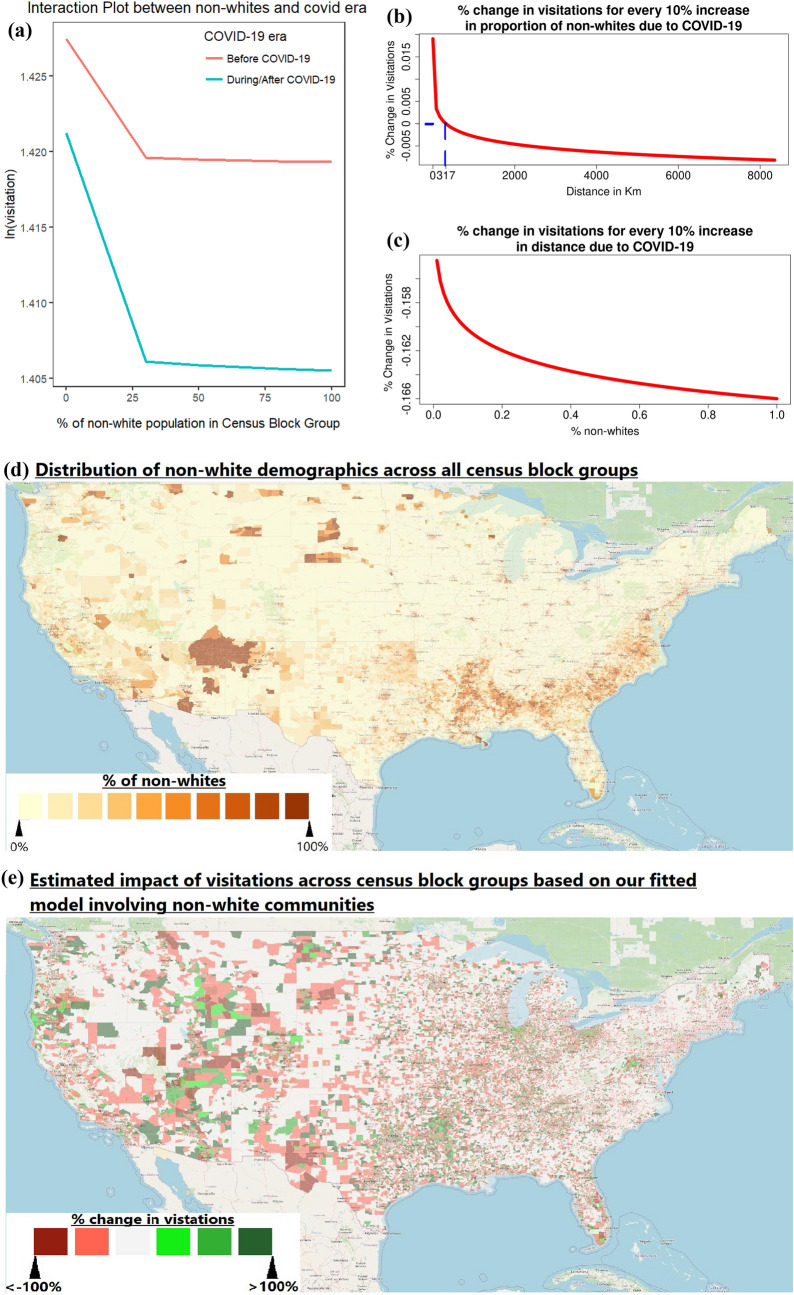
The widespread COVID-19 pandemic fundamentally changed many people's ways of life. With the necessity of social distancing and lock downs across the United States, evidence shows more people engage in outdoor activities. With the utilization of location-based service (LBS) data, we seek to explore how visitation patterns to national parks changed among communities of color during the COVID-19 pandemic. Our results show that visitation rates to national parks located closer than 347 km to individuals have increased amidst the pandemic, but the converse was demonstrated amongst parks located further than 347 km from individuals. More importantly, COVID-19 has adversely impacted visitation figures amongst non-white and Native American communities, with visitation volumes declining if these communities are situated further from national parks. Our results show disproportionately low-representations amongst national park visitors from these communities of color. African American communities display a particularly concerning trend whereby their visitation to national parks is substantially lower amongst communities closer to national parks.

摘要

广泛传播的 COVID-19 大流行从根本上改变了许多人的生活方式。随着美国各地社交距离和封锁的必要性,有证据表明更多的人参与户外活动。利用基于位置的服务 (LBS) 数据,我们试图探索在 COVID-19 大流行期间,有色人种社区对国家公园的访问模式如何发生变化。我们的研究结果表明,在大流行期间,距离个人 347 公里以内的国家公园的游客人数有所增加,但距离个人超过 347 公里的公园则相反。更重要的是,COVID-19 对非白人和美国原住民社区的游客人数产生了不利影响,如果这些社区距离国家公园较远,游客数量就会下降。我们的研究结果表明,来自这些有色人种社区的国家公园游客人数代表比例不成比例地低。非裔美国人社区呈现出一个特别令人担忧的趋势,即他们到国家公园的访问量在靠近国家公园的社区中大幅下降。

https://cdn.ncbi.nlm.nih.gov/pmc/blobs/6c27/9352905/dc2653535402/41598_2022_16330_Fig7_HTML.jpg
https://cdn.ncbi.nlm.nih.gov/pmc/blobs/6c27/9352905/17cd0ac5943c/41598_2022_16330_Fig1_HTML.jpg
https://cdn.ncbi.nlm.nih.gov/pmc/blobs/6c27/9352905/17ee0734c296/41598_2022_16330_Fig2_HTML.jpg
https://cdn.ncbi.nlm.nih.gov/pmc/blobs/6c27/9352905/4a43e3c2f556/41598_2022_16330_Fig3_HTML.jpg
https://cdn.ncbi.nlm.nih.gov/pmc/blobs/6c27/9352905/0ec3a0195d25/41598_2022_16330_Fig4_HTML.jpg
https://cdn.ncbi.nlm.nih.gov/pmc/blobs/6c27/9352905/7ed276c892bb/41598_2022_16330_Fig5_HTML.jpg
https://cdn.ncbi.nlm.nih.gov/pmc/blobs/6c27/9352905/71d1ad2539d5/41598_2022_16330_Fig6_HTML.jpg
https://cdn.ncbi.nlm.nih.gov/pmc/blobs/6c27/9352905/dc2653535402/41598_2022_16330_Fig7_HTML.jpg
https://cdn.ncbi.nlm.nih.gov/pmc/blobs/6c27/9352905/17cd0ac5943c/41598_2022_16330_Fig1_HTML.jpg
https://cdn.ncbi.nlm.nih.gov/pmc/blobs/6c27/9352905/17ee0734c296/41598_2022_16330_Fig2_HTML.jpg
https://cdn.ncbi.nlm.nih.gov/pmc/blobs/6c27/9352905/4a43e3c2f556/41598_2022_16330_Fig3_HTML.jpg
https://cdn.ncbi.nlm.nih.gov/pmc/blobs/6c27/9352905/0ec3a0195d25/41598_2022_16330_Fig4_HTML.jpg
https://cdn.ncbi.nlm.nih.gov/pmc/blobs/6c27/9352905/7ed276c892bb/41598_2022_16330_Fig5_HTML.jpg
https://cdn.ncbi.nlm.nih.gov/pmc/blobs/6c27/9352905/71d1ad2539d5/41598_2022_16330_Fig6_HTML.jpg
https://cdn.ncbi.nlm.nih.gov/pmc/blobs/6c27/9352905/dc2653535402/41598_2022_16330_Fig7_HTML.jpg

相似文献

1
COVID-19's impact on visitation behavior to US national parks from communities of color: evidence from mobile phone data.COVID-19 对美国有色人种社区游客访问国家公园行为的影响:来自移动电话数据的证据。
Sci Rep. 2022 Aug 4;12(1):13398. doi: 10.1038/s41598-022-16330-z.
2
Public parks and the pandemic: How park usage has been affected by COVID-19 policies.公共公园与大流行:新冠疫情政策如何影响公园使用。
PLoS One. 2021 May 19;16(5):e0251799. doi: 10.1371/journal.pone.0251799. eCollection 2021.
3
Exploring park visitation trends during the Covid-19 pandemic in Hungary by using mobile device location data.利用移动设备定位数据探索匈牙利新冠疫情期间的公园游客趋势
Sci Rep. 2023 Jul 8;13(1):11078. doi: 10.1038/s41598-023-38287-3.
4
Using cellular device location data to estimate visitation to public lands: Comparing device location data to U.S. National Park Service's visitor use statistics.利用移动设备位置数据估算公共土地的游客访问量:将设备位置数据与美国国家公园管理局的游客使用统计数据进行比较。
PLoS One. 2023 Nov 9;18(11):e0289922. doi: 10.1371/journal.pone.0289922. eCollection 2023.
5
Survive, revive, and thrive: The impact of COVID-19 on global park visitation.幸存、复苏与繁荣:新冠疫情对全球公园游客量的影响。
Sci Total Environ. 2024 Oct 10;946:174077. doi: 10.1016/j.scitotenv.2024.174077. Epub 2024 Jun 20.
6
Greenspace use during the COVID-19 pandemic: A longitudinal population mobility study in the United Kingdom.新冠疫情期间的绿地使用情况:英国的一项纵向人口流动研究。
Environ Res. 2023 Dec 15;239(Pt 2):117360. doi: 10.1016/j.envres.2023.117360. Epub 2023 Oct 17.
7
Change of urban park usage as a response to the COVID-19 global pandemic.城市公园使用变化以应对 COVID-19 全球大流行。
Sci Rep. 2023 Nov 7;13(1):19324. doi: 10.1038/s41598-023-46745-1.
8
Mobile phone data reveals spatiotemporal recreational patterns in conservation areas during the COVID pandemic.手机数据揭示了 COVID 大流行期间保护区的时空休闲模式。
Sci Rep. 2023 Nov 20;13(1):20282. doi: 10.1038/s41598-023-47326-y.
9
Impacts of COVID-19 pandemic on urban park visitation: a global analysis.新冠疫情对城市公园游客量的影响:一项全球分析。
J For Res (Harbin). 2021;32(2):553-567. doi: 10.1007/s11676-020-01249-w. Epub 2020 Nov 12.
10
Green space justice amid COVID-19: Unequal access to public green space across American neighborhoods.新冠疫情下的绿色空间公平:美国社区间公共绿色空间获取机会不均等。
Front Public Health. 2023 Feb 2;11:1055720. doi: 10.3389/fpubh.2023.1055720. eCollection 2023.

引用本文的文献

1
Mobile Phone Network Data in the COVID-19 era: A systematic review of applications, socioeconomic factors affecting compliance to non-pharmaceutical interventions, privacy implications, and post-pandemic economic recovery strategies.新冠疫情时代的移动电话网络数据:对应用、影响非药物干预措施依从性的社会经济因素、隐私问题及疫情后经济复苏策略的系统综述
PLoS One. 2025 Apr 29;20(4):e0322520. doi: 10.1371/journal.pone.0322520. eCollection 2025.
2
Opportunities and challenges within green spaces during COVID-19: Perspectives of visitors and managers in Maine, USA.新冠疫情期间绿色空间的机遇与挑战:美国缅因州游客与管理者的视角
PLoS One. 2025 Apr 22;20(4):e0320800. doi: 10.1371/journal.pone.0320800. eCollection 2025.
3

本文引用的文献

1
A qualitative analysis of social and emotional perspectives of airline passengers during the COVID-19 pandemic.对新冠疫情期间航空公司乘客的社会和情感观点进行的定性分析。
J Air Transp Manag. 2021 Jul;94:102079. doi: 10.1016/j.jairtraman.2021.102079. Epub 2021 May 4.
2
Why the Navajo Nation was hit so hard by coronavirus: Understanding the disproportionate impact of the COVID-19 pandemic.为何纳瓦霍族受新冠病毒打击如此严重:理解新冠疫情造成的不均衡影响。
Appl Geogr. 2021 Sep;134:102526. doi: 10.1016/j.apgeog.2021.102526. Epub 2021 Jul 29.
3
Assessing the validity of mobile device data for estimating visitor demographics and visitation patterns in Yellowstone National Park.
Utilizing large-scale human mobility data to identify determinants of physical activity.
利用大规模人类移动性数据来确定身体活动的决定因素。
Sci Rep. 2025 Jan 27;15(1):3420. doi: 10.1038/s41598-025-87017-4.
4
Urban tick exposure on Staten Island is higher in pet owners.斯塔滕岛的宠物主人感染城市 ticks 的风险更高。
PLoS One. 2024 Nov 14;19(11):e0311891. doi: 10.1371/journal.pone.0311891. eCollection 2024.
评估移动设备数据在估算黄石国家公园游客人口统计数据和访问模式方面的有效性。
J Environ Manage. 2022 Sep 1;317:115410. doi: 10.1016/j.jenvman.2022.115410. Epub 2022 Jun 10.
4
COVID-19 pandemic impacts on conservation research, management, and public engagement in US national parks.新冠疫情对美国国家公园的保护研究、管理及公众参与的影响。
Biol Conserv. 2021 May;257:109038. doi: 10.1016/j.biocon.2021.109038. Epub 2021 Mar 26.
5
Public parks and the pandemic: How park usage has been affected by COVID-19 policies.公共公园与大流行:新冠疫情政策如何影响公园使用。
PLoS One. 2021 May 19;16(5):e0251799. doi: 10.1371/journal.pone.0251799. eCollection 2021.
6
The COVID-19 pandemic: Impacts on cities and major lessons for urban planning, design, and management.新型冠状病毒肺炎疫情:对城市的影响及对城市规划、设计和管理的主要启示。
Sci Total Environ. 2020 Dec 20;749:142391. doi: 10.1016/j.scitotenv.2020.142391. Epub 2020 Sep 18.
7
State-level variation of initial COVID-19 dynamics in the United States.美国 COVID-19 疫情初期动态的州际差异。
PLoS One. 2020 Oct 13;15(10):e0240648. doi: 10.1371/journal.pone.0240648. eCollection 2020.
8
Government support to airlines in the aftermath of the COVID-19 pandemic.新冠疫情之后政府对航空公司的支持。
J Air Transp Manag. 2020 Oct;89:101931. doi: 10.1016/j.jairtraman.2020.101931. Epub 2020 Sep 14.
9
Factors that predict passengers willingness to fly during and after the COVID-19 pandemic.预测新冠疫情期间及之后乘客飞行意愿的因素。
J Air Transp Manag. 2020 Oct;89:101897. doi: 10.1016/j.jairtraman.2020.101897. Epub 2020 Aug 18.
10
COVID-19: Exposing and addressing health disparities among ethnic minorities and migrants.2019冠状病毒病:揭示并解决少数族裔和移民中的健康差距问题。
J Travel Med. 2020 Nov 9;27(7). doi: 10.1093/jtm/taaa113.