West China School of Public Health and West China Fourth Hospital, Sichuan University, Sichuan, Chengdu, China.
Sichuan Center for Disease Control and Prevention, Chengdu, Sichuan, China.
BMC Public Health. 2022 Aug 4;22(1):1484. doi: 10.1186/s12889-022-13890-7.
Epidemiological studies have investigated the short-term effects of meteorological factors and air pollution on the incidence of hand, foot, and mouth disease (HFMD). Several meteorological indicators, such as relative humidity and the diurnal temperature range (DTR), significantly modify the relationship between short-term exposure to temperature and HFMD incidence. However, it remains unclear whether (and how) long-term air pollution levels modify the short-term relationships of HFMD incidence with meteorological factors and air pollution.
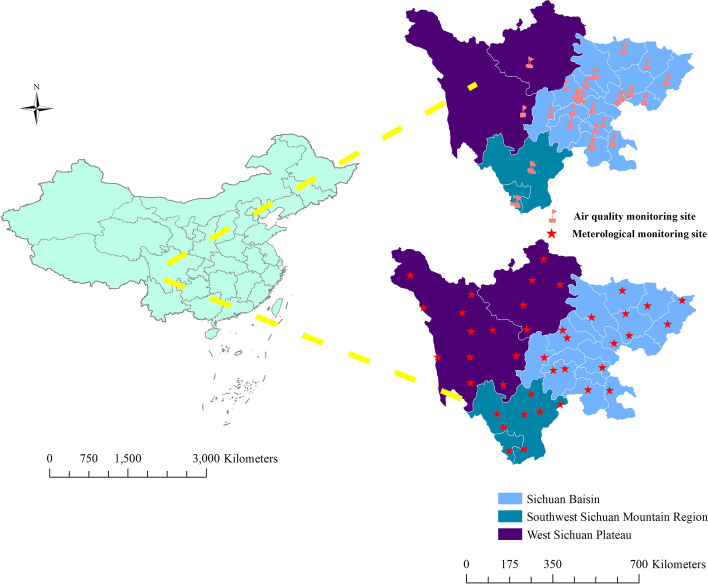
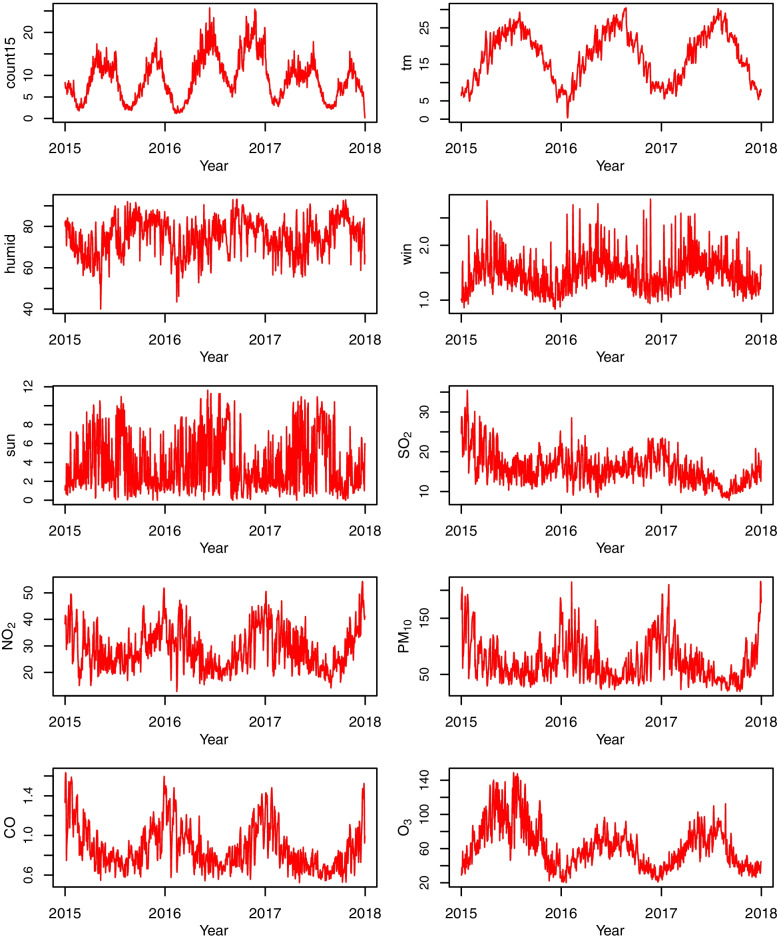
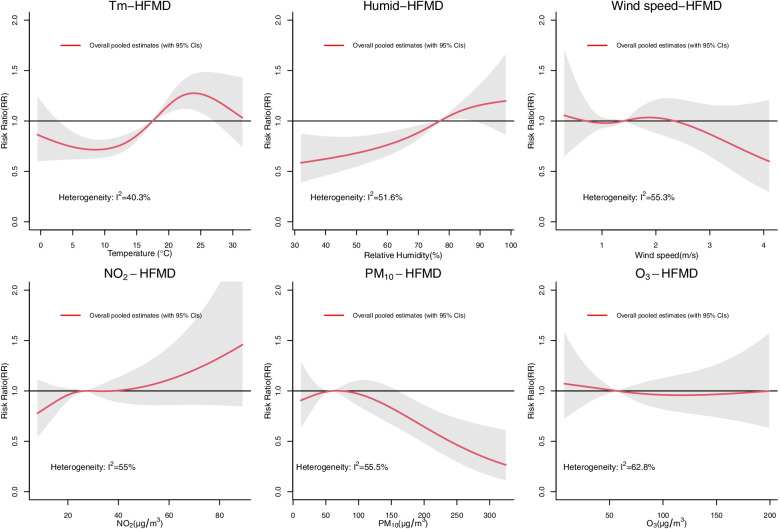
We obtained daily data on meteorological factors, air pollutants, and HFMD counts in children from 21 prefecture-level cities in Sichuan Province in Southwest China from 2015 to 2017. First, we constructed a distributed lag nonlinear model (DLNM) at each prefecture-level site to evaluate the short-term impacts of meteorological variables and air pollutants on HFMD incidence. Then, we assessed the pooled effects of the exposures and incorporated long-term city-specific air pollutant indicators as meta-predictors to examine their potential modification effects by performing multivariate meta-regression models.
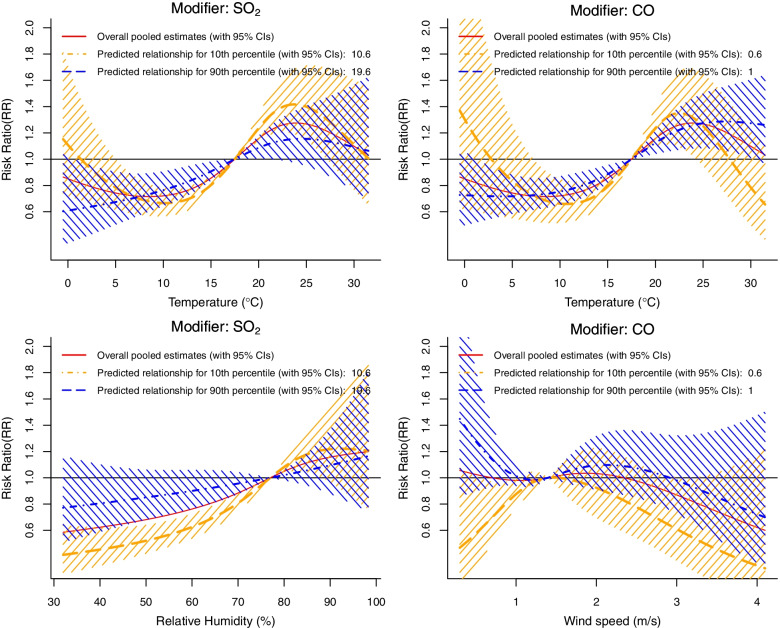
We found that long-term SO and CO concentrations significantly modified the short-term relationships between climatic variables and HFMD incidence. Specifically, high concentrations of CO (P = 0.027) and SO (P = 0.039) reduced the risk of HFMD at low temperatures. The relationship between relative humidity and HFMD incidence was weakened at high SO concentrations (P = 0.024), especially when the relative humidity was below the median level. When the minimum relative humidity (32%) was compared to the median relative humidity (77%), the risk ratio (RR) was 0.77 (95% CI: 0.51-1.17) in the 90 percentile of SO (19.6 μg/m) and 0.41 (95% CI: 0.27-0.64) in the 10 percentile of SO (10.6 μg/m).
Our results indicated that long-term SO and CO levels modified the short-term associations between HFMD incidence in children and meteorological variables. These findings may inform health authorities to optimize targeted public health policies including reducing ambient air pollution and reinforcing self-protective actions to weaken the adverse health impacts of environmental factors on HFMD incidence.
流行病学研究已经调查了气象因素和空气污染对手足口病(HFMD)发病率的短期影响。相对湿度和日较差(DTR)等几个气象指标显著改变了短期暴露于温度与 HFMD 发病率之间的关系。然而,目前尚不清楚长期空气污染水平是否(以及如何)改变 HFMD 发病率与气象因素和空气污染之间的短期关系。
我们从 2015 年至 2017 年从中国西南部四川省的 21 个地级市获得了儿童每日气象因素、空气污染物和 HFMD 计数的数据。首先,我们在每个地级市建立了一个分布式滞后非线性模型(DLNM),以评估气象变量和空气污染物对 HFMD 发病率的短期影响。然后,我们评估了暴露的综合影响,并纳入了长期特定城市的空气污染物指标作为元预测因子,通过进行多变量元回归模型来检验它们的潜在修饰作用。
我们发现,长期 SO 和 CO 浓度显著改变了气候变量与 HFMD 发病率之间的短期关系。具体来说,高浓度的 CO(P=0.027)和 SO(P=0.039)降低了低温下 HFMD 的风险。SO 浓度高时(P=0.024),相对湿度与 HFMD 发病率之间的关系减弱,尤其是当相对湿度低于中位数水平时。当最低相对湿度(32%)与中位数相对湿度(77%)相比时,SO 第 90 百分位数(19.6μg/m)时的风险比(RR)为 0.77(95%CI:0.51-1.17),SO 第 10 百分位数(10.6μg/m)时的 RR 为 0.41(95%CI:0.27-0.64)。
我们的结果表明,长期 SO 和 CO 水平改变了儿童 HFMD 发病率与气象变量之间的短期关联。这些发现可能为卫生当局提供信息,以优化包括减少环境空气污染和加强自我保护措施在内的有针对性的公共卫生政策,以削弱环境因素对 HFMD 发病率的不利健康影响。