Nuffield Trust, 59 New Cavendish St, London, W1G 7LP, UK.
National Research University Higher School of Economics, 0 Myasnitskaya str., 101000, Moscow, Russian Federation.
BMC Prim Care. 2022 Aug 4;23(1):194. doi: 10.1186/s12875-022-01812-w.
There is unfinished reform in primary care in Russia and other former Soviet Union (FSU) countries. The traditional 'Semashko' multi-specialty polyclinic model has been retained, while its major characteristics are increasingly questioned. The search for a new model is on a health policy agenda. It is relevant for many other countries.
In this paper, we explore the strengths and weaknesses of the multi-specialty polyclinic model currently found in Russia and other FSU countries, as well as the features of the emerging multi-disciplinary and large-scale primary care models internationally. The comparison of the two is a major research question. Health policy implications are discussed.
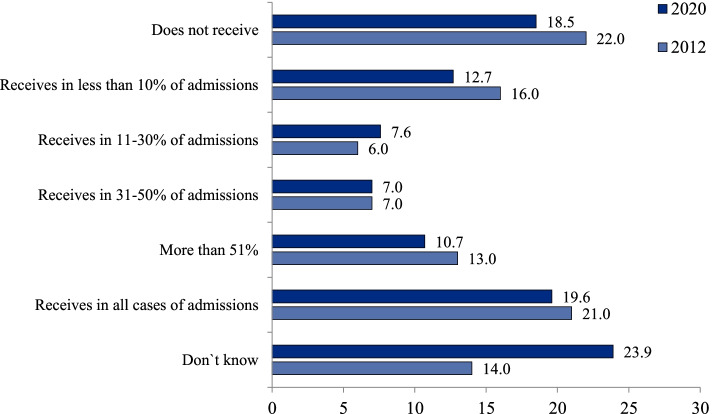
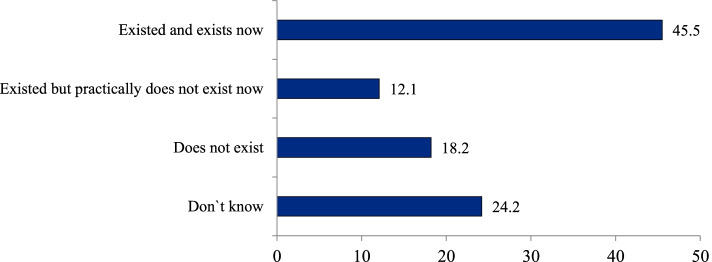
We use data from two physicians' surveys and recent literature to identify the characteristics of multi-specialty polyclinics, indicators of their performance and the evaluation in the specific country context. The review of the literature is used to describe new primary care models internationally.
The Semashko polyclinic model has lost some of its original strengths due to the excessive specialization of service delivery. We demonstrate the strengths of extended practices in Western countries and conclude that FSU countries should "leapfrog" the phase of developing solo practices and build a multi-disciplinary model similar to the extended practices model in Europe. The latter may act as a 'golden mean' between the administrative dominance of the polyclinic model and the limited capacity of solo practices. The new model requires a separation of primary care and outpatient specialty care, with the transformation of polyclinics into centers of outpatient diagnostic and specialty services that become part of hospital services while working closely with primary care.
The comprehensiveness of care in a big setting and potential economies of scale, which are major strengths of the polyclinic model, should be retained in the provision of specialty care rather than primary care. Internationally, there are lessons about the risks associated with models based on narrow specialization in caring for patients who increasingly have multiple conditions.
俄罗斯和其他前苏联(FSU)国家的基层医疗改革尚未完成。传统的“Semashko”多专科综合诊所模式得以保留,但其主要特征越来越受到质疑。新的模式正在寻求中,这对许多其他国家也具有现实意义。
本文旨在探讨俄罗斯和其他 FSU 国家目前多专科综合诊所模式的优缺点,以及国际上新兴的多学科和大规模初级保健模式的特点。比较这两种模式是本文的主要研究问题。本文还讨论了卫生政策的影响。
我们使用来自两项医生调查和最新文献的数据,以确定多专科综合诊所的特点、其绩效指标以及在特定国家背景下的评估。文献综述用于描述国际上新的初级保健模式。
由于服务提供的过度专业化,Semashko 综合诊所模式已经失去了一些最初的优势。我们展示了西方国家扩展实践的优势,并得出结论,FSU 国家应该“跨越式发展”发展个体执业的阶段,建立类似于欧洲扩展实践模式的多学科模式。后者可能是综合诊所模式的行政主导和个体执业能力有限之间的“中庸之道”。新模式需要将初级保健和门诊专科医疗分开,将综合诊所转变为门诊诊断和专科服务中心,成为医院服务的一部分,同时与初级保健密切合作。
在提供专科医疗服务时,应保留综合诊所模式在大环境下提供全面医疗服务和潜在规模经济方面的优势,而不是在提供初级保健服务时保留。在国际上,有关基于专科医疗的患者管理模式的风险的经验教训越来越多,这些模式越来越多的患者患有多种疾病。