Metzner F, Neupetsch C, Carabello A, Pietsch M, Wendler T, Drossel W-G
ZESBO Centre for Research on Musculoskeletal Systems, Leipzig University, Semmelweisstraße 14, 04103, Leipzig, Germany.
Department of Orthopaedics, Trauma and Plastic Surgery, Leipzig University, Leipzig, Germany.
BMC Biomed Eng. 2022 Aug 4;4(1):6. doi: 10.1186/s42490-022-00063-1.
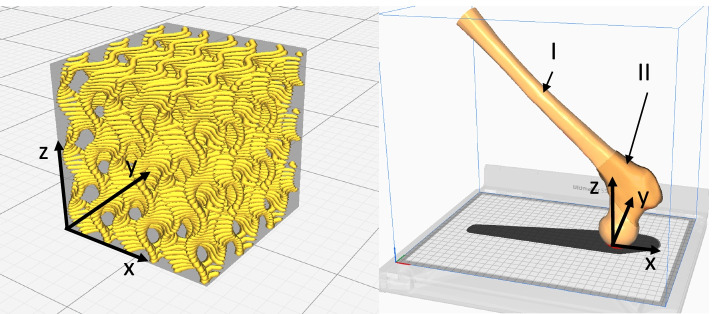
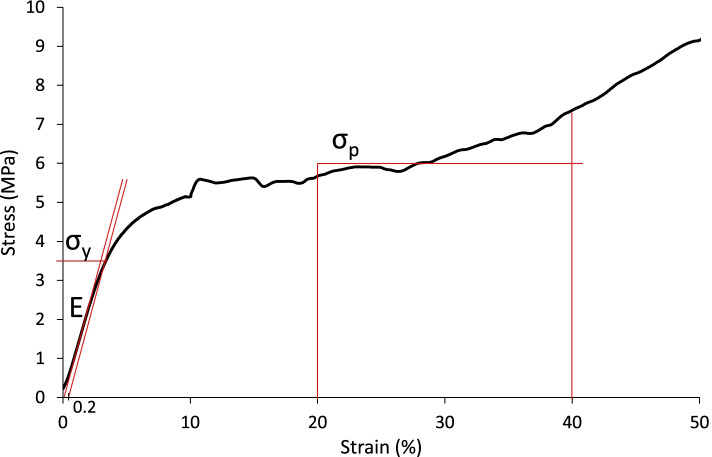
Replicating the mechanical behavior of human bones, especially cancellous bone tissue, is challenging. Typically, conventional bone models primarily consist of polyurethane foam surrounded by a solid shell. Although nearly isotropic foam components have mechanical properties similar to cancellous bone, they do not represent the anisotropy and inhomogeneity of bone architecture. To consider the architecture of bone, models were developed whose core was additively manufactured based on CT data. This core was subsequently coated with glass fiber composite. Specimens consisting of a gyroid-structure were fabricated using fused filament fabrication (FFF) techniques from different materials and various filler levels. Subsequent compression tests showed good accordance between the mechanical behavior of the printed specimens and human bone. The unidirectional fiberglass composite showed higher strength and stiffness than human cortical bone in 3-point bending tests, with comparable material behaviors being observed. During biomechanical investigation of the entire assembly, femoral prosthetic stems were inserted into both artificial and human bones under controlled conditions, while recording occurring forces and strains. All of the artificial prototypes, made of different materials, showed analogous behavior to human bone. In conclusion, it was shown that low-cost FFF technique can be used to generate valid bone models and selectively modify their properties by changing the infill.
复制人类骨骼,尤其是松质骨组织的力学行为具有挑战性。通常,传统的骨模型主要由被实心外壳包围的聚氨酯泡沫组成。尽管近各向同性的泡沫组件具有与松质骨相似的力学性能,但它们并不代表骨结构的各向异性和不均匀性。为了考虑骨结构,开发了一些模型,其核心基于CT数据通过增材制造而成。这个核心随后用玻璃纤维复合材料进行涂覆。使用熔融长丝制造(FFF)技术由不同材料和各种填充水平制造出具有类螺旋结构的试样。随后的压缩试验表明,打印试样的力学行为与人类骨骼之间具有良好的一致性。在三点弯曲试验中,单向玻璃纤维复合材料显示出比人类皮质骨更高的强度和刚度,同时观察到了类似的材料行为。在对整个组件进行生物力学研究期间,在受控条件下将股骨假体柄插入人造骨和人类骨骼中,同时记录所产生的力和应变。所有由不同材料制成的人造原型都表现出与人类骨骼类似的行为。总之,结果表明低成本的FFF技术可用于生成有效的骨模型,并通过改变填充来选择性地改变其性能。