Department of Molecular and Integrative Physiology, University of Michigan Medical School, Ann Arbor, Michigan, USA.
Department of Internal Medicine, Division of Cardiovascular Medicine, University of Michigan Medical School, Ann Arbor, Michigan, USA.
Obesity (Silver Spring). 2022 Sep;30(9):1818-1830. doi: 10.1002/oby.23509. Epub 2022 Aug 4.
The intersection between immunology and metabolism contributes to the pathogenesis of obesity-associated metabolic diseases as well as molecular control of inflammatory responses. The metabolite itaconate and the cell-permeable derivatives have robust anti-inflammatory effects; therefore, it is hypothesized that cis-aconitate decarboxylase (Acod1)-produced itaconate has a protective, anti-inflammatory effect during diet-induced obesity and metabolic disease.
Wild-type and Acod1 mice were subjected to diet-induced obesity. Glucose metabolism was analyzed by glucose tolerance tests, insulin tolerance tests, and indirect calorimetry. Gene expression and transcriptome analysis was performed using quantitative reverse transcription-polymerase chain reaction (qRT-PCR) and RNA sequencing.
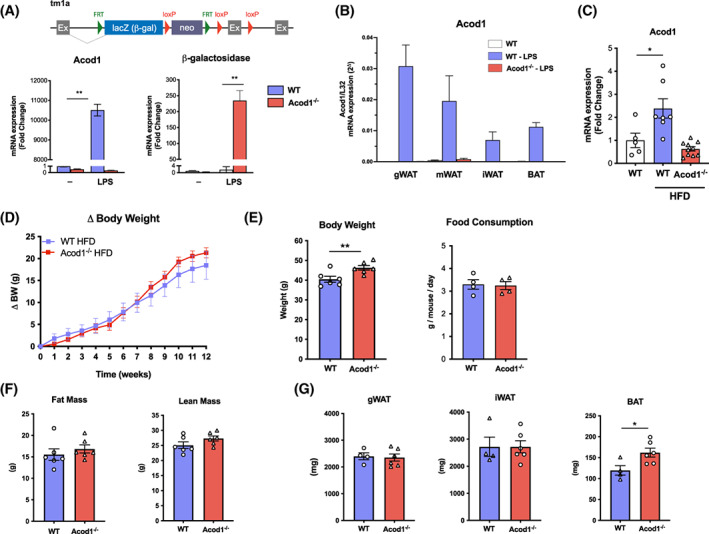
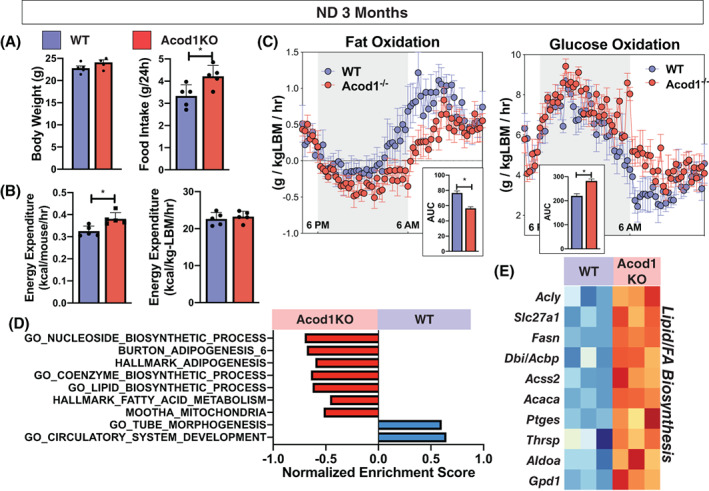
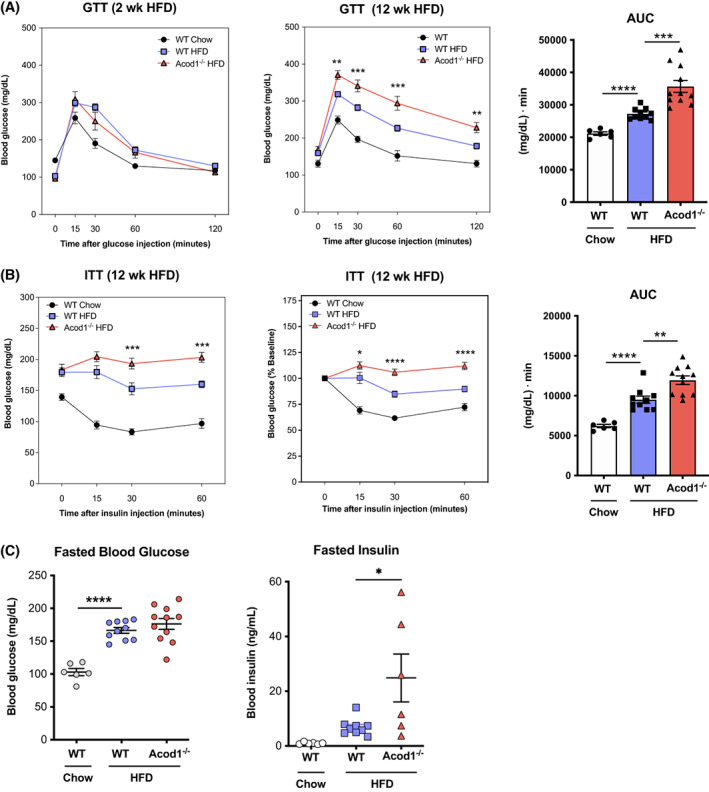
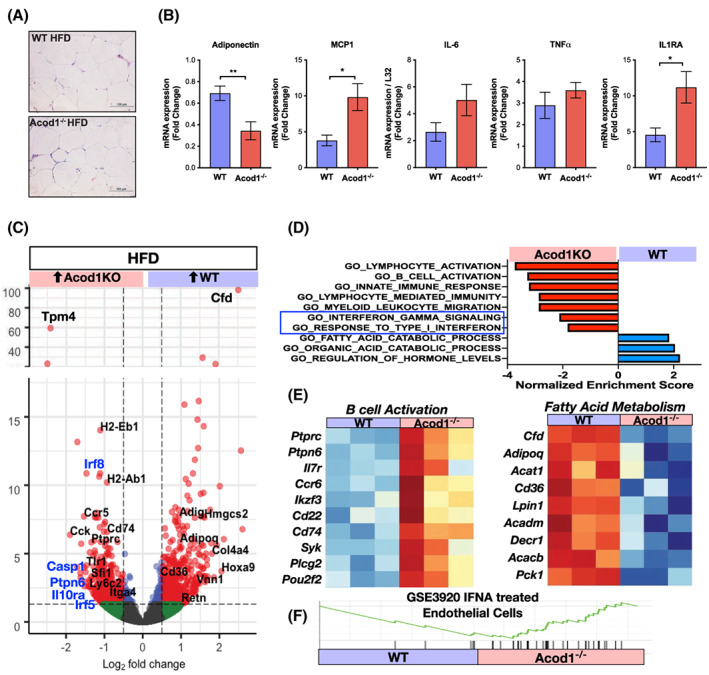
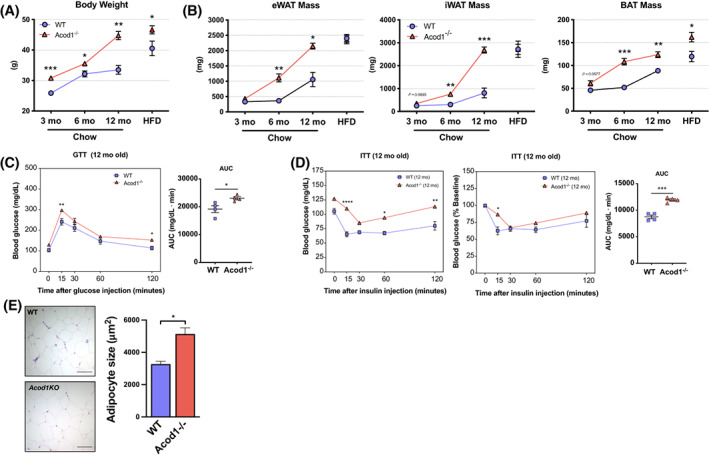
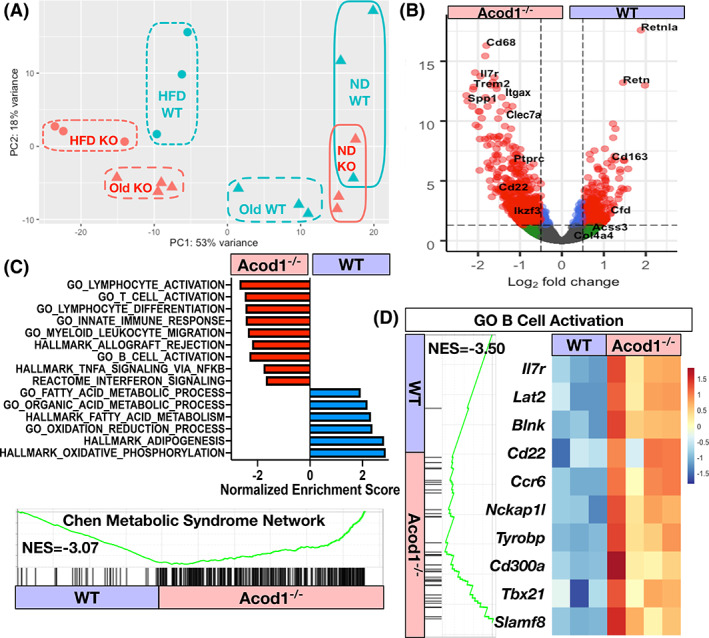
Wild-type and Acod1 mice on high-fat diet had equivalent weight gain, but Acod1 mice had impaired glucose metabolism. Insulin tolerance tests and glucose tolerance tests after 12 weeks on high-fat diet revealed significantly higher blood glucose levels in Acod1 mice. This was associated with significant enrichment of inflammatory gene sets and a reduction in genes related to adipogenesis and fatty acid metabolism. Analysis of naive Acod1 mice showed a significant increase in fat deposition at 3 and 6 months of age and obesity and insulin resistance by 12 months.
The data show that Acod1 has an important role in the regulation of glucose homeostasis and obesity under normal and high-fat diet conditions.
免疫学和代谢学的交叉点促进了肥胖相关代谢性疾病的发病机制以及炎症反应的分子控制。代谢产物衣康酸和可穿透细胞的衍生物具有强大的抗炎作用;因此,假设顺式乌头酸脱羧酶(Acod1)产生的衣康酸在饮食诱导的肥胖和代谢疾病中具有保护和抗炎作用。
野生型和 Acod1 小鼠接受饮食诱导的肥胖。通过葡萄糖耐量试验、胰岛素耐量试验和间接测热法分析葡萄糖代谢。使用定量逆转录聚合酶链反应(qRT-PCR)和 RNA 测序进行基因表达和转录组分析。
高脂肪饮食的野生型和 Acod1 小鼠体重增加相当,但 Acod1 小鼠的葡萄糖代谢受损。高脂肪饮食 12 周后的胰岛素耐量试验和葡萄糖耐量试验显示,Acod1 小鼠的血糖水平明显升高。这与炎症基因集的显著富集以及与脂肪生成和脂肪酸代谢相关的基因减少有关。对幼稚的 Acod1 小鼠的分析表明,在 3 个月和 6 个月时脂肪沉积显著增加,并且在 12 个月时肥胖和胰岛素抵抗。
数据表明,Acod1 在正常和高脂肪饮食条件下对葡萄糖稳态和肥胖的调节具有重要作用。