Department of Internal Medicine, Division of Cardiovascular Medicine, University of Michigan, Ann Arbor, Michigan, USA.
Department of Biochemistry and Molecular Biology, Soochow University Medical College, Suzhou, Jiangsu, China.
J Clin Invest. 2023 Dec 12;134(3):e173034. doi: 10.1172/JCI173034.
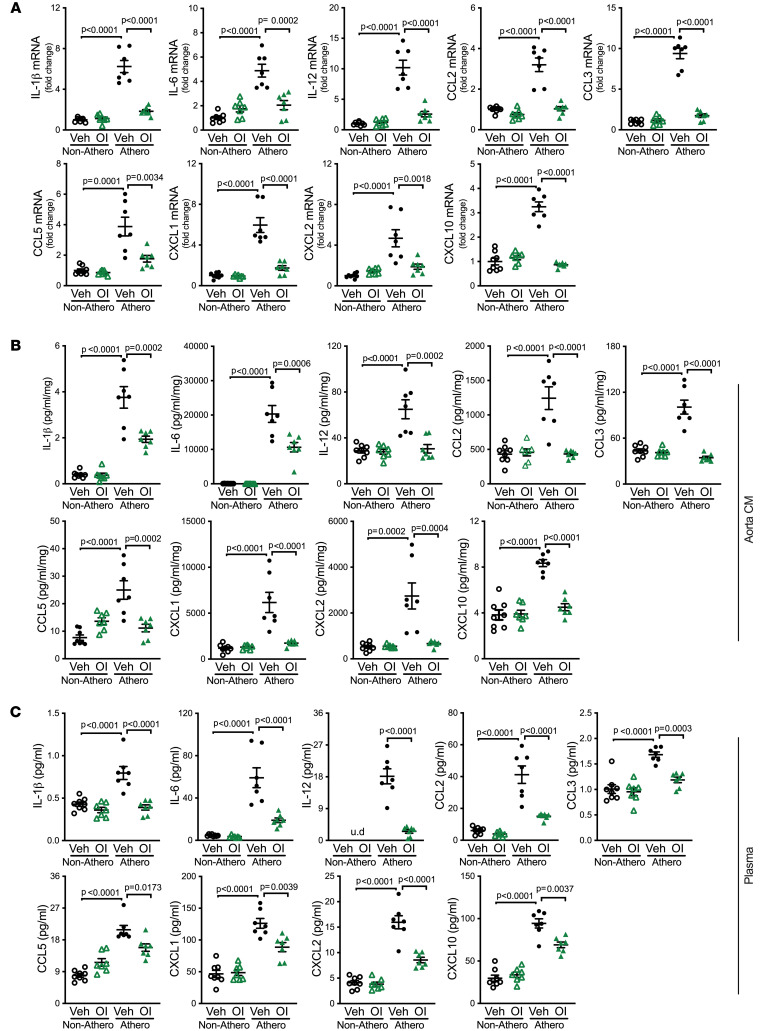
Itaconate has emerged as a critical immunoregulatory metabolite. Here, we examined the therapeutic potential of itaconate in atherosclerosis. We found that both itaconate and the enzyme that synthesizes it, aconitate decarboxylase 1 (Acod1, also known as immune-responsive gene 1 [IRG1]), are upregulated during atherogenesis in mice. Deletion of Acod1 in myeloid cells exacerbated inflammation and atherosclerosis in vivo and resulted in an elevated frequency of a specific subset of M1-polarized proinflammatory macrophages in the atherosclerotic aorta. Importantly, Acod1 levels were inversely correlated with clinical occlusion in atherosclerotic human aorta specimens. Treating mice with the itaconate derivative 4-octyl itaconate attenuated inflammation and atherosclerosis induced by high cholesterol. Mechanistically, we found that the antioxidant transcription factor, nuclear factor erythroid 2-related factor 2 (Nrf2), was required for itaconate to suppress macrophage activation induced by oxidized lipids in vitro and to decrease atherosclerotic lesion areas in vivo. Overall, our work shows that itaconate suppresses atherogenesis by inducing Nrf2-dependent inhibition of proinflammatory responses in macrophages. Activation of the itaconate pathway may represent an important approach to treat atherosclerosis.
衣康酸已成为一种重要的免疫调节代谢物。在这里,我们研究了衣康酸在动脉粥样硬化中的治疗潜力。我们发现,衣康酸及其合成酶顺乌头酸酶 1(Acod1,也称为免疫反应基因 1[IRG1])在小鼠动脉粥样硬化形成过程中均上调。髓系细胞中 Acod1 的缺失加剧了体内炎症和动脉粥样硬化,并导致动脉粥样硬化主动脉中特定的 M1 极化促炎巨噬细胞亚群频率升高。重要的是,Acod1 水平与动脉粥样硬化人类主动脉标本的临床闭塞呈负相关。用衣康酸衍生物 4-辛基衣康酸治疗小鼠可减轻胆固醇诱导的炎症和动脉粥样硬化。从机制上讲,我们发现抗氧化转录因子核因子红细胞 2 相关因子 2(Nrf2)对于衣康酸在体外抑制氧化脂质诱导的巨噬细胞激活以及减少体内动脉粥样硬化病变面积是必需的。总的来说,我们的工作表明,衣康酸通过诱导 Nrf2 依赖性抑制巨噬细胞中的促炎反应来抑制动脉粥样硬化的发生。激活衣康酸途径可能是治疗动脉粥样硬化的一种重要方法。