Department of Nephrology, Kiang Wu Hospital, Macau, China.
Department of Nephrology, The Third Affiliated Hospital of Sun Yat-sen University, Guangzhou, China.
J Immunol Res. 2022 Jul 26;2022:6190333. doi: 10.1155/2022/6190333. eCollection 2022.
Chronic kidney disease (CKD) is a global public health problem. Identifying new biomarkers that can be used to calculate the glomerular filtration rate (GFR) would greatly improve the diagnosis and understanding of CKD at the molecular level. A metabolomics study of blood samples derived from patients with widely divergent glomerular filtration rates could potentially discover small molecule metabolites associated with varying kidney function.
Using ultrahigh-performance liquid chromatography-tandem mass spectrometry (UPLC-MS/MS), serum was analyzed from 53 participants with a spectrum of measured GFR (by iohexol plasma clearance) ranging from normal to severe renal insufficiency. An untargeted metabolomics assay (N ¼ 214) was conducted at the Calibra-Metabolon Joint Laboratory.
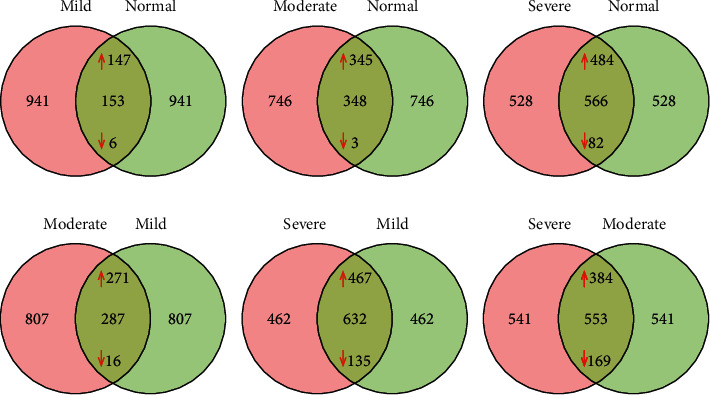
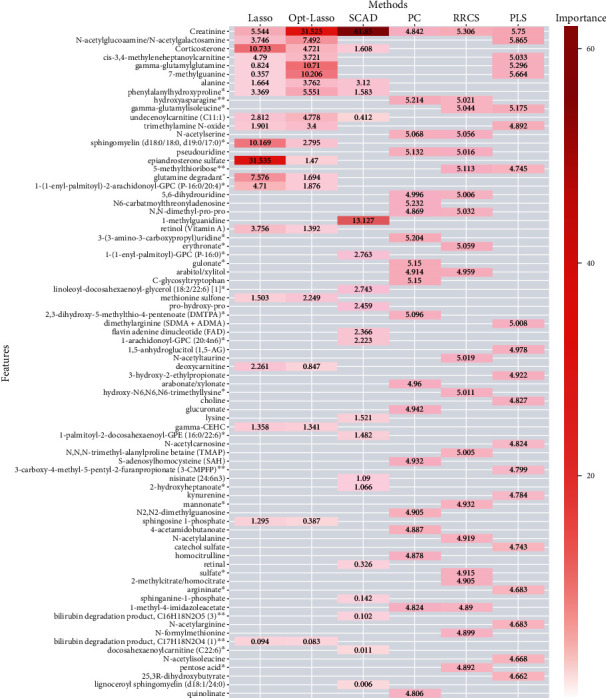
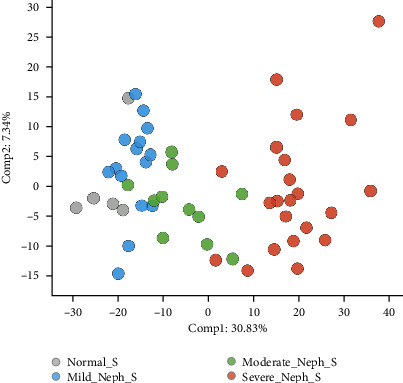
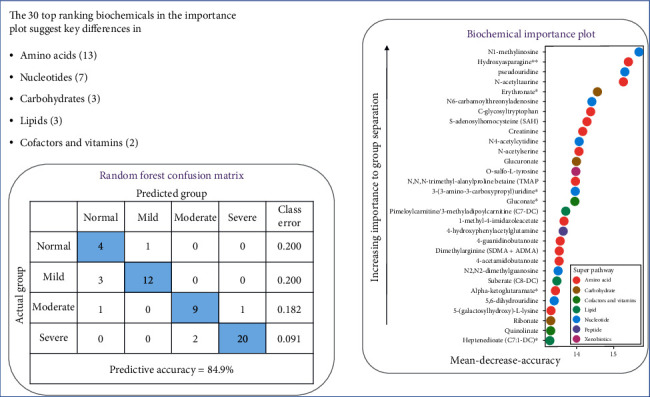
From a large number of metabolomics-derived metabolites, the top 30 metabolites correlated to increasing renal insufficiency according to mGFR were selected by the random forest method. Significant differences in metabolite profiles with increasing stages of CKD were observed. Combining candidate lists from six other unique statistical analyses, six novel, potential metabolites that were reproducibly strongly associated with mGFR were selected, including erythronate, gulonate, C-glycosyltryptophan, N-acetylserine, N6-carbamoylthreonyladenosine, and pseudouridine. In addition, hydroxyasparagine were strongly associated with mGFR and CKD, which were unique to this study.
Global metabolite profiling of serum yielded potentially valuable biomarkers of different stages of CKD. Additionally, these potential biomarkers might provide insight into the underlying pathophysiologic processes that contribute to the progression of CKD as well as improve GFR estimation.
慢性肾脏病(CKD)是一个全球性的公共卫生问题。鉴定新的生物标志物,可用于计算肾小球滤过率(GFR),将极大地改善 CKD 的分子水平的诊断和理解。来自肾小球滤过率差异很大的患者的血液样本的代谢组学研究可能会发现与不同肾脏功能相关的小分子代谢物。
使用超高效液相色谱-串联质谱法(UPLC-MS/MS),对 53 名参与者的血清进行分析,这些参与者的 GFR(通过碘海醇血浆清除率测量)范围从正常到严重肾功能不全。在 Calibra-Metabolon 联合实验室进行了非靶向代谢组学检测(N ¼ 214)。
通过随机森林方法,从大量代谢组学衍生的代谢物中,选择了前 30 个与 mGFR 呈正相关的代谢物。观察到随着 CKD 阶段的增加,代谢物谱存在显著差异。结合来自其他六个独特统计分析的候选列表,选择了六个新的、潜在的与 mGFR 强相关的候选代谢物,包括赤藓糖、古洛糖、C-糖基色氨酸、N-乙酰丝氨酸、N6-碳氨酰基苏氨酸腺苷和假尿嘧啶。此外,羟基天冬酰胺与 mGFR 和 CKD 强烈相关,这是本研究特有的。
血清的全局代谢物分析产生了 CKD 不同阶段的潜在有价值的生物标志物。此外,这些潜在的生物标志物可能为导致 CKD 进展的潜在病理生理过程提供深入了解,并改善 GFR 估计。