Chakrabarti Mrinmay, Bhattacharya Aniket, Gebere Mengistu G, Johnson John, Ayub Zeeshan A, Chatzistamou Ioulia, Vyavahare Narendra R, Azhar Mohamad
Department of Cell Biology and Anatomy, School of Medicine, University of South Carolina, Columbia, SC, United States.
Department of Neuroscience and Cell Biology, Child Health Institute of New Jersey Rutgers-Robert Wood Johnson Medical School, New Brunswick, NJ, United States.
Front Cardiovasc Med. 2022 Jul 19;9:770065. doi: 10.3389/fcvm.2022.770065. eCollection 2022.
Calcific aortic valve disease (CAVD) is a progressive heart disease that is particularly prevalent in elderly patients. The current treatment of CAVD is surgical valve replacement, but this is not a permanent solution, and it is very challenging for elderly patients. Thus, a pharmacological intervention for CAVD may be beneficial. In this study, we intended to rescue aortic valve (AV) calcification through inhibition of TGFβ1 and SMAD3 signaling pathways.
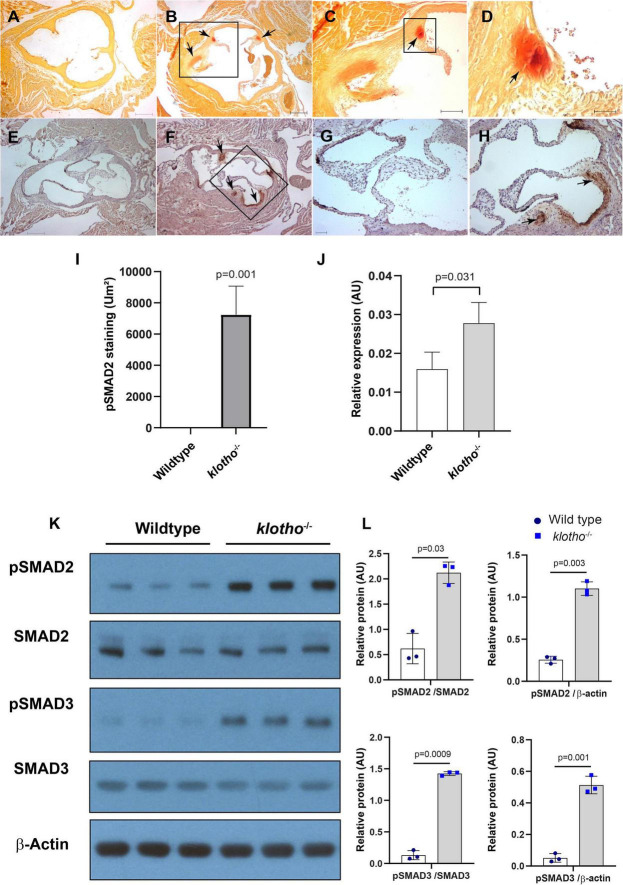
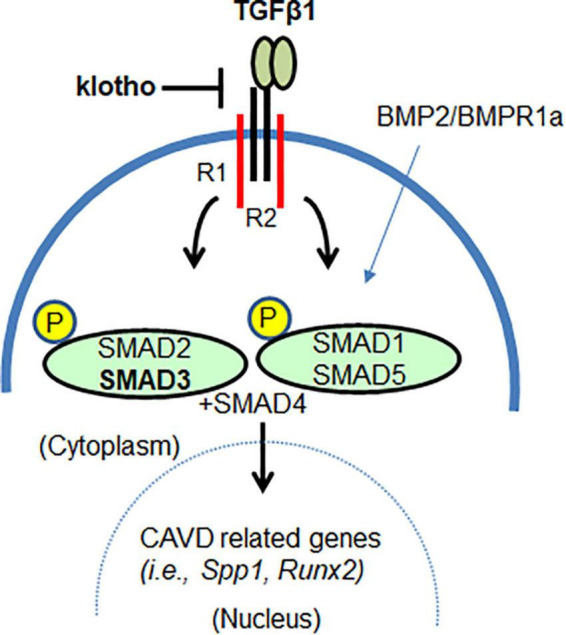
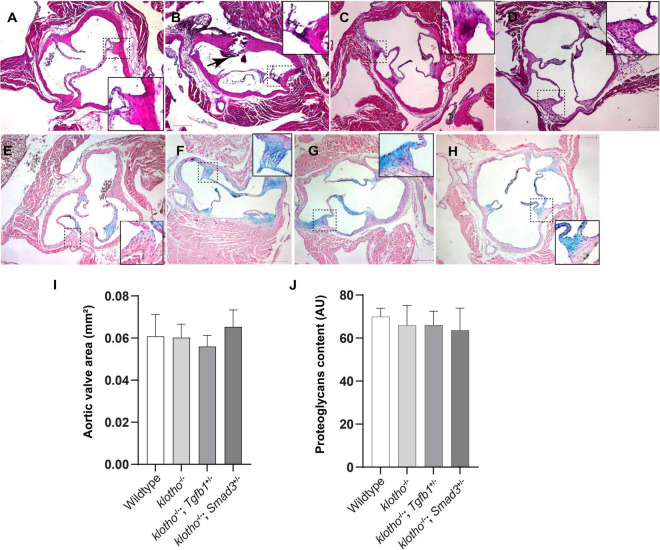
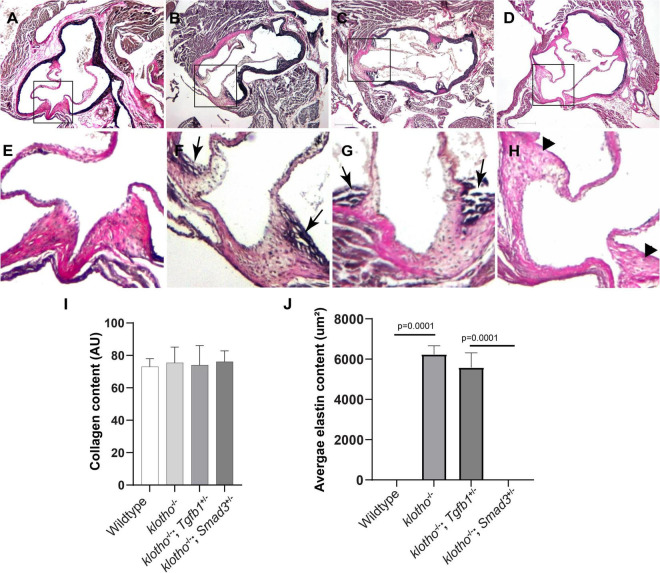
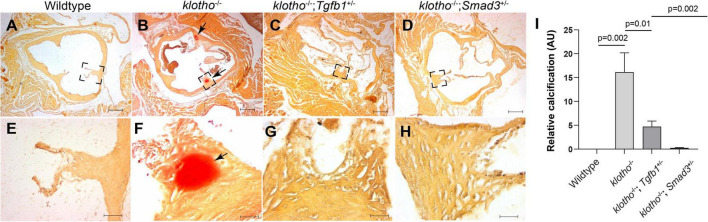
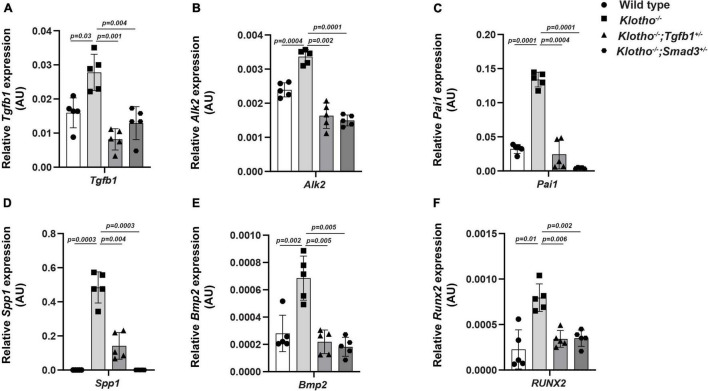
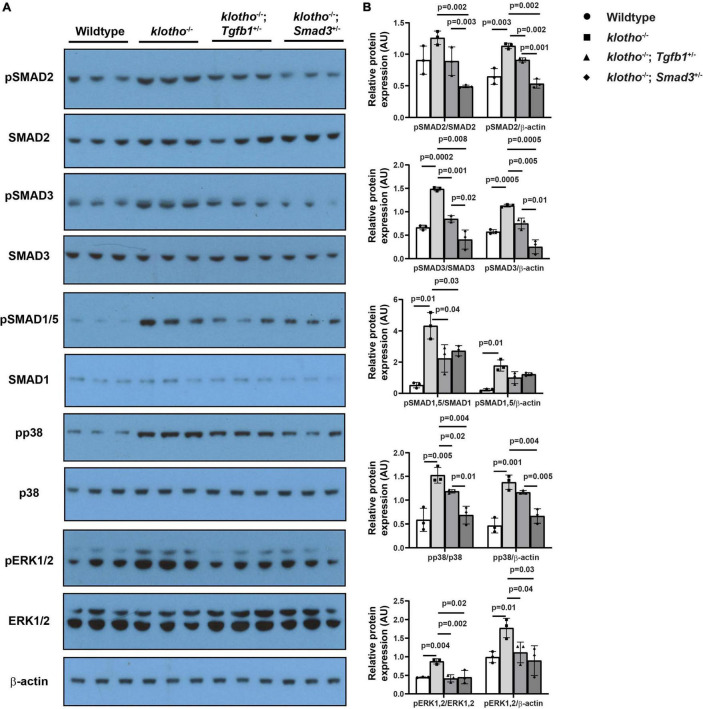
The gene, which was discovered as an aging-suppressor gene, has been observed to play a crucial role in AV calcification. The knockout ( ) mice have shorter life span (8-12 weeks) and develop severe AV calcification. Here, we showed that increased TGFβ1 and TGFβ-dependent SMAD3 signaling were associated with AV calcification in mice. Next, we generated - and -haploinsufficient mice to determine the contribution of TGFβ1 and SMAD3 to the AV calcification in mice. The histological and morphometric evaluation suggested a significant reduction of AV calcification in ; mice compared to mice. heterozygous deletion was observed to be more potent in reducing AV calcification in mice compared to the ; mice. We observed significant inhibition of , , , , and mRNA expression in ; and ; mice compared to mice. Western blot analysis confirmed that the inhibition of TGFβ canonical and non-canonical signaling pathways were associated with the rescue of AV calcification of both ; and ; mice.
Overall, inhibition of the TGFβ1-dependent SMAD3 signaling pathway significantly blocks the development of AV calcification in mice. This information is useful in understanding the signaling mechanisms involved in CAVD.
钙化性主动脉瓣疾病(CAVD)是一种进行性心脏病,在老年患者中尤为普遍。CAVD目前的治疗方法是外科瓣膜置换,但这并非永久性解决方案,且对老年患者极具挑战性。因此,针对CAVD的药物干预可能有益。在本研究中,我们旨在通过抑制TGFβ1和SMAD3信号通路来挽救主动脉瓣(AV)钙化。
该基因作为一种衰老抑制基因被发现,已观察到其在AV钙化中起关键作用。该基因敲除( )小鼠寿命较短(8 - 12周),并发生严重的AV钙化。在此,我们表明TGFβ1和TGFβ依赖性SMAD3信号增加与 小鼠的AV钙化相关。接下来,我们生成了 - 和 -单倍不足 小鼠,以确定TGFβ1和SMAD3对 小鼠AV钙化的作用。组织学和形态学评估表明,与 小鼠相比, ; 小鼠的AV钙化显著减少。与 ; 小鼠相比,观察到 杂合缺失在减少 小鼠AV钙化方面更有效。与 小鼠相比,我们在 ; 和 ; 小鼠中观察到 、 、 、 和 基因表达的显著抑制。蛋白质印迹分析证实,TGFβ经典和非经典信号通路的抑制与 ; 和 ; 小鼠AV钙化的挽救相关。
总体而言,抑制TGFβ1依赖性SMAD3信号通路可显著阻断 小鼠AV钙化的发展。该信息有助于理解CAVD中涉及的信号机制。