Dugan Patricia, Carroll Elizabeth, Thorpe Jennifer, Jette Nathalie, Agarwal Parul, Ashby Samantha, Hanna Jane, French Jacqueline, Devinsky Orrin, Sen Arjune
Department of Neurology, NYU Grossman School of Medicine, New York, USA.
SUDEP Action, Wantage.
Epilepsia Open. 2022 Aug 5;7(4):645-56. doi: 10.1002/epi4.12637.
As part of the COVID-19 and Epilepsy (COV-E) global study, we aimed to understand the impact of COVID-19 on the medical care and well-being of people with epilepsy (PWE) in the United States, based on their perspectives and those of their caregivers.
Separate surveys designed for PWE and their caregivers were circulated from April 2020 to July 2021; modifications in March 2021 included a question about COVID-19 vaccination status.
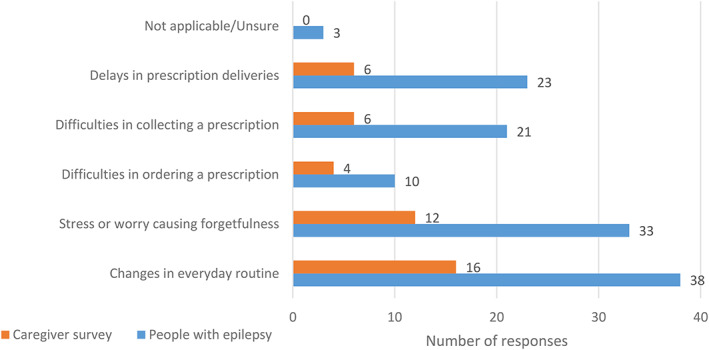
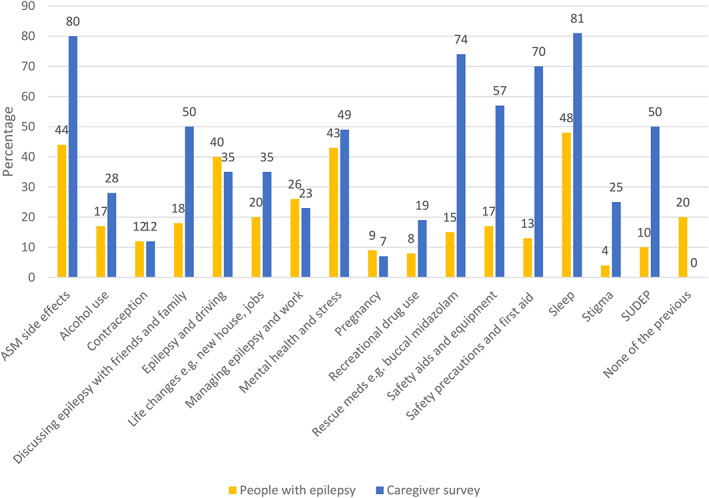
We received 788 responses, 71% from PWE (n = 559) and 29% (n=229) from caregivers of persons with epilepsy. A third (n = 308) of respondents reported a change in their health or in the health of the person they care for. Twenty-seven percent (n = 210) reported issues related to worsening mental health. Of respondents taking ASMs (n = 769), 10% (n= 78) reported difficulty taking medications on time, mostly due to stress causing forgetfulness. Less than half of respondents received counseling on mental health and stress. Less than half of the PWE reported having discussions with their healthcare providers about sleep, ASMs and potential side effects, while a larger proportion of caregivers (81%) reported having had discussions with their healthcare providers on the same topics. More PWE and caregivers reported that COVID-19 related measures caused adverse impact on their health in the post-vaccine period than during the pre-vaccine period, citing mental health issues as the primary reason.
Our findings indicate that the impact of the COVID-19 pandemic in the US on PWE is multifaceted. Apart from the increased risk of poor COVID-19 outcomes, the pandemic has also had negative effects on mental health and self-management. Healthcare providers must be vigilant for increased emotional distress in PWE during the pandemic and consider the importance of effective counseling to diminish risks related to exacerbated treatment gaps.
作为新冠疫情与癫痫(COV-E)全球研究的一部分,我们旨在基于癫痫患者(PWE)及其护理人员的观点,了解新冠疫情对美国癫痫患者医疗护理和福祉的影响。
针对癫痫患者及其护理人员设计的单独调查问卷于2020年4月至2021年7月分发;2021年3月的修改内容包括一个关于新冠疫苗接种状况的问题。
我们收到了788份回复,其中71%来自癫痫患者(n = 559),29%(n = 229)来自癫痫患者的护理人员。三分之一(n = 308)的受访者报告其自身健康或其所照顾者的健康发生了变化。27%(n = 210)的受访者报告了与心理健康恶化相关的问题。在服用抗癫痫药物(ASM)的受访者(n = 769)中,10%(n = 78)报告按时服药有困难,主要原因是压力导致健忘。不到一半的受访者接受了心理健康和压力方面的咨询。不到一半的癫痫患者报告与他们的医疗服务提供者讨论过睡眠、抗癫痫药物和潜在副作用,而更大比例的护理人员(81%)报告与他们的医疗服务提供者就相同主题进行过讨论。更多的癫痫患者和护理人员报告称,与新冠疫情相关的措施在疫苗接种后时期对他们健康的不利影响比疫苗接种前时期更大,心理健康问题被视为主要原因。
我们的研究结果表明,美国新冠疫情对癫痫患者的影响是多方面的。除了新冠疫情不良后果风险增加外,疫情还对心理健康和自我管理产生了负面影响。医疗服务提供者在疫情期间必须警惕癫痫患者情绪困扰的增加,并考虑有效咨询的重要性,以降低与治疗差距加剧相关的风险。