Assenza Giovanni, Lanzone Jacopo, Brigo Francesco, Coppola Antonietta, Di Gennaro Giancarlo, Di Lazzaro Vincenzo, Ricci Lorenzo, Romigi Andrea, Tombini Mario, Mecarelli Oriano
Unit of Neurology, Neurophysiology, Neurobiology, Department of Medicine, University Campus Bio-Medico of Rome, Rome, Italy.
Division of Neurology, "Franz Tappeiner" Hospital, Merano, Italy.
Front Neurol. 2020 Jul 3;11:737. doi: 10.3389/fneur.2020.00737. eCollection 2020.
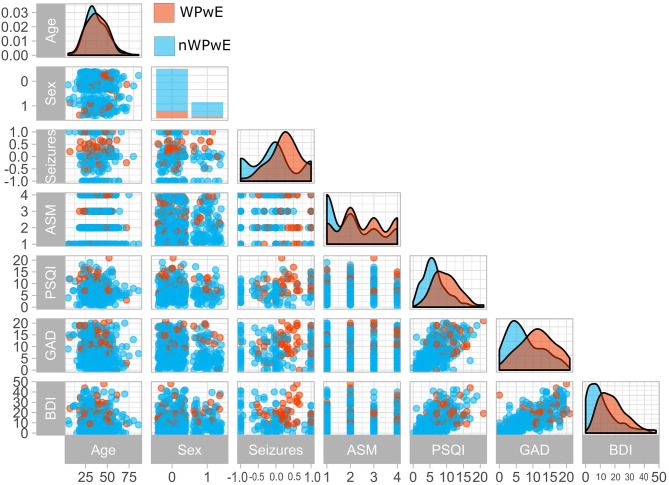
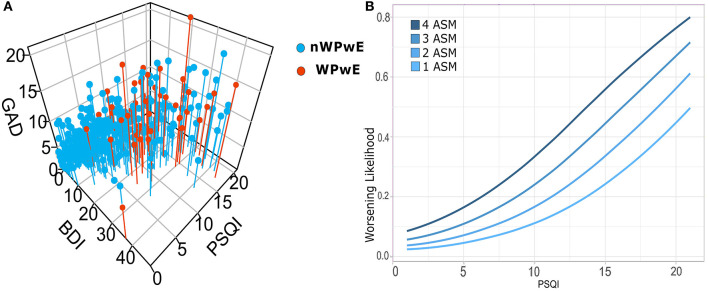
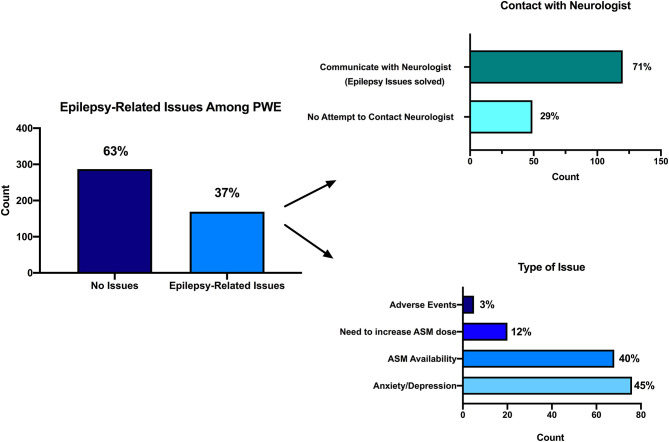
In early 2020, Italy struggled with an unprecedented health emergency related to the COVID-19 pandemic. Medical care of chronic neurological diseases, such as epilepsy, is being sorely neglected. In this national survey, we aimed at understanding the impact of COVID-19 lockdown on the care of people with epilepsy (PwE) and identifying PwE risk factors for seizure worsening to direct telemedicine efforts. We administered a 48-items online survey (published on April 11, 2020) including socio-demographic, epilepsy-related, and psychometric variables (BDI-II for depression, GAD-7 for anxiety, and PSQI for sleep) to PwE and people without epilepsy (PwoE). Regression analysis identified predictors of seizure worsening. We collected responses from 456 PwE (344 females) and 472 PwoE (347 females). Outpatient examinations of PwE were postponed in 95% of cases. One-third of PwE complained of issues with epilepsy management, but only 71% of them reached the treating physician and solved their problems. PwE had worse depressive and anxiety symptoms (higher BDI-II and GAD-7 scores; < 0.001) than PwoE. Sleep quality was equally compromised in both groups (47 and 42%). Sixty-seven PwE (18%) reported seizure worsening, which was best explained by the number of anti-seizure medications (ASM) of chronic therapy and the severity of sleep disorder. During the current COVID-19 pandemic, a significant percentage of PwE experienced difficulties in follow-up and a seizure number increase, in particular those chronically taking more ASMs and with poor sleep quality. This dramatic experience outlines the urgent need for validation and implementation of telemedicine services for epileptic patients in order to provide regular follow-up.
2020年初,意大利与新冠肺炎疫情引发的前所未有的健康紧急状况作斗争。癫痫等慢性神经疾病的医疗护理被严重忽视。在这项全国性调查中,我们旨在了解新冠肺炎疫情封锁对癫痫患者护理的影响,并确定癫痫发作恶化的癫痫患者风险因素,以指导远程医疗工作。我们对癫痫患者和非癫痫患者进行了一项包含48个条目的在线调查(于2020年4月11日发布),调查内容包括社会人口统计学、癫痫相关以及心理测量学变量(用于评估抑郁的贝克抑郁量表第二版、用于评估焦虑的广泛性焦虑障碍量表以及用于评估睡眠的匹兹堡睡眠质量指数)。回归分析确定了癫痫发作恶化的预测因素。我们收集了456名癫痫患者(344名女性)和472名非癫痫患者(347名女性)的回复。95%的癫痫患者门诊检查被推迟。三分之一的癫痫患者抱怨癫痫管理存在问题,但其中只有71%的患者联系了主治医生并解决了问题。癫痫患者的抑郁和焦虑症状比非癫痫患者更严重(贝克抑郁量表第二版和广泛性焦虑障碍量表得分更高;<0.001)。两组的睡眠质量均受到同等程度的影响(分别为47%和42%)。67名癫痫患者(18%)报告癫痫发作恶化,这可以通过长期治疗中抗癫痫药物的数量和睡眠障碍的严重程度得到最好的解释。在当前的新冠肺炎疫情期间,相当一部分癫痫患者在随访中遇到困难,癫痫发作次数增加,尤其是那些长期服用更多抗癫痫药物且睡眠质量差的患者。这一严峻情况凸显了迫切需要对癫痫患者远程医疗服务进行验证和实施,以便提供定期随访。