School of Public Health, Soochow University, Suzhou, 215123, Jiangsu, China.
State Key Laboratory of Radiation Medicine and Protection, Collaborative Innovation Center of Radiological Medicine of Jiangsu Higher Education Institutions, School for Radiological and Interdisciplinary Sciences (RAD-X), Soochow University, Suzhou, 215123, Jiangsu, China.
Part Fibre Toxicol. 2022 Aug 6;19(1):55. doi: 10.1186/s12989-022-00492-9.
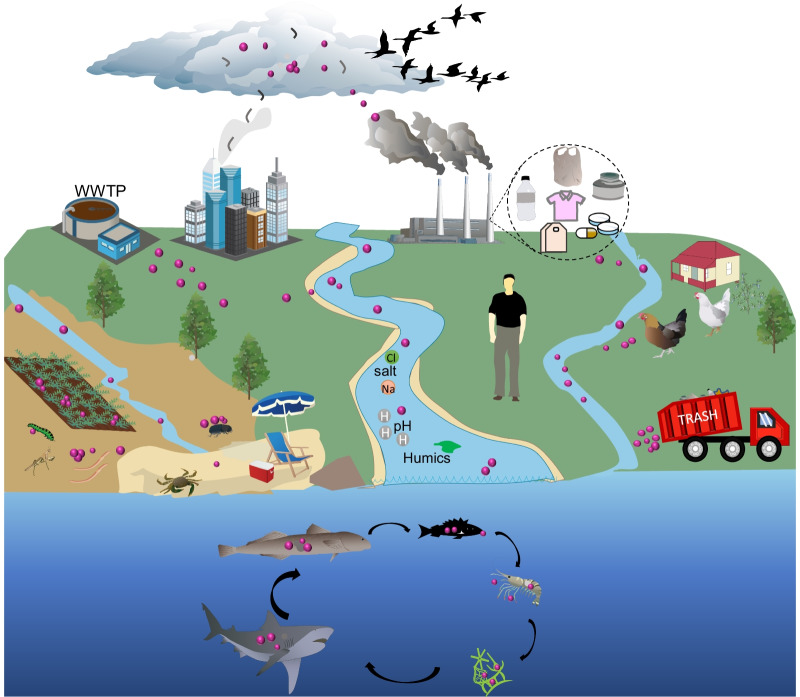
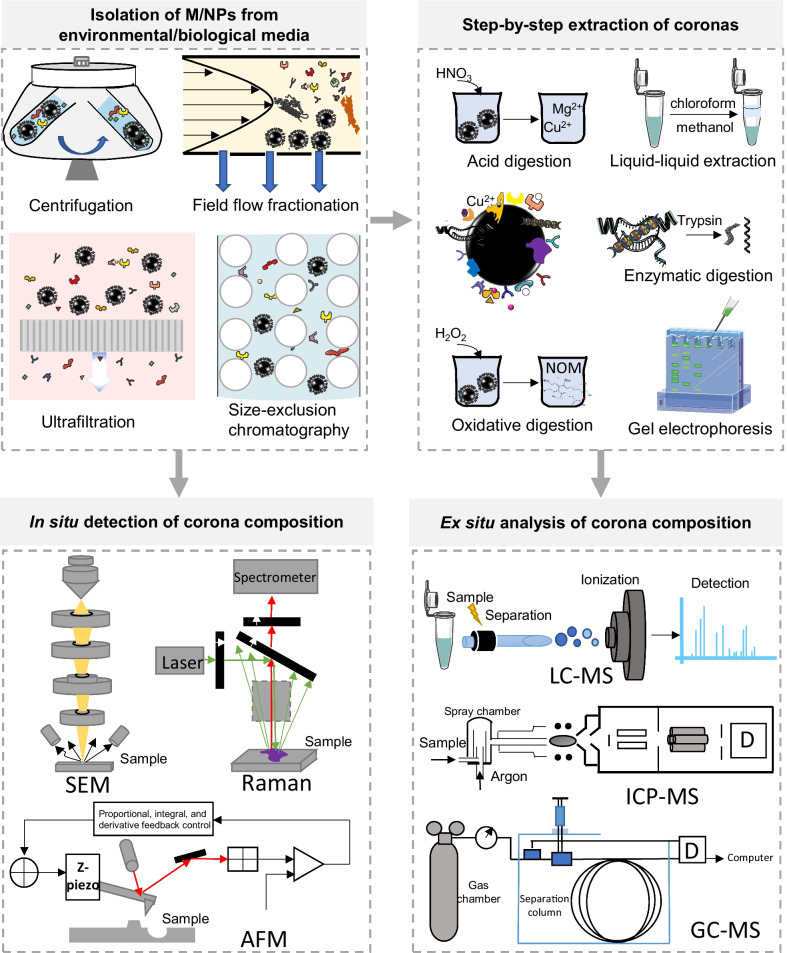
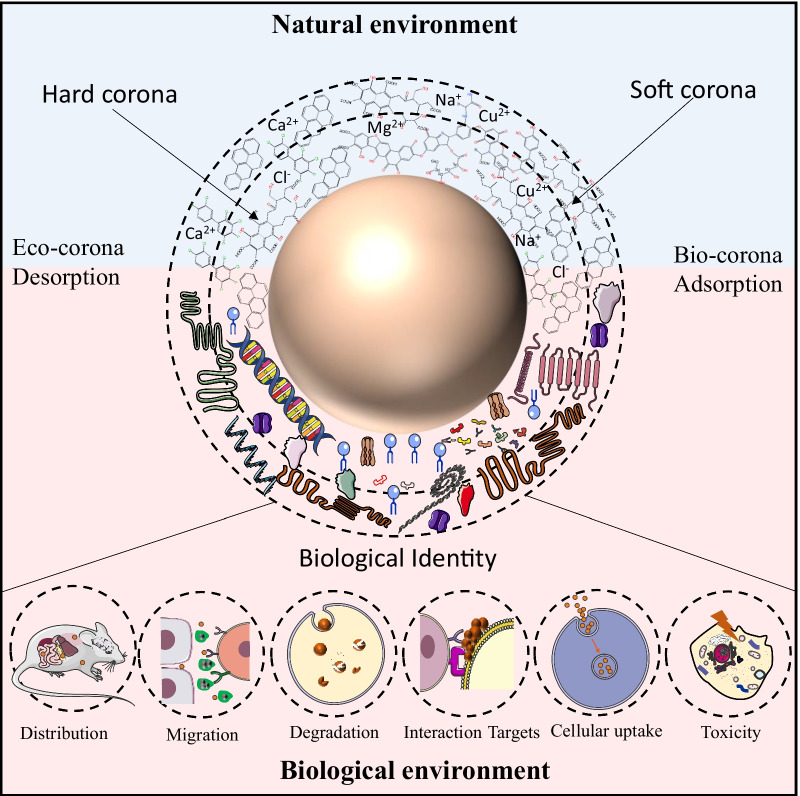
As an emerging pollutant in the life cycle of plastic products, micro/nanoplastics (M/NPs) are increasingly being released into the natural environment. Substantial concerns have been raised regarding the environmental and health impacts of M/NPs. Although diverse M/NPs have been detected in natural environment, most of them display two similar features, i.e.,high surface area and strong binding affinity, which enable extensive interactions between M/NPs and surrounding substances. This results in the formation of coronas, including eco-coronas and bio-coronas, on the plastic surface in different media. In real exposure scenarios, corona formation on M/NPs is inevitable and often displays variable and complex structures. The surface coronas have been found to impact the transportation, uptake, distribution, biotransformation and toxicity of particulates. Different from conventional toxins, packages on M/NPs rather than bare particles are more dangerous. We, therefore, recommend seriously consideration of the role of surface coronas in safety assessments. This review summarizes recent progress on the eco-coronas and bio-coronas of M/NPs, and further discusses the analytical methods to interpret corona structures, highlights the impacts of the corona on toxicity and provides future perspectives.
作为塑料产品生命周期中的一种新兴污染物,微/纳米塑料(M/NPs)正越来越多地被释放到自然环境中。人们对 M/NPs 的环境和健康影响表示了极大的关注。尽管在自然环境中已经检测到了多种 M/NPs,但它们大多数都表现出两个相似的特征,即高比表面积和强结合亲和力,这使得 M/NPs 与周围物质之间能够进行广泛的相互作用。这导致在不同介质中,塑料表面形成了包括生态冠和生物冠在内的冠状结构。在实际暴露场景中,M/NPs 上的冠状结构形成是不可避免的,并且通常表现出可变和复杂的结构。已经发现表面冠状结构会影响颗粒物的迁移、吸收、分布、生物转化和毒性。与传统毒素不同,M/NPs 上的包裹物而不是裸露的颗粒更危险。因此,我们建议在安全评估中认真考虑表面冠状结构的作用。本综述总结了 M/NPs 的生态冠和生物冠的最新进展,并进一步讨论了解释冠状结构的分析方法,强调了冠状结构对毒性的影响,并提供了未来的展望。