Department of Obstetrics and Gynecology, Reproductive Medicine, Nanfang Hospital, Southern Medical University, Guangzhou, 510515, Guangdong, China.
Hainan Provincial Key Laboratory for Human Reproductive Medicine and Genetic Research, Hainan Provincial Clinical Research Center for Thalassemia, the Key Laboratory of Tropical Translational Medicine of Ministry of Education, Department of Reproductive Medicine, the First Affiliated Hospital of Hainan Medical University, Hainan Medical University, Haikou, 571101, Hainan, China.
J Exp Clin Cancer Res. 2022 Aug 8;41(1):238. doi: 10.1186/s13046-022-02448-5.
Epithelial ovarian cancer (EOC) is the leading cause of deaths among patients with gynecologic malignancies. In recent years, cancer stem cells (CSCs) have attracted great attention, which have been regarded as new biomarkers and targets in cancer diagnoses as well as therapies. However, therapeutic failure caused by chemotherapy resistance in late-stage EOC occurs frequently. The 5-year survival rate of patients with EOC remains at about 30%.
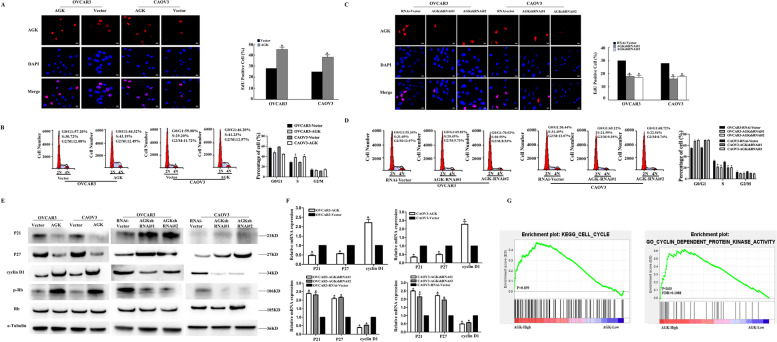
In this study, the expression of acylglycerol kinase (AGK) was analyzed among patients with EOC. The effect of AGK on EOC cell proliferation and tumorigenicity was studied using Western blotting, flow cytometry, EdU assay and in vivo xenotransplantation assays. Furthermore, AGK induced CSC-like properties and was resistant to cisplatin chemotherapy in the EOC cells, which were investigated through sphere formation assays and the in vivo model of chemoresistance. Finally, the relationship between AGK and RPL39 (Ribosomal protein L39) in mitochondria as well as their effect on the mitochondrial function was analyzed through methods including transmission electron microscopy, microarray, biotin identification and immunoprecipitation.
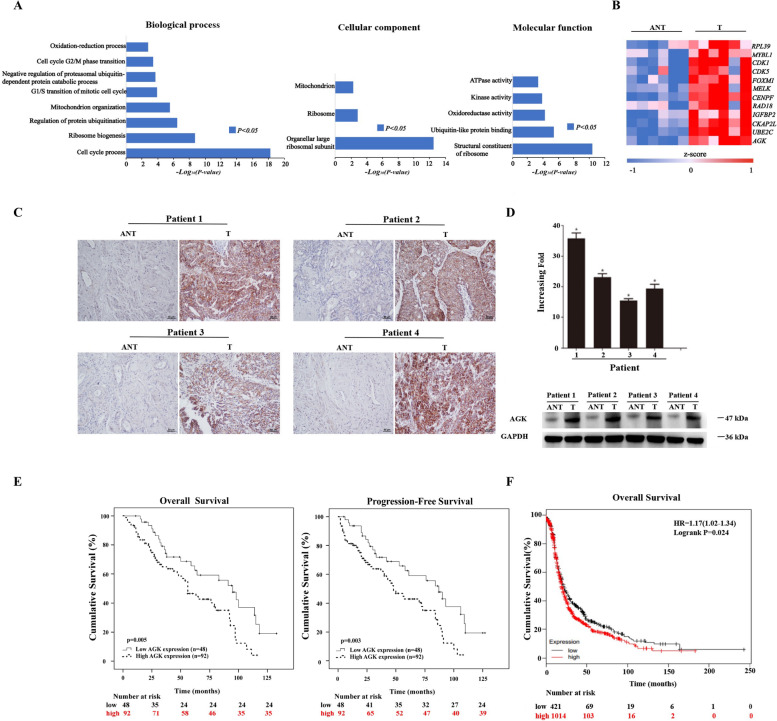
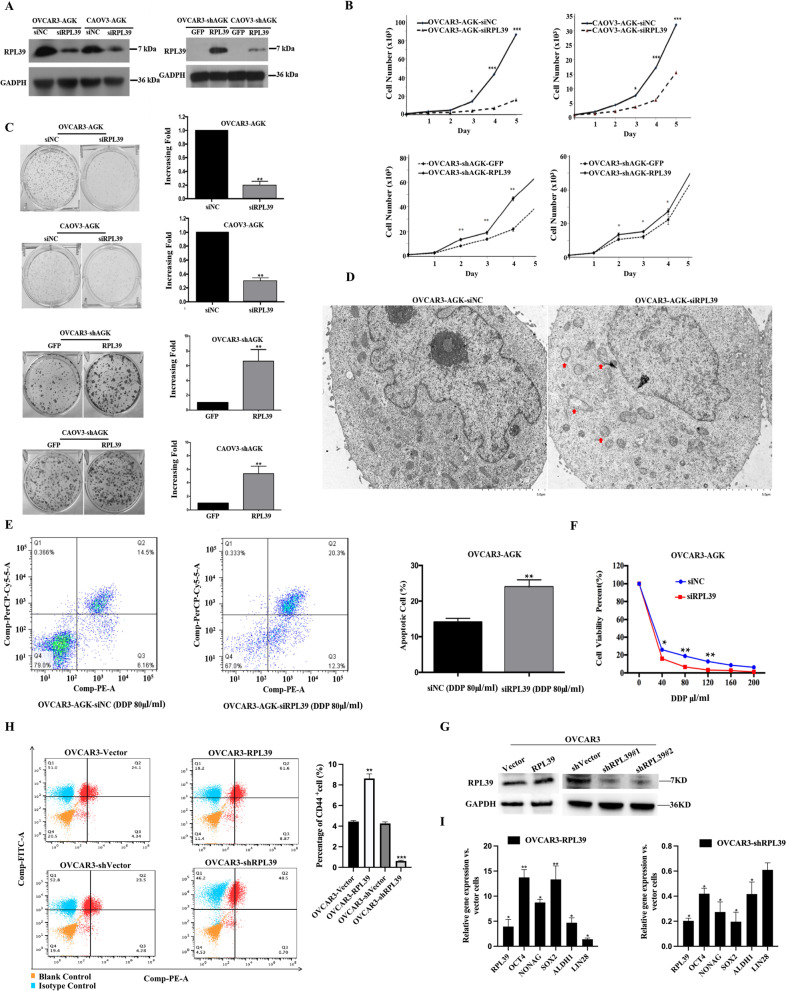
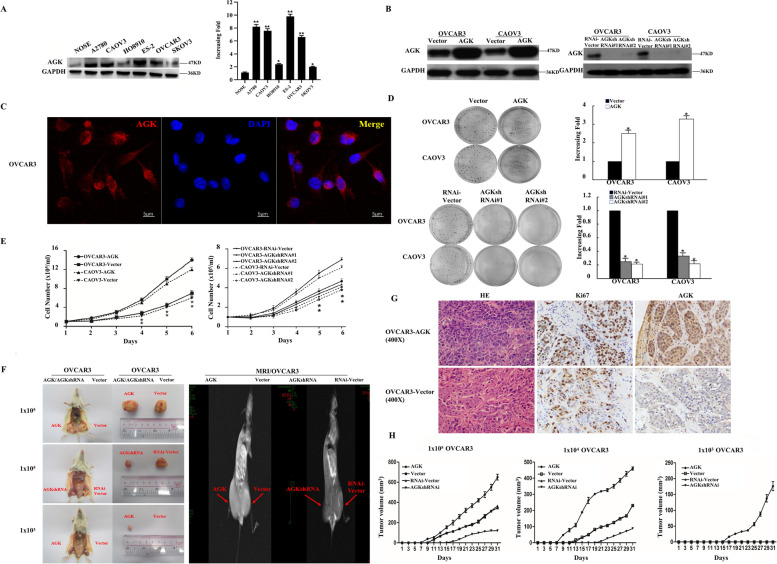
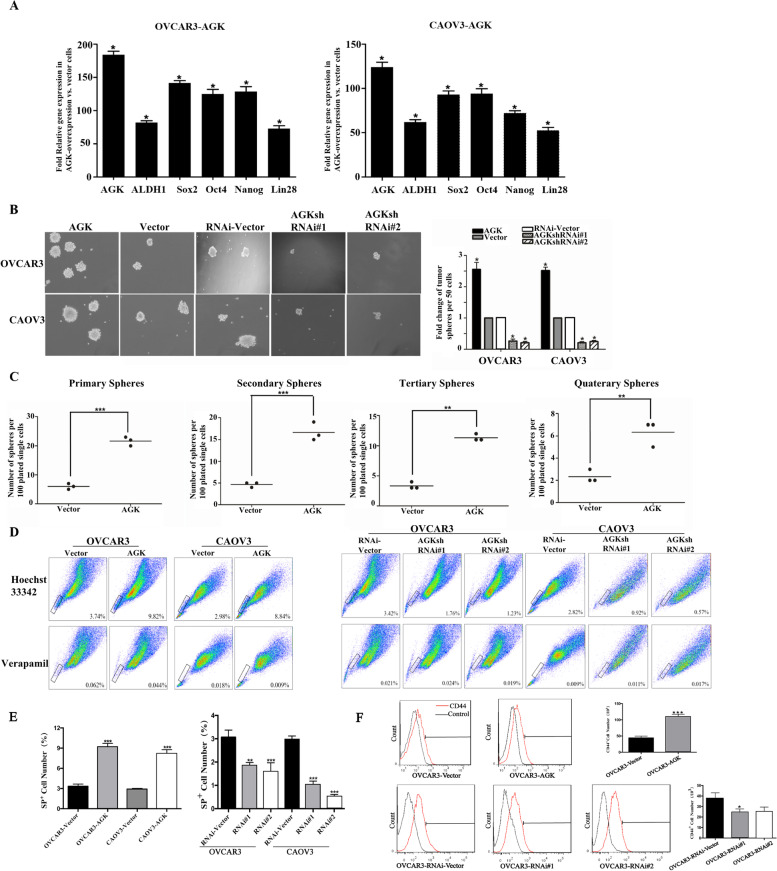
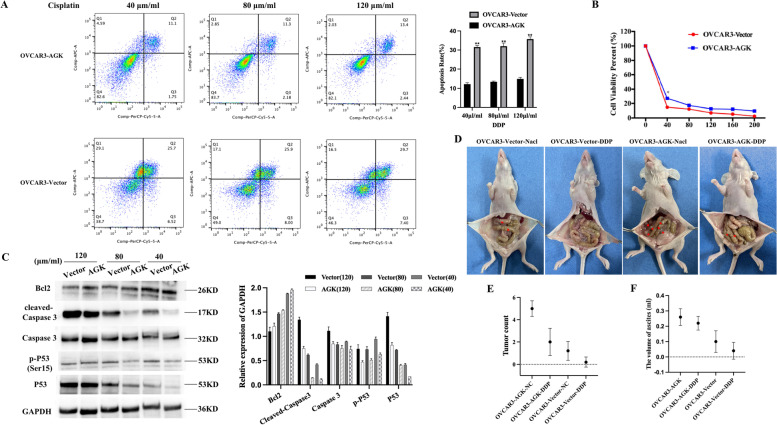
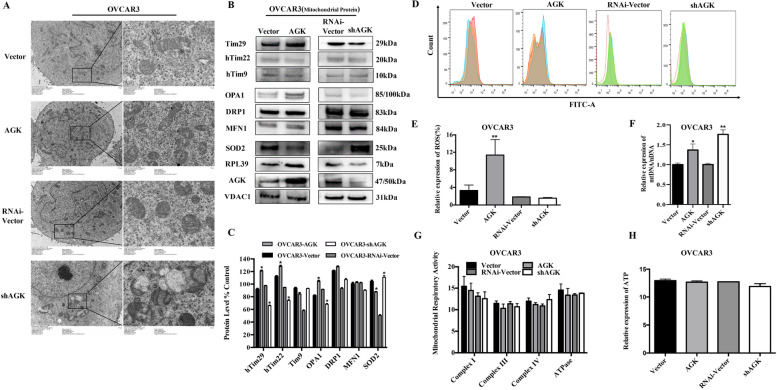
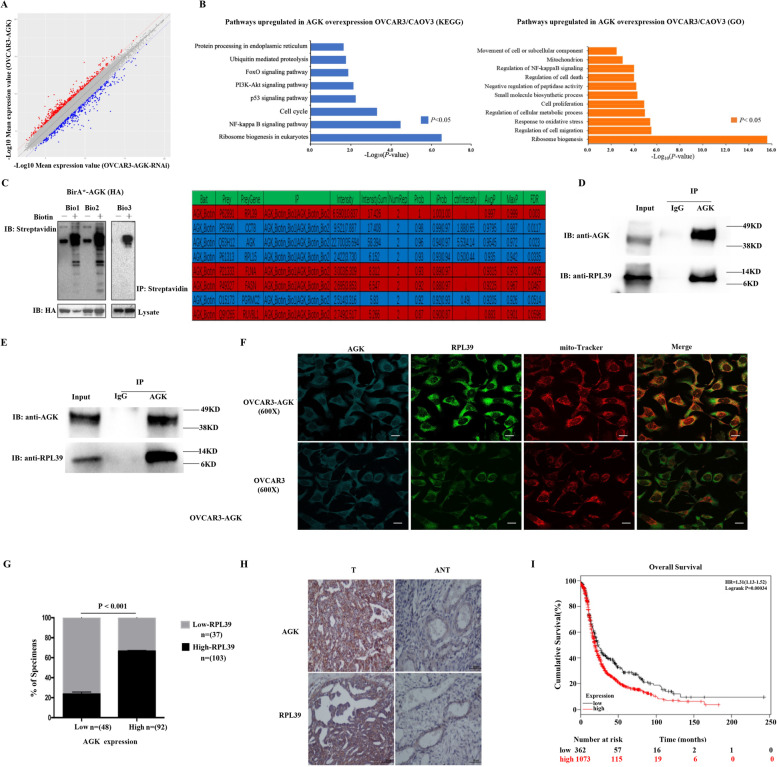
AGK showed a markedly upregulated expression in EOC, which was significantly associated with the poor survival of patients with EOC, the expression of AGK-promoted EOC cell proliferation and tumorigenicity. AGK also induced CSC-like properties in the EOC cells and was resistant to cisplatin chemotherapy. Furthermore, the results indicated that AGK not only maintained mitochondrial cristae morphogenesis, but also increased the production of reactive oxygen species and Δψm of EOC cells in a kinase-independent manner. Finally, our results revealed that AGK played its biological function by directly interacting with RPL39.
We demonstrated that AGK was a novel CSC biomarker for EOC, which the stemness of EOC was promoted and chemotherapy resistance was developed through physical as well as functional interaction with RPL39.
上皮性卵巢癌(EOC)是妇科恶性肿瘤患者死亡的主要原因。近年来,癌症干细胞(CSC)引起了广泛关注,它们被认为是癌症诊断和治疗的新生物标志物和靶点。然而,晚期 EOC 化疗耐药导致的治疗失败经常发生。EOC 患者的 5 年生存率仍保持在约 30%。
本研究分析了 EOC 患者中酰基甘油激酶(AGK)的表达。通过 Western blot、流式细胞术、EdU 检测和体内异种移植实验研究了 AGK 对 EOC 细胞增殖和致瘤性的影响。此外,通过球体形成实验和体内耐药模型研究了 AGK 诱导 EOC 细胞产生 CSC 样特性并对顺铂化疗产生耐药性的情况。最后,通过透射电镜、微阵列、生物素鉴定和免疫沉淀等方法分析了 AGK 与线粒体中 RPL39(核糖体蛋白 L39)的关系及其对线粒体功能的影响。
AGK 在 EOC 中表达明显上调,与 EOC 患者的不良生存显著相关,AGK 的表达促进了 EOC 细胞的增殖和致瘤性。AGK 还诱导了 EOC 细胞的 CSC 样特性,并对顺铂化疗产生耐药性。此外,结果表明,AGK 不仅以激酶非依赖性的方式维持 EOC 细胞线粒体嵴形态发生,还增加了活性氧和Δψm 的产生。最后,我们的结果表明,AGK 通过与 RPL39 直接相互作用发挥其生物学功能。
我们证实 AGK 是 EOC 的新型 CSC 标志物,通过与 RPL39 的物理和功能相互作用,促进了 EOC 的干细胞特性和化疗耐药性的发展。