Solanki Kundan, Rajpoot Sajjan, Kumar Ashutosh, J Zhang Kam Y, Ohishi Tomokazu, Hirani Nik, Wadhonkar Khandu, Patidar Pramod, Pan Qiuwei, Baig Mirza S
Department of Biosciences & Biomedical Engineering, Indian Institute of Technology Indore, Simrol, Indore, 453552, India.
Laboratory for Structural Bioinformatics, Center for Biosystems Dynamics Research, RIKEN, Tsurumi, Yokohama, Kanagawa, 230-0045, Japan.
Future Virol. 2022 Jul. doi: 10.2217/fvl-2022-0003. Epub 2022 Aug 2.
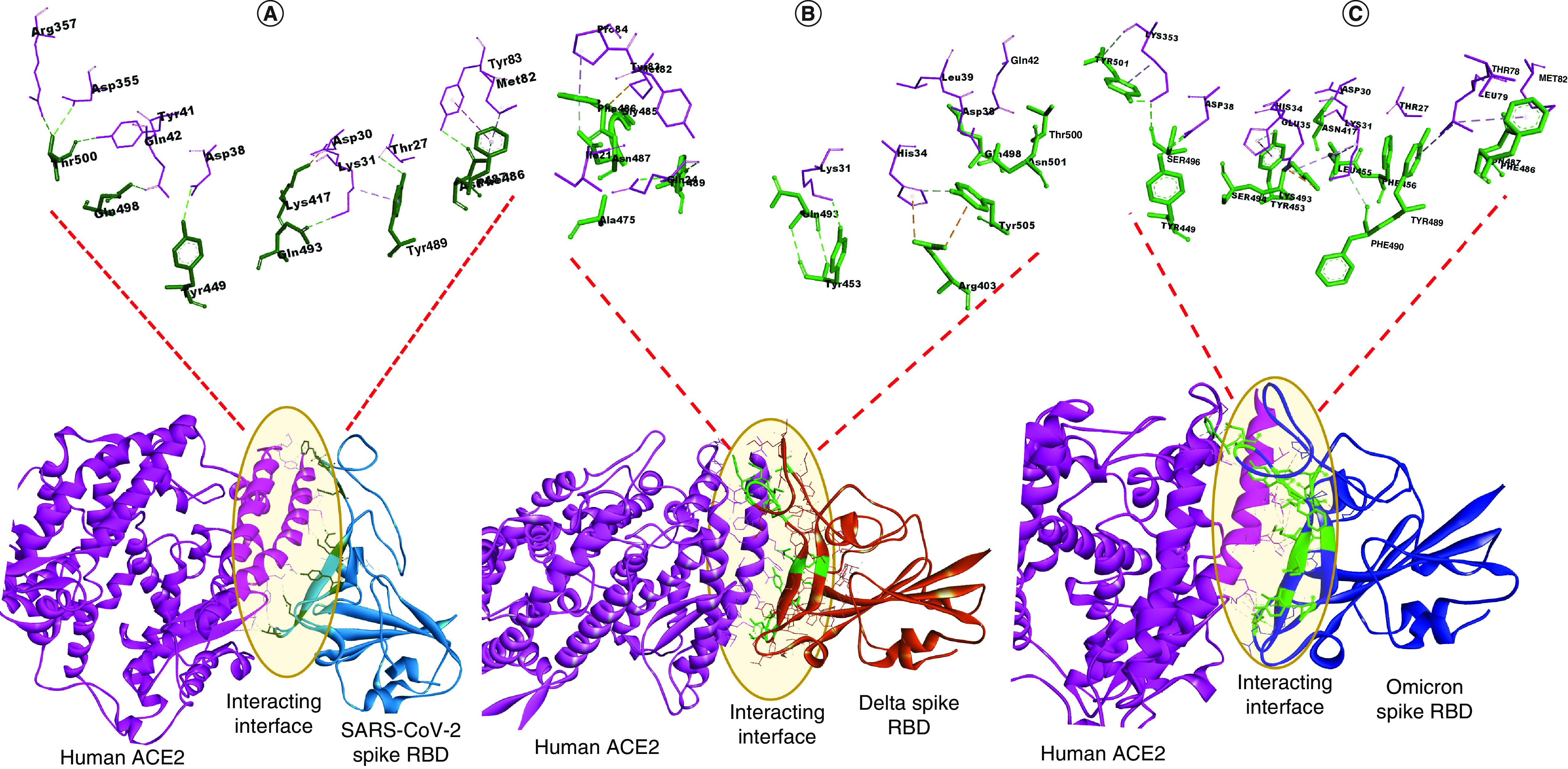
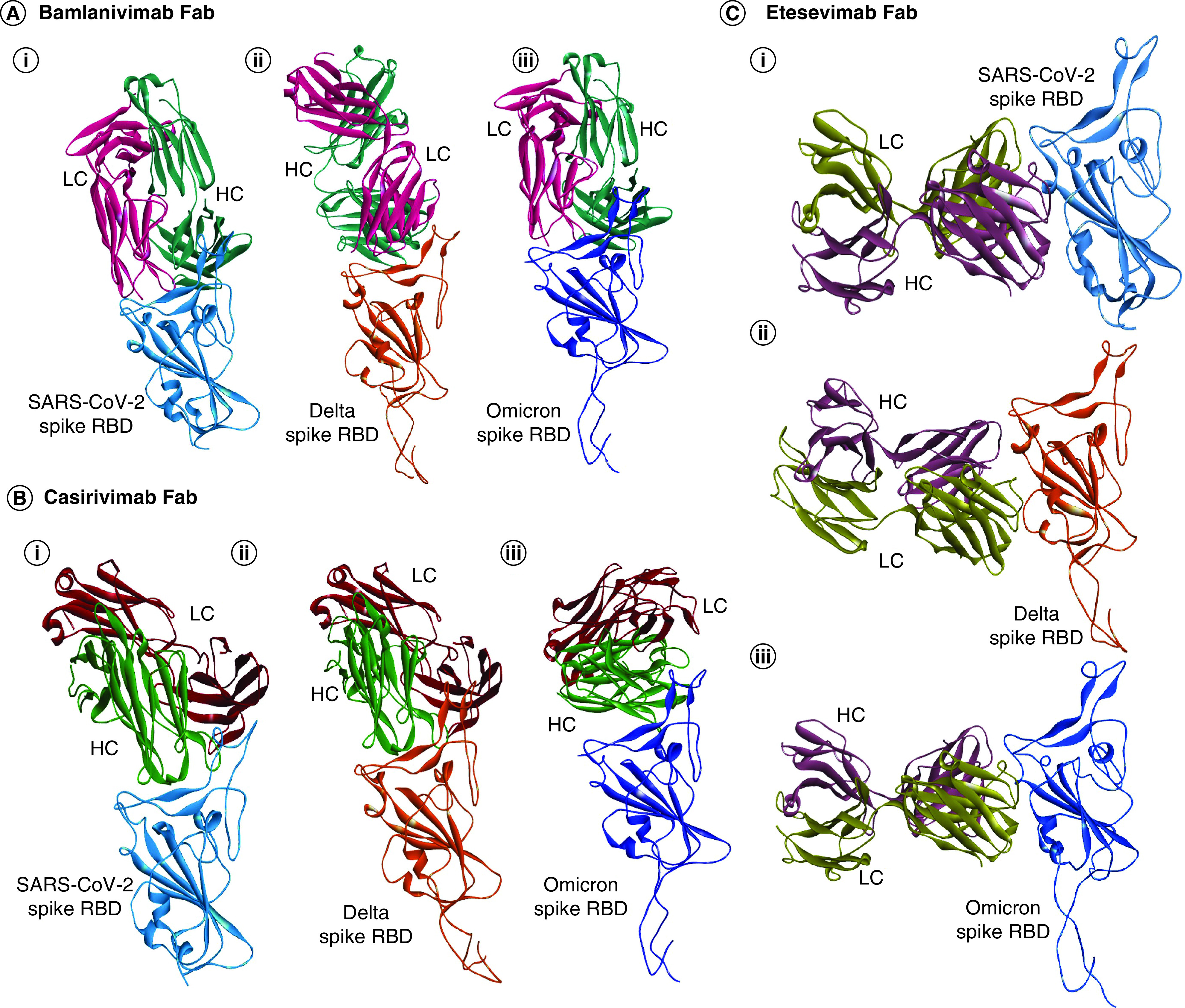
Mutations in the SARS-CoV-2 spike (S) protein have dramatically changed the transmissibility and pathogenicity of the virus. Therefore, we studied the binding affinity of Omicron spike-receptor binding domain (S-RBD) with human ACE2 receptor. We used pyDockWEB and HADDOCK 2.4 docking for our study. Computational docking indicated higher binding affinity of Omicron S-RBD as compared with wild-type SARS-CoV-2 and Delta S-RBD with ACE2. Interface analysis suggested four mutated residues of Omicron S-RBD for its enhanced binding. We also showed decreased binding affinity of Omicron and Delta S-RBDs with monoclonal antibodies. Compared with wild-type SARS-CoV-2, Omicron S-RBD exhibit higher binding with ACE2 and lower affinity against monoclonal antibodies.
严重急性呼吸综合征冠状病毒2(SARS-CoV-2)刺突(S)蛋白的突变极大地改变了病毒的传播性和致病性。因此,我们研究了奥密克戎刺突受体结合域(S-RBD)与人血管紧张素转换酶2(ACE2)受体的结合亲和力。我们使用pyDockWEB和HADDOCK 2.4对接进行研究。计算对接表明,与野生型SARS-CoV-2和德尔塔S-RBD与ACE2相比,奥密克戎S-RBD具有更高的结合亲和力。界面分析表明,奥密克戎S-RBD的四个突变残基增强了其结合能力。我们还表明,奥密克戎和德尔塔S-RBD与单克隆抗体的结合亲和力降低。与野生型SARS-CoV-2相比,奥密克戎S-RBD与ACE2的结合更高,与单克隆抗体的亲和力更低。