Philip Angelin M, Ahmed Wesam S, Biswas Kabir H
Division of Genomics and Translational Biomedicine, College of Health & Life Sciences, Hamad Bin Khalifa University, Qatar Foundation, Doha 34110, Qatar.
Division of Biological and Biomedical Sciences, College of Health & Life Sciences, Hamad Bin Khalifa University, Qatar Foundation, Doha 34110, Qatar.
Comput Struct Biotechnol J. 2023 Feb 13;21:1966-1977. doi: 10.1016/j.csbj.2023.02.019. eCollection 2023.
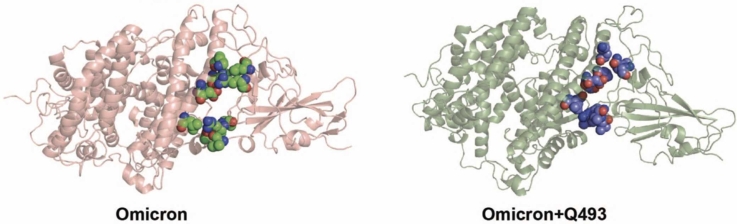
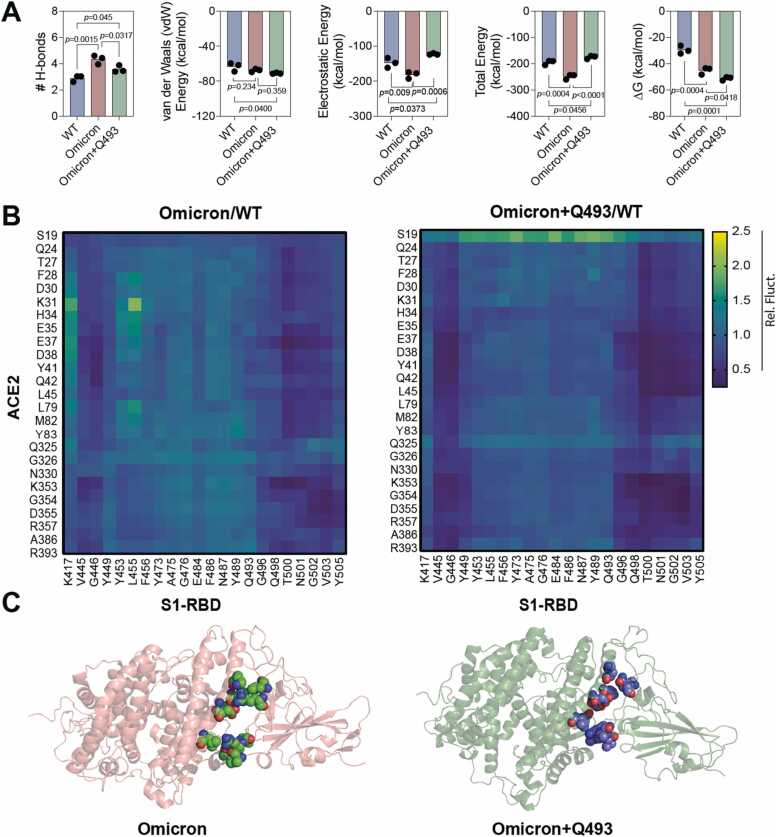
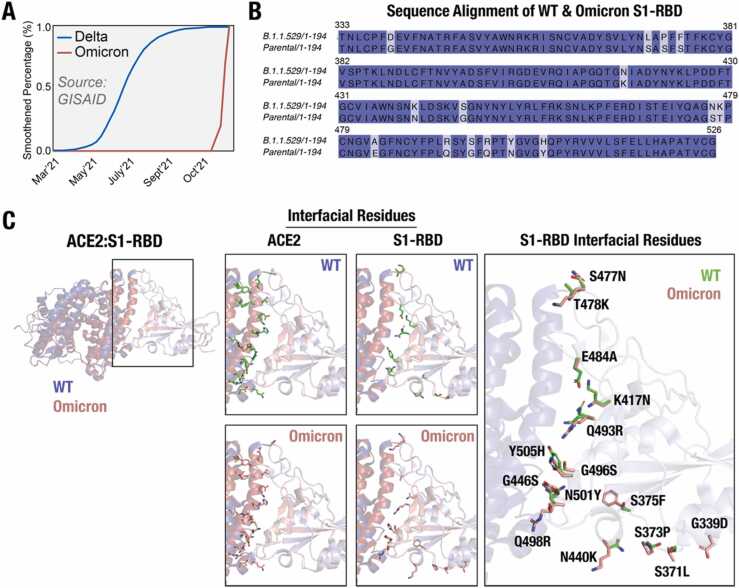
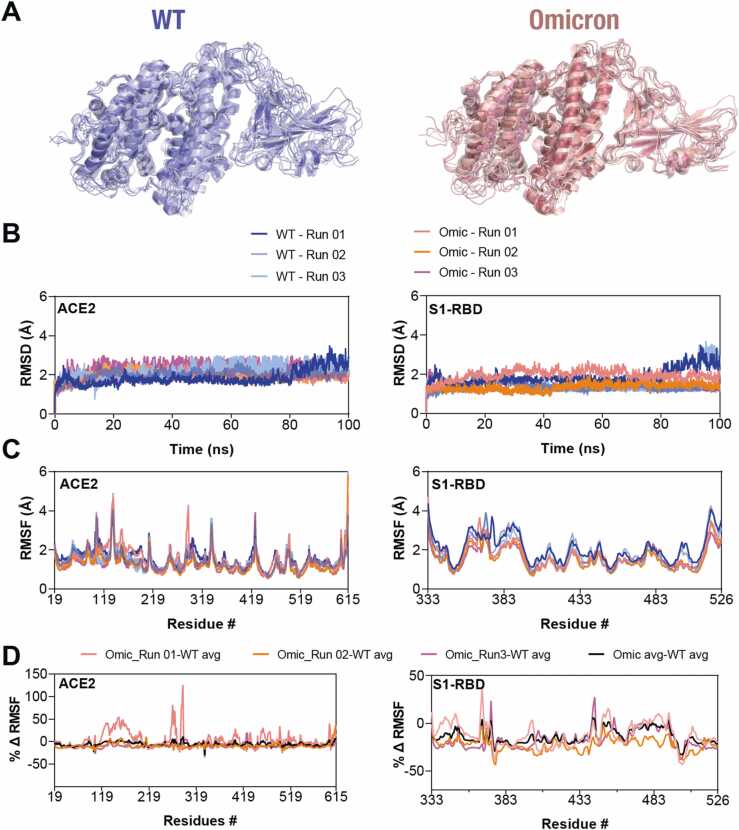
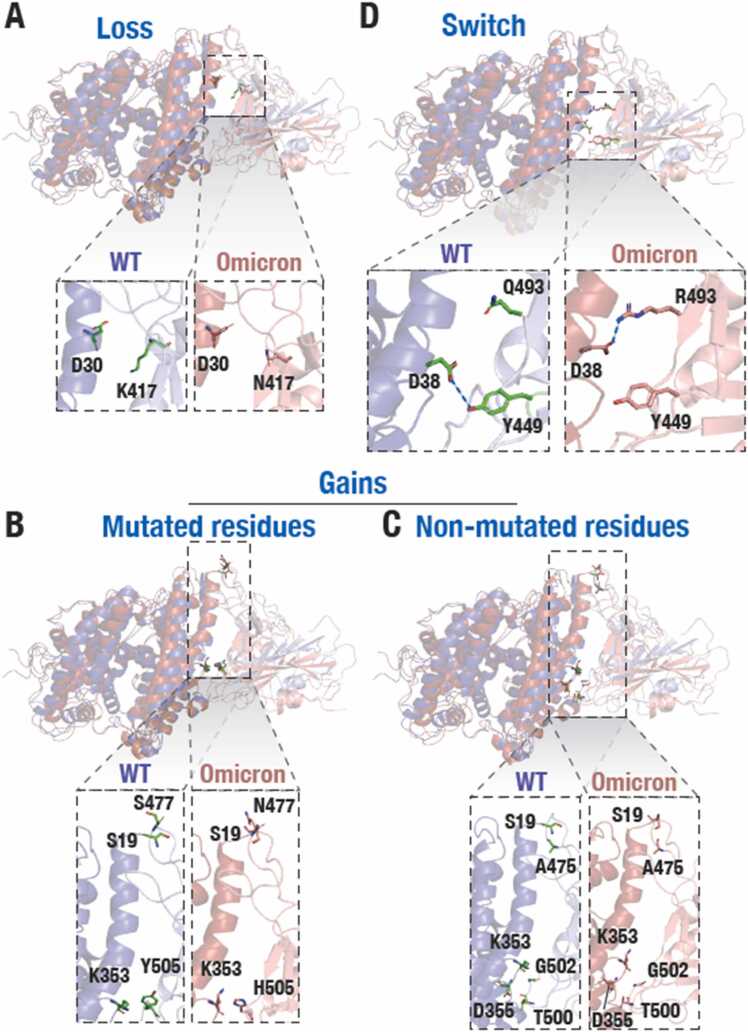
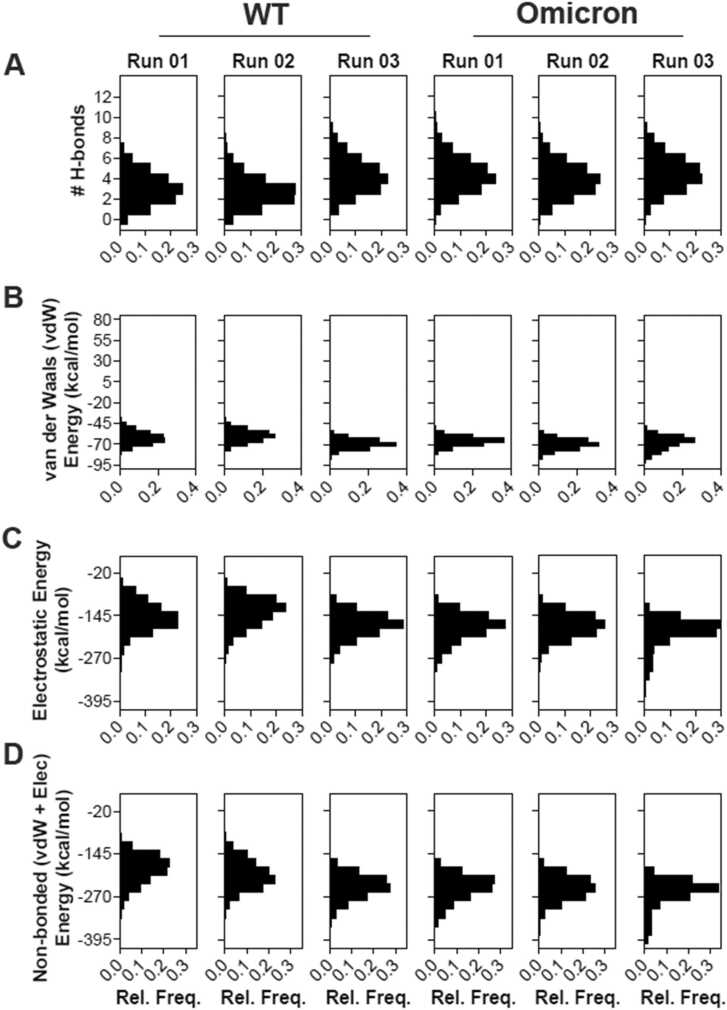
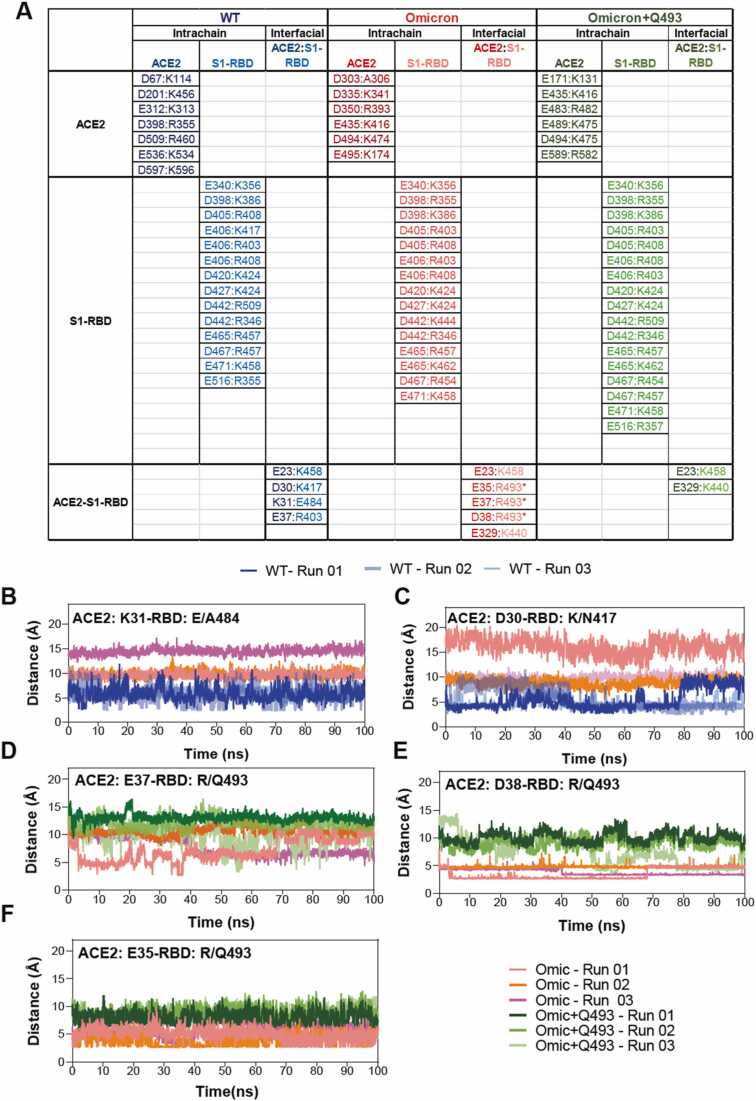
The SARS-CoV-2 Omicron variant containing 15 mutations, including the unique Q493R, in the spike protein receptor binding domain (S1-RBD) is highly infectious. While comparison with previously reported mutations provide some insights, the mechanism underlying the increased infections and the impact of the reversal of the unique Q493R mutation seen in BA.4, BA.5, BA.2.75, BQ.1 and XBB lineages is not yet completely understood. Here, using structural modelling and molecular dynamics (MD) simulations, we show that the Omicron mutations increases the affinity of S1-RBD for ACE2, and a reversal of the unique Q493R mutation further increases the ACE2-S1-RBD affinity. Specifically, we performed all atom, explicit solvent MD simulations using a modelled structure of the Omicron S1-RBD-ACE2 and compared the trajectories with the WT complex revealing a substantial reduction in the Cα-atom fluctuation in the Omicron S1-RBD and increased hydrogen bond and other interactions. Residue level analysis revealed an alteration in the interaction between several residues including a switch in the interaction of ACE2 D38 from S1-RBD Y449 in the WT complex to the mutated R residue (Q493R) in Omicron complex. Importantly, simulations with Revertant (Omicron without the Q493R mutation) complex revealed further enhancement of the interaction between S1-RBD and ACE2. Thus, results presented here not only provide insights into the increased infectious potential of the Omicron variant but also a mechanistic basis for the reversal of the Q493R mutation seen in some Omicron lineages and will aid in understanding the impact of mutations in SARS-CoV-2 evolution.
严重急性呼吸综合征冠状病毒2(SARS-CoV-2)的奥密克戎变种在刺突蛋白受体结合域(S1-RBD)中含有15个突变,包括独特的Q493R,具有高度传染性。虽然与先前报道的突变进行比较提供了一些见解,但感染增加的潜在机制以及在BA.4、BA.5、BA.2.75、BQ.1和XBB谱系中看到的独特Q493R突变逆转的影响尚未完全了解。在这里,我们使用结构建模和分子动力学(MD)模拟表明,奥密克戎突变增加了S1-RBD与血管紧张素转换酶2(ACE2)的亲和力,而独特的Q493R突变的逆转进一步增加了ACE2-S1-RBD的亲和力。具体而言,我们使用奥密克戎S1-RBD-ACE2的建模结构进行了全原子、显式溶剂MD模拟,并将轨迹与野生型复合物进行比较,发现奥密克戎S1-RBD中Cα原子波动大幅减少,氢键和其他相互作用增加。残基水平分析揭示了几个残基之间相互作用的改变,包括ACE2 D38在野生型复合物中与S1-RBD Y449的相互作用转变为奥密克戎复合物中的突变R残基(Q493R)。重要的是,对回复突变体(不含Q493R突变的奥密克戎)复合物的模拟揭示了S1-RBD与ACE2之间相互作用的进一步增强。因此,这里呈现的结果不仅为奥密克戎变种增加的感染潜力提供了见解,也为在一些奥密克戎谱系中看到的Q493R突变逆转提供了机制基础,并将有助于理解SARS-CoV-2进化中突变的影响。