Odet Stéphane, Meyer Christophe, Gaudet Camille, Weber Elise, Quenot Julie, Derruau Stéphane, Laurence Sebastien, Bompy Lisa, Girodon Marine, Chatelain Brice, Mauprivez Cédric, Brenet Esteban, Kerdjoudj Halima, Zwetyenga Narcisse, Marchetti Philippe, Hatzfeld Anne-Sophie, Toubeau David, Pouthier Fabienne, Lafarge Xavier, Redl Heinz, Fenelon Mathilde, Fricain Jean-Christophe, Di Pietro Roberta, Ledouble Charlotte, Gualdi Thomas, Parmentier Anne-Laure, Louvrier Aurélien, Gindraux Florelle
Service de chirurgie maxillo-faciale, stomatologie et odontologie hospitalière, CHU Besançon, Besançon, France.
Laboratoire de Nanomédecine, Imagerie, Thérapeutique EA 4662, Université Bourgogne Franche-Comté, Besançon, France.
Front Bioeng Biotechnol. 2022 Jul 22;10:936074. doi: 10.3389/fbioe.2022.936074. eCollection 2022.
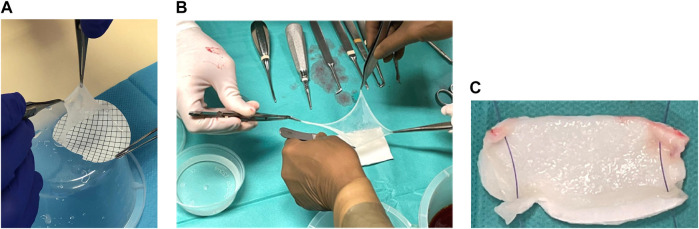
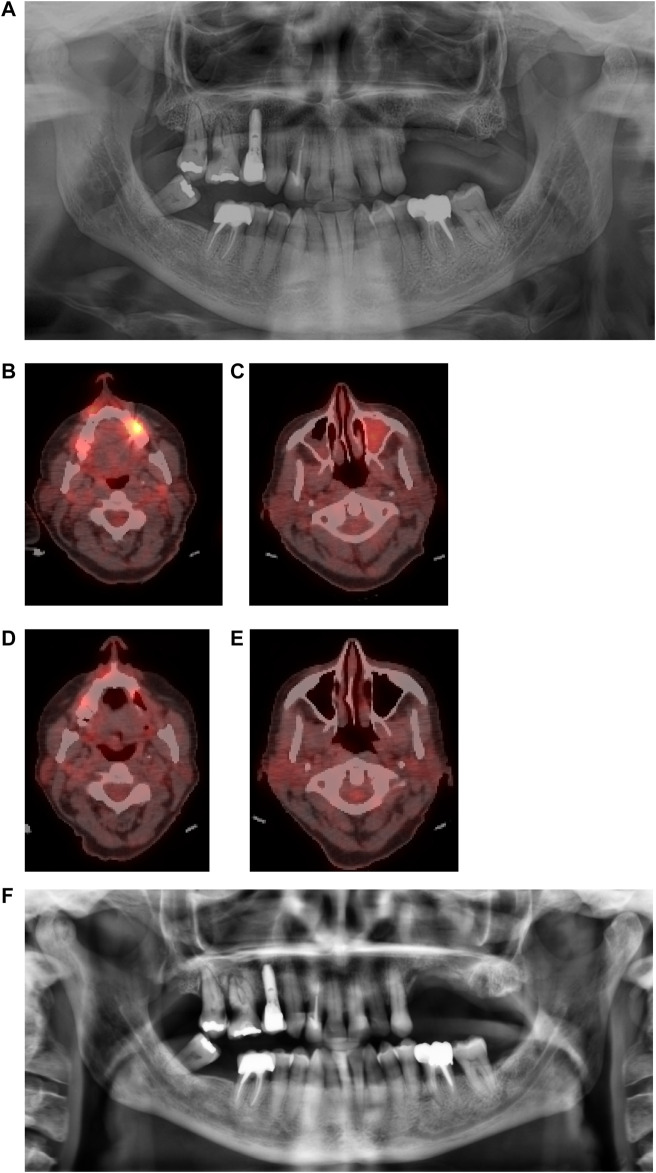
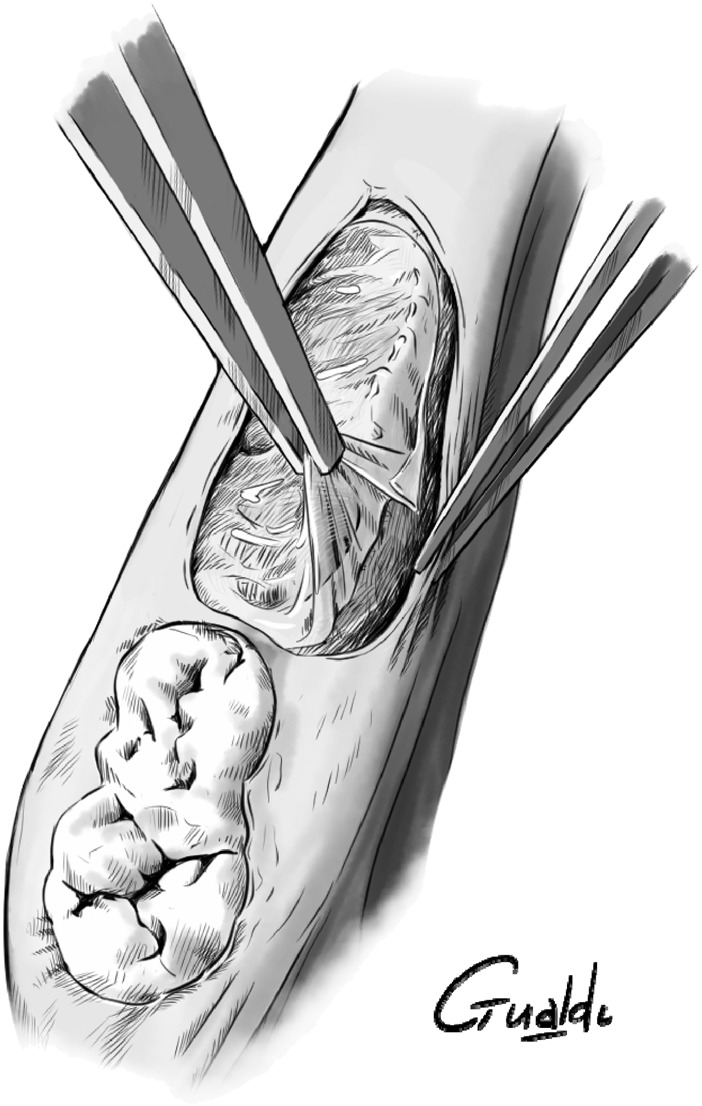
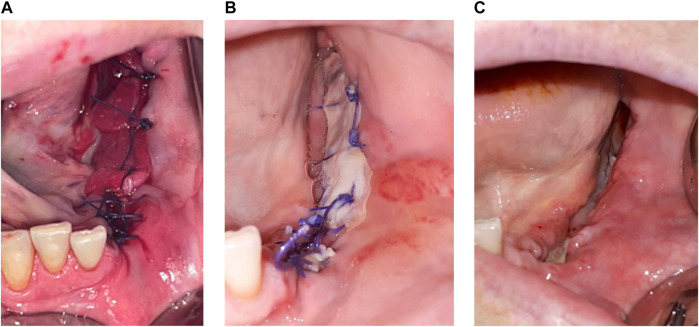
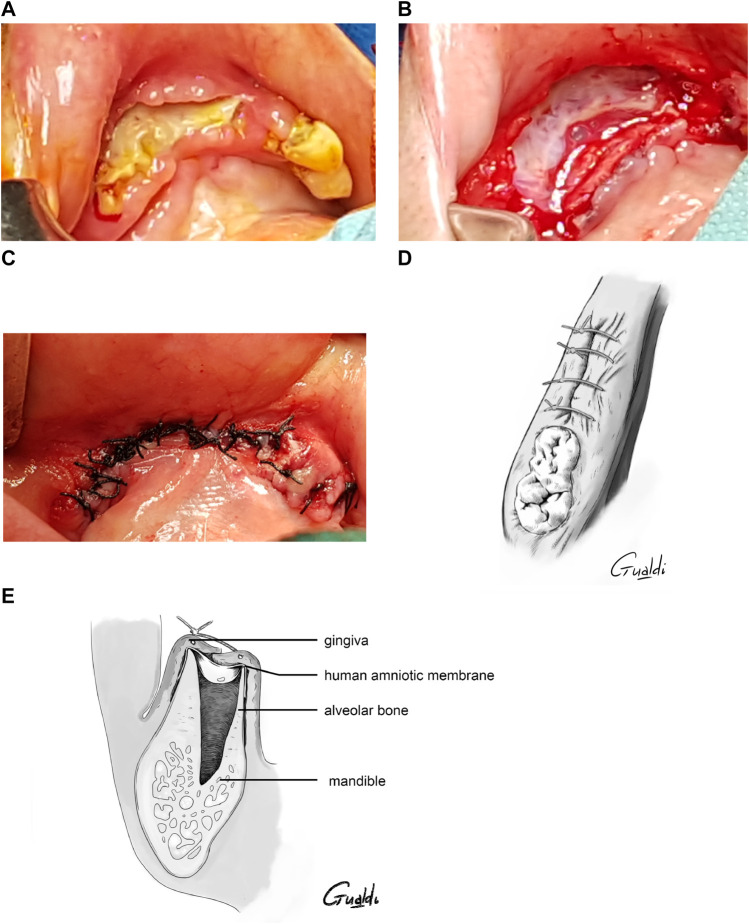
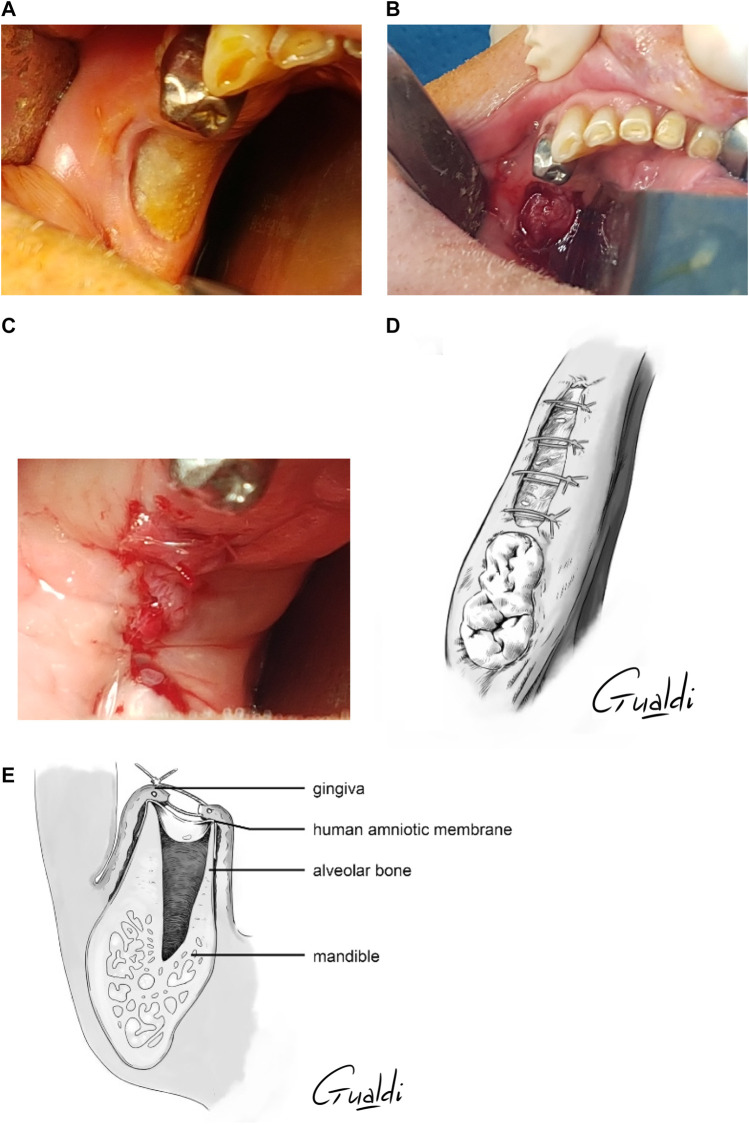
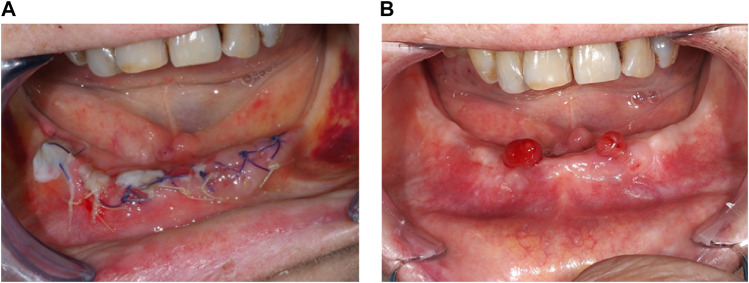
Medication-related osteonecrosis of the jaw (MRONJ) is a complication of certain pharmacological treatments such as bisphosphonates, denosumab, and angiogenesis inhibitors. There are currently no guidelines on its management, particularly in advanced stages. The human amniotic membrane (hAM) has low immunogenicity and exerts anti-inflammatory, antifibrotic, antimicrobial, antiviral, and analgesic effects. It is a source of stem cells and growth factors promoting tissue regeneration. hAM acts as an anatomical barrier with suitable mechanical properties (permeability, stability, elasticity, flexibility, and resorbability) to prevent the proliferation of fibrous tissue and promote early neovascularization at the surgical site. In oral surgery, hAM stimulates healing and facilitates the proliferation and differentiation of epithelial cells in the oral mucosa and therefore its regeneration. We proposed using cryopreserved hAM to eight patients suffering from cancer (11 lesions) with stage 2-3 MRONJ on a compassionate use basis. A collagen sponge was added in some cases to facilitate hAM grafting. One or three hAMs were applied and one patient had a reapplication. Three patients had complete closure of the surgical site with proper epithelialization at 2 weeks, and two of them maintained it until the last follow-up. At 1 week after surgery, three patients had partial wound dehiscence with partial healing 3 months later and two patients had complete wound dehiscence. hAM reapplication led to complete healing. All patients remained asymptomatic with excellent immediate significant pain relief, no infections, and a truly positive impact on the patients' quality of life. No adverse events occurred. At 6 months of follow-up, 80% of lesions had complete or partial wound healing (30 and 50%, respectively), while 62.5% of patients were in stage 3. Radiological evaluations found that 85.7% of patients had stable bone lesions ( = 5) or new bone formation ( = 1). One patient had a worsening MRONJ but remained asymptomatic. One patient did not attend his follow-up radiological examination. For the first time, this prospective pilot study extensively illustrates both the handling and surgical application of hAM in MRONJ, its possible association with a collagen sponge scaffold, its outcome at the site, the application of multiple hAM patches at the same time, and its reapplication.
药物相关性颌骨坏死(MRONJ)是某些药物治疗(如双膦酸盐、地诺单抗和血管生成抑制剂)的并发症。目前对于其治疗尚无指南,尤其是在晚期阶段。人羊膜(hAM)具有低免疫原性,并具有抗炎、抗纤维化、抗菌、抗病毒和镇痛作用。它是促进组织再生的干细胞和生长因子的来源。hAM作为一种具有合适机械性能(渗透性、稳定性、弹性、柔韧性和可吸收性)的解剖屏障,可防止纤维组织增殖并促进手术部位早期新血管形成。在口腔外科手术中,hAM可刺激愈合并促进口腔黏膜上皮细胞的增殖和分化,从而促进其再生。我们在同情用药的基础上,向8例患有2 - 3期MRONJ的癌症患者(11处病变)提议使用冷冻保存的hAM。在某些情况下添加了胶原海绵以促进hAM移植。应用了1片或3片hAM,1例患者进行了再次应用。3例患者在2周时手术部位完全闭合并伴有适当的上皮化,其中2例维持至最后一次随访。术后1周,3例患者出现部分伤口裂开,3个月后部分愈合,2例患者出现完全伤口裂开。hAM再次应用导致完全愈合。所有患者均无症状,即刻疼痛显著缓解,无感染,对患者生活质量产生了真正积极的影响。未发生不良事件。随访6个月时,8%的病变实现了完全或部分伤口愈合(分别为3%和5%),而62.5%的患者处于3期。影像学评估发现,85.7%的患者骨病变稳定( = 5)或有新骨形成( = 1)。1例患者MRONJ病情恶化但仍无症状。1例患者未参加其随访影像学检查。这项前瞻性试点研究首次广泛阐述了hAM在MRONJ中的处理和手术应用、其与胶原海绵支架的可能关联、在手术部位的结果、同时应用多片hAM贴片以及再次应用的情况。