Swanson David L, Zhang Yufeng, Jimenez Ana Gabriela
Department of Biology, University of South Dakota, Vermillion, SD, United States.
College of Health Science, University of Memphis, Memphis, TN, United States.
Front Physiol. 2022 Jul 22;13:961392. doi: 10.3389/fphys.2022.961392. eCollection 2022.
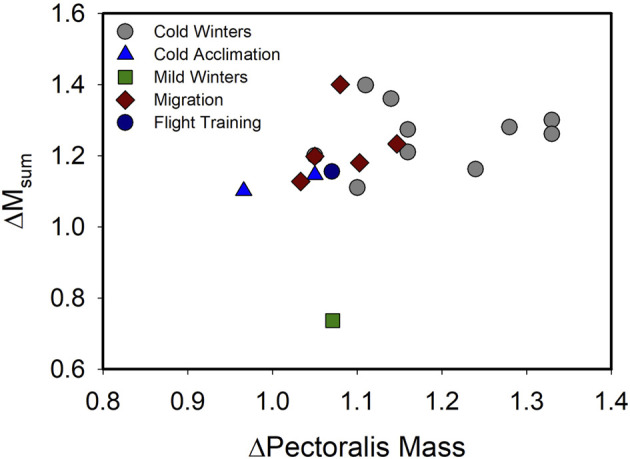
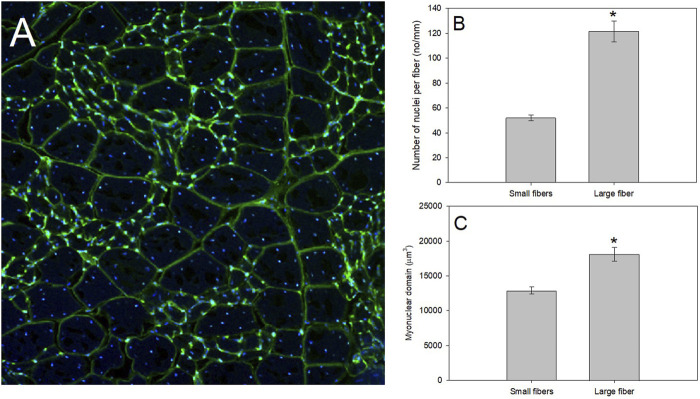
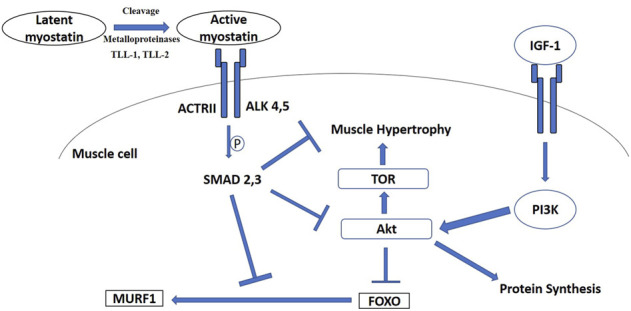
Phenotypically plastic responses of animals to adjust to environmental variation are pervasive. Reversible plasticity (i.e., phenotypic flexibility), where adult phenotypes can be reversibly altered according to prevailing environmental conditions, allow for better matching of phenotypes to the environment and can generate fitness benefits but may also be associated with costs that trade-off with capacity for flexibility. Here, we review the literature on avian metabolic and muscle plasticity in response to season, temperature, migration and experimental manipulation of flight costs, and employ an integrative approach to explore the phenotypic flexibility of metabolic rates and skeletal muscle in wild birds. Basal (minimum maintenance metabolic rate) and summit (maximum cold-induced metabolic rate) metabolic rates are flexible traits in birds, typically increasing with increasing energy demands. Because skeletal muscles are important for energy use at the organismal level, especially to maximum rates of energy use during exercise or shivering thermogenesis, we consider flexibility of skeletal muscle at the tissue and ultrastructural levels in response to variations in the thermal environment and in workloads due to flight exercise. We also examine two major muscle remodeling regulatory pathways: myostatin and insulin-like growth factor -1 (IGF-1). Changes in myostatin and IGF-1 pathways are sometimes, but not always, regulated in a manner consistent with metabolic rate and muscle mass flexibility in response to changing energy demands in wild birds, but few studies have examined such variation so additional study is needed to fully understand roles for these pathways in regulating metabolic flexibility in birds. Muscle ultrastrutural variation in terms of muscle fiber diameter and associated myonuclear domain (MND) in birds is plastic and highly responsive to thermal variation and increases in workload, however, only a few studies have examined ultrastructural flexibility in avian muscle. Additionally, the relationship between myostatin, IGF-1, and satellite cell (SC) proliferation as it relates to avian muscle flexibility has not been addressed in birds and represents a promising avenue for future study.
动物为适应环境变化而产生的表型可塑性反应普遍存在。可逆可塑性(即表型灵活性),即成年表型可根据当前环境条件发生可逆改变,能使表型更好地与环境匹配并产生适应性益处,但也可能伴随着与灵活性能力相权衡的成本。在此,我们回顾了有关鸟类代谢和肌肉可塑性以应对季节、温度、迁徙以及飞行成本实验操纵的文献,并采用综合方法来探究野生鸟类代谢率和骨骼肌的表型灵活性。基础(最低维持代谢率)和峰值(最大冷诱导代谢率)代谢率是鸟类的灵活性状,通常随能量需求增加而升高。由于骨骼肌在机体水平的能量利用中很重要,特别是在运动或颤抖产热期间能量利用的最大速率方面,我们考虑骨骼肌在组织和超微结构水平上对热环境变化以及飞行运动引起的工作量变化的灵活性。我们还研究了两条主要的肌肉重塑调节途径:肌肉生长抑制素和胰岛素样生长因子 -1(IGF -1)。肌肉生长抑制素和IGF -1途径的变化有时(但并非总是)以与野生鸟类能量需求变化时的代谢率和肌肉质量灵活性一致的方式受到调节,但很少有研究考察这种变化,因此需要更多研究来全面了解这些途径在调节鸟类代谢灵活性中的作用。鸟类肌肉纤维直径和相关肌核域(MND)方面的肌肉超微结构变化具有可塑性,且对热变化和工作量增加高度敏感,然而,只有少数研究考察了鸟类肌肉的超微结构灵活性。此外,肌肉生长抑制素、IGF -1与卫星细胞(SC)增殖之间的关系,以及它与鸟类肌肉灵活性的关联,在鸟类中尚未得到研究,这是未来研究的一个有前景的方向。