• 文献检索
  • 文档翻译
  • 深度研究
  • 学术资讯
  • Suppr Zotero 插件Zotero 插件
  • 邀请有礼
  • 套餐&价格
  • 历史记录
应用&插件
Suppr Zotero 插件Zotero 插件浏览器插件Mac 客户端Windows 客户端微信小程序
定价
高级版会员购买积分包购买API积分包
服务
文献检索文档翻译深度研究API 文档MCP 服务
关于我们
关于 Suppr公司介绍联系我们用户协议隐私条款
关注我们

Suppr 超能文献

核心技术专利:CN118964589B侵权必究
粤ICP备2023148730 号-1Suppr @ 2026

文献检索

告别复杂PubMed语法,用中文像聊天一样搜索,搜遍4000万医学文献。AI智能推荐,让科研检索更轻松。

立即免费搜索

文件翻译

保留排版,准确专业,支持PDF/Word/PPT等文件格式,支持 12+语言互译。

免费翻译文档

深度研究

AI帮你快速写综述,25分钟生成高质量综述,智能提取关键信息,辅助科研写作。

立即免费体验

持续性姿势-知觉性头晕的超低频神经反馈——病例报告

Infra-low frequency neurofeedback in persistent postural-perceptual dizziness-Case report.

作者信息

Sasu Roxana

机构信息

Neurotopia, Woodland Hills, CA, United States.

出版信息

Front Hum Neurosci. 2022 Jul 22;16:959579. doi: 10.3389/fnhum.2022.959579. eCollection 2022.

DOI:10.3389/fnhum.2022.959579
PMID:35937677
原文链接:https://pmc.ncbi.nlm.nih.gov/articles/PMC9352934/
Abstract

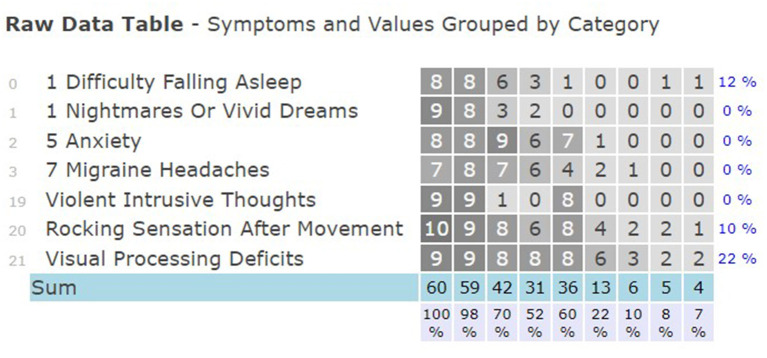
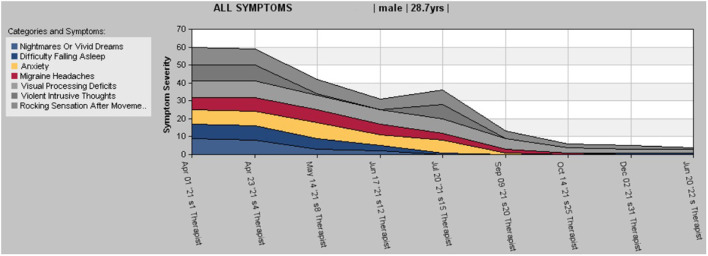
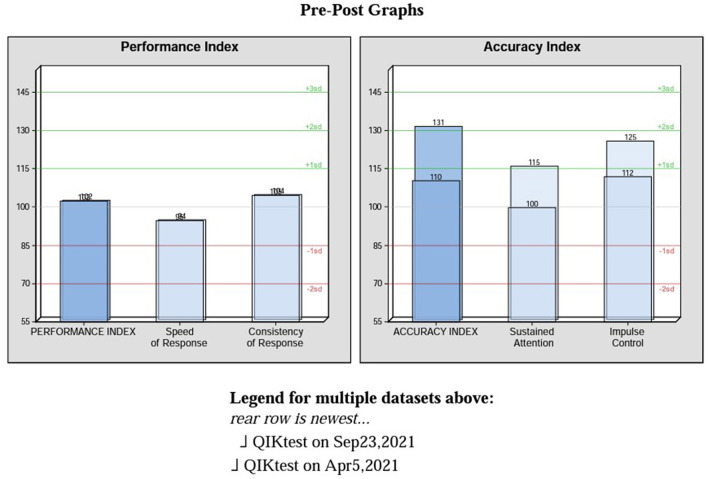
Persistent Postural-Perceptual Dizziness, also known as PPPD or 3PD, is a chronic functional vestibular disorder characterized by persistent sensation of rocking or swaying unsteadiness and/ or non-spinning dizziness without vertigo lasting at least 3 months. Symptoms typically worsen with upright posture (like standing or sitting upright), head or body motion and exposure to busy or visually rich environments. The article describes the application of Infra-Low Frequency Neurofeedback (ILF NF) over 32 sessions on an unmedicated individual with symptoms related to PPPD that were still present 3 years after the initial diagnosis. Along with significant reduction in those symptoms, other accompanying symptoms (like anxiety, intrusive violent thoughts, suicidal thoughts) were markedly improved with ILF NFB. Consistent symptom tracking from session to session, as well as before and after CPT data were used to document reported changes with ILF NF.

摘要

持续性姿势-感知性头晕,也称为PPPD或3PD,是一种慢性功能性前庭疾病,其特征是持续存在摇摆或摇晃不稳的感觉和/或无眩晕的非旋转性头晕,持续至少3个月。症状通常在直立姿势(如站立或坐直)、头部或身体运动以及暴露于繁忙或视觉丰富的环境中时加重。本文描述了对一名未用药的个体进行32次 infra-低频神经反馈(ILF NF)治疗的应用,该个体在初次诊断3年后仍存在与PPPD相关的症状。随着这些症状的显著减轻,其他伴随症状(如焦虑、侵入性暴力想法、自杀念头)也通过ILF NFB得到了明显改善。每次治疗之间以及CPT数据前后的持续症状跟踪被用于记录ILF NF报告的变化。
https://cdn.ncbi.nlm.nih.gov/pmc/blobs/78dc/9352934/f1338b4d3323/fnhum-16-959579-g0003.jpg
https://cdn.ncbi.nlm.nih.gov/pmc/blobs/78dc/9352934/dedcdb69c46a/fnhum-16-959579-g0001.jpg
https://cdn.ncbi.nlm.nih.gov/pmc/blobs/78dc/9352934/742e215abddc/fnhum-16-959579-g0002.jpg
https://cdn.ncbi.nlm.nih.gov/pmc/blobs/78dc/9352934/f1338b4d3323/fnhum-16-959579-g0003.jpg
https://cdn.ncbi.nlm.nih.gov/pmc/blobs/78dc/9352934/dedcdb69c46a/fnhum-16-959579-g0001.jpg
https://cdn.ncbi.nlm.nih.gov/pmc/blobs/78dc/9352934/742e215abddc/fnhum-16-959579-g0002.jpg
https://cdn.ncbi.nlm.nih.gov/pmc/blobs/78dc/9352934/f1338b4d3323/fnhum-16-959579-g0003.jpg

相似文献

1
Infra-low frequency neurofeedback in persistent postural-perceptual dizziness-Case report.持续性姿势-知觉性头晕的超低频神经反馈——病例报告
Front Hum Neurosci. 2022 Jul 22;16:959579. doi: 10.3389/fnhum.2022.959579. eCollection 2022.
2
Diagnostic criteria for persistent postural-perceptual dizziness (PPPD): Consensus document of the committee for the Classification of Vestibular Disorders of the Bárány Society.持续性姿势-知觉性头晕(PPPD)的诊断标准:巴兰尼协会前庭疾病分类委员会共识文件
J Vestib Res. 2017;27(4):191-208. doi: 10.3233/VES-170622.
3
Persistent postural-perceptual dizziness: A functional neuro-otologic disorder.持续性姿势感知性头晕:一种功能性神经耳科疾病。
Auris Nasus Larynx. 2024 Jun;51(3):588-598. doi: 10.1016/j.anl.2023.12.008. Epub 2024 Mar 29.
4
Gaze instability after exposure to moving visual stimuli in patients with persistent postural-perceptual dizziness.持续性姿势性-感知性头晕患者在暴露于移动视觉刺激后出现的注视不稳定。
Front Hum Neurosci. 2022 Nov 25;16:1056556. doi: 10.3389/fnhum.2022.1056556. eCollection 2022.
5
Persistent Postural-Perceptual Dizziness: Review and Update on Key Mechanisms of the Most Common Functional Neuro-otologic Disorder.持续性姿势感知性头晕:最常见的功能性神经耳科疾病关键机制的综述和更新。
Neurol Clin. 2023 Nov;41(4):647-664. doi: 10.1016/j.ncl.2023.04.003. Epub 2023 Jun 1.
6
Persistent postural-perceptual dizziness (PPPD): a common, characteristic and treatable cause of chronic dizziness.持续性姿势-知觉性头晕(PPPD):一种常见、具有特征性且可治疗的慢性头晕病因。
Pract Neurol. 2018 Feb;18(1):5-13. doi: 10.1136/practneurol-2017-001809. Epub 2017 Dec 5.
7
[Persistent Postural-Perceptual Dizziness (PPPD) - A clinical case and essentials for the primary care medicine].[持续性姿势-感知性头晕(PPPD)—— 一个临床病例及基层医疗要点]
Rev Med Suisse. 2023 Feb 15;19(814):334-337. doi: 10.53738/REVMED.2023.19.814.334.
8
Persistent Postural-Perceptual Dizziness: Precipitating Conditions, Co-morbidities and Treatment With Cognitive Behavioral Therapy.持续性姿势-感知性头晕:诱发因素、合并症及认知行为疗法治疗
Front Neurol. 2021 Dec 24;12:795516. doi: 10.3389/fneur.2021.795516. eCollection 2021.
9
A review on the alterations in the brain of persistent postural-perceptual dizziness patients and non-pharmacological interventions for its management.持续性姿势-知觉性头晕患者大脑的改变及其非药物治疗干预的综述。
Rev Neurosci. 2020 Aug 27;31(6):675-680. doi: 10.1515/revneuro-2019-0109.
10
Persistent Postural-Perceptual Dizziness.持续性姿势感知性头晕。
Semin Neurol. 2020 Feb;40(1):130-137. doi: 10.1055/s-0039-3402736. Epub 2020 Jan 14.

引用本文的文献

1
ILF-neurofeedback in clinical practice: examining symptom change and performance metrics across diagnostic groups.临床实践中的ILF神经反馈:跨诊断组检查症状变化和性能指标
Front Hum Neurosci. 2025 Jul 30;19:1601187. doi: 10.3389/fnhum.2025.1601187. eCollection 2025.

本文引用的文献

1
Persistent Postural-Perceptual Dizziness: Precipitating Conditions, Co-morbidities and Treatment With Cognitive Behavioral Therapy.持续性姿势-感知性头晕:诱发因素、合并症及认知行为疗法治疗
Front Neurol. 2021 Dec 24;12:795516. doi: 10.3389/fneur.2021.795516. eCollection 2021.
2
Diagnostic criteria for persistent postural-perceptual dizziness (PPPD): Consensus document of the committee for the Classification of Vestibular Disorders of the Bárány Society.持续性姿势-知觉性头晕(PPPD)的诊断标准:巴兰尼协会前庭疾病分类委员会共识文件
J Vestib Res. 2017;27(4):191-208. doi: 10.3233/VES-170622.
3
Overview of the International Classification of Vestibular Disorders.
前庭疾病国际分类概述
Neurol Clin. 2015 Aug;33(3):541-50, vii. doi: 10.1016/j.ncl.2015.04.010.
4
Outcome of symptoms of dizziness in a general practice community sample.普通全科医疗社区样本中头晕症状的转归
Fam Pract. 1999 Dec;16(6):616-8. doi: 10.1093/fampra/16.6.616.