Department of Radiation Physics, Division of Radiation Oncology, The University of Texas MD Anderson Cancer Center, Houston, Texas.
The University of Texas MD Anderson Cancer Center UTHealth Graduate School of Biomedical Sciences, Houston, Texas.
Radiat Res. 2022 Oct 1;198(4):336-346. doi: 10.1667/RADE-22-00040.1.
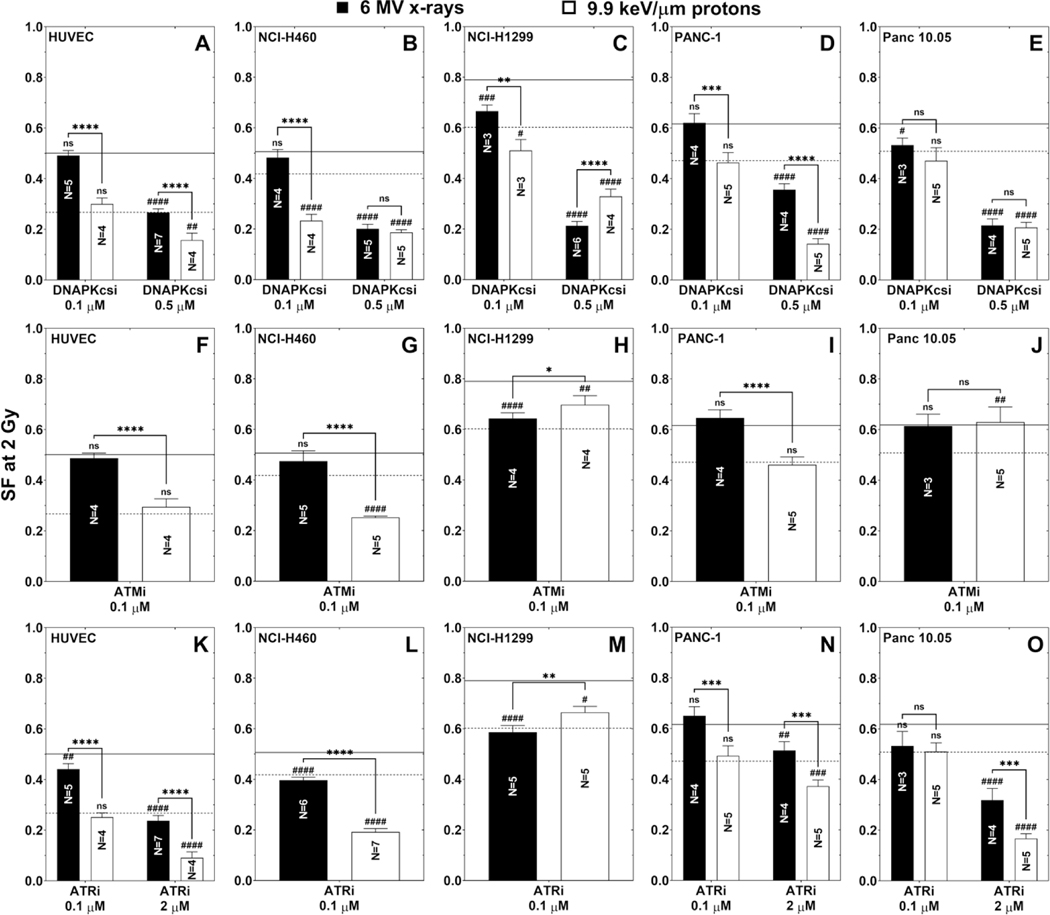
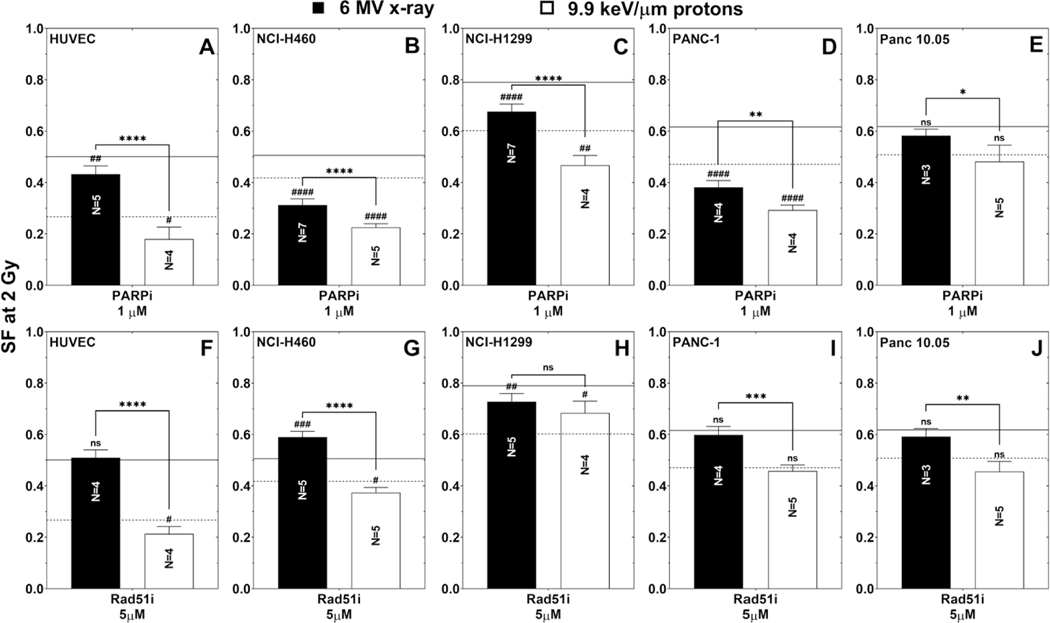
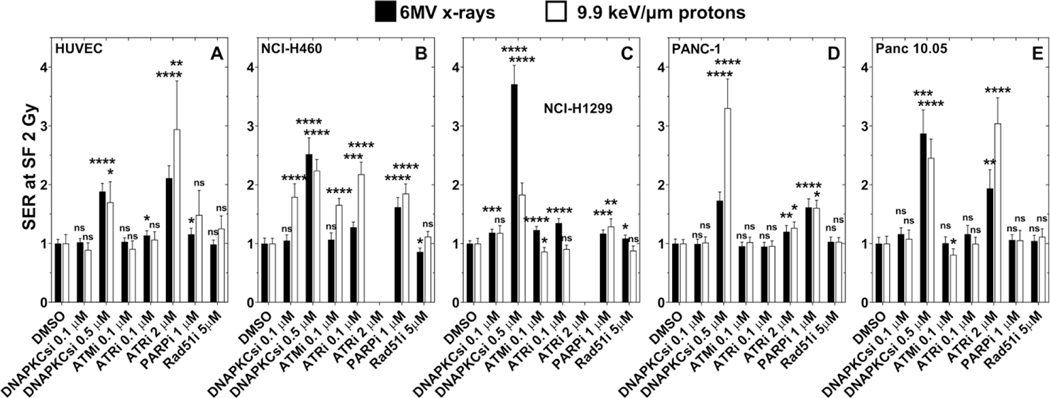
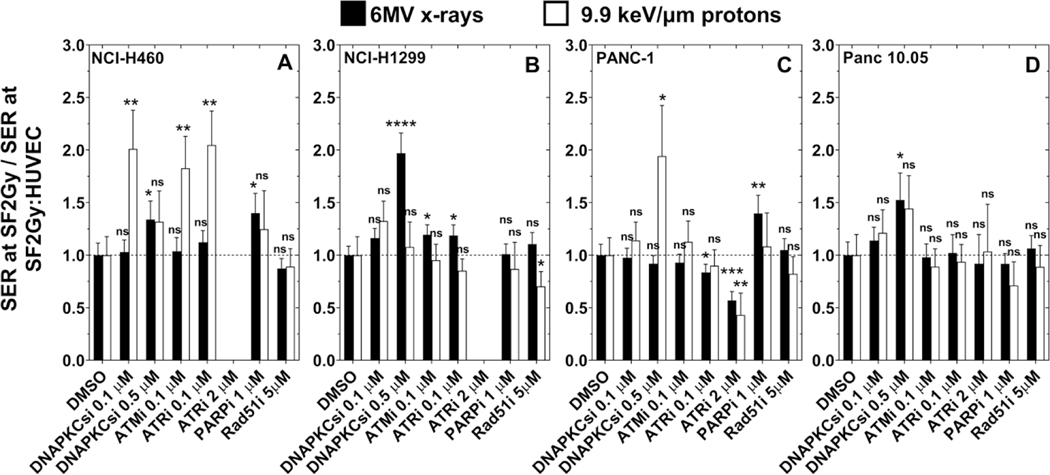
Small molecule inhibitors are currently in preclinical and clinical development for the treatment of selected cancers, particularly those with existing genetic alterations in DNA repair and DNA damage response (DDR) pathways. Keen interest has also been expressed in combining such agents with other targeted antitumor strategies such as radiotherapy. Radiotherapy exerts its cytotoxic effects primarily through DNA damage-induced cell death; therefore, inhibiting DNA repair and the DDR should lead to additive and/or synergistic radiosensitizing effects. In this study we screened the response to X-ray or proton radiation in cell lines treated with DDR inhibitors (DDRis) targeting ATM, ATR, DNA-PKcs, Rad51, and PARP, with survival metrics established using clonogenic assays. We observed that DDRis generate significant radiosensitization in cancer and primary cells derived from normal tissue. Existing genetic defects in cancer cells appear to be an important consideration when determining the optimal inhibitor to use for synergistic combination with radiation. We also show that while greater radiosensitization can be achieved with protons (9.9 keV/µm) combined with DDRis, the relative biological effectiveness is unchanged or in some cases reduced. Our results indicate that while targeting the DDR can significantly radiosensitize cancer cells to such combinations, normal cells may also be equally or more severely affected, depending on the DDRi used. These data highlight the importance of identifying genetic defects as predictive biomarkers of response for combination treatment.
小分子抑制剂目前正在针对特定癌症(尤其是那些存在 DNA 修复和 DNA 损伤反应(DDR)途径中现有遗传改变的癌症)的临床前和临床开发中。人们对将此类药物与其他靶向抗肿瘤策略(如放射疗法)联合使用也表现出浓厚的兴趣。放射疗法主要通过诱导 DNA 损伤导致的细胞死亡来发挥其细胞毒性作用;因此,抑制 DNA 修复和 DDR 应该会导致附加和/或协同的放射增敏作用。在这项研究中,我们筛选了用针对 ATM、ATR、DNA-PKcs、Rad51 和 PARP 的 DDR 抑制剂(DDRi)处理的细胞系对 X 射线或质子辐射的反应,使用克隆形成测定法建立了生存指标。我们观察到 DDRi 在癌细胞和源自正常组织的原代细胞中产生显著的放射增敏作用。在确定与辐射协同组合使用的最佳抑制剂时,癌细胞中现有的遗传缺陷似乎是一个重要的考虑因素。我们还表明,虽然与 DDRi 联合使用质子(9.9 keV/µm)可以实现更大的放射增敏作用,但相对生物效应不变或在某些情况下降低。我们的结果表明,尽管针对 DDR 可以使此类组合对癌细胞产生显著的放射增敏作用,但正常细胞也可能同样或更严重地受到影响,具体取决于所使用的 DDRi。这些数据强调了确定遗传缺陷作为组合治疗反应预测生物标志物的重要性。