Department of Critical Care Medicine, Nanjing First Hospital, Nanjing Medical University, Nanjing, People's Republic of China; Department of General Surgery, Surgical Intensive Care Unit (SICU), Jinling Hospital, Medical School of Nanjing University, Nanjing, People's Republic of China.
Department of Gastroenterology, Wuxi People's Hospital Affiliated to Nanjing Medical University, Wuxi, People's Republic of China.
Turk J Gastroenterol. 2022 Aug;33(8):710-719. doi: 10.5152/tjg.2022.21307.
This study aimed to examine the effect of sodium butyrate on severe acute pancreatitis-related gut barrier injury in a rat model and explore its mechanism.
Male rats randomly fell into 3 groups, that is, the control, the severe acute pancreatitis group, and the severe acute pancreatitis+butyrate group. Rats in the control group received sham operation, while rats in the severe acute pancreatitis group and severe acute pancreatitis+butyrate group received severe acute pancreatitis induction by intraductal infusion of 4% sodium taurocholate. After that, rats in the severe acute pancreatitis+butyrate group were fed with sodium butyrate solution with free access. Intestinal barrier injury was measured based on the expression of tight junction proteins by reverse transcription polymerase chain reaction, Western blotting assay as well as immunohistochemical staining. The variation of Treg cells was measured by reverse transcription polymerase chain reaction, Western blotting assay, immunohistochemical staining, and flow cytometry analysis.
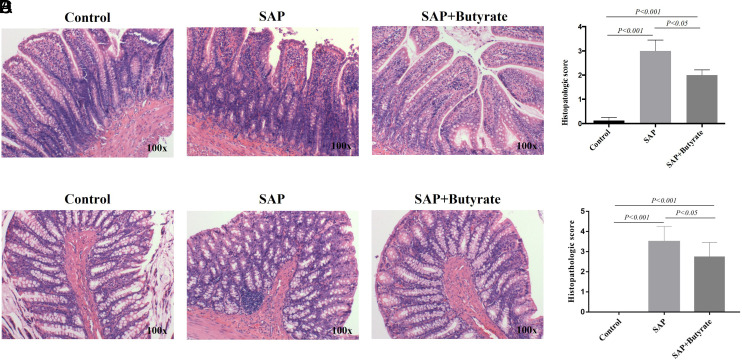
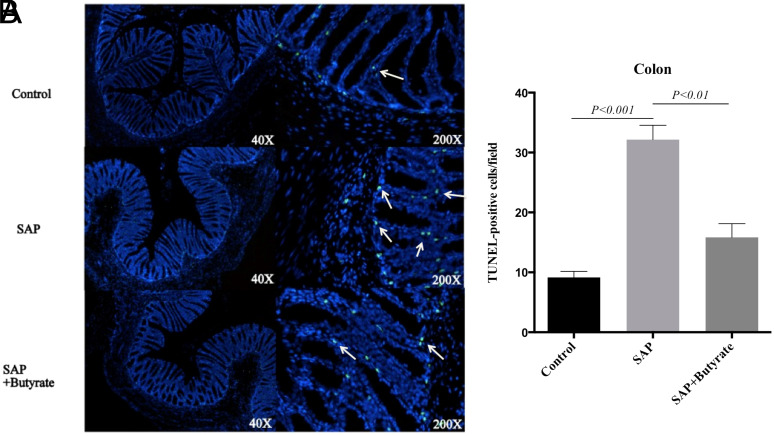
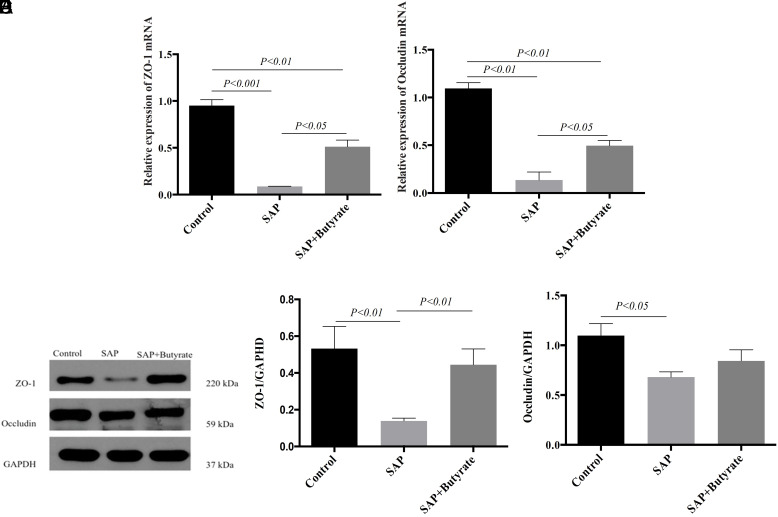
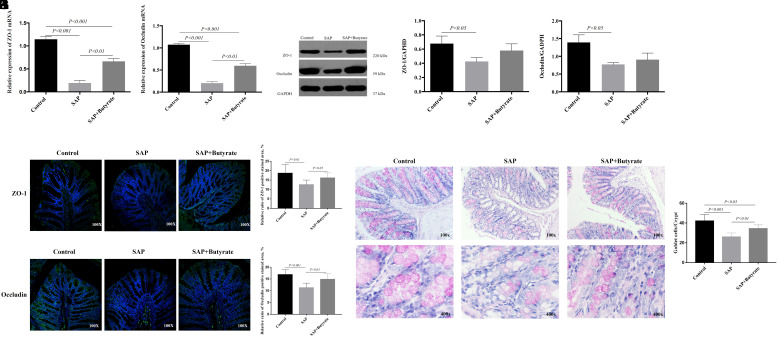
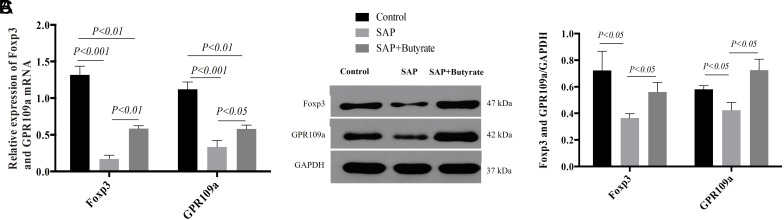
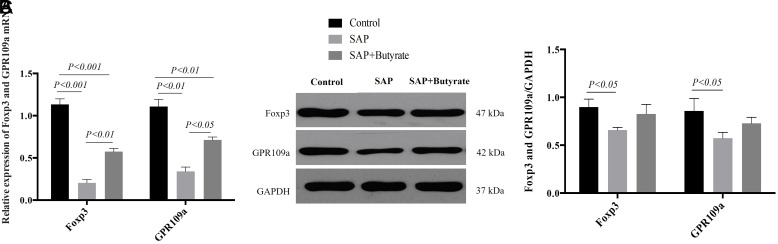
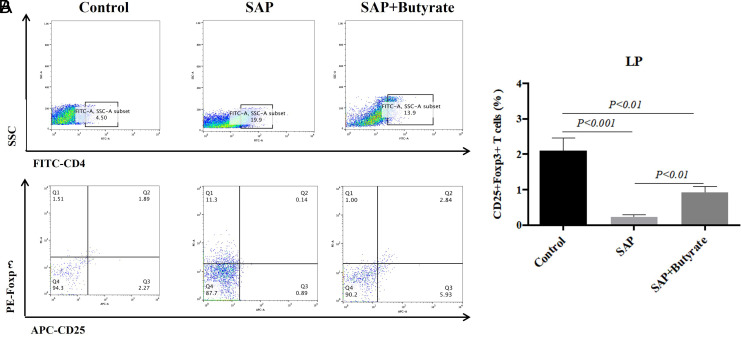
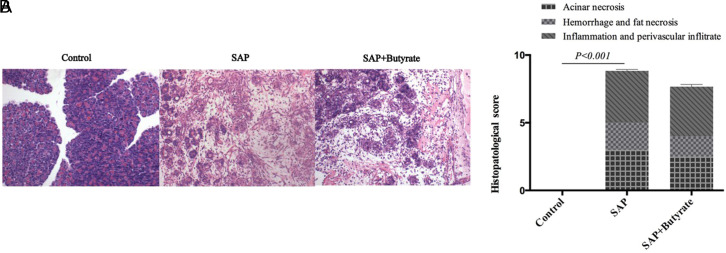
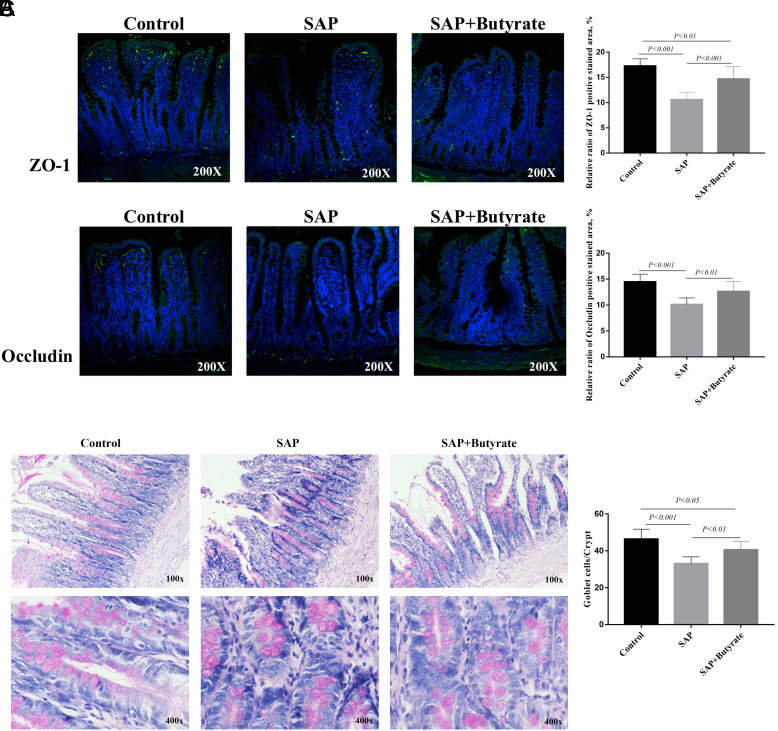
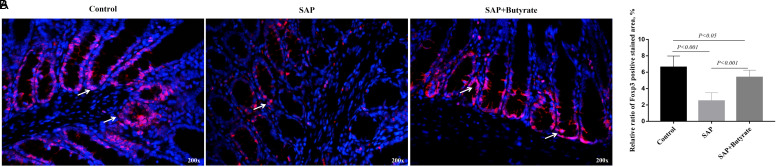
Compared to rats in the control, rats in the severe acute pancreatitis group showed significantly higher pathohistological scores (P < .001) in the intestine, as well as decreased expression of occludin and ZO-1. While, rats in the severe acute pancreatitis+butyrate group showed mitigated histologic lesions (P < .05) and increased expressions of occludin and ZO-1. In addition, rats in the severe acute pancreatitis group showed the obvious reduction in the expressions of Foxp3 and GPR109a and the decreased percentage of Treg cells in the intestine (P < .001) compared to rats in the control. However, rats in the severe acute pancreatitis+butyrate group showed markedly increased expressions of Foxp3 and GPR109a and the upregulated percentage of Treg cells (P < .01).
Butyrate could significantly mitigate the intestinal injury induced by severe acute pancreatitis, probably by inducing the differentiation of Treg cells.
本研究旨在探讨丁酸钠对大鼠重症急性胰腺炎相关肠道屏障损伤的影响,并探讨其机制。
雄性大鼠随机分为 3 组,即对照组、重症急性胰腺炎组和重症急性胰腺炎+丁酸钠组。对照组大鼠接受假手术,重症急性胰腺炎组和重症急性胰腺炎+丁酸钠组大鼠通过胆管内输注 4%牛磺胆酸钠诱导重症急性胰腺炎。之后,重症急性胰腺炎+丁酸钠组大鼠自由摄取丁酸钠溶液。通过反转录聚合酶链反应、Western blot 检测和免疫组织化学染色检测紧密连接蛋白的表达来衡量肠道屏障损伤。通过反转录聚合酶链反应、Western blot 检测、免疫组织化学染色和流式细胞术分析来衡量 Treg 细胞的变化。
与对照组大鼠相比,重症急性胰腺炎组大鼠的肠道组织学评分明显升高(P <.001),occludin 和 ZO-1 的表达减少。而重症急性胰腺炎+丁酸钠组大鼠的组织学损伤明显减轻(P <.05),occludin 和 ZO-1 的表达增加。此外,与对照组大鼠相比,重症急性胰腺炎组大鼠的肠道中 Foxp3 和 GPR109a 的表达明显减少,Treg 细胞的比例降低(P <.001)。然而,重症急性胰腺炎+丁酸钠组大鼠的 Foxp3 和 GPR109a 表达明显增加,Treg 细胞的比例升高(P <.01)。
丁酸钠可显著减轻重症急性胰腺炎引起的肠道损伤,可能是通过诱导 Treg 细胞的分化。