Hartwig Jason, Chung J N, Dong Jun, Han Bo, Wang Hao, Darr Samuel, Taliaferro Matthew, Jain Shreykumar, Doherty Michael
NASA Glenn Research Center, Cleveland, OH, 44135, USA.
University of Florida, Gainesville, FL, 32611, USA.
NPJ Microgravity. 2022 Aug 9;8(1):33. doi: 10.1038/s41526-022-00220-9.
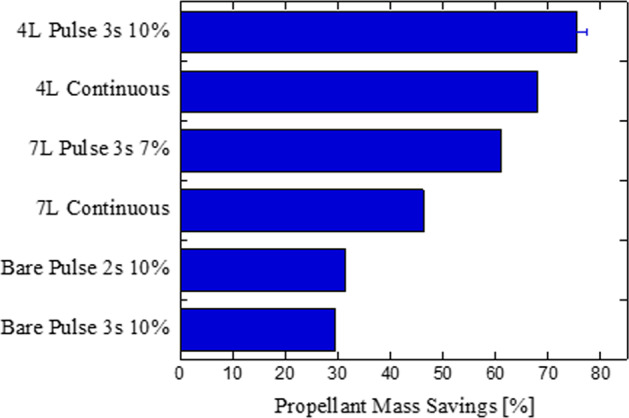
The enabling of in-space cryogenic engines and cryogenic fuel depots for future manned and robotic space exploration missions begins with technology development of advanced cryogenic fluid management systems upstream in the propellant feed system. Before single-phase liquid can flow to the engine or customer spacecraft receiver tank, the connecting transfer line must first be chilled down to cryogenic temperatures. The most direct and simplest method to quench the line is to use the cold propellant itself. When a cryogenic fluid is introduced into a warm transfer system, two-phase flow quenching ensues. While boiling is well known to be a highly efficient mode of heat transfer, previous work has shown this efficiency is lowered in reduced gravity. Due to the projected cost of launching and storing cryogens in space, it is desired to perform this chilldown process using the least amount of propellant possible, especially given the desire for reusable systems and thus multiple transfers. This paper presents an assessment of two revolutionary new performance enhancements that reduce the amount of propellant consumed during chilldown while in a microgravity environment. Twenty-eight cryogenic transfer line chilldown experiments were performed onboard four parabolic flights to examine the independent as well as combined effect of using low thermally conductive coatings and pulse flow on the chilldown process. Across a range of Reynolds numbers, results show the combination significantly enhances performance in microgravity, with a reduction in consumed mass up to 75% relative to continuous flow for a bare transfer line.
为未来载人及机器人太空探索任务启用太空低温发动机和低温燃料库,首先要在推进剂输送系统上游开展先进低温流体管理系统的技术研发。在单相液体能够流向发动机或客户航天器接收罐之前,连接传输管线必须先冷却至低温温度。冷却管线最直接、最简单的方法是使用低温推进剂本身。当低温流体被引入温暖的传输系统时,会发生两相流冷却。虽然沸腾是一种高效的传热方式,但先前的研究表明,在微重力环境下这种效率会降低。鉴于在太空发射和储存低温推进剂的预计成本,希望尽可能少地使用推进剂来完成这种冷却过程,特别是考虑到对可重复使用系统以及多次传输的需求。本文评估了两种全新的创新性性能增强方法,它们可减少微重力环境下冷却过程中消耗的推进剂数量。在四次抛物线飞行中进行了28次低温传输管线冷却实验,以研究使用低导热涂层和脉冲流对冷却过程的独立影响以及综合影响。在一系列雷诺数范围内,结果表明,这种组合在微重力环境下显著提高了性能,相对于裸传输管线的连续流,消耗质量最多可减少75%。