Xu Wei, Grindler Sandra, Kenéz Ákos, Dänicke Sven, Frahm Jana, Huber Korinna
Beijing Research Center of Intelligent Equipment for Agriculture, Beijing, 100097, China.
Department of Biosystems, Biosystems Technology Cluster, Campus Geel, Kleinhoefstraat 4, 2440 Geel, Leuven, KU, Belgium.
J Anim Sci Biotechnol. 2022 Aug 10;13(1):94. doi: 10.1186/s40104-022-00741-z.
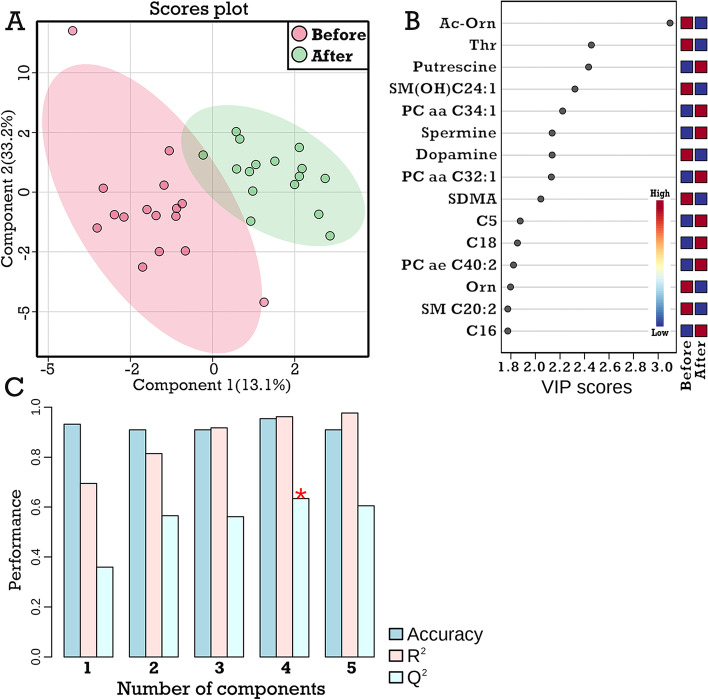
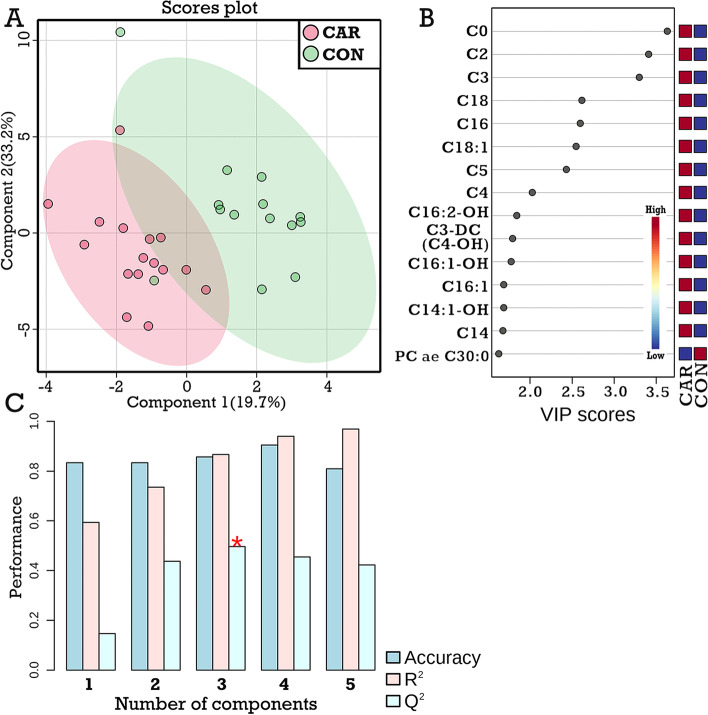
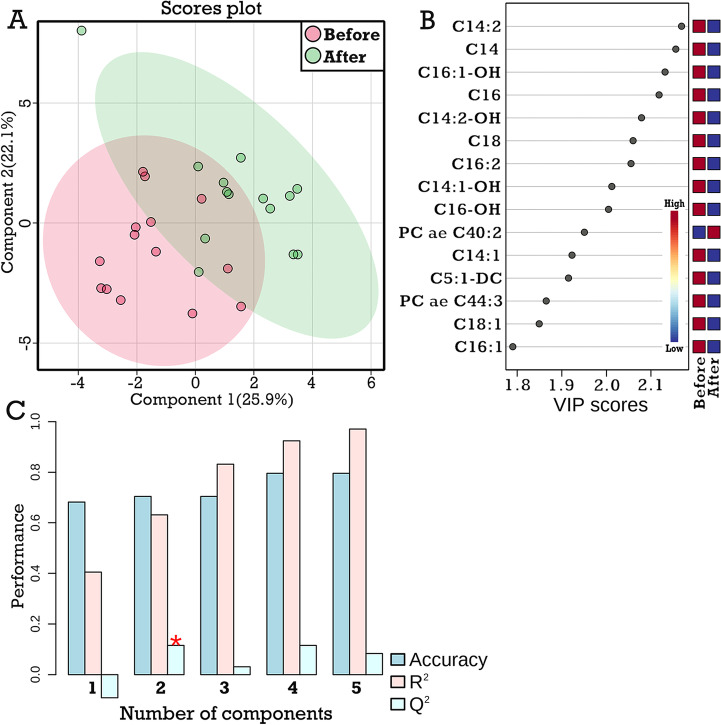
Carnitine facilitates the flux of long-chain fatty acids for hepatic mitochondrial beta-oxidation, which acts to ameliorate the negative energy balance commonly affecting high-yielding dairy cows. Inflammation triggered by lipopolysaccharide (LPS) load can however pose a challenge to the metabolic integrity via the expression of pro-inflammatory mediators, leading to immune system activation and respective metabolic alterations. The effect of enhanced carnitine availability on hepatic metabolome profiles during an inflammatory challenge has not yet been determined in dairy cows. Herein, Holstein cows were supplemented with 25 g/d rumen-protected carnitine from 42 d prepartum until 126 d postpartum (n = 16) or assigned to the control group with no supplementation during the same period (n = 14). We biopsied the liver of the cows before (100 d postpartum) and after (112 d postpartum) an intravenous injection of 0.5 µg/kg LPS. Liver samples were subjected to a targeted metabolomics analysis using the AbsoluteIDQ p180 Kit (Biocrates Life Sciences AG, Innsbruck, Austria). RESULTS: Multivariate statistical analyses revealed that hepatic metabolome profiles changed in relation to both the carnitine supplementation and the LPS challenge. Comparing the metabolite profiles on 100 d, carnitine increased the concentration of short- and long-chain acyl-carnitines, which may be explained by an enhanced mitochondrial fatty acid shuttle and hence greater energy availability. The LPS injection affected hepatic metabolite profiles only in the carnitine supplemented group, particularly altering the concentration of biogenic amines.
Our results point to interactions between an acute hepatic inflammatory response and biogenic amine metabolism, depending on energy availability.
肉碱有助于长链脂肪酸流入肝脏线粒体进行β-氧化,这有助于改善通常影响高产奶牛的负能量平衡。然而,脂多糖(LPS)负荷引发的炎症可通过促炎介质的表达对代谢完整性构成挑战,导致免疫系统激活和相应的代谢改变。在奶牛炎症应激期间,增加肉碱可用性对肝脏代谢组谱的影响尚未确定。在此,从产前42天至产后126天,给荷斯坦奶牛补充25克/天的瘤胃保护肉碱(n = 16),或在同一时期将其分配到不补充的对照组(n = 14)。在静脉注射0.5微克/千克LPS之前(产后100天)和之后(产后112天)对奶牛肝脏进行活检。使用AbsoluteIDQ p180试剂盒(奥地利因斯布鲁克的Biocrates Life Sciences AG)对肝脏样本进行靶向代谢组学分析。结果:多变量统计分析表明,肝脏代谢组谱因肉碱补充和LPS应激而发生变化。比较产后100天的代谢物谱,肉碱增加了短链和长链酰基肉碱的浓度,这可能是由于线粒体脂肪酸穿梭增强,从而有更多的能量供应。LPS注射仅在补充肉碱的组中影响肝脏代谢物谱,特别是改变了生物胺的浓度。结论:我们的结果表明,急性肝脏炎症反应与生物胺代谢之间存在相互作用,这取决于能量供应情况。