Teikyo University, Tokyo, Japan.
Bristol Myers Squibb, Tokyo, Japan.
J Dermatol. 2022 Nov;49(11):1106-1117. doi: 10.1111/1346-8138.16543. Epub 2022 Aug 10.
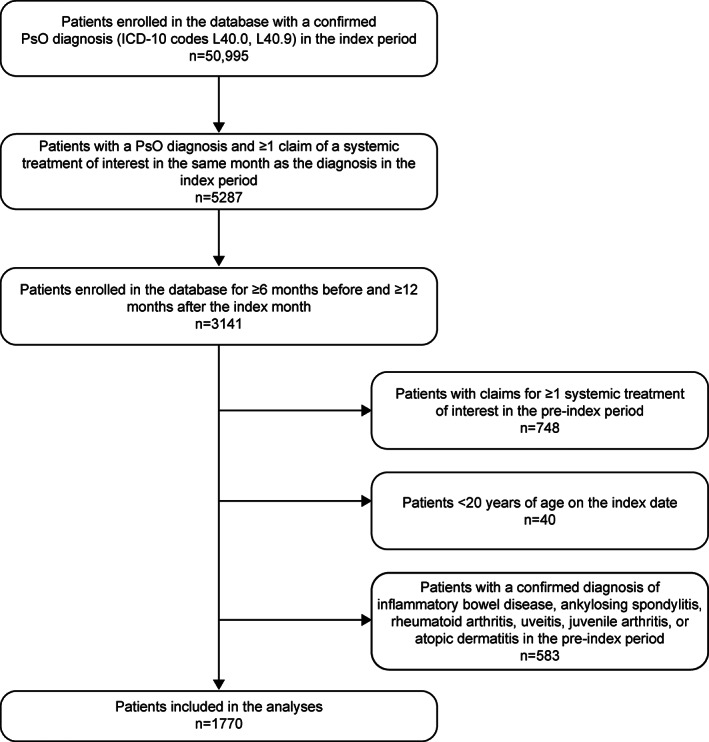
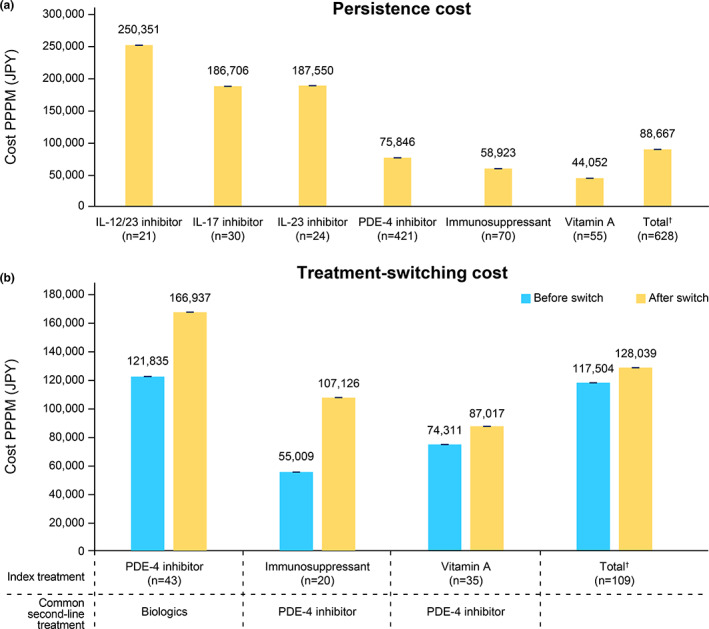
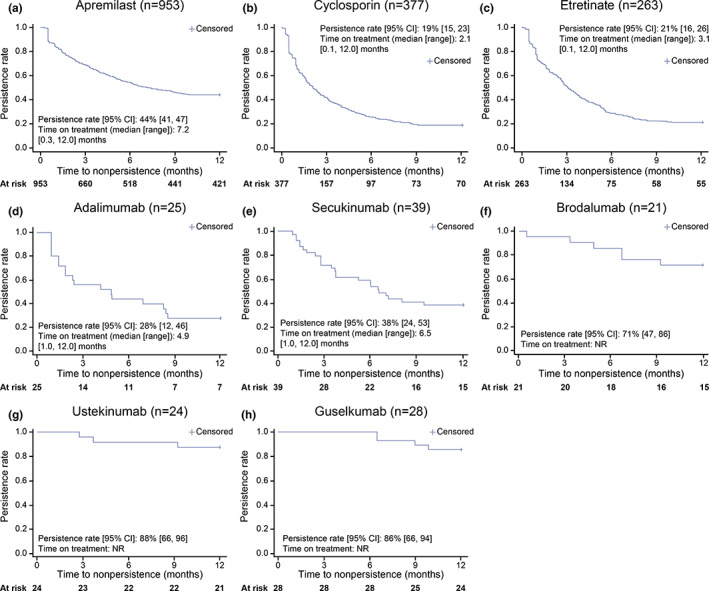
The real-world treatment landscape for patients with moderate-to-severe psoriasis receiving systemic therapies in Japan is not well understood. This study describes the demographic and clinical characteristics, treatment patterns, healthcare resource utilization, and psoriasis-associated costs in these patients. This retrospective observational study used data from the Japan Medical Data Center database between January 2016 and December 2020. Eligible patients had a confirmed diagnosis of psoriasis, ≥1 claim for a systemic treatment of interest, medical history for ≥6 months, and follow-up data for ≥12 months. Systemic therapies comprised biologics (tumor necrosis factor and interleukin inhibitors) and oral treatments (a phosphodiesterase-4 inhibitor, immunosuppressants, and vitamin A). Patient demographics and clinical characteristics, treatment patterns, healthcare resource utilization, and costs were evaluated. The study identified 1770 patients satisfying all inclusion criteria. The mean age was 49.0 years, with 68% of patients aged 20-54 years. Overall, 90.6% and 9.4% of patients received oral medications and biologics as index treatment, respectively. Treatment patterns, healthcare resource utilization, and costs were assessed for treatments received by ≥20 patients (n = 1730). During the 12-month follow-up period, 1102/1730 patients (63.7%) discontinued index treatment, of whom 9.9% switched to alternative systemic treatments. The persistence rate was ≥70% for most biologics and <50% for oral systemic treatments. All 1730 patients had ≥1 all-cause outpatient visit (2.0 visits per person per month) and hospitalization frequency was ≤0.01 per person per month. Persistent patients incurred inflation-adjusted costs of Japanese Yen (JPY) 88 667 per person per month. Treatment switching was associated with an increase in total cost: JPY 128 039 per person per month after switching versus JPY 117 504 before switching. This study of Japanese patients with moderate-to-severe psoriasis demonstrated low persistence, high discontinuation, and low rates of treatment switching with systemic therapies. Switching was associated with increased total cost. These results indicate unmet needs for new treatments.
在日本,接受全身治疗的中重度银屑病患者的实际治疗情况尚不清楚。本研究描述了这些患者的人口统计学和临床特征、治疗模式、医疗资源利用情况以及银屑病相关费用。这项回顾性观察性研究使用了 2016 年 1 月至 2020 年 12 月期间日本医疗数据中心数据库的数据。符合条件的患者有明确的银屑病诊断,有≥1 次感兴趣的全身治疗用药的报销记录,有≥6 个月的病史和≥12 个月的随访数据。全身治疗包括生物制剂(肿瘤坏死因子和白细胞介素抑制剂)和口服药物(磷酸二酯酶 4 抑制剂、免疫抑制剂和维生素 A)。评估了患者的人口统计学和临床特征、治疗模式、医疗资源利用情况和费用。研究共纳入了 1770 名符合所有纳入标准的患者。患者的平均年龄为 49.0 岁,68%的患者年龄在 20-54 岁之间。总体而言,90.6%和 9.4%的患者分别接受了口服药物和生物制剂作为起始治疗。对≥20 名患者(n=1730)接受的治疗进行了治疗模式、医疗资源利用情况和费用评估。在 12 个月的随访期间,1730 名患者中有 1102 名(63.7%)停止了起始治疗,其中 9.9%的患者转为了其他全身治疗。大多数生物制剂的持续率≥70%,而口服全身治疗的持续率<50%。所有 1730 名患者均有≥1 次全因门诊就诊(每月每人 2.0 次就诊),每月每人住院次数≤0.01 次。持续治疗的患者每人每月的费用为日元(JPY)88667 日元。治疗转换与总费用的增加有关:转换后的每人每月费用为 JPY 128039 日元,而转换前的每人每月费用为 JPY 117504 日元。本研究对日本中重度银屑病患者的研究表明,全身治疗的药物持续性低、停药率高、治疗转换率低。转换与总费用的增加有关。这些结果表明,需要新的治疗方法来满足这些未满足的需求。