Department of Cell Physiology and Metabolism, Faculty of Medicine, University of Geneva, 1211, Geneva 4, Switzerland.
Translational Research Centre in Onco-hematology, Faculty of Medicine, University of Geneva, 1211, Geneva 4, Switzerland.
Nat Commun. 2022 Aug 10;13(1):4704. doi: 10.1038/s41467-022-32421-x.
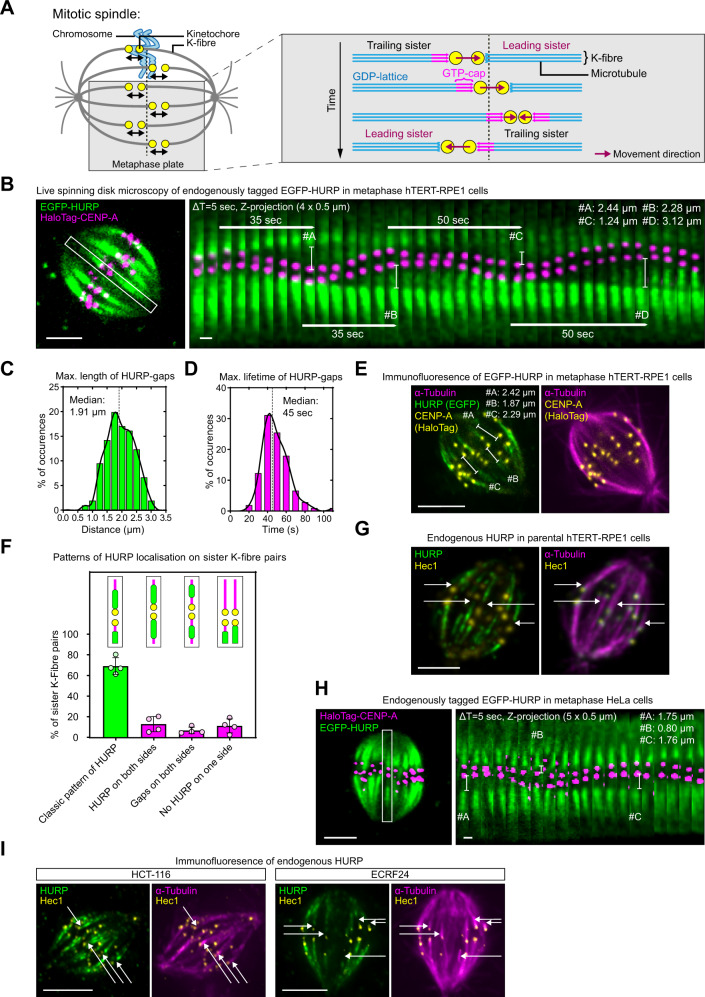
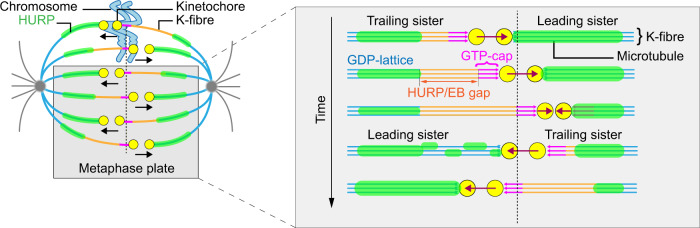
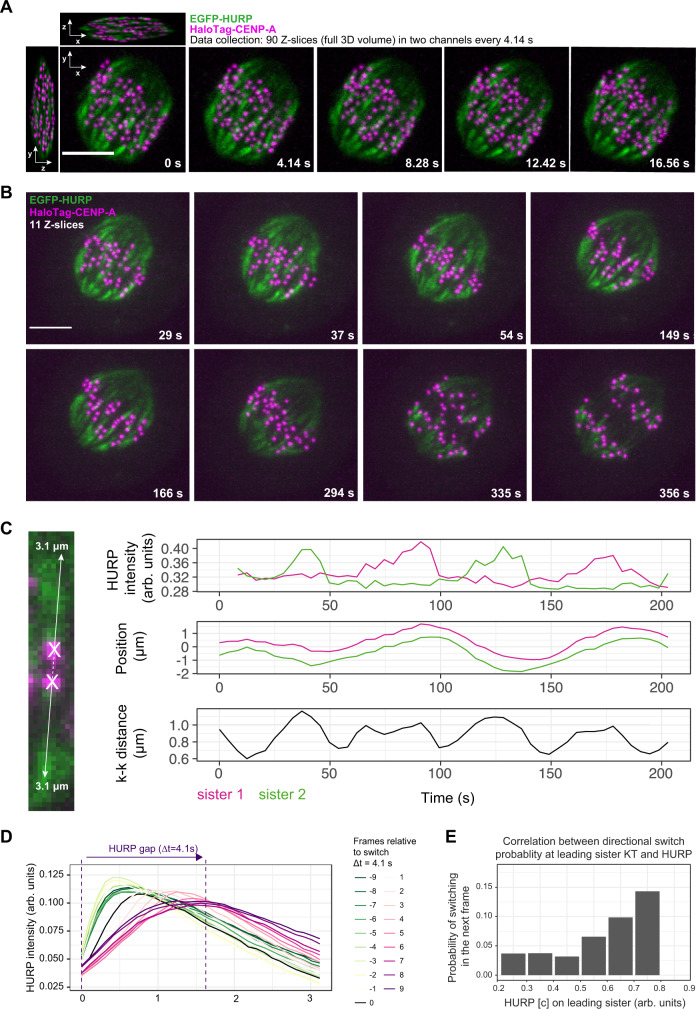
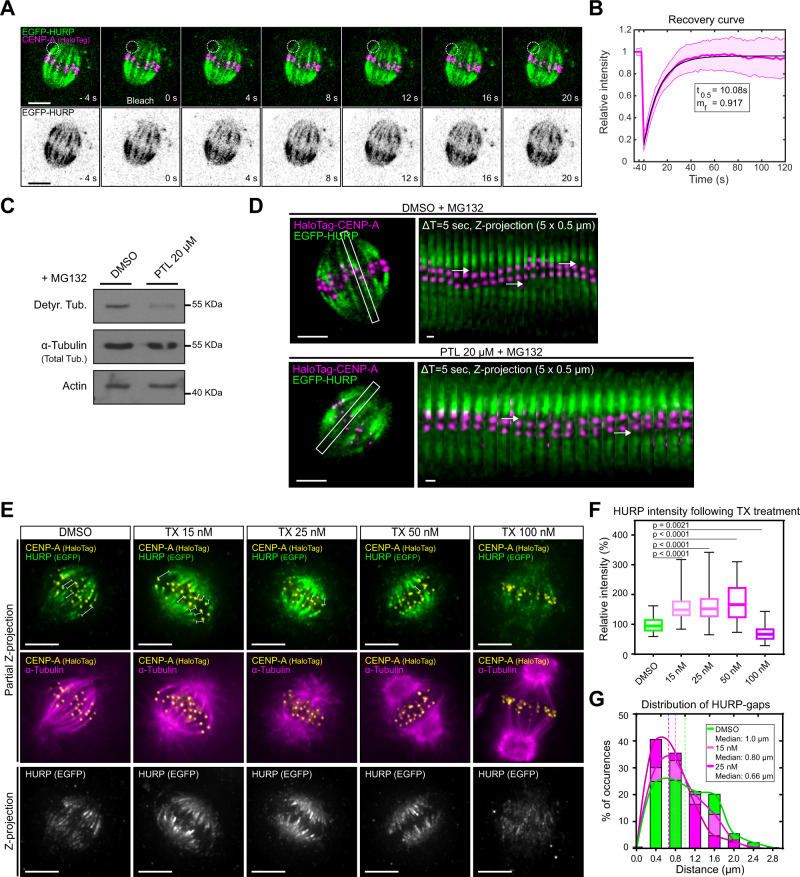
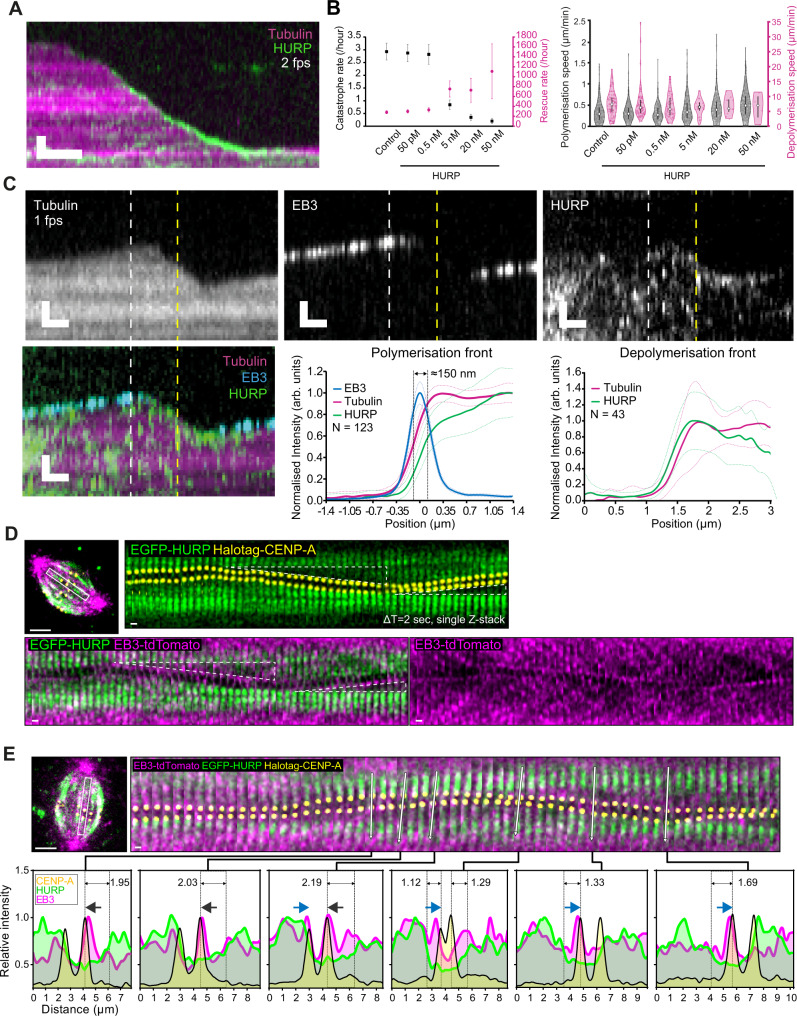
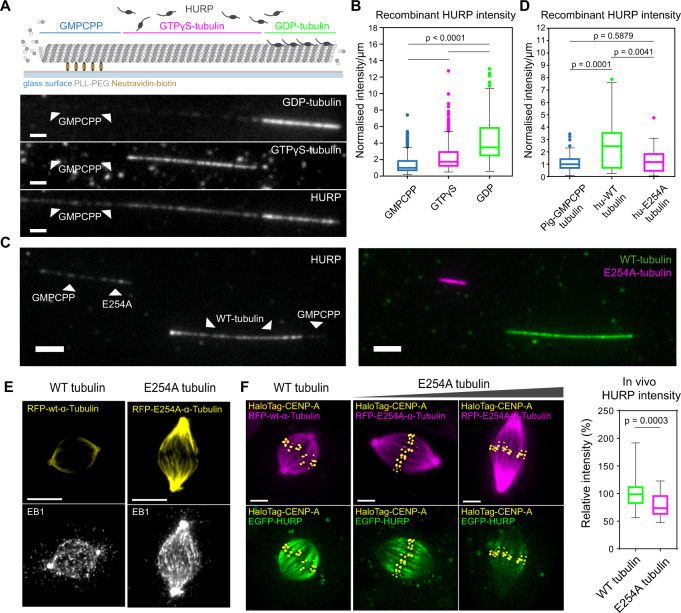
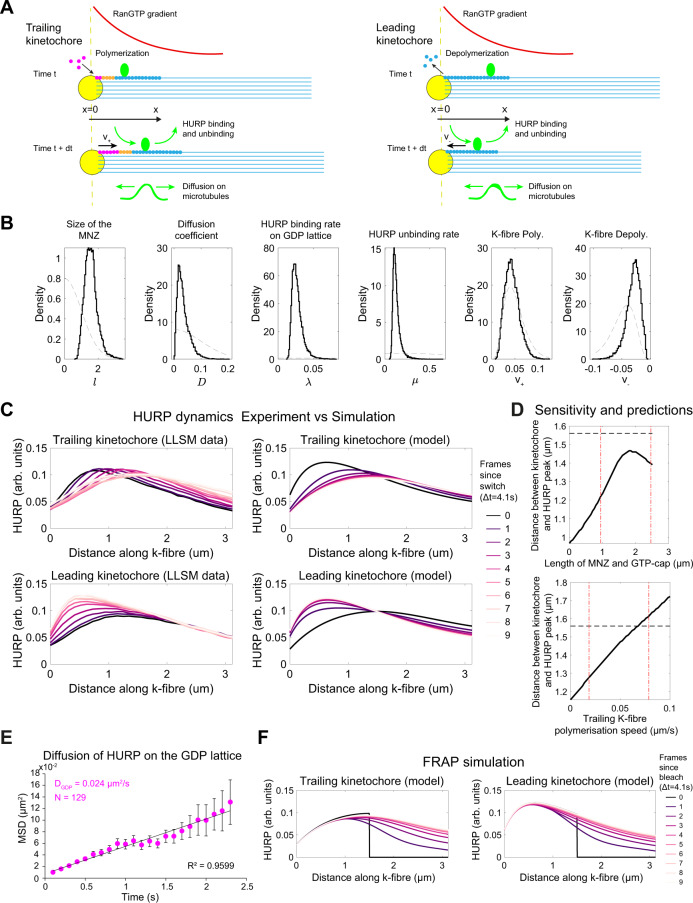
Current models infer that the microtubule-based mitotic spindle is built from GDP-tubulin with small GTP caps at microtubule plus-ends, including those that attach to kinetochores, forming the kinetochore-fibres. Here we reveal that kinetochore-fibres additionally contain a dynamic mixed-nucleotide zone that reaches several microns in length. This zone becomes visible in cells expressing fluorescently labelled end-binding proteins, a known marker for GTP-tubulin, and endogenously-labelled HURP - a protein which we show to preferentially bind the GDP microtubule lattice in vitro and in vivo. We find that in mitotic cells HURP accumulates on the kinetochore-proximal region of depolymerising kinetochore-fibres, whilst avoiding recruitment to nascent polymerising K-fibres, giving rise to a growing "HURP-gap". The absence of end-binding proteins in the HURP-gaps leads us to postulate that they reflect a mixed-nucleotide zone. We generate a minimal quantitative model based on the preferential binding of HURP to GDP-tubulin to show that such a mixed-nucleotide zone is sufficient to recapitulate the observed in vivo dynamics of HURP-gaps.
目前的模型推断,基于微管的有丝分裂纺锤体由 GDP-微管蛋白组成,微管的正极末端带有小 GTP 帽,包括那些附着在动粒上的微管,形成动粒纤维。在这里,我们揭示了动粒纤维还包含一个动态的混合核苷酸区域,其长度可达数微米。这个区域在表达荧光标记末端结合蛋白的细胞中变得可见,末端结合蛋白是 GTP-微管蛋白的已知标记物,而内源性标记的 HURP-我们证明它优先结合体外和体内的 GDP 微管晶格。我们发现在有丝分裂细胞中,HURP 在正在解聚的动粒纤维的动粒近端区域积累,同时避免募集到新形成的聚合 K 纤维,从而产生一个不断增长的“HURP 缺口”。HURP 缺口中没有末端结合蛋白,这使我们推测它们反映了一个混合核苷酸区域。我们生成了一个基于 HURP 优先结合 GDP-微管蛋白的最小定量模型,以表明这样一个混合核苷酸区域足以再现体内观察到的 HURP 缺口的动力学。