Maccabi Institute for Research and Innovation (Maccabitech), Maccabi Healthcare Services, Tel Aviv, Israel.
Sackler Faculty of Medicine, Tel Aviv University, Tel Aviv, Israel.
BMC Psychiatry. 2022 Aug 11;22(1):541. doi: 10.1186/s12888-022-04184-8.
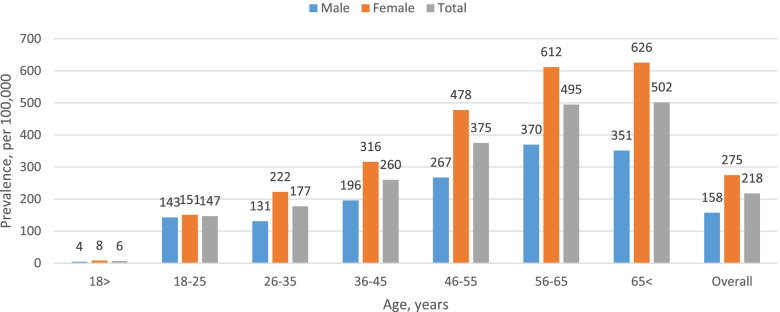
Major depressive disorder (MDD) is one of the most common mental disorders worldwide, estimated to affect 10-15% of the population per year. Treatment resistant depression (TRD) is estimated to affect a third of these patients who show difficulties in social and occupational function, decline of physical health, suicidal thoughts and increased health care utilization. We describe the prevalence of MDD, TRD and associated healthcare resource utilization in Maccabi Healthcare Services (MHS), a 2.5 million-member state-mandated health service in Israel.
All MHS members with an MDD diagnosis were identified within the years 2017-2018 and prevalence assessed by age, sex and TRD. To assess the incidence of MDD, members aged 18-65 years at the start of any MDD episode were identified between 1 January 2016 and 31 May 2018 with at least one systemic first-line antidepressant treatment within three months before or after the initial episode. Treatment patterns, time on first-line treatment, and healthcare resource utilization were compared by TRD.
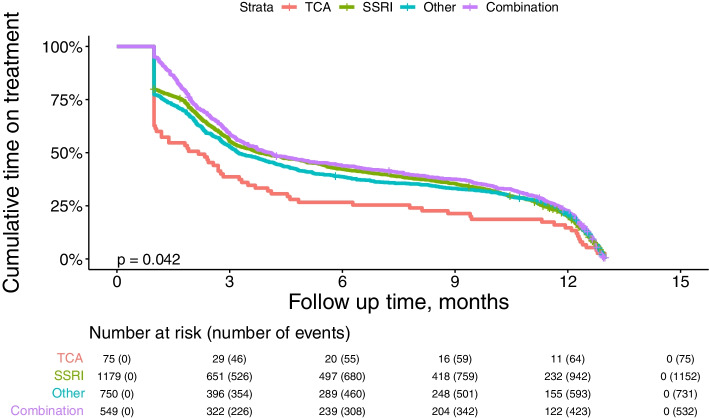
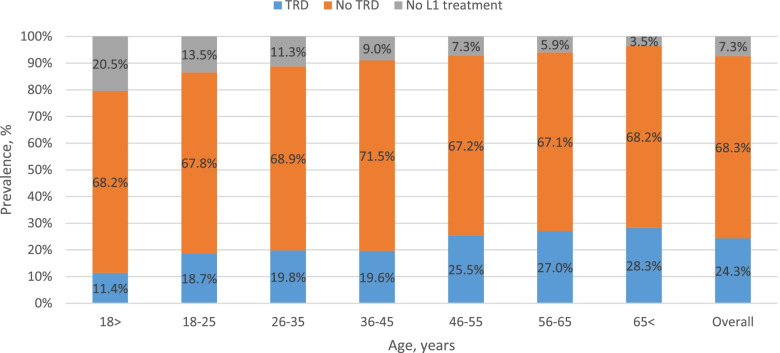
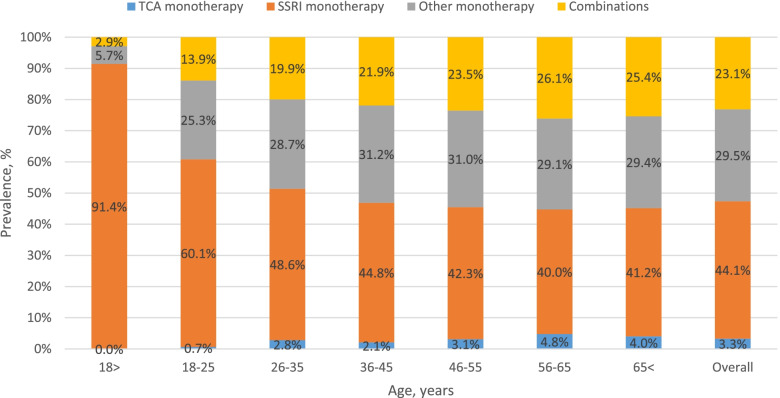
A total of 4960 eligible MDD patients were identified (median age = 51 years, 65% female), representing a period prevalence of 0.218%, and of those, a high proportion of patients received drug treatment (92%). Among incident MDD cases (n = 2553), 24.4% had TRD. Factors associated with TRD included increasing age and personality disorder. Median time on treatment was 3.7 months (longer for those without TRD than those with) and 81.9% of patients purchased more than one month's supply of therapy. In the year after index, patients with TRD had a significant increased number of visits to primary care physicians, psychiatrists, emergency room visits, general hospitalizations, and psychiatric hospitalizations.
Our study shows that prevalence of MDD in Israel is low compared to other countries, however once diagnosed, patients' are likely to receive drug treatment. Among patients diagnosed with MDD, the proportion of TRD is similar to other countries, increases with age and is associated with increased healthcare utilization, therefore should be a focus of continued research for finding effective long term treatment options.
重度抑郁症(MDD)是全球最常见的精神障碍之一,估计每年有 10-15%的人口受其影响。治疗抵抗性抑郁症(TRD)估计影响了三分之一的这些患者,他们在社交和职业功能方面存在困难,身体健康状况下降,出现自杀念头,并增加了对医疗保健的利用。我们描述了 Maccabi 医疗保健服务(MHS)中 MDD、TRD 的患病率以及相关的医疗保健资源利用情况,MHS 是以色列一个拥有 250 万成员的国家授权的医疗服务机构。
在 2017-2018 年期间,确定了所有 MHS 中有 MDD 诊断的成员,并按年龄、性别和 TRD 评估患病率。为了评估 MDD 的发病率,在 2016 年 1 月 1 日至 2018 年 5 月 31 日期间,确定了在任何 MDD 发作开始时年龄在 18-65 岁之间的成员,并且在初次发作前或后三个月内至少接受过一次系统性一线抗抑郁治疗。通过 TRD 比较了治疗模式、一线治疗时间和医疗保健资源的利用情况。
共确定了 4960 名符合条件的 MDD 患者(中位年龄为 51 岁,女性占 65%),占总患病率的 0.218%,其中很大一部分患者接受了药物治疗(92%)。在新诊断的 MDD 病例(n=2553)中,有 24.4%的患者有 TRD。与 TRD 相关的因素包括年龄增长和人格障碍。治疗中位时间为 3.7 个月(无 TRD 者比有 TRD 者长),81.9%的患者购买了一个月以上的治疗药物。在索引后的一年中,TRD 患者的初级保健医生、精神科医生就诊次数、急诊就诊次数、一般住院次数和精神科住院次数显著增加。
我们的研究表明,与其他国家相比,以色列的 MDD 患病率较低,但一旦确诊,患者很可能会接受药物治疗。在诊断为 MDD 的患者中,TRD 的比例与其他国家相似,随年龄增长而增加,并与医疗保健利用的增加相关,因此应继续研究寻找有效的长期治疗方案。