Liu Mengchen, Cai Yan, Pan Jichao, Peter Karlheinz, Li Zhiyong
School of Biological Science and Medical Engineering, Southeast University, Nanjing 210096, People's Republic of China.
Atherothrombosis and Vascular Biology, Baker Heart and Diabetes Institute, PO Box 6492, St Kilda Road Central, Melbourne, VIC 8008, Australia.
R Soc Open Sci. 2022 Aug 3;9(8):220239. doi: 10.1098/rsos.220239. eCollection 2022 Aug.
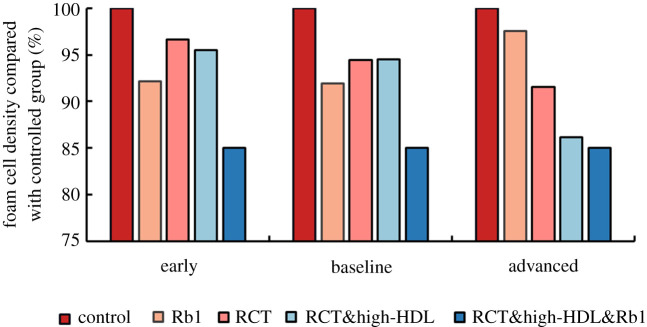
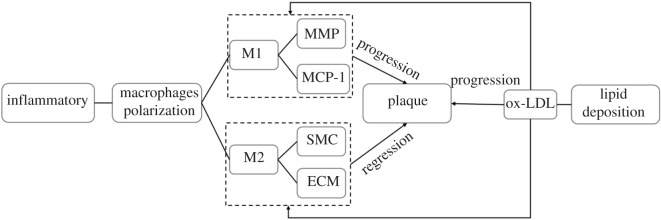
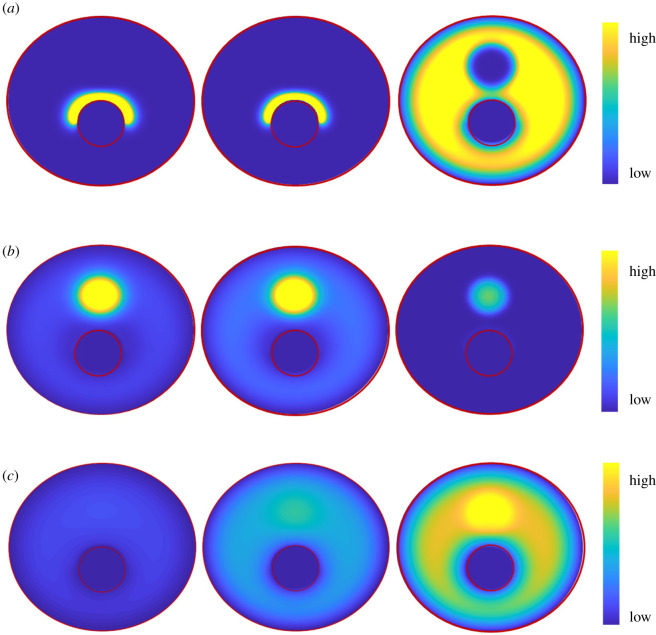
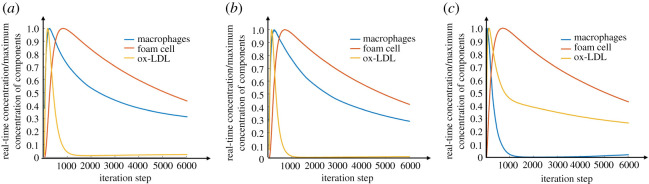
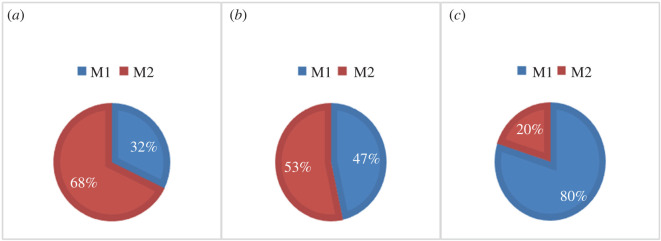
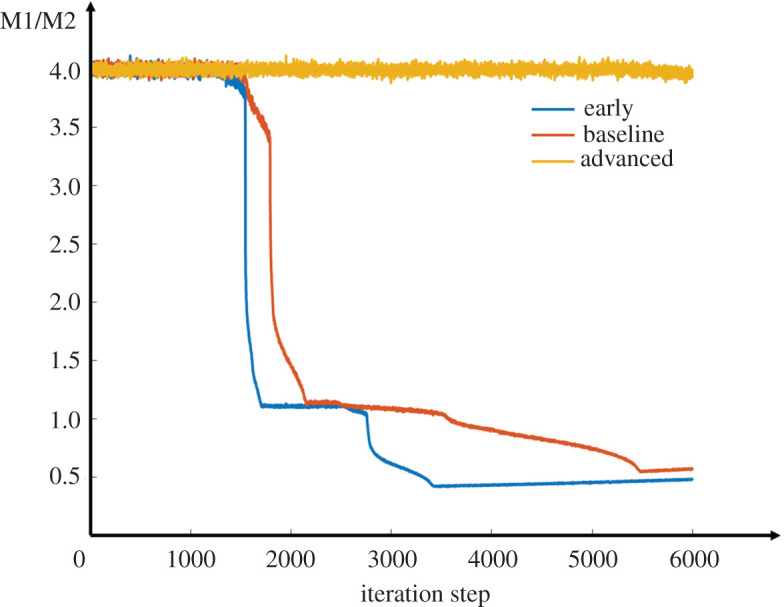
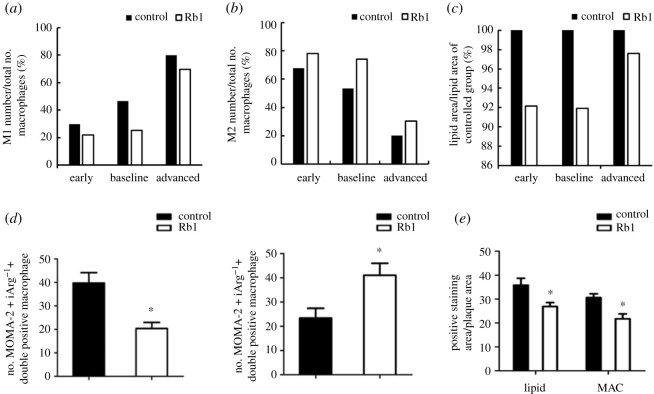
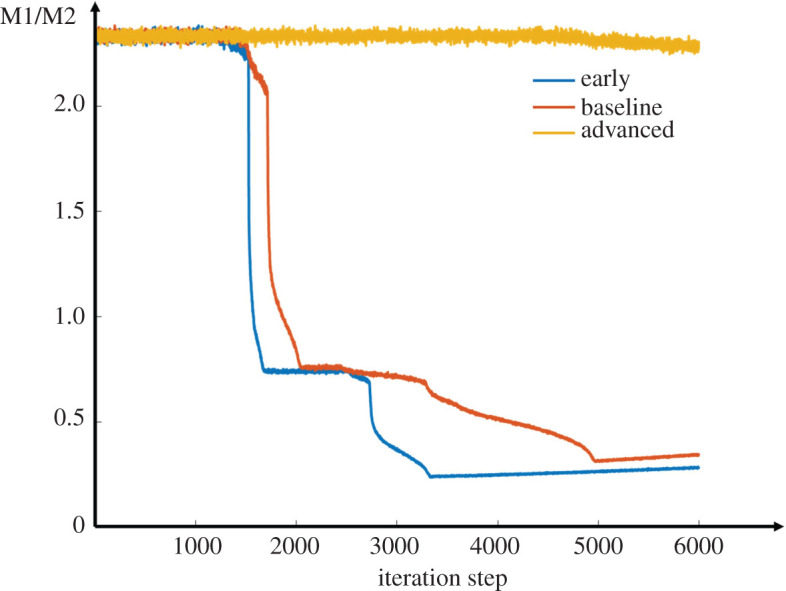
We proposed a dynamic stochastic mathematical model to evaluate the role of macrophage polarization in plaque development. The dynamic process of macrophages from proliferation to death was simulated under different lipid microenvironments. The probability of macrophage phenotypic switching was described using a Bernoulli distribution where the stochastic variable was determined by the local lipid level. Moreover, the interactions between macrophages and microenvironmental factors vary with macrophage phenotype. We investigated the distribution of key microenvironmental factors, the dynamics of macrophage polarization and its influence on foam cell formation. M1 macrophages were found to predominate in advanced plaque corresponding to the exacerbated inflammation observed in mice experiments. The imbalance between the deposition of oxidized low-density lipoprotein and phagocytic effects of macrophages governed the formation of foam cells. Furthermore, we simulated targeted therapies by either directly inhibiting the polarization probability to M1 macrophages or indirectly regulating macrophage polarization due to high-density lipoprotein levels. Comparison of simulation results with experimental findings in both therapies indicated that the intervention and regulation of macrophage polarization could influence plaque microenvironment and subsequently induce plaque regression, especially in the early stage. The proposed modelling system can facilitate the evaluation of novel therapies targeting macrophage polarization.
我们提出了一个动态随机数学模型来评估巨噬细胞极化在斑块发展中的作用。在不同的脂质微环境下模拟了巨噬细胞从增殖到死亡的动态过程。巨噬细胞表型转换的概率用伯努利分布来描述,其中随机变量由局部脂质水平决定。此外,巨噬细胞与微环境因素之间的相互作用随巨噬细胞表型而变化。我们研究了关键微环境因素的分布、巨噬细胞极化的动态变化及其对泡沫细胞形成的影响。发现M1巨噬细胞在晚期斑块中占主导地位,这与小鼠实验中观察到的炎症加剧相对应。氧化低密度脂蛋白的沉积与巨噬细胞吞噬作用之间的失衡控制了泡沫细胞的形成。此外,我们通过直接抑制向M1巨噬细胞的极化概率或间接调节由于高密度脂蛋白水平引起的巨噬细胞极化来模拟靶向治疗。两种治疗方法的模拟结果与实验结果的比较表明,巨噬细胞极化的干预和调节可以影响斑块微环境,随后诱导斑块消退,尤其是在早期。所提出的建模系统有助于评估针对巨噬细胞极化的新型治疗方法。