Ottawa Institute of Systems Biology, University of Ottawagrid.28046.38, Ottawa, Ontario, Canada.
School of Pharmaceutical Sciences, Faculty of Medicine, University of Ottawagrid.28046.38, Ottawa, Ontario, Canada.
mSystems. 2022 Aug 30;7(4):e0038122. doi: 10.1128/msystems.00381-22. Epub 2022 Aug 11.
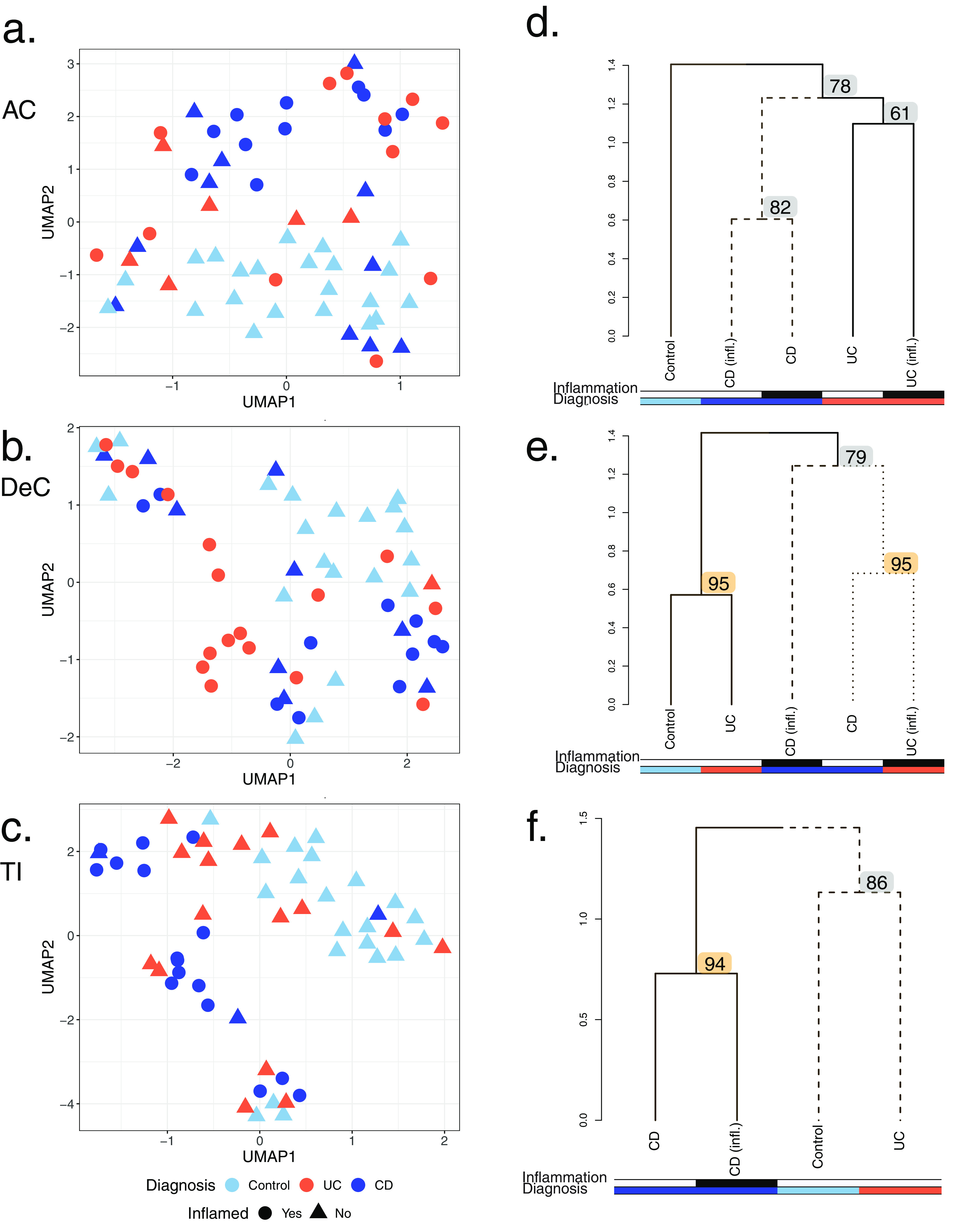
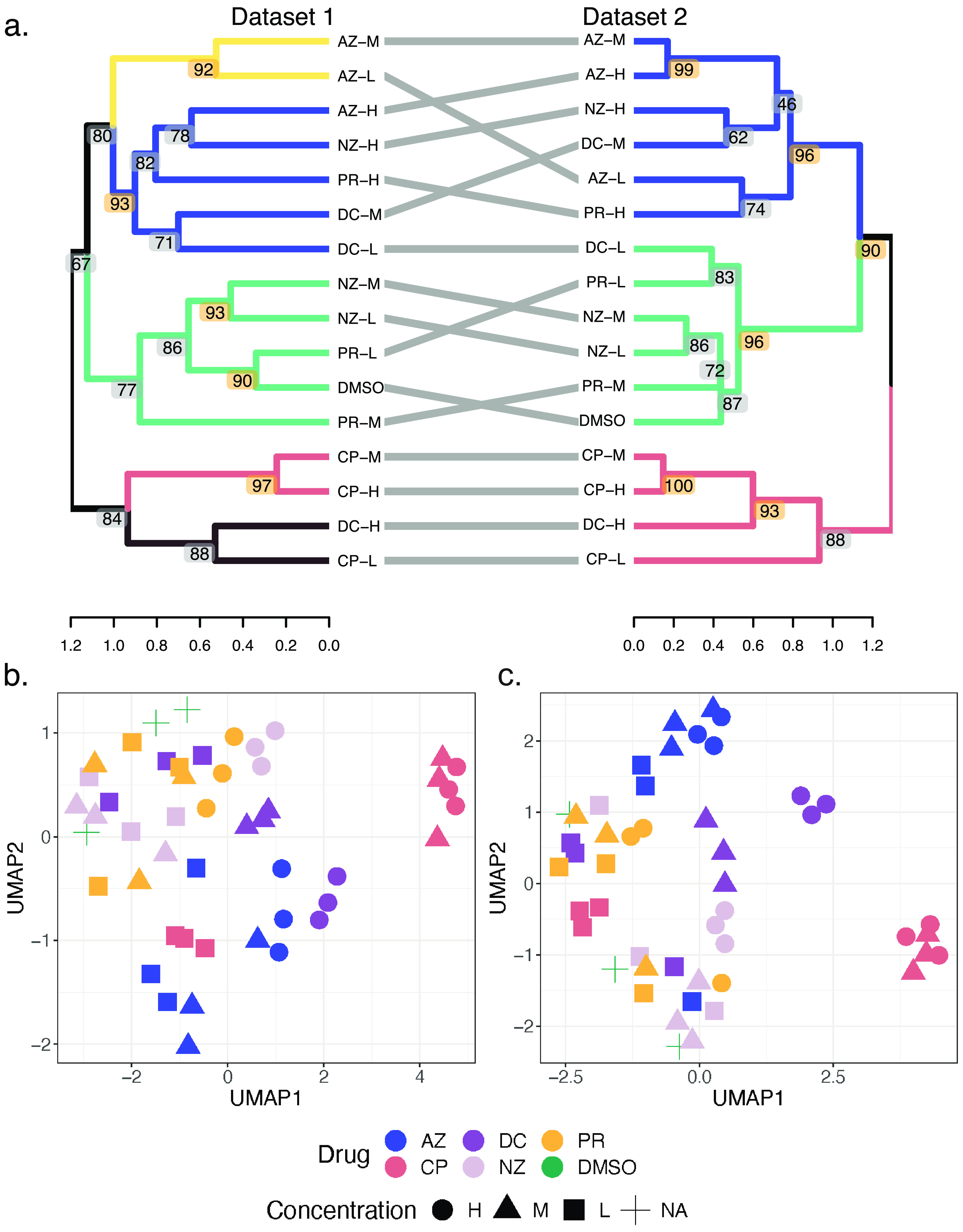
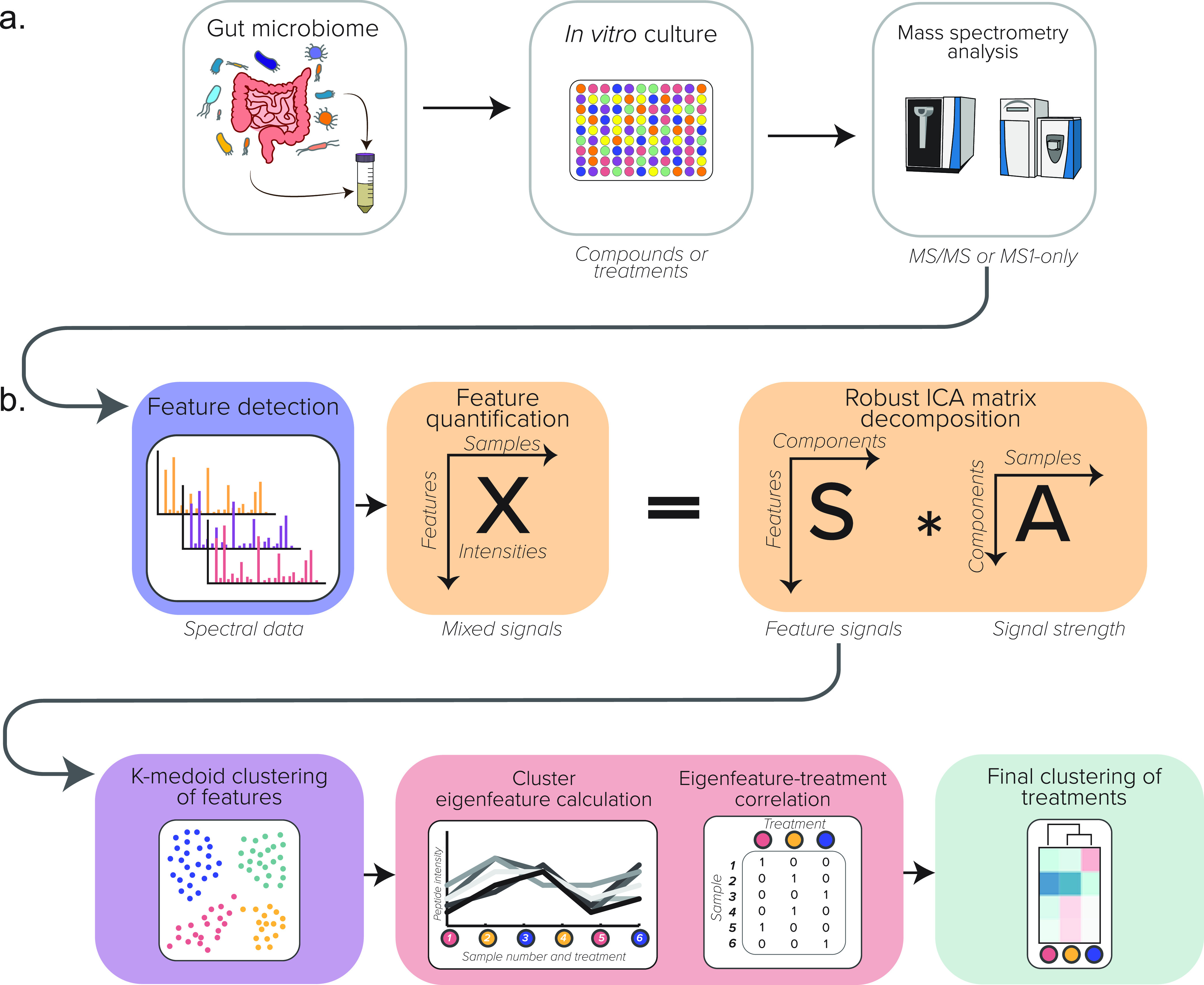
Metaproteomics is used to explore the functional dynamics of microbial communities. However, acquiring metaproteomic data by tandem mass spectrometry (MS/MS) is time-consuming and resource-intensive, and there is a demand for computational methods that can be used to reduce these resource requirements. We present MetaProClust-MS1, a computational framework for microbiome feature screening developed to prioritize samples for follow-up MS/MS. In this proof-of-concept study, we tested and compared MetaProClust-MS1 results on gut microbiome data, from fecal samples, acquired using short 15-min MS1-only chromatographic gradients and MS1 spectra from longer 60-min gradients to MS/MS-acquired data. We found that MetaProClust-MS1 identified robust gut microbiome responses caused by xenobiotics with significantly correlated cluster topologies of comparable data sets. We also used MetaProClust-MS1 to reanalyze data from both a clinical MS/MS diagnostic study of pediatric patients with inflammatory bowel disease and an experiment evaluating the therapeutic effects of a small molecule on the brain tissue of Alzheimer's disease mouse models. MetaProClust-MS1 clusters could distinguish between inflammatory bowel disease diagnoses (ulcerative colitis and Crohn's disease) using samples from mucosal luminal interface samples and identified hippocampal proteome shifts of Alzheimer's disease mouse models after small-molecule treatment. Therefore, we demonstrate that MetaProClust-MS1 can screen both microbiomes and single-species proteomes using only MS1 profiles, and our results suggest that this approach may be generalizable to any proteomics experiment. MetaProClust-MS1 may be especially useful for large-scale metaproteomic screening for the prioritization of samples for further metaproteomic characterization, using MS/MS, for instance, in addition to being a promising novel approach for clinical diagnostic screening. Growing evidence suggests that human gut microbiome composition and function are highly associated with health and disease. As such, high-throughput metaproteomic studies are becoming more common in gut microbiome research. However, using a conventional long liquid chromatography (LC)-MS/MS gradient metaproteomics approach as an initial screen in large-scale microbiome experiments can be slow and expensive. To combat this challenge, we introduce MetaProClust-MS1, a computational framework for microbiome screening using MS1-only profiles. In this proof-of-concept study, we show that MetaProClust-MS1 identifies clusters of gut microbiome treatments using MS1-only profiles similar to those identified using MS/MS. Our approach allows researchers to prioritize samples and treatments of interest for further metaproteomic analyses and may be generally applicable to any proteomic analysis. In particular, this approach may be especially useful for large-scale metaproteomic screening or in clinical settings where rapid diagnostic evidence is required.
代谢组学用于探索微生物群落的功能动态。然而,通过串联质谱(MS/MS)获取代谢组学数据既耗时又耗资源,因此需要开发能够减少这些资源需求的计算方法。我们提出了 MetaProClust-MS1,这是一种用于微生物组特征筛选的计算框架,旨在为后续 MS/MS 优先选择样本。在这项概念验证研究中,我们测试并比较了 MetaProClust-MS1 在肠道微生物组数据上的结果,这些数据来自粪便样本,使用短的 15 分钟 MS1 仅色谱梯度和长的 60 分钟 MS1 谱获得,用于 MS/MS 获得的数据。我们发现,MetaProClust-MS1 能够识别出由外源性物质引起的稳健的肠道微生物组反应,并且具有可比数据集的显著相关聚类拓扑结构。我们还使用 MetaProClust-MS1 重新分析了来自儿科炎症性肠病患者的 MS/MS 诊断研究和评估小分子对阿尔茨海默病小鼠模型脑组织治疗效果的实验的数据。MetaProClust-MS1 聚类可以区分溃疡性结肠炎和克罗恩病的诊断(溃疡性结肠炎和克罗恩病),使用来自粘膜腔界面样本的样本,并鉴定出小分子治疗后阿尔茨海默病小鼠模型的海马蛋白质组变化。因此,我们证明了 MetaProClust-MS1 可以仅使用 MS1 谱筛选微生物组和单一种群蛋白质组,并且我们的结果表明,这种方法可能适用于任何蛋白质组学实验。MetaProClust-MS1 可能特别适用于使用 MS/MS 对样本进行进一步代谢组学表征的大规模代谢组学筛选,除了作为临床诊断筛选的有前途的新方法外。越来越多的证据表明,人类肠道微生物组的组成和功能与健康和疾病高度相关。因此,高通量代谢组学研究在肠道微生物组研究中越来越普遍。然而,在大规模微生物组实验中使用传统的长液相色谱(LC)-MS/MS 梯度代谢组学方法作为初始筛选可能会很慢且昂贵。为了应对这一挑战,我们引入了 MetaProClust-MS1,这是一种使用仅 MS1 谱进行微生物组筛选的计算框架。在这项概念验证研究中,我们表明 MetaProClust-MS1 可以使用 MS1 仅谱识别类似于使用 MS/MS 识别的肠道微生物组处理的聚类。我们的方法允许研究人员优先选择样本和感兴趣的处理,以进行进一步的代谢组学分析,并且可能普遍适用于任何蛋白质组分析。特别是,这种方法可能特别适用于大规模代谢组学筛选或在需要快速诊断证据的临床环境中。