The Affiliated Jiangsu Shengze Hospital of Nanjing Medical University, Suzhou, 215228, China.
State Key Laboratory of Radiation Medicine and Protection, School for Radiological and Interdisciplinary Sciences (RAD-X), Collaborative Innovation Center of Radiation Medicine of Jiangsu Higher Education Institutions, Soochow University, Suzhou, 215123, China.
J Nanobiotechnology. 2022 Aug 11;20(1):372. doi: 10.1186/s12951-022-01561-z.
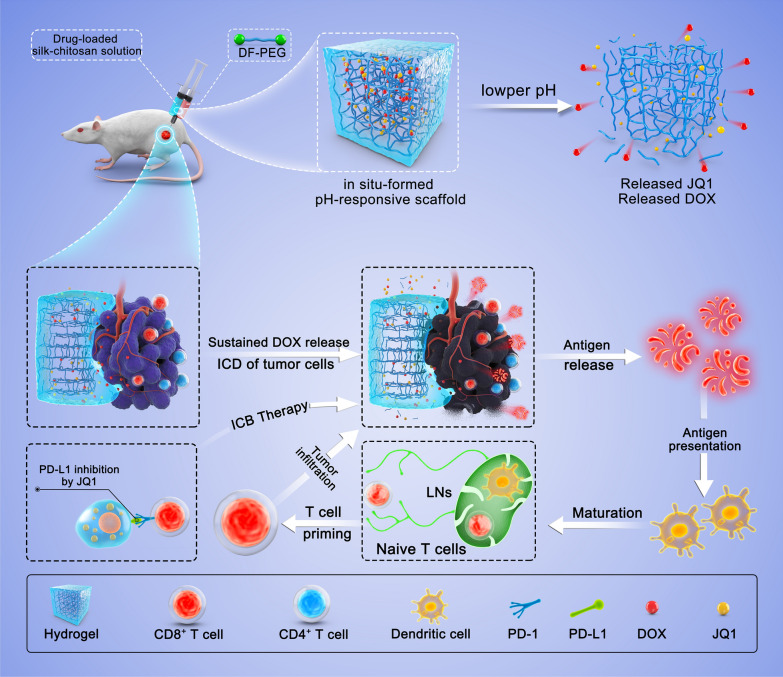
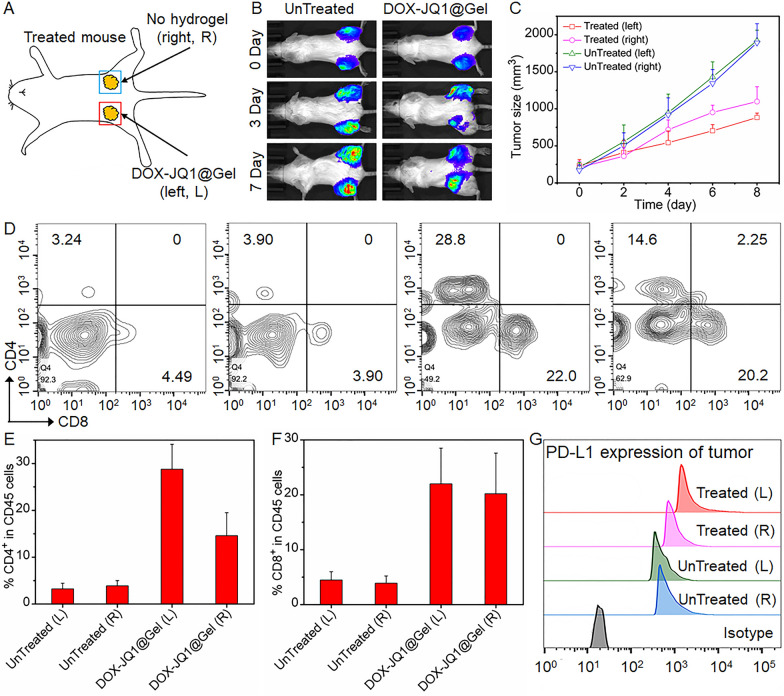
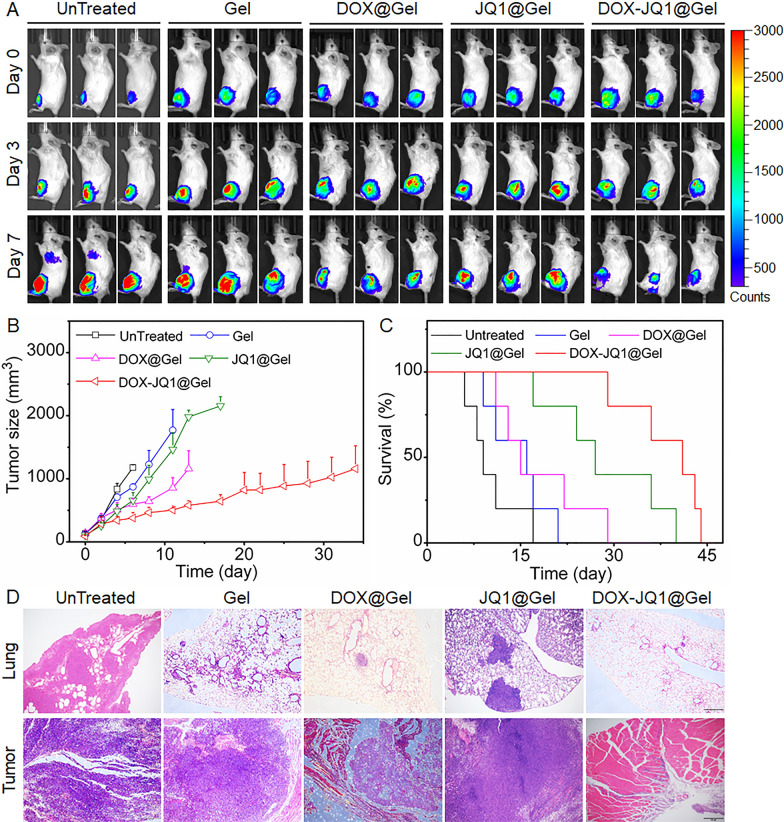
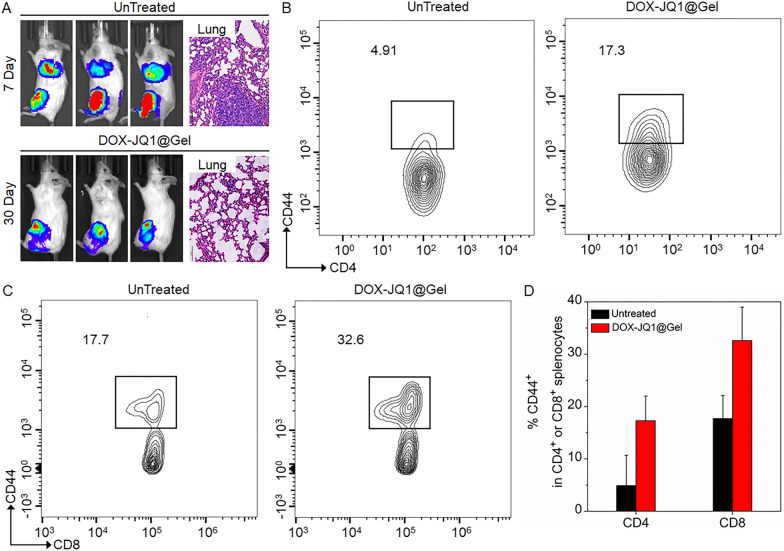
Although combination chemoimmunotherapy shows promising clinical results for cancer treatment, this approach is largely restricted by variable objective response rate and severe systemic adverse effects of immunotherapeutic antibody and chemotherapeutic drugs. Therefore, an in situ-formed therapeutic silk-chitosan composite scaffold is fabricated in this study to allow local release of the chemotherapeutic drug doxorubicin (DOX) and JQ1 (small molecular inhibitor used for the extraterminal protein BRD4 and bromodomain) with control release kinetics. DOX-JQ1@Gel contains a pH-degradable group that releases therapeutics in a weak acidic tumor microenvironment. The released DOX could directly kill tumor cells or lead to immunogenic cell death, thereby triggering the response of antitumor immunity. Meanwhile, chemotherapy-triggered antigen release and JQ1-mediated PD-L1 checkpoint blockade cumulatively contribute to trigger the response of antitumor immunity. Finally, the DOX-JQ1@Gel is locally injected to evaluate its synergistic cancer therapeutic effect, which is expected to improve objective response rate of immunotherapy and minimize systemic side effects.
尽管联合化疗免疫疗法在癌症治疗方面显示出有前景的临床结果,但这种方法在很大程度上受到免疫治疗抗体和化疗药物的客观反应率变化和严重全身不良反应的限制。因此,本研究中构建了一种原位形成的治疗性丝-壳聚糖复合支架,以允许阿霉素(DOX)和 JQ1(用于端外蛋白 BRD4 和溴结构域的小分子抑制剂)的局部释放,并具有控制释放动力学。DOX-JQ1@Gel 含有 pH 可降解基团,可在弱酸性肿瘤微环境中释放治疗药物。释放的 DOX 可以直接杀死肿瘤细胞或导致免疫原性细胞死亡,从而引发抗肿瘤免疫反应。同时,化疗触发的抗原释放和 JQ1 介导的 PD-L1 检查点阻断累积有助于触发抗肿瘤免疫反应。最后,局部注射 DOX-JQ1@Gel 以评估其协同癌症治疗效果,有望提高免疫治疗的客观反应率,并最小化全身副作用。