Kolliopoulos Constantinos, Ali Mohamad Moustafa, Castillejo-Lopez Casimiro, Heldin Carl-Henrik, Heldin Paraskevi
Department of Medical Biochemistry and Microbiology, Uppsala University, P.O. Box 582, SE-751 23 Uppsala, Sweden.
Department of Genetics and Pathology, Uppsala University, P.O. Box 582, SE-751 23 Uppsala, Sweden.
Cancers (Basel). 2022 Jul 31;14(15):3747. doi: 10.3390/cancers14153747.
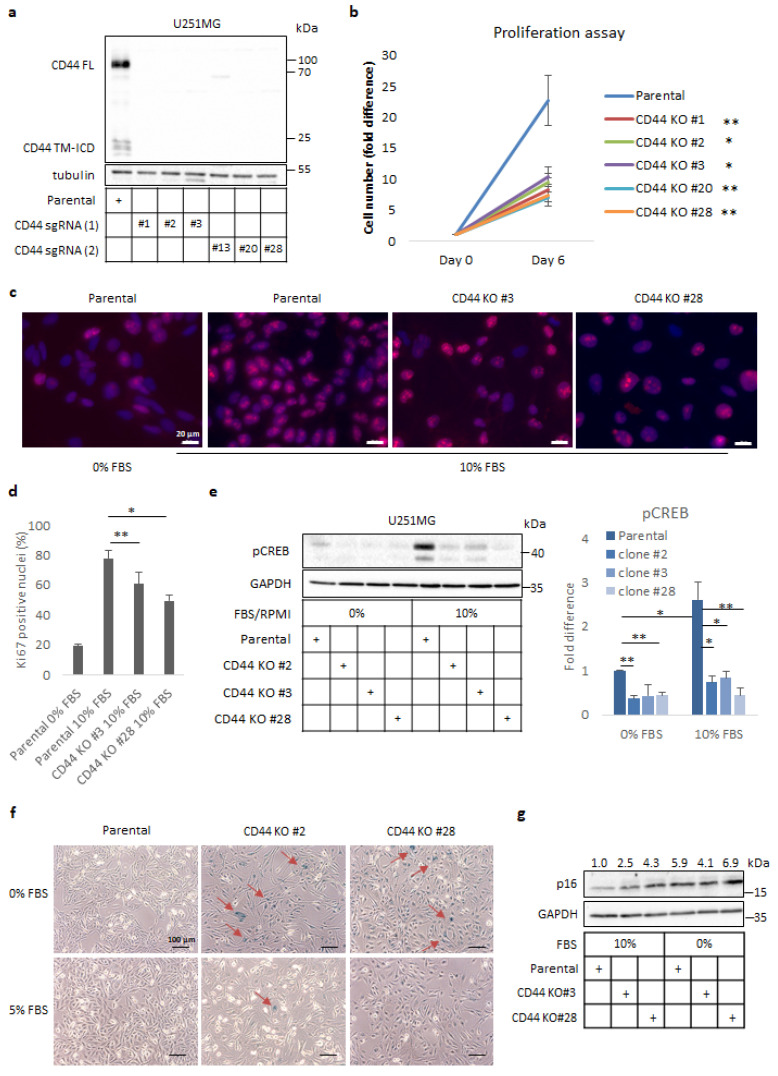
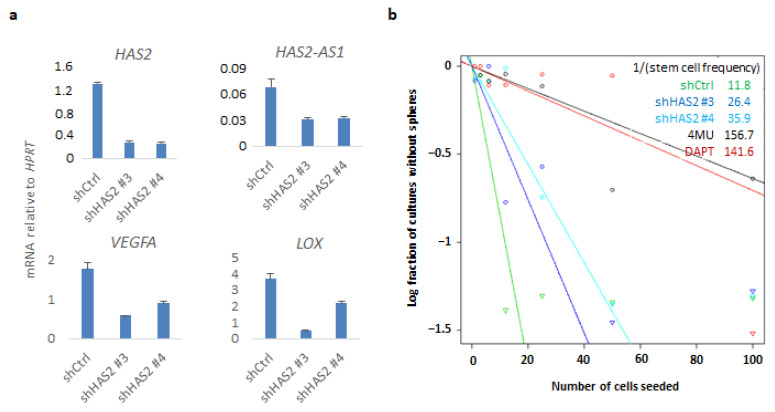
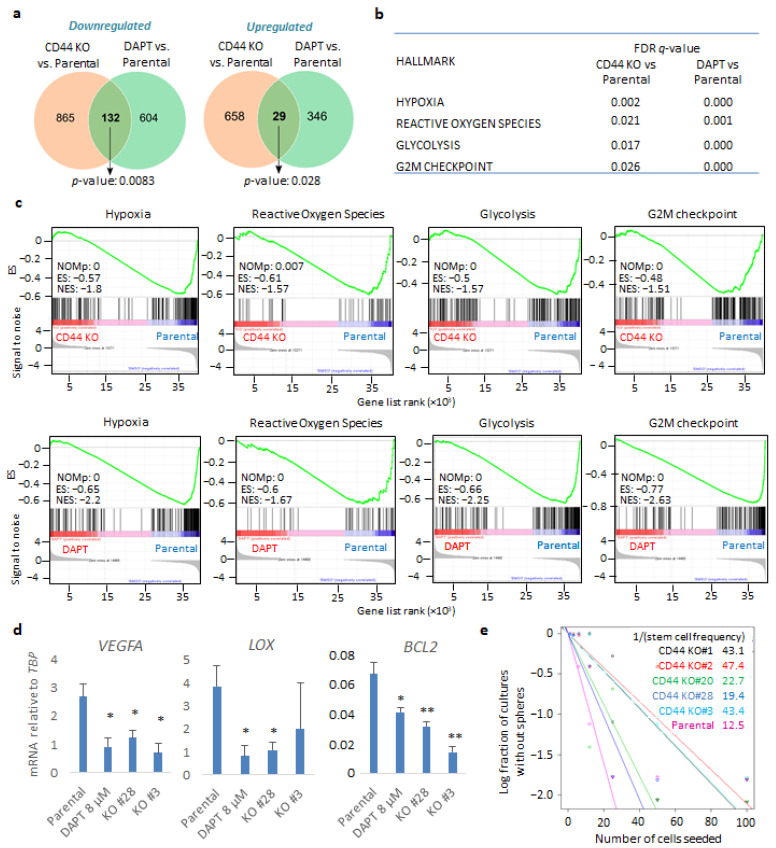
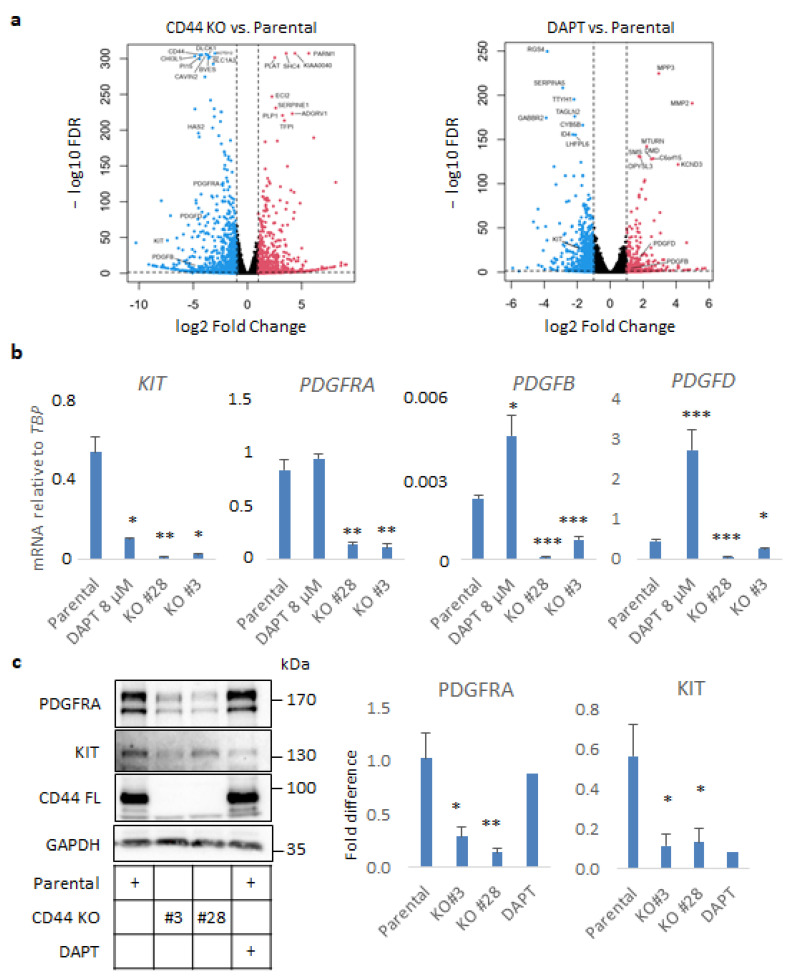
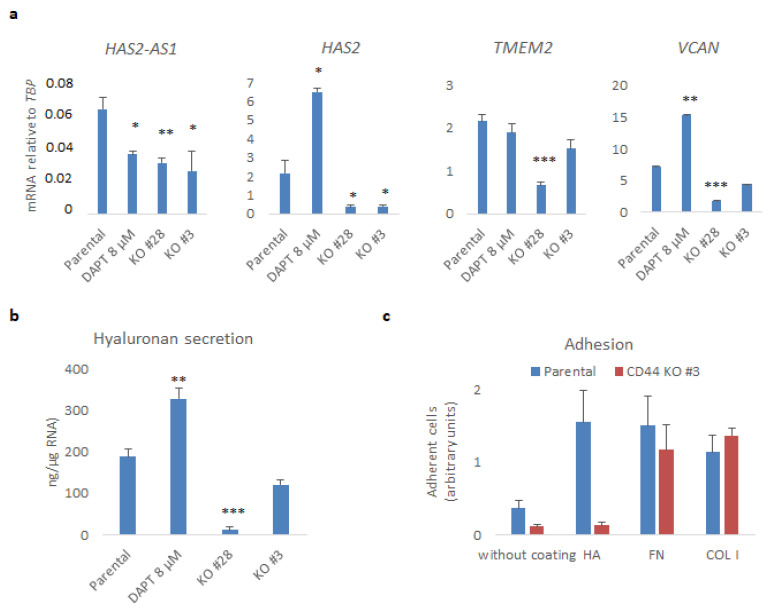
Glioblastoma multiforme (GBM) is a lethal brain tumor, characterized by enhanced proliferation and invasion, as well as increased vascularization and chemoresistance. The expression of the hyaluronan receptor CD44 has been shown to correlate with GBM progression and poor prognosis. Here, we sought to elucidate the molecular mechanisms by which CD44 promotes GBM progression by knocking out (KO) CD44, employing CRISPR/Cas9 gene editing in U251MG cells. CD44-depleted cells exhibited an impaired proliferation rate, as shown by the decreased cell numbers, decreased Ki67-positive cell nuclei, diminished phosphorylation of CREB, and increased levels of the cell cycle inhibitor p16 compared to control cells. Furthermore, the CD44 KO cells showed decreased stemness and increased senescence, which was manifested upon serum deprivation. In stem cell-like enriched spheres, RNA-sequencing analysis of U251MG cells revealed a CD44 dependence for gene signatures related to hypoxia, the glycolytic pathway, and G2 to M phase transition. Partially similar results were obtained when cells were treated with the γ-secretase inhibitor DAPT, which inhibits CD44 cleavage and therefore inhibits the release of the intracellular domain (ICD) of CD44, suggesting that certain transcriptional responses are dependent on CD44-ICD. Interestingly, the expression of molecules involved in hyaluronan synthesis, degradation, and interacting matrix proteins, as well as of platelet-derived growth factor (PDGF) isoforms and PDGF receptors, were also deregulated in CD44 KO cells. These results were confirmed by the knockdown of CD44 in another GBM cell line, U2990. Notably, downregulation of hyaluronan synthase 2 (HAS2) impaired the hypoxia-related genes and decreased the CD44 protein levels, suggesting a CD44/hyaluronan feedback circuit contributing to GBM progression.
多形性胶质母细胞瘤(GBM)是一种致命的脑肿瘤,其特征在于增殖和侵袭增强,以及血管生成增加和化疗耐药性增强。透明质酸受体CD44的表达已被证明与GBM进展和不良预后相关。在这里,我们试图通过在U251MG细胞中使用CRISPR/Cas9基因编辑敲除(KO)CD44来阐明CD44促进GBM进展的分子机制。与对照细胞相比,CD44缺失的细胞增殖率受损,表现为细胞数量减少、Ki67阳性细胞核减少、CREB磷酸化减少以及细胞周期抑制剂p16水平增加。此外,CD44基因敲除细胞显示干性降低和衰老增加,这在血清剥夺时表现出来。在富含干细胞样的球体中,对U251MG细胞进行RNA测序分析发现,与缺氧、糖酵解途径以及G2期到M期转变相关的基因特征依赖于CD44。当用γ-分泌酶抑制剂DAPT处理细胞时,获得了部分相似的结果,该抑制剂抑制CD44的切割,从而抑制CD44细胞内结构域(ICD)的释放,表明某些转录反应依赖于CD44-ICD。有趣的是,参与透明质酸合成、降解和相互作用的基质蛋白的分子,以及血小板衍生生长因子(PDGF)异构体和PDGF受体的表达,在CD44基因敲除细胞中也失调。这些结果在另一种GBM细胞系U2990中通过敲低CD44得到证实。值得注意的是,透明质酸合酶2(HAS2)的下调损害了缺氧相关基因并降低了CD44蛋白水平,表明存在一个有助于GBM进展的CD44/透明质酸反馈回路。