Center for Diagnostic, Therapeutic and Investigative Studies, Faculty of Health Sciences, Universiti Kebangsaan Malaysia, Kuala Lumpur 50300, Malaysia.
Center for Toxicology and Health Risk Research, Faculty of Health Sciences, Universiti Kebangsaan Malaysia, Kuala Lumpur 50300, Malaysia.
Int J Mol Sci. 2022 Aug 2;23(15):8582. doi: 10.3390/ijms23158582.
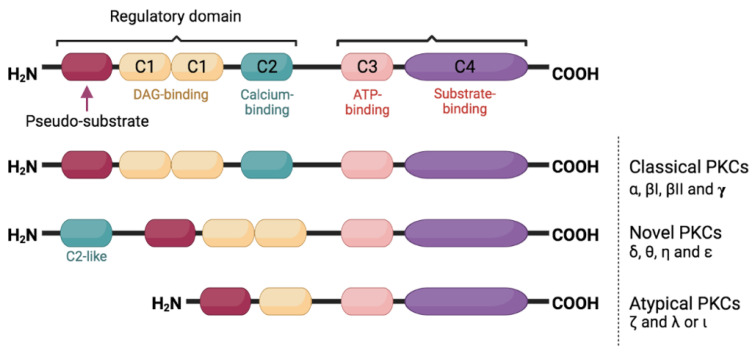
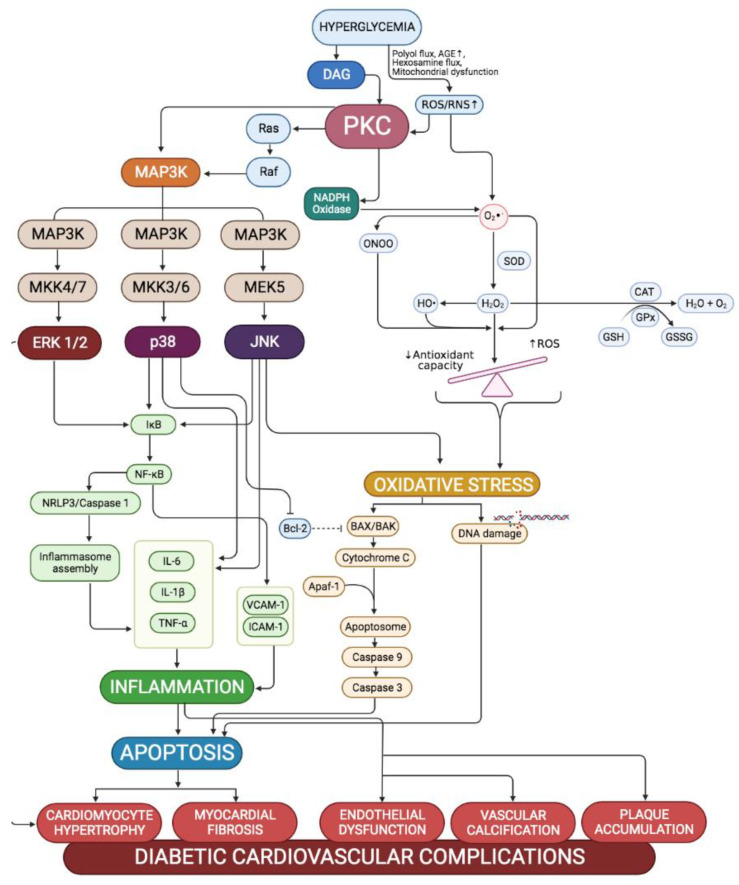
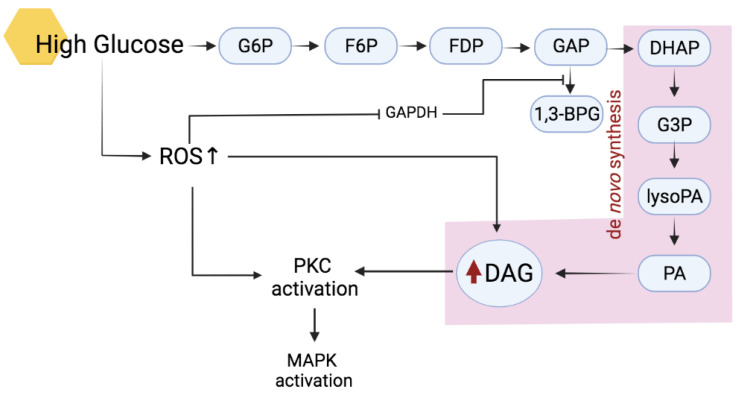
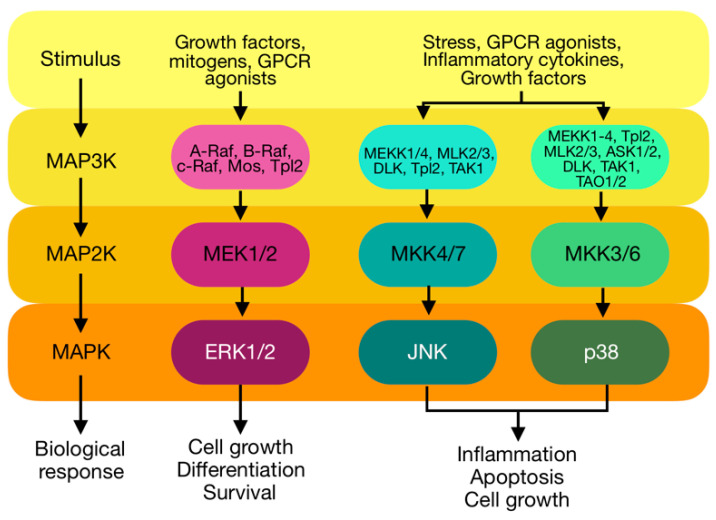
Cardiovascular disease is the most common cause of death among diabetic patients worldwide. Hence, cardiovascular wellbeing in diabetic patients requires utmost importance in disease management. Recent studies have demonstrated that protein kinase C activation plays a vital role in the development of cardiovascular complications via its activation of mitogen-activated protein kinase (MAPK) cascades, also known as PKC-MAPK pathways. In fact, persistent hyperglycaemia in diabetic conditions contribute to preserved PKC activation mediated by excessive production of diacylglycerol (DAG) and oxidative stress. PKC-MAPK pathways are involved in several cellular responses, including enhancing oxidative stress and activating signalling pathways that lead to uncontrolled cardiac and vascular remodelling and their subsequent dysfunction. In this review, we discuss the recent discovery on the role of PKC-MAPK pathways, the mechanisms involved in the development and progression of diabetic cardiovascular complications, and their potential as therapeutic targets for cardiovascular management in diabetic patients.
心血管疾病是全球糖尿病患者死亡的最常见原因。因此,糖尿病患者的心血管健康在疾病管理中至关重要。最近的研究表明,蛋白激酶 C 的激活通过激活丝裂原活化蛋白激酶 (MAPK) 级联反应,也称为 PKC-MAPK 途径,在心血管并发症的发展中起着至关重要的作用。事实上,糖尿病患者持续的高血糖会导致二酰基甘油 (DAG) 过度产生和氧化应激引起的 PKC 持续激活。PKC-MAPK 途径参与了几种细胞反应,包括增强氧化应激和激活信号通路,导致不受控制的心脏和血管重塑及其随后的功能障碍。在这篇综述中,我们讨论了 PKC-MAPK 途径作用的最新发现,以及它们在糖尿病心血管并发症的发展和进展中的作用机制,以及它们作为糖尿病患者心血管管理治疗靶点的潜力。