Department of Bioinformatics, Matthias Schleiden Institute, University of Jena, Ernst-Abbe-Platz 2, 07743 Jena, Germany.
Centre for Applied Mathematics and Bioinformatics, and Department of Mathematics and Natural Sciences, Gulf University for Science and Technology, Hawally 32093, Kuwait.
Int J Mol Sci. 2022 Aug 4;23(15):8692. doi: 10.3390/ijms23158692.
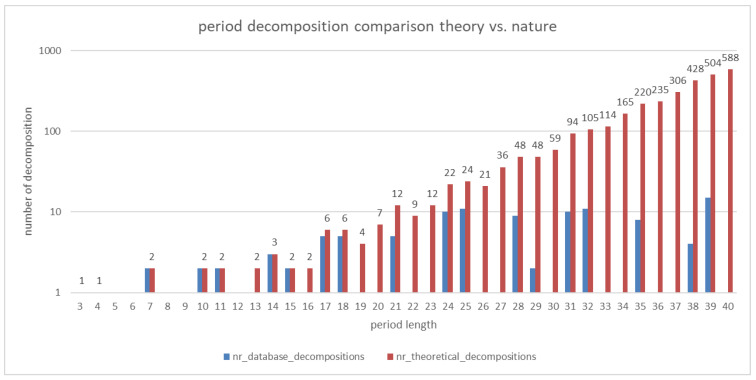
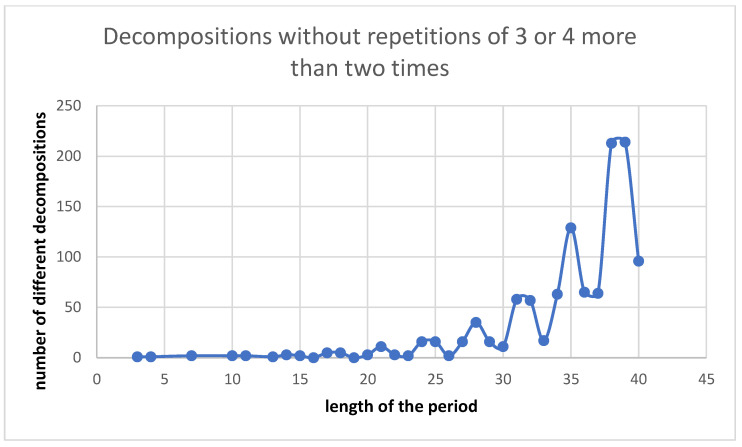
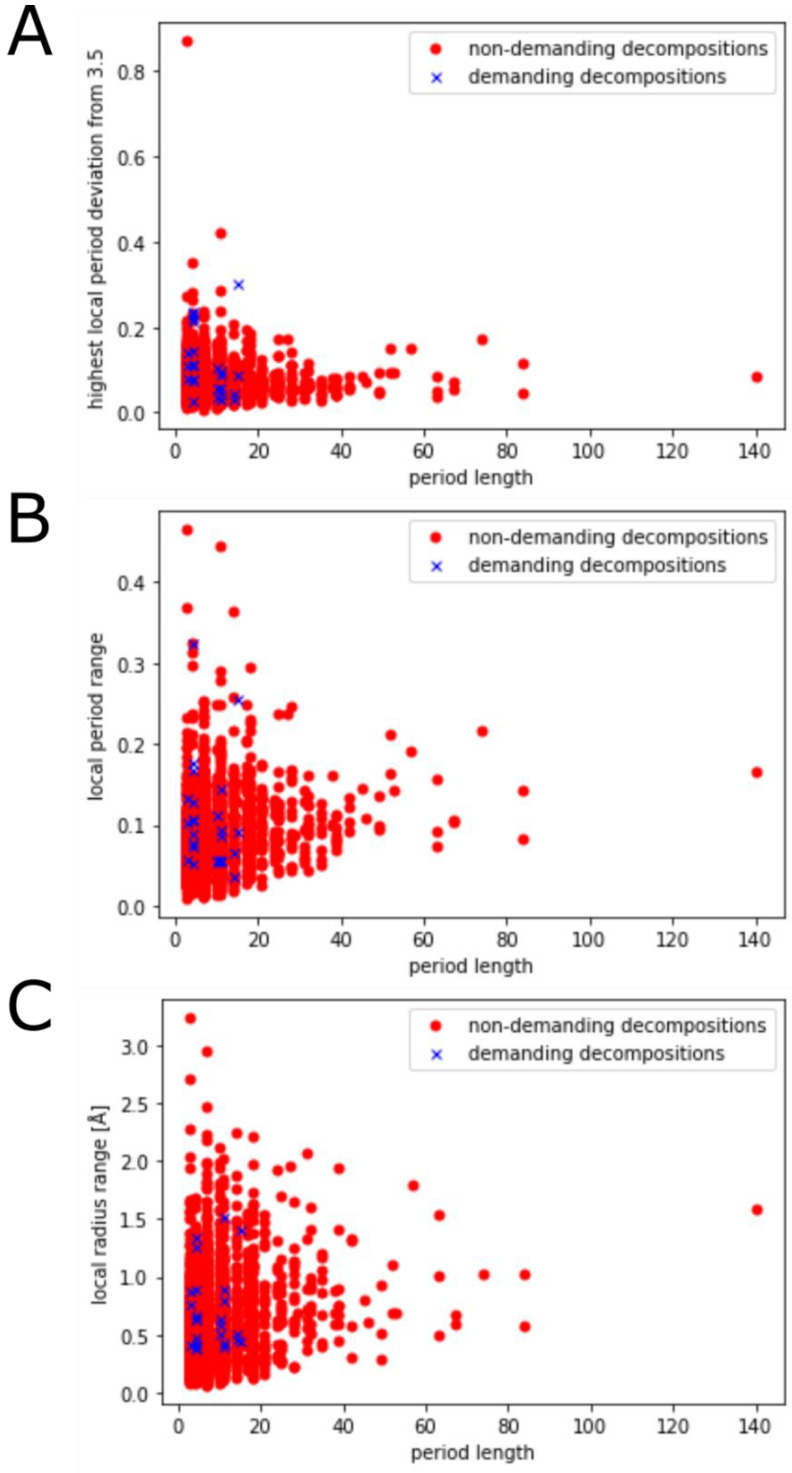
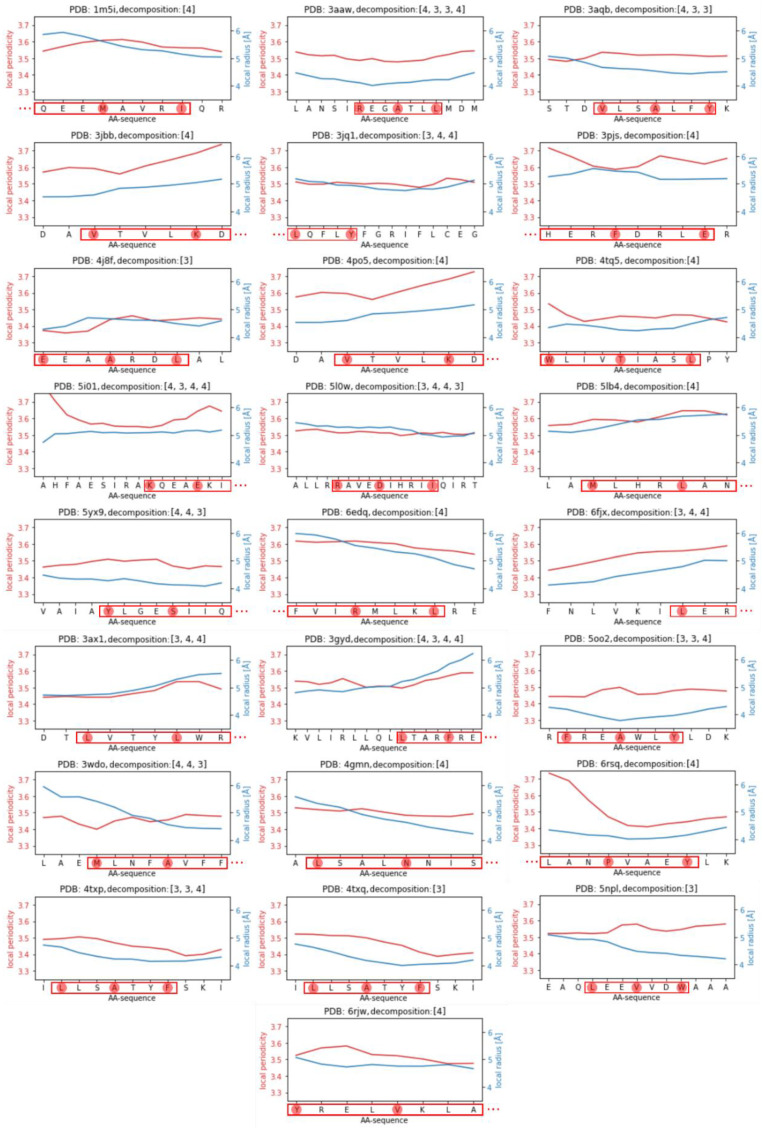
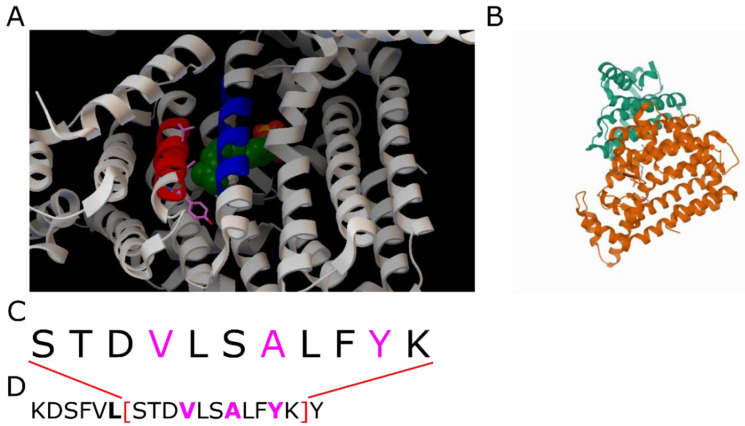
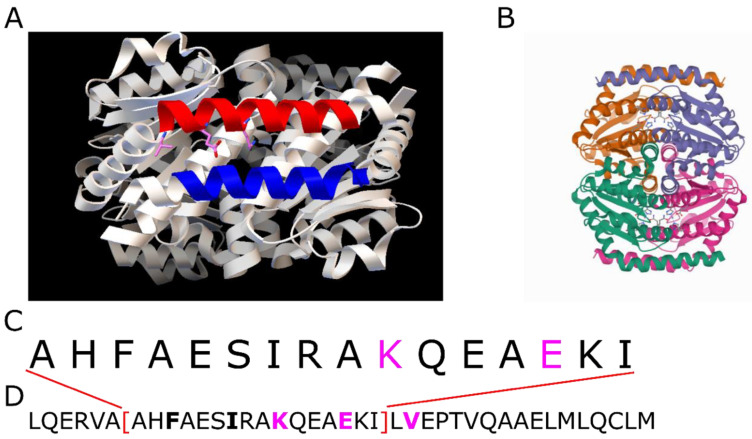
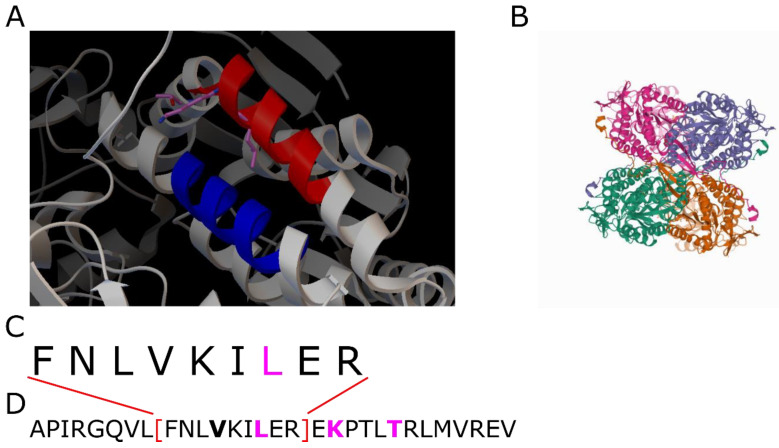
A coiled coil is a structural motif in proteins that consists of at least two α-helices wound around each other. For structural stabilization, these α-helices form interhelical contacts via their amino acid side chains. However, there are restrictions as to the distances along the amino acid sequence at which those contacts occur. As the spatial period of the α-helix is 3.6, the most frequent distances between hydrophobic contacts are 3, 4, and 7. Up to now, the multitude of possible decompositions of α-helices participating in coiled coils at these distances has not been explored systematically. Here, we present an algorithm that computes all non-redundant decompositions of sequence periods of hydrophobic amino acids into distances of 3, 4, and 7. Further, we examine which decompositions can be found in nature by analyzing the available data and taking a closer look at correlations between the properties of the coiled coil and its decomposition. We find that the availability of decompositions allowing for coiled-coil formation without putting too much strain on the α-helix geometry follows an oscillatory pattern in respect of period length. Our algorithm supplies the basis for exploring the possible decompositions of coiled coils of any period length.
卷曲螺旋是蛋白质中的一种结构基序,由至少两个相互缠绕的α-螺旋组成。为了结构稳定,这些α-螺旋通过其氨基酸侧链形成螺旋间的接触。然而,这些接触发生的氨基酸序列的距离存在限制。由于α-螺旋的空间周期为 3.6,因此疏水性接触最常见的距离为 3、4 和 7。到目前为止,这些距离处参与卷曲螺旋的α-螺旋的多种可能的分解尚未被系统地探索。在这里,我们提出了一种算法,用于计算疏水氨基酸序列周期分解为 3、4 和 7 的所有非冗余分解。此外,我们通过分析可用数据并仔细研究卷曲螺旋及其分解的性质之间的相关性,来研究在自然界中可以找到哪些分解。我们发现,允许在不使α-螺旋几何结构过度紧张的情况下形成卷曲螺旋的分解的可用性,在周期长度方面呈现出波动模式。我们的算法为探索任何周期长度的卷曲螺旋的可能分解提供了基础。