Institute of Organic Chemistry, Polish Academy of Sciences, 01-224 Warsaw, Poland.
Department of Animal Nutrition, The Kielanowski Institute of Animal Physiology and Nutrition, Polish Academy of Sciences, 05-110 Jabłonna, Poland.
Int J Mol Sci. 2022 Aug 8;23(15):8819. doi: 10.3390/ijms23158819.
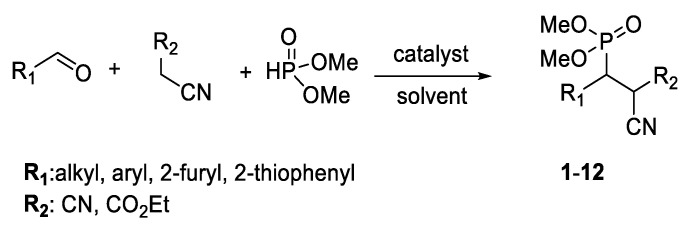
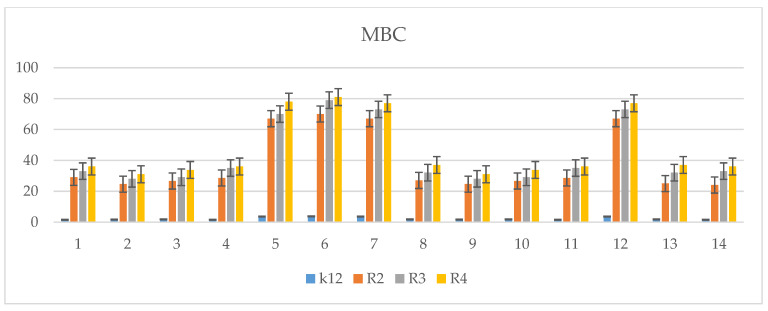
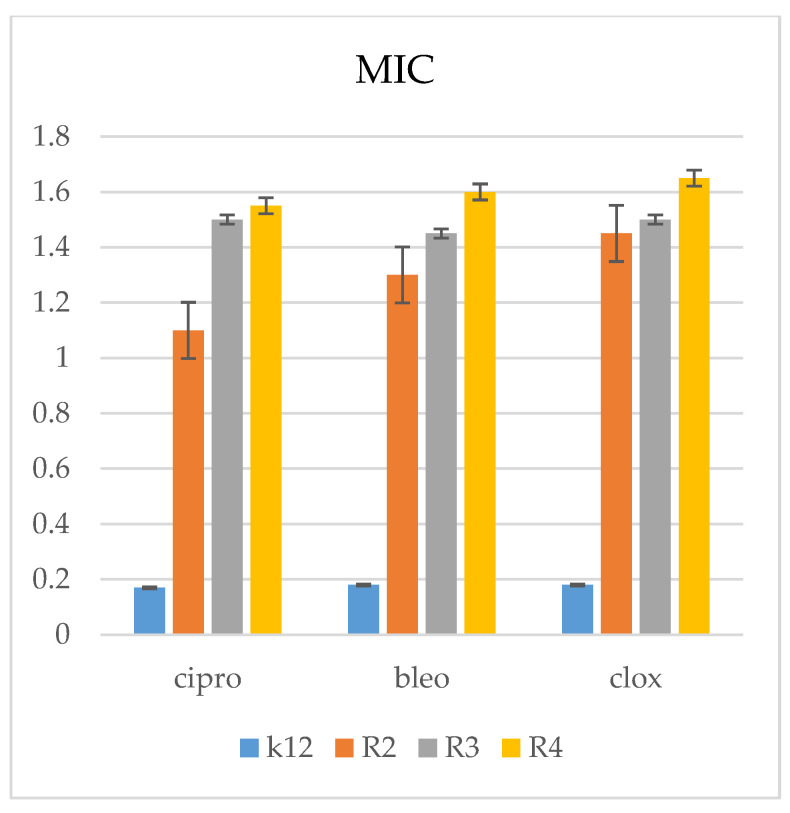
An enzymatic route for phosphorous-carbon bond formation was developed by discovering new promiscuous activity of lipase. We reported a new metal-free biocatalytic method for the synthesis of pharmacologically relevant β-phosphonomalononitriles via a lipase-catalyzed one-pot Knoevenagel-phospha-Michael reaction. We carefully analyzed the best conditions for the given reaction: the type of enzyme, temperature, and type of solvent. A series of target compounds was synthesized, with yields ranging from 43% to 93% by enzymatic reaction with (CcL) lipase as recyclable and, a few times, reusable catalyst. The advantages of this protocol are excellent yields, mild reaction conditions, low costs, and sustainability. The applicability of the same catalyst in the synthesis of β-phosphononitriles is also described. Further, the obtained compounds were validated as new potential antimicrobial agents with characteristic bacterial strains. The pivotal role of such a group of phosphonate derivatives on inhibitory activity against selected pathogenic strains was revealed. The observed results are especially important in the case of the increasing resistance of bacteria to various drugs and antibiotics. The impact of the β-phosphono malonate chemical structure on antimicrobial activity was demonstrated. The crucial role of the substituents attached to the aromatic ring on the inhibitory action against selected pathogenic strains was revealed. Among tested compounds, four β-phosphonate derivatives showed an antimicrobial activity profile similar to that obtained with currently used antibiotics such as ciprofloxacin, bleomycin, and cloxacillin. In addition, the obtained compounds constitute a convenient platform for further chemical functionalization, allowing for a convenient change in their biological activity profile. It should also be noted that the cost of the compounds obtained is low, which may be an attractive alternative to the currently used antimicrobial agents. The observed results are especially important because of the increasing resistance of bacteria to various drugs and antibiotics.
开发了一种通过发现脂肪酶新的混杂活性来形成磷-碳键的酶促途径。我们报道了一种新的无金属生物催化方法,通过脂肪酶催化的一锅法 Knoevenagel-膦-Michael 反应合成具有药理相关性的β-膦酰基丙二腈。我们仔细分析了该反应的最佳条件:酶的类型、温度和溶剂的类型。通过使用(CcL)脂肪酶作为可回收和可重复使用几次的催化剂进行酶反应,合成了一系列目标化合物,产率范围为 43%至 93%。该方案的优点是产率高、反应条件温和、成本低且可持续。还描述了相同催化剂在β-膦酰基丙二腈合成中的适用性。此外,所得化合物被验证为具有特征性细菌菌株的新的潜在抗菌剂。揭示了此类磷酸酯衍生物对抑制选定致病菌株的活性的关键作用。观察到的结果在细菌对各种药物和抗生素的耐药性不断增加的情况下尤为重要。证明了β-膦酸基丙二酸酯的化学结构对抗菌活性的影响。揭示了连接到芳环的取代基对抑制选定致病菌株的抑制作用的关键作用。在所测试的化合物中,有四个β-磷酸酯衍生物表现出与目前使用的抗生素(如环丙沙星、博来霉素和氯唑西林)相似的抗菌活性谱。此外,获得的化合物构成了进一步化学官能化的便利平台,允许方便地改变其生物活性谱。还应该注意的是,获得的化合物的成本低,这可能是对目前使用的抗菌剂的有吸引力的替代物。观察到的结果尤其重要,因为细菌对各种药物和抗生素的耐药性不断增加。