Li Feng, Zhang Lei, Wu Li-Da, Zhang Zhi-Yuan, Liu Huan-Huan, Zhang Zhen-Ye, Zhang Jie, Qian Ling-Ling, Wang Ru-Xing
Department of Cardiology, Wuxi People's Hospital Affiliated to Nanjing Medical University, Wuxi 214023, China.
J Clin Med. 2022 Jul 31;11(15):4468. doi: 10.3390/jcm11154468.
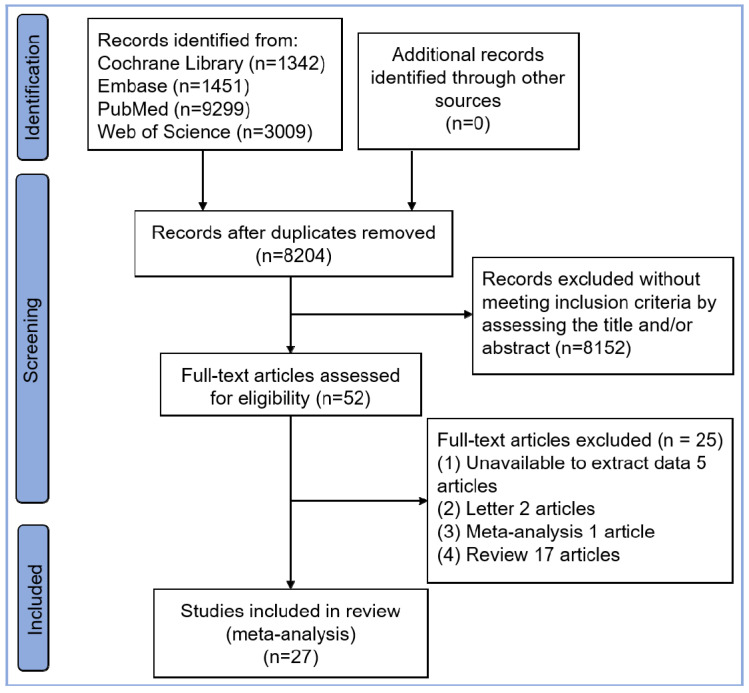
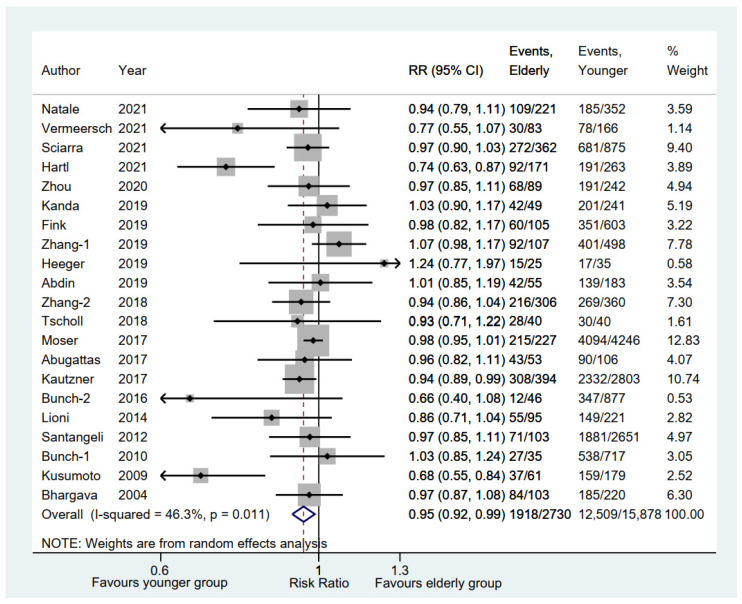
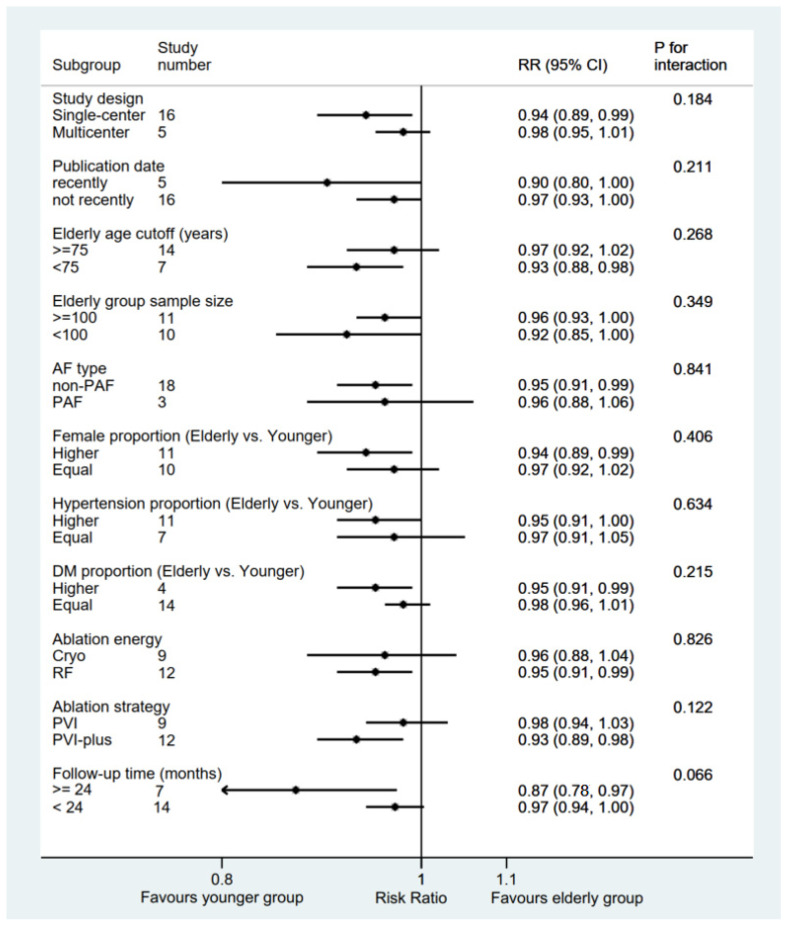
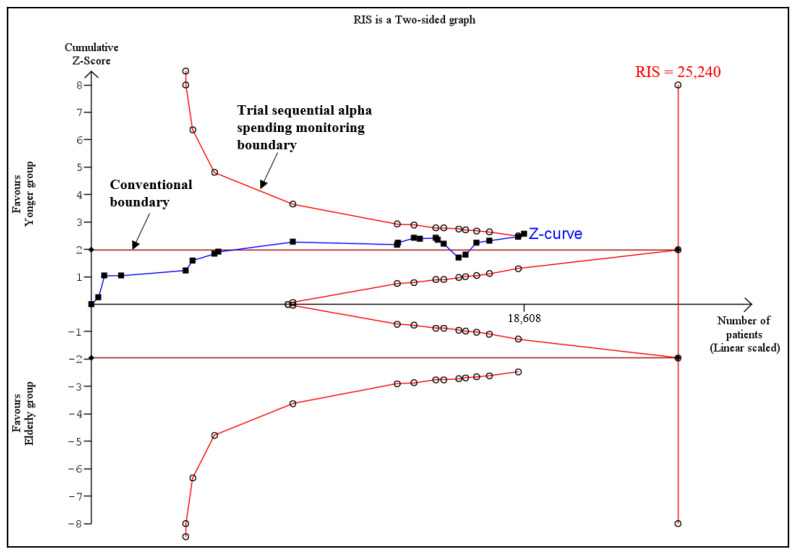
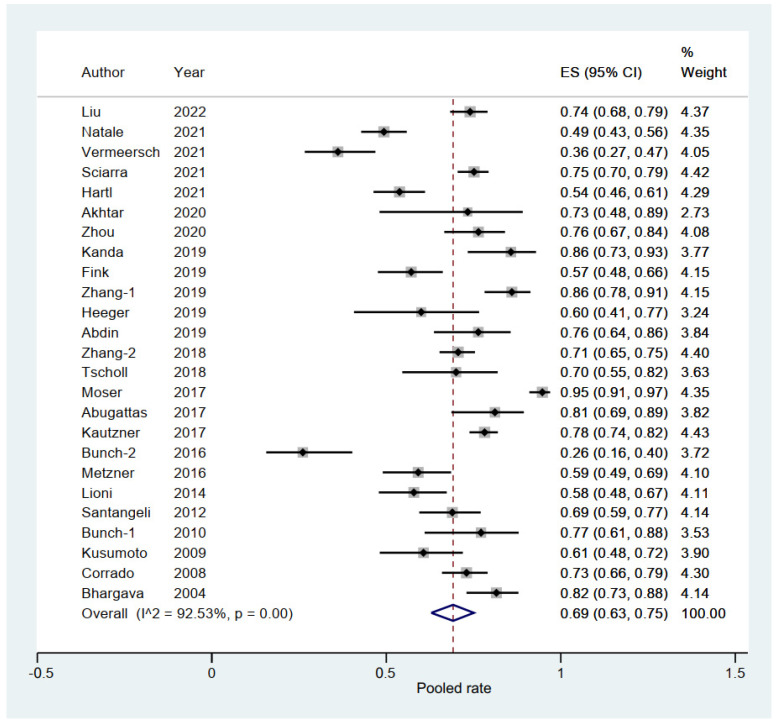
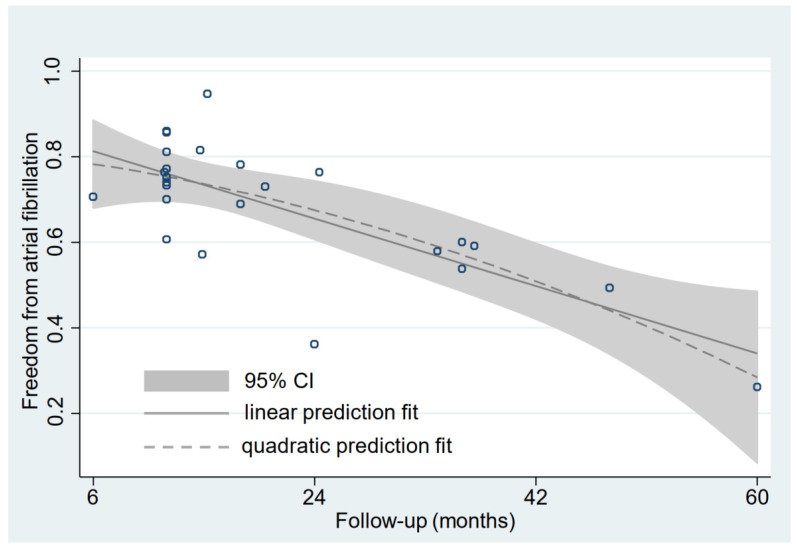
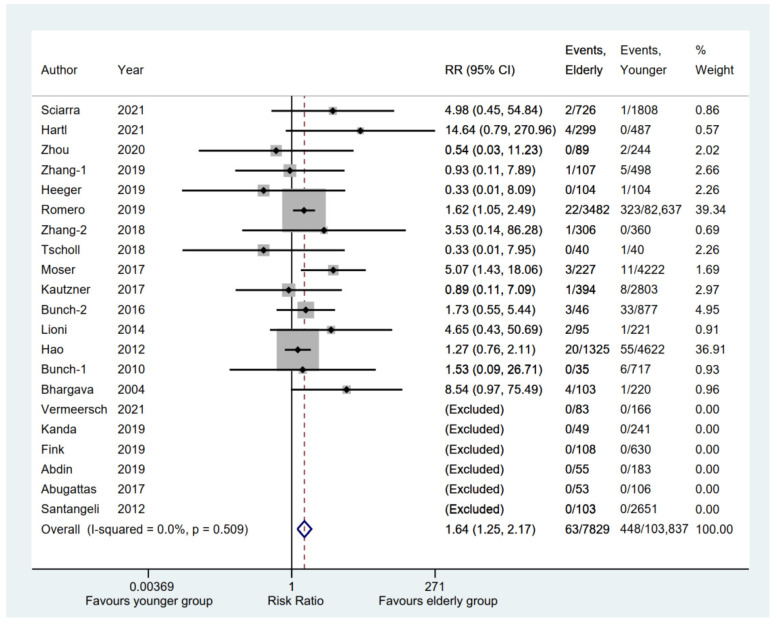
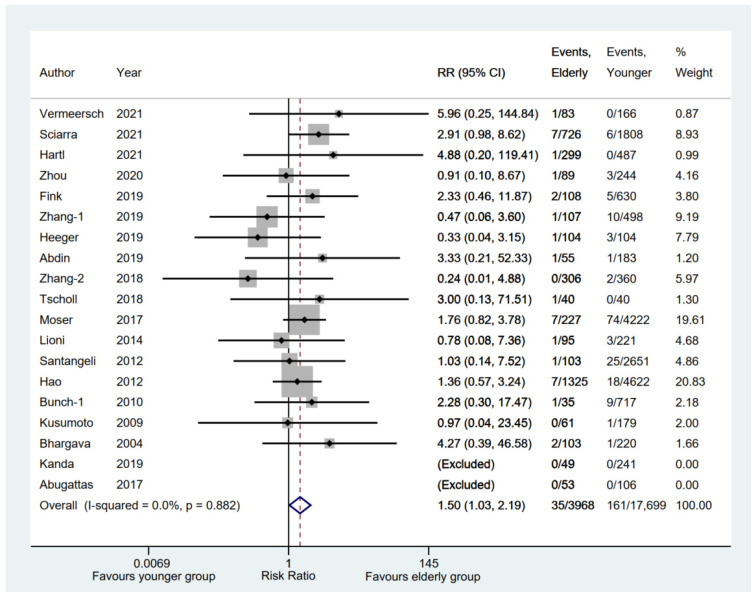
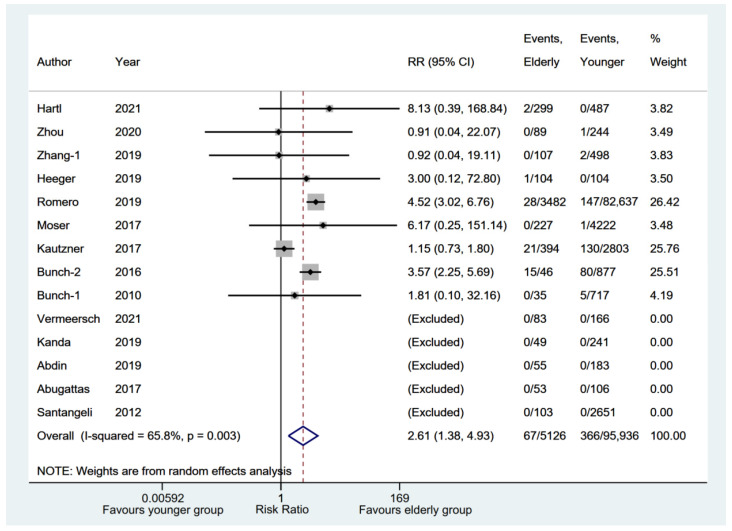
Age is an independent risk factor of the progress and prognosis of atrial fibrillation (AF). However, ablation outcomes between elderly and younger patients with AF remain elusive. Cochrane Library, Embase, PubMed, and Web of Science were systematically searched up to 1 April 2022. Studies comparing AF ablation outcomes between elderly and younger patients and comprising outcomes of AF ablation for elderly patients were included. Trial sequential analysis (TSA) was performed to adjust for random error and lower statistical power in our meta-analysis. Subgroup analysis identified possible determinants of outcome impact for elderly patients after ablation. Moreover, linear and quadratic prediction fit plots with confidence intervals were performed, as appropriate. A total of 27 studies with 113,106 AF patients were eligible. Compared with the younger group, the elderly group was significantly associated with a lower rate of freedom from AF (risk ratio [RR], 0.95; = 0.008), as well as a higher incidence of safety outcomes (cerebrovascular events: RR, 1.64; = 0.000; serious hemorrhage complications: RR, 1.50; = 0.035; all-cause death: RR, 2.61; = 0.003). Subgroup analysis and quadratic prediction fit analysis revealed the follow-up time was the potential determinant of freedom from AF for elderly patients after AF ablation. Our meta-analysis suggests that elderly patients may have inferior efficacy and safety outcomes to younger patients with AF ablation. Moreover, the follow-up time may be a potential determinant of outcome impact on freedom from AF for elderly patients after AF ablation.
年龄是心房颤动(AF)进展和预后的独立危险因素。然而,老年与年轻AF患者的消融结局仍不明确。截至2022年4月1日,对Cochrane图书馆、Embase、PubMed和Web of Science进行了系统检索。纳入比较老年与年轻患者AF消融结局以及包含老年患者AF消融结局的研究。在我们的荟萃分析中进行了试验序贯分析(TSA)以校正随机误差和较低的统计效能。亚组分析确定了消融后老年患者结局影响的可能决定因素。此外,酌情绘制了带有置信区间的线性和二次预测拟合图。共有27项研究、113106例AF患者符合条件。与年轻组相比,老年组AF复发率显著较低(风险比[RR],0.95;P = 0.008),安全结局发生率较高(脑血管事件:RR,1.64;P = 0.000;严重出血并发症:RR,1.50;P = 0.035;全因死亡:RR,2.61;P = 0.003)。亚组分析和二次预测拟合分析显示,随访时间是老年患者AF消融后AF复发的潜在决定因素。我们的荟萃分析表明,老年AF患者消融的疗效和安全性结局可能不如年轻患者。此外,随访时间可能是AF消融后老年患者AF复发结局影响的潜在决定因素。