• 文献检索
  • 文档翻译
  • 深度研究
  • 学术资讯
  • Suppr Zotero 插件Zotero 插件
  • 邀请有礼
  • 套餐&价格
  • 历史记录
应用&插件
Suppr Zotero 插件Zotero 插件浏览器插件Mac 客户端Windows 客户端微信小程序
定价
高级版会员购买积分包购买API积分包
服务
文献检索文档翻译深度研究API 文档MCP 服务
关于我们
关于 Suppr公司介绍联系我们用户协议隐私条款
关注我们

Suppr 超能文献

核心技术专利:CN118964589B侵权必究
粤ICP备2023148730 号-1Suppr @ 2026

文献检索

告别复杂PubMed语法,用中文像聊天一样搜索,搜遍4000万医学文献。AI智能推荐,让科研检索更轻松。

立即免费搜索

文件翻译

保留排版,准确专业,支持PDF/Word/PPT等文件格式,支持 12+语言互译。

免费翻译文档

深度研究

AI帮你快速写综述,25分钟生成高质量综述,智能提取关键信息,辅助科研写作。

立即免费体验

人工智能应用和自学习 6G 网络在智慧城市数字生态系统中的应用:分类、挑战和未来方向。

Artificial Intelligence Applications and Self-Learning 6G Networks for Smart Cities Digital Ecosystems: Taxonomy, Challenges, and Future Directions.

机构信息

Intelligent Distributed Computing and Systems (INDUCE) Research Laboratory, Department of Computer Science and Software Engineering, College of Information Technology, United Arab Emirates University, Abu Dhabi 15551, United Arab Emirates.

National Water and Energy Center, United Arab Emirates University, Abu Dhabi 15551, United Arab Emirates.

出版信息

Sensors (Basel). 2022 Aug 1;22(15):5750. doi: 10.3390/s22155750.

DOI:10.3390/s22155750
PMID:35957307
原文链接:https://pmc.ncbi.nlm.nih.gov/articles/PMC9371016/
Abstract

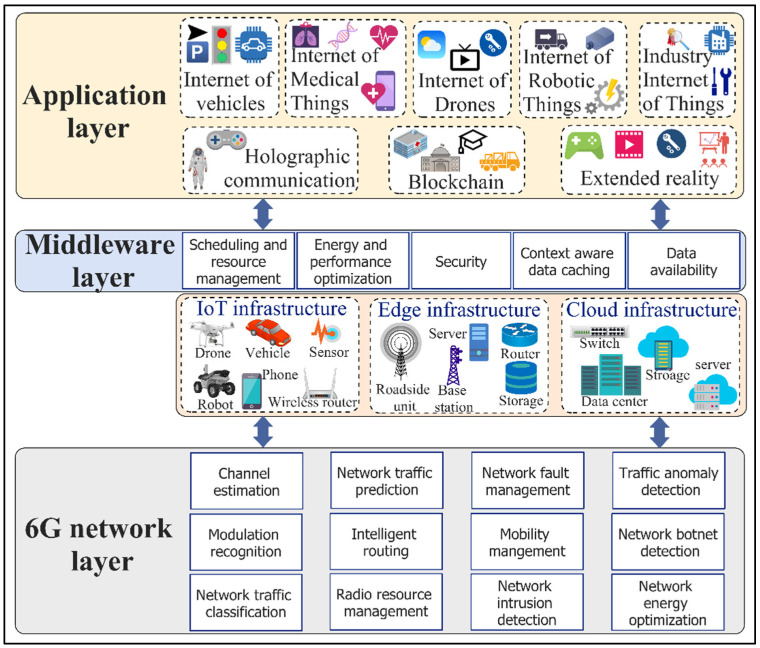
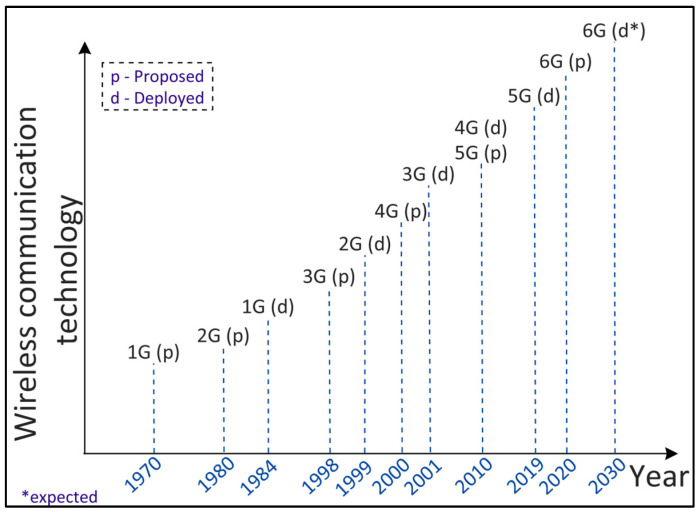
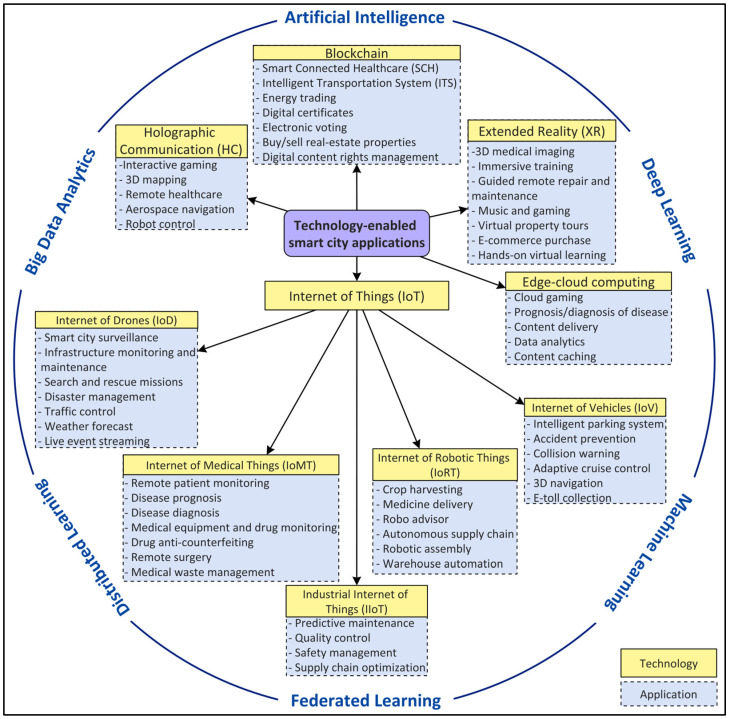
The recent upsurge of smart cities' applications and their building blocks in terms of the Internet of Things (IoT), Artificial Intelligence (AI), federated and distributed learning, big data analytics, blockchain, and edge-cloud computing has urged the design of the upcoming 6G network generation, due to their stringent requirements in terms of the quality of services (QoS), availability, and dependability to satisfy a Service-Level-Agreement (SLA) for the end users. Industries and academia have started to design 6G networks and propose the use of AI in its protocols and operations. Published papers on the topic discuss either the requirements of applications via a top-down approach or the network requirements in terms of agility, performance, and energy saving using a down-top perspective. In contrast, this paper adopts a holistic outlook, considering the applications, the middleware, the underlying technologies, and the 6G network systems towards an intelligent and integrated computing, communication, coordination, and decision-making ecosystem. In particular, we discuss the temporal evolution of the wireless network generations' development to capture the applications, middleware, and technological requirements that led to the development of the network generation systems from 1G to AI-enabled 6G and its employed self-learning models. We provide a taxonomy of the technology-enabled smart city applications' systems and present insights into those systems for the realization of a trustworthy and efficient smart city ecosystem. We propose future research directions in 6G networks for smart city applications.

摘要

近年来,物联网 (IoT)、人工智能 (AI)、联邦和分布式学习、大数据分析、区块链和边缘云计算等智能城市应用及其构建块的兴起,促使人们设计即将到来的 6G 网络,因为这些应用对服务质量 (QoS)、可用性和可靠性提出了严格的要求,以满足最终用户的服务级别协议 (SLA)。工业界和学术界已经开始设计 6G 网络,并提出在其协议和操作中使用人工智能。关于该主题的已发表论文要么通过自上而下的方法讨论应用程序的要求,要么从灵活性、性能和节能的角度使用自下而上的观点讨论网络要求。相比之下,本文采用整体观点,考虑应用程序、中间件、底层技术和 6G 网络系统,以实现智能和集成的计算、通信、协调和决策生态系统。特别是,我们讨论了无线网络代发展的时间演变,以捕捉导致从 1G 到 AI 支持的 6G 的网络代系统发展的应用程序、中间件和技术要求,以及其采用的自学习模型。我们对基于技术的智能城市应用系统进行了分类,并深入了解这些系统,以实现值得信赖和高效的智能城市生态系统。我们为智能城市应用的 6G 网络提出了未来的研究方向。
https://cdn.ncbi.nlm.nih.gov/pmc/blobs/90bf/9371016/27c615994a3e/sensors-22-05750-g018.jpg
https://cdn.ncbi.nlm.nih.gov/pmc/blobs/90bf/9371016/27de774a69ba/sensors-22-05750-g001.jpg
https://cdn.ncbi.nlm.nih.gov/pmc/blobs/90bf/9371016/4627bad7548b/sensors-22-05750-g002.jpg
https://cdn.ncbi.nlm.nih.gov/pmc/blobs/90bf/9371016/e0de09f79f82/sensors-22-05750-g003.jpg
https://cdn.ncbi.nlm.nih.gov/pmc/blobs/90bf/9371016/0387628688c2/sensors-22-05750-g004.jpg
https://cdn.ncbi.nlm.nih.gov/pmc/blobs/90bf/9371016/b7fd5d318619/sensors-22-05750-g005.jpg
https://cdn.ncbi.nlm.nih.gov/pmc/blobs/90bf/9371016/994231ac6277/sensors-22-05750-g006.jpg
https://cdn.ncbi.nlm.nih.gov/pmc/blobs/90bf/9371016/0be6ccbf3365/sensors-22-05750-g007.jpg
https://cdn.ncbi.nlm.nih.gov/pmc/blobs/90bf/9371016/2145937385eb/sensors-22-05750-g008.jpg
https://cdn.ncbi.nlm.nih.gov/pmc/blobs/90bf/9371016/1320d8e1807b/sensors-22-05750-g009.jpg
https://cdn.ncbi.nlm.nih.gov/pmc/blobs/90bf/9371016/e59c775f76a3/sensors-22-05750-g010.jpg
https://cdn.ncbi.nlm.nih.gov/pmc/blobs/90bf/9371016/4643c185fed2/sensors-22-05750-g011.jpg
https://cdn.ncbi.nlm.nih.gov/pmc/blobs/90bf/9371016/b694ad43e4cd/sensors-22-05750-g012.jpg
https://cdn.ncbi.nlm.nih.gov/pmc/blobs/90bf/9371016/31367619702e/sensors-22-05750-g013.jpg
https://cdn.ncbi.nlm.nih.gov/pmc/blobs/90bf/9371016/c51241462db2/sensors-22-05750-g014.jpg
https://cdn.ncbi.nlm.nih.gov/pmc/blobs/90bf/9371016/a5c9b5390040/sensors-22-05750-g015.jpg
https://cdn.ncbi.nlm.nih.gov/pmc/blobs/90bf/9371016/c3f90074e22a/sensors-22-05750-g016.jpg
https://cdn.ncbi.nlm.nih.gov/pmc/blobs/90bf/9371016/ad5659793d5b/sensors-22-05750-g017.jpg
https://cdn.ncbi.nlm.nih.gov/pmc/blobs/90bf/9371016/27c615994a3e/sensors-22-05750-g018.jpg
https://cdn.ncbi.nlm.nih.gov/pmc/blobs/90bf/9371016/27de774a69ba/sensors-22-05750-g001.jpg
https://cdn.ncbi.nlm.nih.gov/pmc/blobs/90bf/9371016/4627bad7548b/sensors-22-05750-g002.jpg
https://cdn.ncbi.nlm.nih.gov/pmc/blobs/90bf/9371016/e0de09f79f82/sensors-22-05750-g003.jpg
https://cdn.ncbi.nlm.nih.gov/pmc/blobs/90bf/9371016/0387628688c2/sensors-22-05750-g004.jpg
https://cdn.ncbi.nlm.nih.gov/pmc/blobs/90bf/9371016/b7fd5d318619/sensors-22-05750-g005.jpg
https://cdn.ncbi.nlm.nih.gov/pmc/blobs/90bf/9371016/994231ac6277/sensors-22-05750-g006.jpg
https://cdn.ncbi.nlm.nih.gov/pmc/blobs/90bf/9371016/0be6ccbf3365/sensors-22-05750-g007.jpg
https://cdn.ncbi.nlm.nih.gov/pmc/blobs/90bf/9371016/2145937385eb/sensors-22-05750-g008.jpg
https://cdn.ncbi.nlm.nih.gov/pmc/blobs/90bf/9371016/1320d8e1807b/sensors-22-05750-g009.jpg
https://cdn.ncbi.nlm.nih.gov/pmc/blobs/90bf/9371016/e59c775f76a3/sensors-22-05750-g010.jpg
https://cdn.ncbi.nlm.nih.gov/pmc/blobs/90bf/9371016/4643c185fed2/sensors-22-05750-g011.jpg
https://cdn.ncbi.nlm.nih.gov/pmc/blobs/90bf/9371016/b694ad43e4cd/sensors-22-05750-g012.jpg
https://cdn.ncbi.nlm.nih.gov/pmc/blobs/90bf/9371016/31367619702e/sensors-22-05750-g013.jpg
https://cdn.ncbi.nlm.nih.gov/pmc/blobs/90bf/9371016/c51241462db2/sensors-22-05750-g014.jpg
https://cdn.ncbi.nlm.nih.gov/pmc/blobs/90bf/9371016/a5c9b5390040/sensors-22-05750-g015.jpg
https://cdn.ncbi.nlm.nih.gov/pmc/blobs/90bf/9371016/c3f90074e22a/sensors-22-05750-g016.jpg
https://cdn.ncbi.nlm.nih.gov/pmc/blobs/90bf/9371016/ad5659793d5b/sensors-22-05750-g017.jpg
https://cdn.ncbi.nlm.nih.gov/pmc/blobs/90bf/9371016/27c615994a3e/sensors-22-05750-g018.jpg

相似文献

1
Artificial Intelligence Applications and Self-Learning 6G Networks for Smart Cities Digital Ecosystems: Taxonomy, Challenges, and Future Directions.人工智能应用和自学习 6G 网络在智慧城市数字生态系统中的应用:分类、挑战和未来方向。
Sensors (Basel). 2022 Aug 1;22(15):5750. doi: 10.3390/s22155750.
2
At the Confluence of Artificial Intelligence and Edge Computing in IoT-Based Applications: A Review and New Perspectives.在基于物联网应用的人工智能和边缘计算的融合:综述与新视角。
Sensors (Basel). 2023 Feb 2;23(3):1639. doi: 10.3390/s23031639.
3
6G Networks and the AI Revolution-Exploring Technologies, Applications, and Emerging Challenges.6G网络与人工智能革命——探索技术、应用及新出现的挑战
Sensors (Basel). 2024 Mar 15;24(6):1888. doi: 10.3390/s24061888.
4
A Review of Emerging Technologies for IoT-Based Smart Cities.物联网智慧城市新兴技术综述。
Sensors (Basel). 2022 Nov 28;22(23):9271. doi: 10.3390/s22239271.
5
Security Requirements and Challenges of 6G Technologies and Applications.6G 技术与应用的安全需求与挑战。
Sensors (Basel). 2022 Mar 2;22(5):1969. doi: 10.3390/s22051969.
6
Integration of IoT-Enabled Technologies and Artificial Intelligence (AI) for Smart City Scenario: Recent Advancements and Future Trends.物联网技术与人工智能(AI)在智慧城市场景中的集成:最新进展与未来趋势。
Sensors (Basel). 2023 May 30;23(11):5206. doi: 10.3390/s23115206.
7
A Comparative Analysis on Blockchain versus Centralized Authentication Architectures for IoT-Enabled Smart Devices in Smart Cities: A Comprehensive Review, Recent Advances, and Future Research Directions.区块链与集中式认证架构在智慧城市物联网智能设备中的比较分析:全面回顾、最新进展和未来研究方向。
Sensors (Basel). 2022 Jul 10;22(14):5168. doi: 10.3390/s22145168.
8
Blockchain-Driven Intelligent Scheme for IoT-Based Public Safety System beyond 5G Networks.基于区块链的 5G 网络之外的物联网公共安全系统智能方案
Sensors (Basel). 2023 Jan 14;23(2):969. doi: 10.3390/s23020969.
9
Revolution or Evolution? Technical Requirements and Considerations towards 6G Mobile Communications.革命还是演进?面向 6G 移动通信的技术需求与考量。
Sensors (Basel). 2022 Jan 20;22(3):762. doi: 10.3390/s22030762.
10

引用本文的文献

1
Editorial: Protecting privacy in neuroimaging analysis: balancing data sharing and privacy preservation.社论:神经影像分析中的隐私保护:平衡数据共享与隐私保护
Front Neuroinform. 2025 Jan 7;18:1543121. doi: 10.3389/fninf.2024.1543121. eCollection 2024.
2
6G Networks and the AI Revolution-Exploring Technologies, Applications, and Emerging Challenges.6G网络与人工智能革命——探索技术、应用及新出现的挑战
Sensors (Basel). 2024 Mar 15;24(6):1888. doi: 10.3390/s24061888.
3
6G-Enabling the New Smart City: A Survey.6G赋能新型智慧城市:一项综述

本文引用的文献

1
ESCOVE: Energy-SLA-Aware Edge-Cloud Computation Offloading in Vehicular Networks.ESCOVE:车载网络中能量感知的服务水平协议感知边缘云计算卸载
Sensors (Basel). 2021 Aug 2;21(15):5233. doi: 10.3390/s21155233.
2
IoMT amid COVID-19 pandemic: Application, architecture, technology, and security.新冠疫情期间的物联网医疗:应用、架构、技术与安全
J Netw Comput Appl. 2021 Jan 15;174:102886. doi: 10.1016/j.jnca.2020.102886. Epub 2020 Nov 2.
3
A Scoping Review of Integrated Blockchain-Cloud (BcC) Architecture for Healthcare: Applications, Challenges and Solutions.
Sensors (Basel). 2023 Aug 30;23(17):7528. doi: 10.3390/s23177528.
4
Towards a Deep Learning Pain-Level Detection Deployment at UAE for Patient-Centric-Pain Management and Diagnosis Support: Framework and Performance Evaluation.迈向阿联酋用于以患者为中心的疼痛管理和诊断支持的深度学习疼痛水平检测部署:框架与性能评估
Procedia Comput Sci. 2023;220:339-347. doi: 10.1016/j.procs.2023.03.044. Epub 2023 Apr 17.
综合区块链-云 (BcC) 架构在医疗保健中的应用、挑战与解决方案:综述
Sensors (Basel). 2021 May 28;21(11):3753. doi: 10.3390/s21113753.
4
Internet of Robotic Things Intelligent Connectivity and Platforms.机器人物联网:智能连接与平台
Front Robot AI. 2020 Sep 25;7:104. doi: 10.3389/frobt.2020.00104. eCollection 2020.
5
Deep Learning-Based Cell-Level and Beam-Level Mobility Management System.基于深度学习的细胞级和波束级移动性管理系统。
Sensors (Basel). 2020 Dec 11;20(24):7124. doi: 10.3390/s20247124.
6
Peace engineering: The contribution of blockchain systems to the e-voting process.和平工程:区块链系统对电子投票过程的贡献。
Technol Forecast Soc Change. 2021 Jan;162:120397. doi: 10.1016/j.techfore.2020.120397. Epub 2020 Oct 14.
7
Blockchain for Vehicular Internet of Things: Recent Advances and Open Issues.区块链在车联网中的应用:最新进展与开放问题。
Sensors (Basel). 2020 Sep 7;20(18):5079. doi: 10.3390/s20185079.
8
Energy-Efficient Collaborative Task ComputationOffloading in Cloud-Assisted Edge Computingfor IoT Sensors.面向物联网传感器的云辅助边缘计算中的节能协同任务计算卸载。
Sensors (Basel). 2019 Mar 4;19(5):1105. doi: 10.3390/s19051105.
9
A Systematic Review of Multilateral Teleoperation Systems.多边远程操作系统的系统综述
IEEE Trans Haptics. 2018 Mar 22. doi: 10.1109/TOH.2018.2818134.
10
An Efficient Virtual Machine Consolidation Scheme for Multimedia Cloud Computing.一种用于多媒体云计算的高效虚拟机整合方案。
Sensors (Basel). 2016 Feb 18;16(2):246. doi: 10.3390/s16020246.