Department of Computer Science and Engineering, Institute of Technology, Nirma University, Ahmedabad 382481, Gujarat, India.
Centre for Inter-Disciplinary Research and Innovation, University of Petroleum and Energy Studies, Dehradun 248001, Uttarakhand, India.
Sensors (Basel). 2023 Jan 14;23(2):969. doi: 10.3390/s23020969.
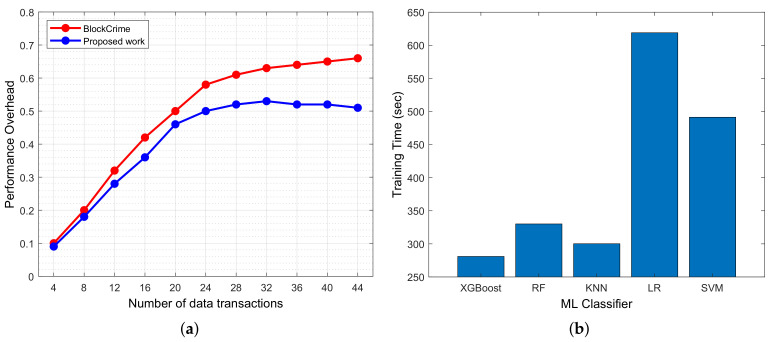
Mobile applications have rapidly grown over the past few decades to offer futuristic applications, such as autonomous vehicles, smart farming, and smart city. Such applications require ubiquitous, real-time, and secure communications to deliver services quickly. Toward this aim, sixth-generation (6G) wireless technology offers superior performance with high reliability, enhanced transmission rate, and low latency. However, managing the resources of the aforementioned applications is highly complex in the precarious network. An adversary can perform various network-related attacks (i.e., data injection or modification) to jeopardize the regular operation of the smart applications. Therefore, incorporating blockchain technology in the smart application can be a prominent solution to tackle security, reliability, and data-sharing privacy concerns. Motivated by the same, we presented a case study on public safety applications that utilizes the essential characteristics of artificial intelligence (AI), blockchain, and a 6G network to handle data integrity attacks on the crime data. The case study is assessed using various performance parameters by considering blockchain scalability, packet drop ratio, and training accuracy. Lastly, we explored different research challenges of adopting blockchain in the 6G wireless network.
移动应用在过去几十年中迅速发展,提供了自动驾驶、智能农业和智慧城市等未来应用。这些应用需要无处不在、实时和安全的通信来快速提供服务。为此,第六代 (6G) 无线技术提供了卓越的性能,具有高可靠性、增强的传输速率和低延迟。然而,在不稳定的网络中,管理上述应用的资源非常复杂。攻击者可以执行各种与网络相关的攻击(例如,数据注入或修改)来危及智能应用的正常运行。因此,在智能应用中结合区块链技术可以是解决安全、可靠性和数据共享隐私问题的突出解决方案。受此启发,我们针对公共安全应用提出了一个案例研究,该研究利用人工智能 (AI)、区块链和 6G 网络的基本特性来处理犯罪数据上的数据完整性攻击。通过考虑区块链可扩展性、数据包丢失率和训练准确性,使用各种性能参数对案例研究进行了评估。最后,我们探讨了在 6G 无线网络中采用区块链的不同研究挑战。