Atopy (Allergy) Research Center, Juntendo University Graduate School of Medicine, Tokyo, Japan.
Department of Science of Allergy and Inflammation, Juntendo University Graduate School of Medicine, Tokyo, Japan.
Front Immunol. 2022 Jul 25;13:945222. doi: 10.3389/fimmu.2022.945222. eCollection 2022.
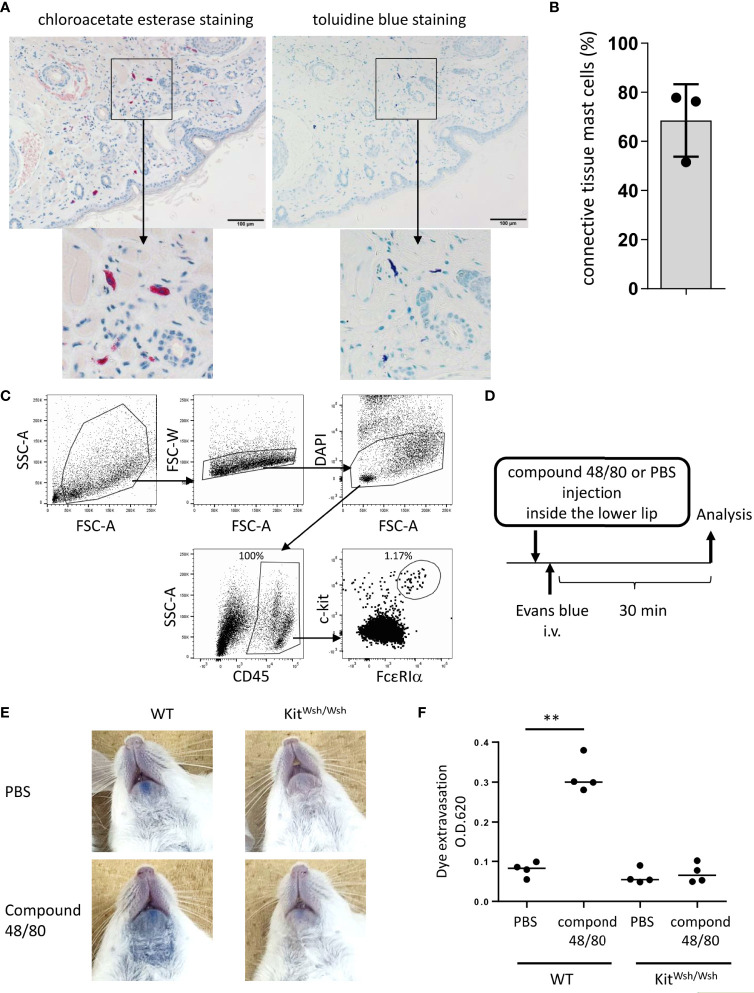
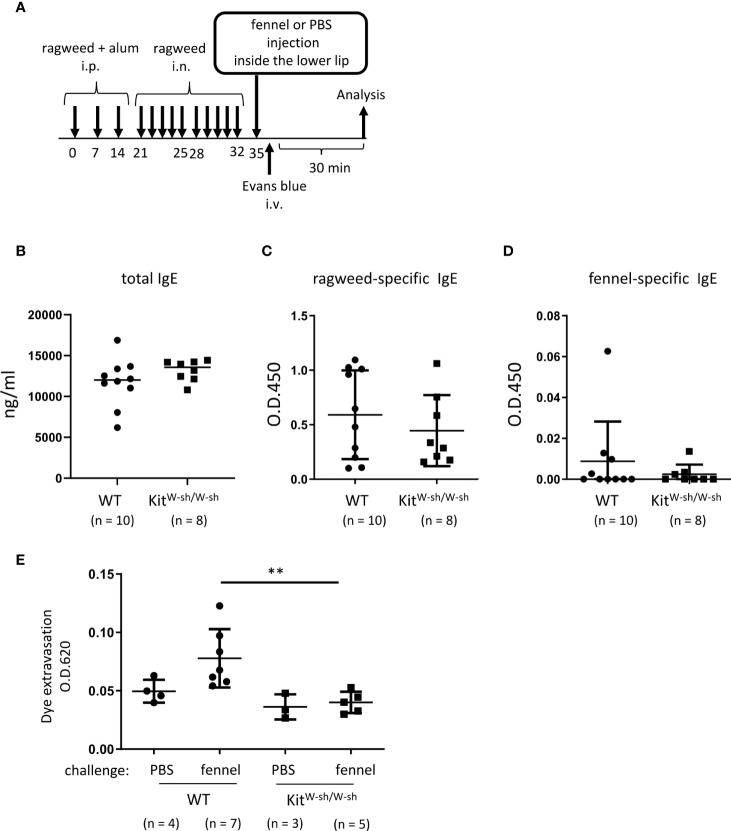
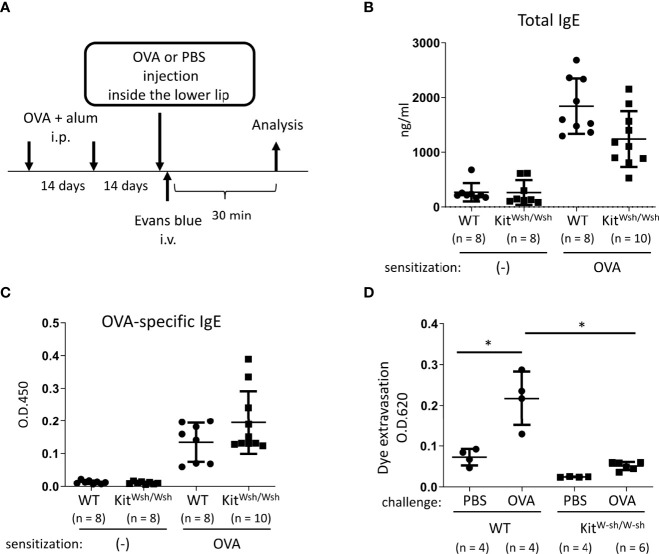
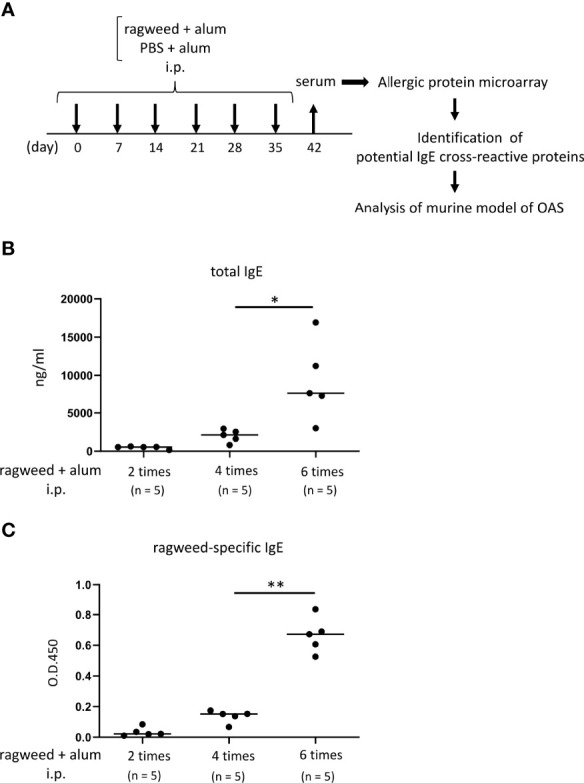
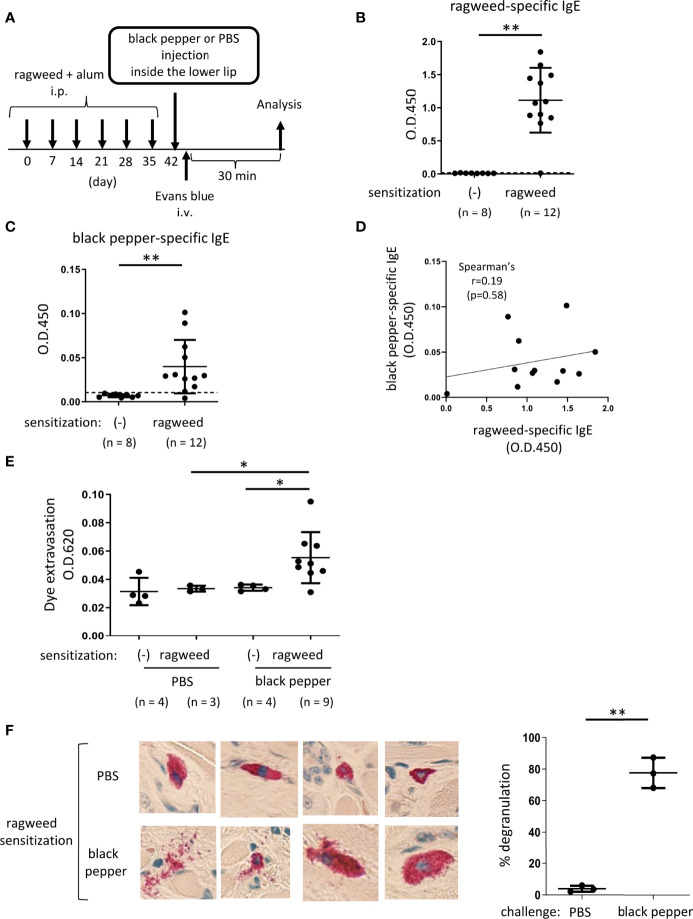
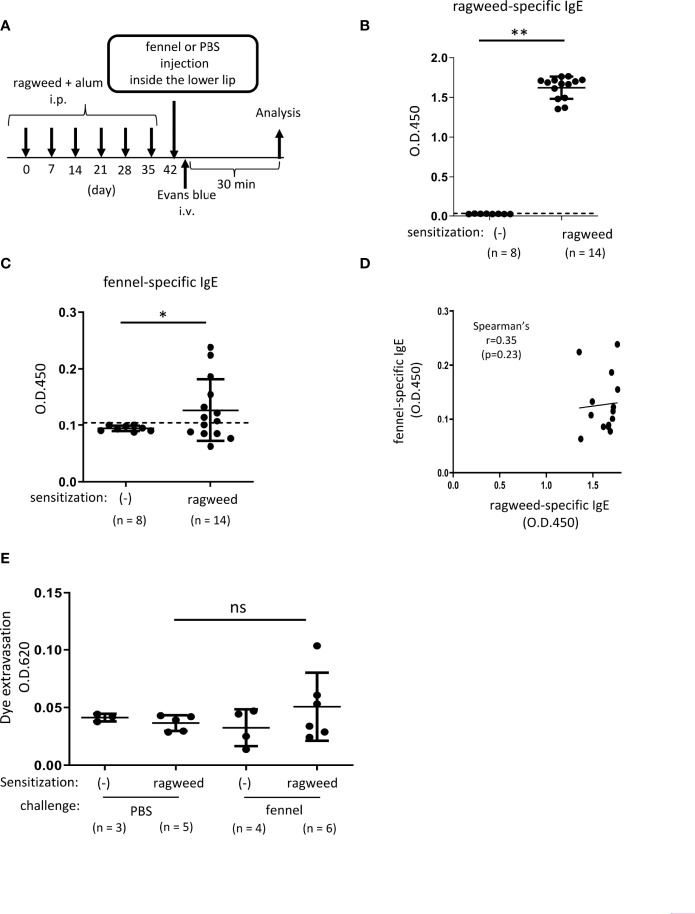
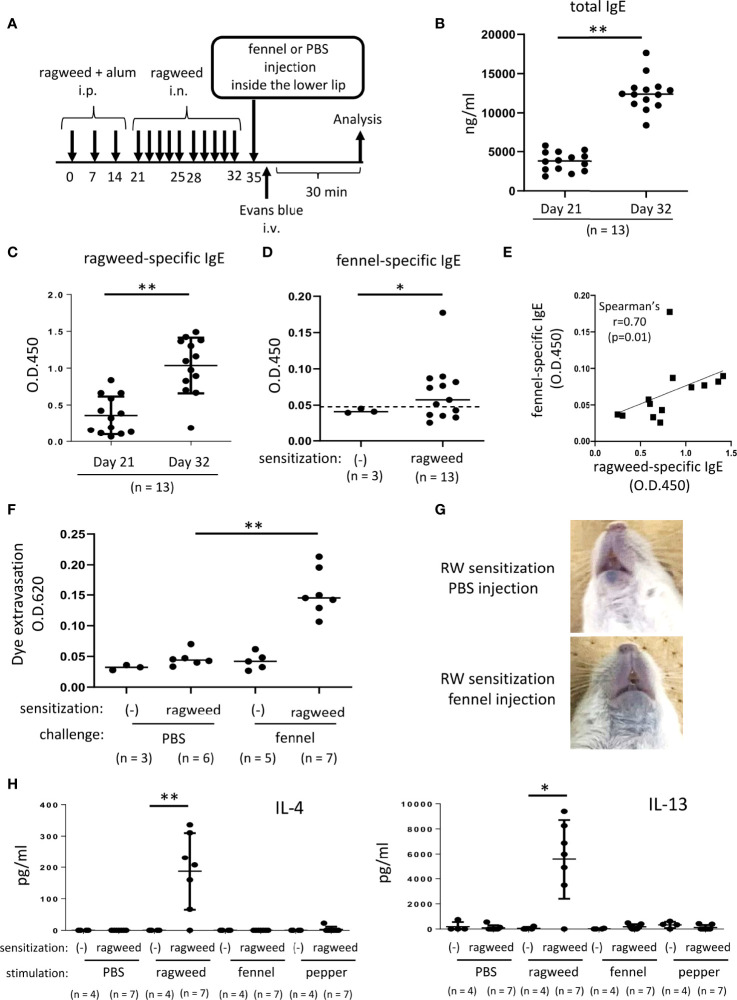
Oral allergy syndrome (OAS) is an IgE-mediated immediate food allergy that is localized to the oral mucosa. Pollen food allergy syndrome (PFAS), a pollinosis-associated OAS, is caused by cross-reactivity between food and pollen allergens. However, we need to more precisely understand the underlying pathogenesis of OAS/PFAS. In the present study, we developed a method to comprehensively identify cross-reactive allergens by using murine model of OAS and protein microarray technology. We focused on lip angioedema, which is one of the most common symptoms of OAS, and confirmed that mast cells reside in the tissues inside the lower lip of the mice. Interestingly, when the food allergen ovalbumin (OVA) was injected inside the lower lip of mice with high levels of OVA-specific IgE followed by an intravenous injection of the Evans blue dye, we found immediate dye extravasation in the skin of the neck in a mast cell-dependent manner. In addition, the degree of mast cell degranulation in the oral cavity, reflecting the severity of oral allergic responses, can be estimated by measuring the amount of extravasated dye in the skin. Therefore, we used this model of OAS to examine IgE cross-reactive allergens . Protein microarray analysis showed that serum IgE from mice intraperitoneally sensitized with ragweed pollen, one of the major pollens causing pollinosis, bound highly to protein extracts from several edible plants including black peppercorn and fennel. We confirmed that the levels of black pepper-specific IgE and fennel-specific IgE were significantly higher in the serum from ragweed pollen-sensitized mice than in the serum from non-sensitized control mice. Importantly, analysis of murine model of OAS showed that the injection of black pepper or fennel extract induced apparent oral allergic responses in ragweed pollen-sensitized mice. These results indicate IgE cross-reactivity of ragweed pollen with black pepper and fennel. In conclusion, we developed mouse model of OAS to identify IgE cross-reactive pollen and food allergens, which will help understand the pathogenesis of OAS/PFAS.
口腔过敏综合征(OAS)是一种 IgE 介导的即刻食物过敏,局限于口腔黏膜。花粉食物过敏综合征(PFAS)是一种与花粉过敏相关的 OAS,由食物和花粉过敏原之间的交叉反应引起。然而,我们需要更准确地了解 OAS/PFAS 的潜在发病机制。在本研究中,我们通过使用 OAS 小鼠模型和蛋白质微阵列技术开发了一种综合鉴定交叉反应性过敏原的方法。我们专注于唇血管性水肿,这是 OAS 最常见的症状之一,并证实肥大细胞存在于小鼠下唇的组织内。有趣的是,当高水平 OVA 特异性 IgE 的 OVA 食物过敏原被注射到小鼠下唇内,随后静脉内注射 Evans 蓝染料时,我们发现染料以肥大细胞依赖性方式立即从颈部皮肤漏出。此外,口腔中肥大细胞脱颗粒的程度,反映了口腔过敏反应的严重程度,可以通过测量皮肤中漏出的染料量来估计。因此,我们使用这种 OAS 模型来研究 IgE 交叉反应性过敏原。蛋白质微阵列分析显示,从豚草花粉(一种引起花粉症的主要花粉之一)腹腔内致敏的小鼠血清中,IgE 高度结合几种食用植物(包括黑胡椒和茴香)的蛋白质提取物。我们证实,豚草花粉致敏小鼠血清中的黑胡椒特异性 IgE 和茴香特异性 IgE 水平明显高于非致敏对照小鼠血清中的水平。重要的是,OAS 小鼠模型的分析表明,黑胡椒或茴香提取物的注射会在豚草花粉致敏的小鼠中引起明显的口腔过敏反应。这些结果表明豚草花粉与黑胡椒和茴香之间存在 IgE 交叉反应性。总之,我们开发了 OAS 小鼠模型来鉴定 IgE 交叉反应性花粉和食物过敏原,这将有助于理解 OAS/PFAS 的发病机制。