Department of Hematology, Children's Hospital of Soochow University, Suzhou 215003, China.
Department of Pediatrics, The First Affiliated Hospital of Bengbu Medical College, Bengbu 233004, China.
J Immunol Res. 2022 Aug 1;2022:7912484. doi: 10.1155/2022/7912484. eCollection 2022.
AML (acute myeloid leukemia) is a common hematological malignancy in children with poor treatment effects and poor prognosis. Recent studies have shown that as a novel BRD4 (bromodomain containing 4) PROTACs (proteolysis targeting chimeras) degrader, GNE-987 can slow down the growth of various tumors and increase apoptosis, with promising clinical prospects. However, the function and molecular mechanism of GNE-987 in AML remain unclear. This study is aimed at investigating the therapeutic effect of GNE-987 on AML and its underlying mechanism.
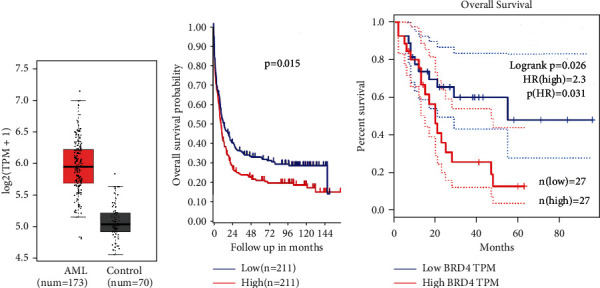
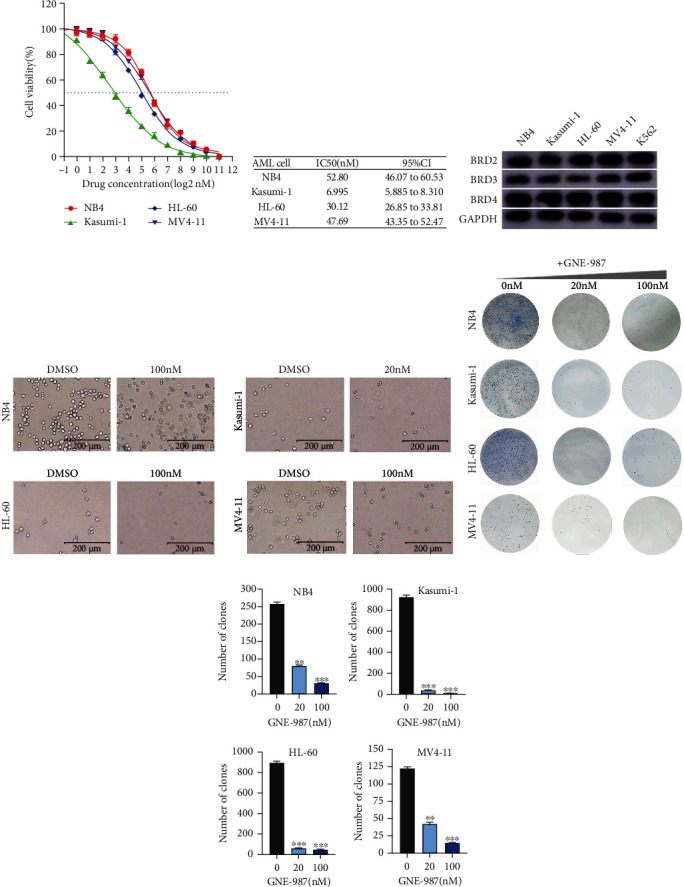
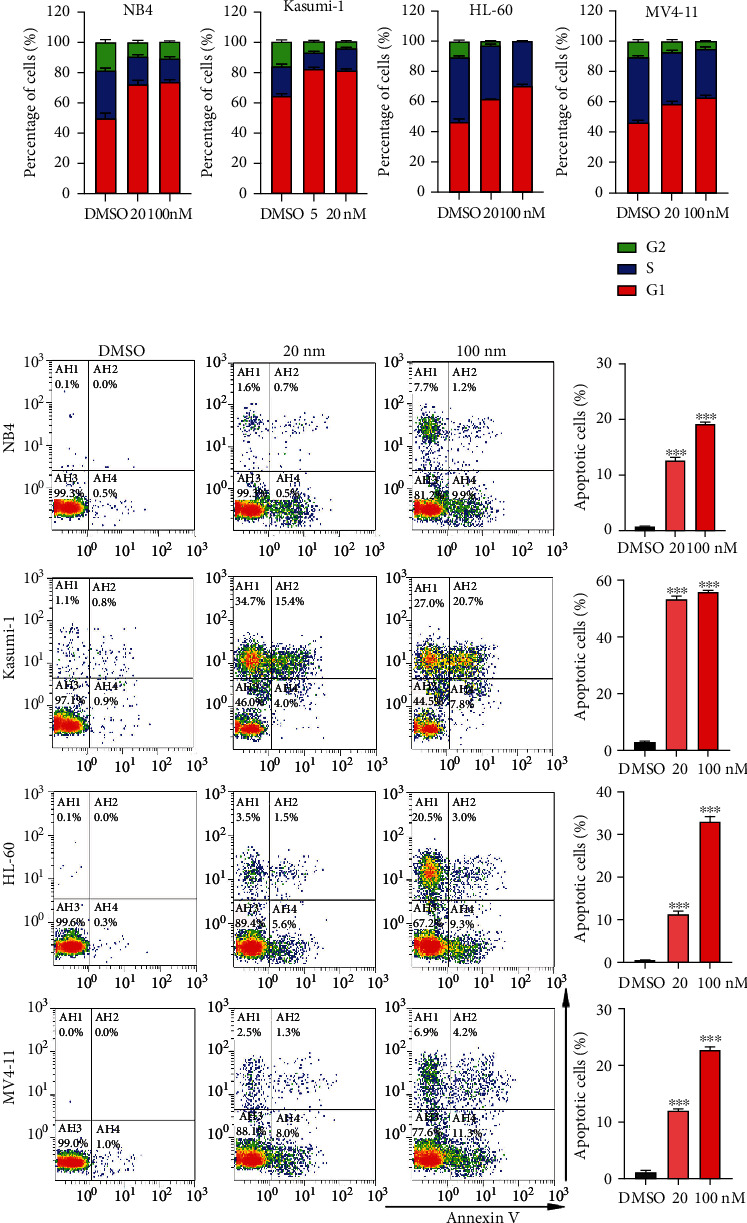
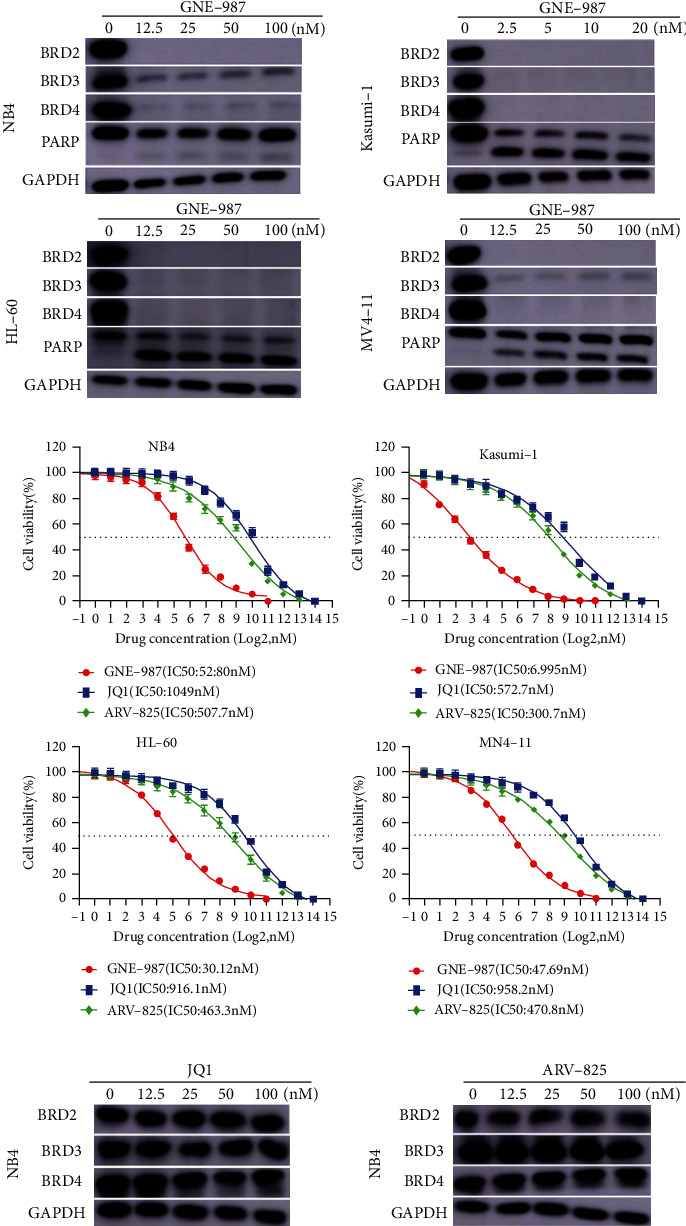
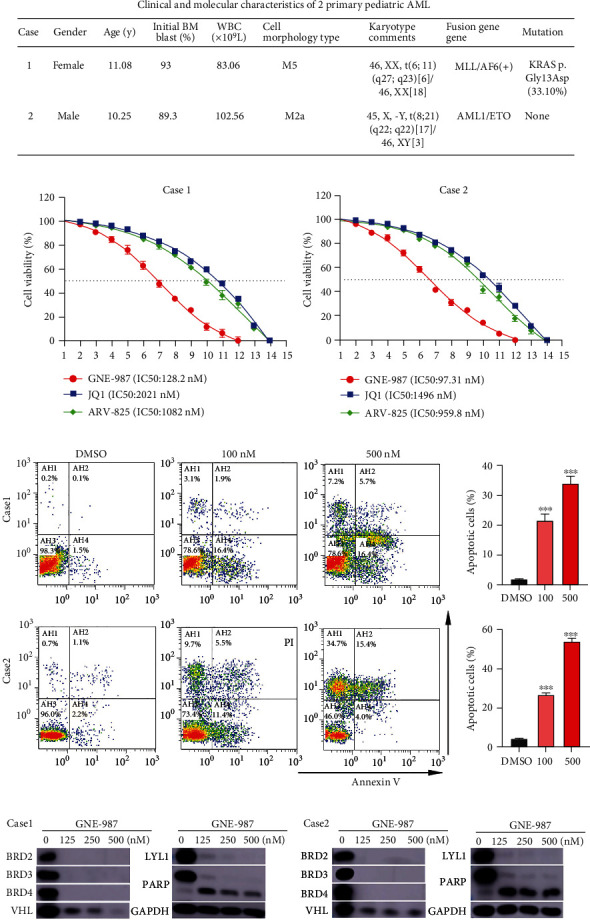
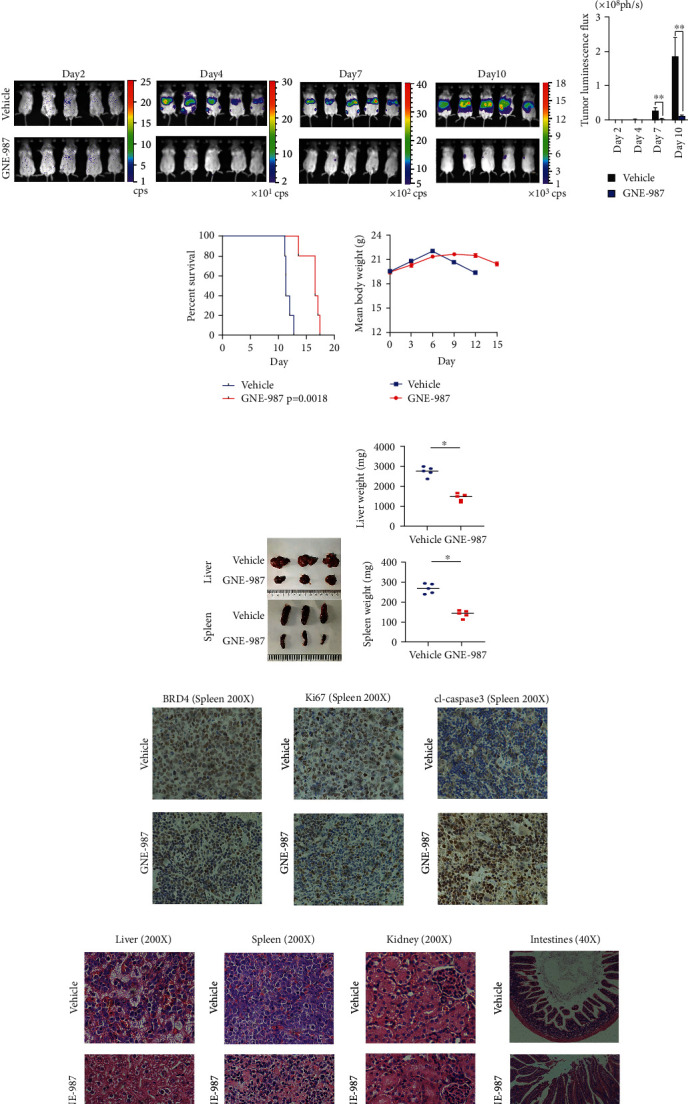
The association between BRD4 and AML was assessed by studying public databases. After GNE-987 was added to AML cells, cell proliferation slowed down, the cycle was disturbed, and apoptosis increased. Western blotting was used to detect BRD2 (bromodomain containing 2), BRD3 (bromodomain containing 3), BRD4, and PARP (poly ADP-ribose polymerase) proteins. The effect of GNE-987 on AML cells was analyzed in vivo. RNA-seq (RNA sequencing) and ChIP-seq (chromatin immunoprecipitation sequencing) validated the function and molecular pathways of GNE-987 in processing AML.
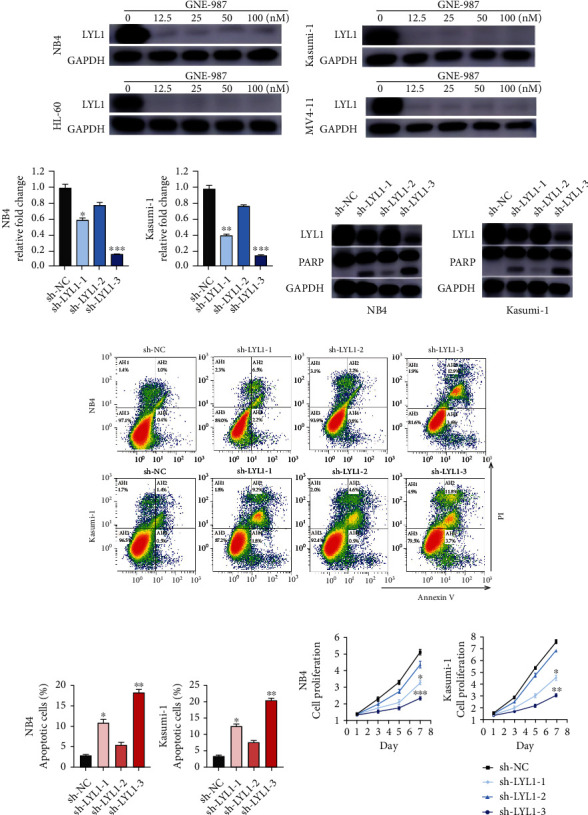
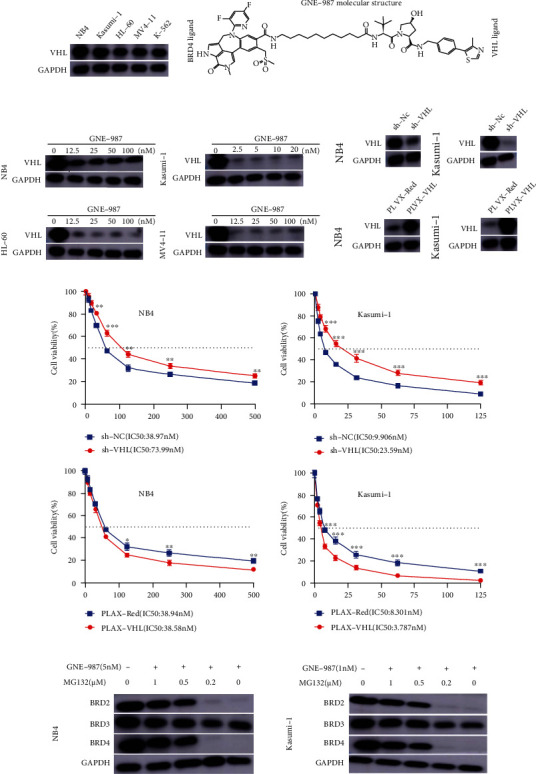
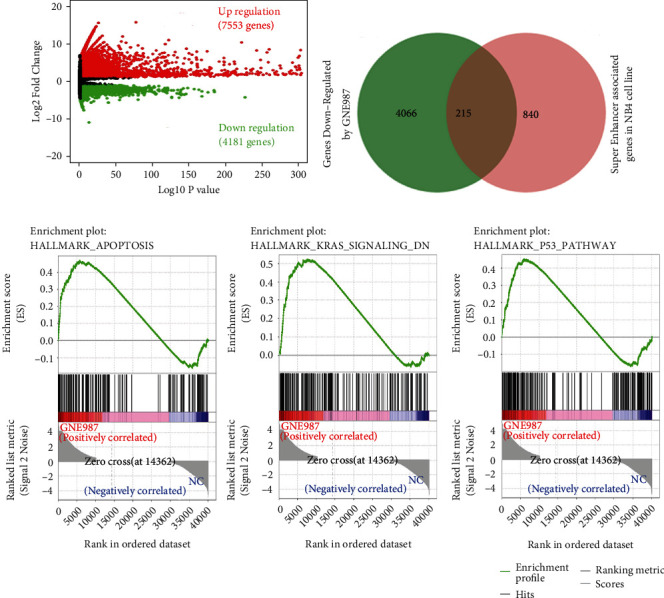
BRD4 expression was significantly elevated in pediatric AML samples compared with healthy donors. GNE-987 inhibited AML cell proliferation by inhibiting the cell cycle and inducing apoptosis. BRD2, BRD3, and BRD4 were consistent with decreased VHL (Von Hippel Lindau) expression in AML cells. In an AML xenograft model, GNE-987 significantly reduced the hepatosplenic infiltration of leukemia cells and increased the mouse survival time. Based on analysis of RNA-seq and ChIP-seq analyses, GNE-987 could target multiple SE- (super-enhancer-) related genes, including LYL1 (lymphoblastic leukemia 1), to inhibit AML.
GNE-987 had strong antitumor activity in AML. GNE-987 could effectively inhibit the expression of SE-related oncogenes including LYL1 in AML. Our results suggested that GNE-987 had broad prospects in the treatment of AML.
AML(急性髓细胞白血病)是儿童常见的血液系统恶性肿瘤,治疗效果差,预后不良。最近的研究表明,作为一种新型的 BRD4(溴结构域蛋白 4)PROTACs(蛋白水解靶向嵌合体)降解剂,GNE-987 可以减缓各种肿瘤的生长并增加细胞凋亡,具有广阔的临床前景。然而,GNE-987 在 AML 中的作用和分子机制尚不清楚。本研究旨在探讨 GNE-987 对 AML 的治疗作用及其潜在机制。
通过研究公共数据库评估 BRD4 与 AML 的关联。在 AML 细胞中加入 GNE-987 后,细胞增殖减慢,细胞周期受到干扰,细胞凋亡增加。Western blot 检测 BRD2(溴结构域蛋白 2)、BRD3(溴结构域蛋白 3)、BRD4 和 PARP(多聚 ADP-核糖聚合酶)蛋白。体内分析 GNE-987 对 AML 细胞的作用。RNA-seq(RNA 测序)和 ChIP-seq(染色质免疫沉淀测序)验证了 GNE-987 在处理 AML 中的作用和分子途径。
与健康供体相比,儿科 AML 样本中 BRD4 的表达明显升高。GNE-987 通过抑制细胞周期和诱导细胞凋亡抑制 AML 细胞增殖。BRD2、BRD3 和 BRD4 的表达与 AML 细胞中 VHL(Von Hippel Lindau)表达的降低一致。在 AML 异种移植模型中,GNE-987 显著减少了白血病细胞在肝脾中的浸润,延长了小鼠的生存时间。基于 RNA-seq 和 ChIP-seq 分析,GNE-987 可以靶向多个 SE-(超级增强子)相关基因,包括 LYL1(淋巴细胞白血病 1),抑制 AML。
GNE-987 在 AML 中具有很强的抗肿瘤活性。GNE-987 可以有效抑制 AML 中包括 LYL1 在内的 SE 相关癌基因的表达。我们的研究结果表明,GNE-987 在 AML 治疗中有广阔的前景。