Zhang Ying, Wang Lingbo, Chen Liqiong, Zhu Peiwu, Huang Na, Chen Tao, Chen Lijiang, Wang Zhongyong, Liao Wenli, Cao Jianming, Zhou Tieli
Department of Clinical Laboratory, The First Affiliated Hospital of Wenzhou Medical University, Key Laboratory of Clinical Laboratory Diagnosis and Translational Research of Zhejiang Province, Wenzhou, People's Republic of China.
Department of Medical Laboratory Science, School of Laboratory Medicine and Life Science, Wenzhou Medical University, Wenzhou, People's Republic of China.
Infect Drug Resist. 2022 Aug 4;15:4213-4227. doi: 10.2147/IDR.S371597. eCollection 2022.
Globally, (PA) is emerging as a predominant nosocomial pathogen that often induces aggressive and even deadly infections. Pseudomonas type III repressor A (PtrA) can be activated specifically by copper ions and interacts with type-III transcriptional activator ExsA. This study aims to provide insight into the PtrA-mediated regulation of the pathogenicity and antibiotics resistance of PA.
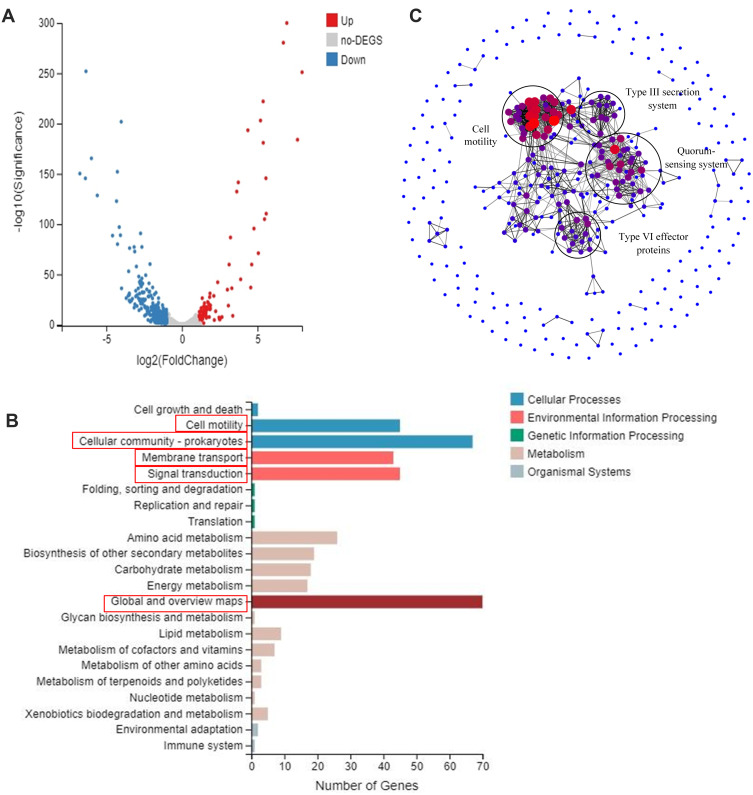
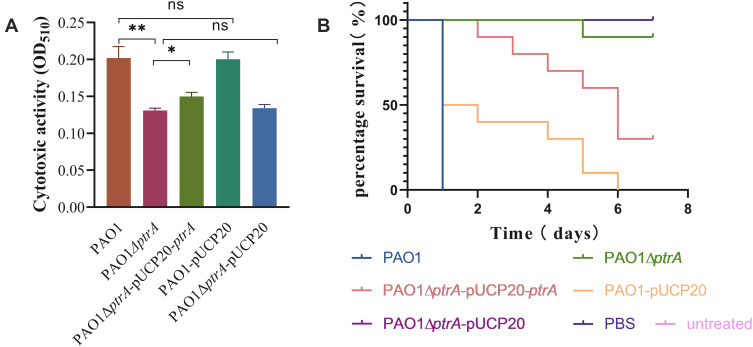
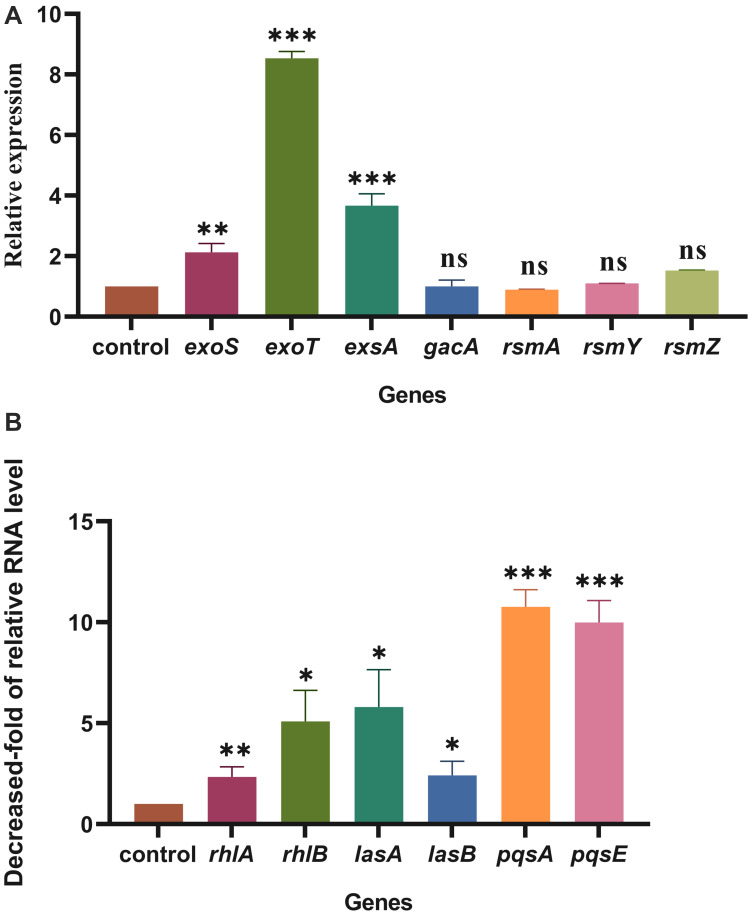
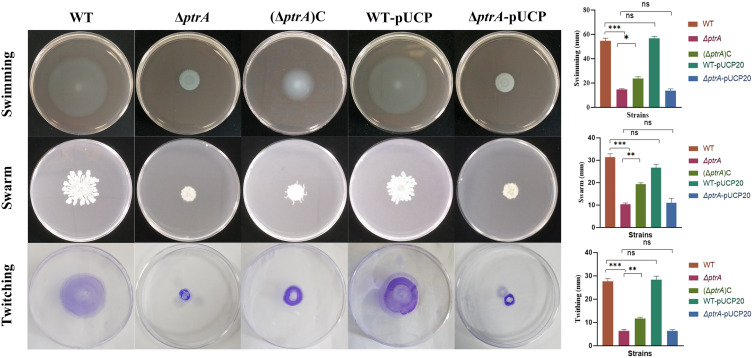
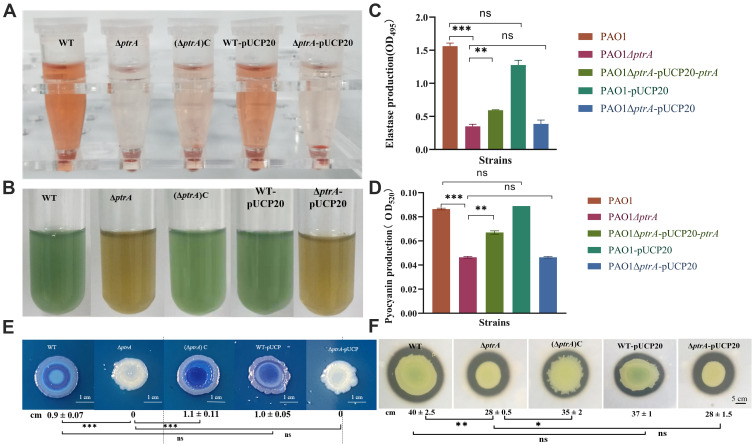
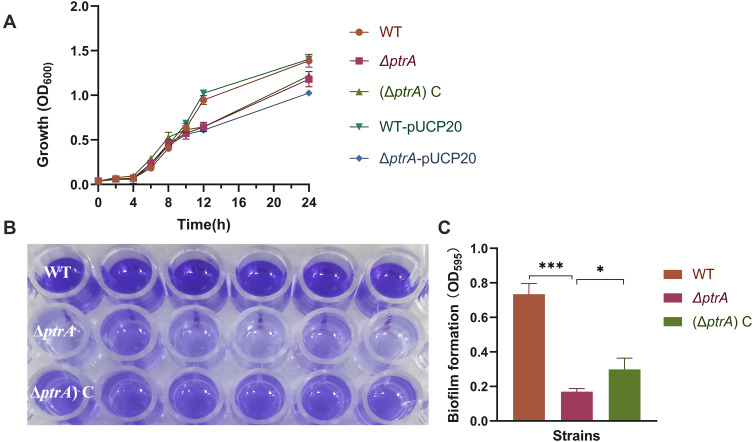
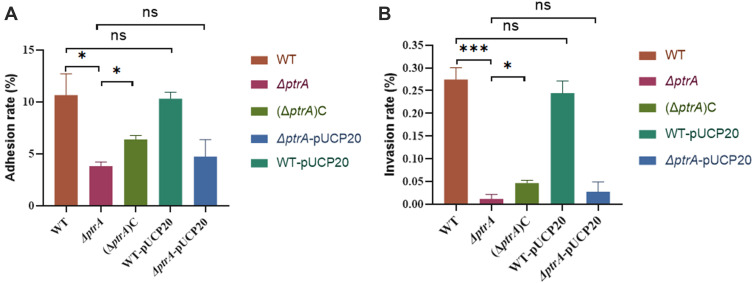
The results of transcriptome sequencing analyses and real-time fluorescence quantitative polymerase chain reaction (RT-qPCR) showed that PtrA plays a dual regulatory role in the virulence systems of PA: negatively regulates the type-III secretion system (T3SS) and positively regulates the quorum-sensing system (QS). The mutant attenuated extracellular virulence related to QS like pyocyanin, elastase, rhamnolipids, proteolytic activity, and biofilm production. According to adhesion and invasion experiments, PtrA can not only contribute to the adhesiveness but also the invasive of PA. Moreover, the PtrA-mediated regulation of PA pathogenicity was determined both in vivo and in vitro through cytotoxicity and survival experiments. In addition, apart from virulence, PtrA was found to influence the carbapenems resistance of PA. After deleting , the minimum inhibitory concentration (MIC) of carbapenems antibiotics was decreased by 2-fold, while a 2-8 fold increase was noted for the complemented strain.
Our findings establish that PtrA exerts a regulatory role in both pathogenicity and carbapenems resistance of PA. This work may shed light on a novel target for the clinical treatment of PA.
在全球范围内,铜绿假单胞菌(PA)正成为一种主要的医院病原体,常引发侵袭性甚至致命的感染。铜绿假单胞菌III型阻遏物A(PtrA)可被铜离子特异性激活,并与III型转录激活因子ExsA相互作用。本研究旨在深入了解PtrA介导的对PA致病性和抗生素耐药性的调控作用。
转录组测序分析和实时荧光定量聚合酶链反应(RT-qPCR)结果表明,PtrA在PA的毒力系统中发挥双重调控作用:对III型分泌系统(T3SS)起负调控作用,对群体感应系统(QS)起正调控作用。PtrA突变体减弱了与QS相关的细胞外毒力,如绿脓菌素、弹性蛋白酶、鼠李糖脂、蛋白水解活性和生物膜形成。根据黏附与侵袭实验,PtrA不仅有助于PA的黏附性,还能增强其侵袭能力。此外,通过细胞毒性和生存实验在体内和体外确定了PtrA介导的对PA致病性的调控作用。此外,除了毒力外,还发现PtrA会影响PA对碳青霉烯类抗生素的耐药性。删除PtrA后,碳青霉烯类抗生素的最低抑菌浓度(MIC)降低了2倍,而互补菌株的MIC则增加了2至8倍。
我们的研究结果表明,PtrA在PA的致病性和对碳青霉烯类抗生素的耐药性方面均发挥调控作用。这项工作可能为PA的临床治疗提供一个新的靶点。