Debus Jane Louisa, Bachmann Paula, Frahm Niklas, Mashhadiakbar Pegah, Langhorst Silvan Elias, Streckenbach Barbara, Baldt Julia, Heidler Felicita, Hecker Michael, Zettl Uwe Klaus
Neuroimmunology Section, Department of Neurology, Rostock University Medical Centre, Gehlsheimer Str. 20, 18147 Rostock, Germany.
Neuroimmunology Section, Department of Neurology, Rostock University Medical Centre, Rostock, Germany.
Ther Adv Chronic Dis. 2022 Aug 4;13:20406223221108391. doi: 10.1177/20406223221108391. eCollection 2022.
Multiple sclerosis (MS) is the most common immune-mediated demyelinating disease in younger adults. Patients with MS (PwMS) are vulnerable to the presence of potential drug-drug interactions (pDDIs) and potential drug-food interactions (pDFIs) as they take numerous medications to treat MS, associated symptoms and comorbidities. Knowledge about pDDIs and pDFIs can increase treatment success and reduce side effects.
We aimed at determining the frequency and severity of pDDIs and pDFIs in PwMS, with regard to polypharmacy.
In the cross-sectional study, we analysed pDDIs and pDFIs of 627 PwMS aged ⩾18 years. Data collection was performed through patient record reviews, clinical examinations and structured patient interviews. pDDIs and pDFIs were identified using two DDI databases: and .
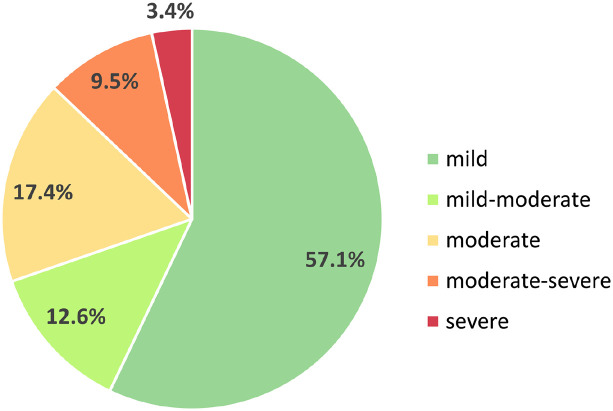
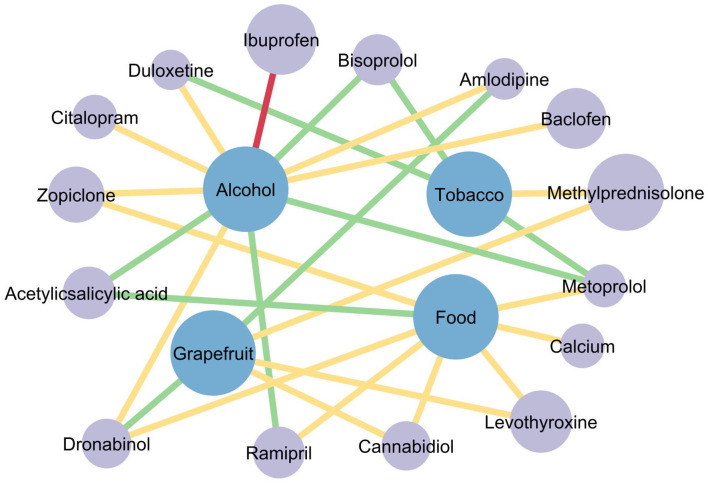
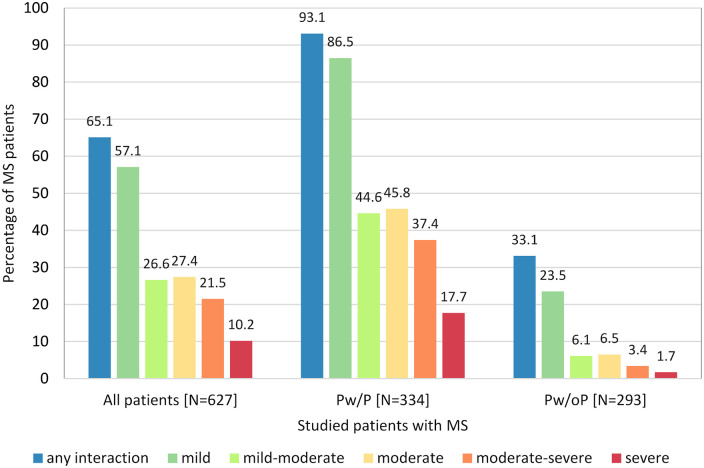
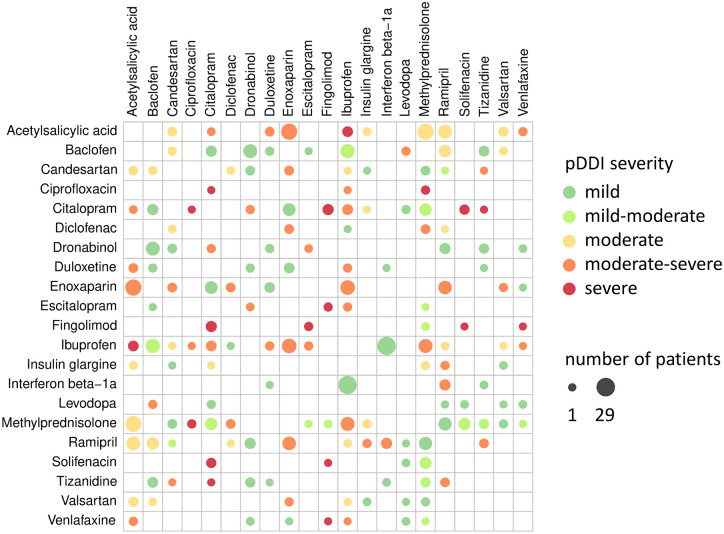
We identified 2587 pDDIs (counted with repetitions). Of 627 PwMS, 408 (65.1%) had ⩾ 1 pDDI. Polypharmacy (concomitant use of ⩾ 5 drugs) was found for 334 patients (53.3%). Patients with polypharmacy (Pw/P) were found to have a 15-fold higher likelihood of having ⩾ 1 severe pDDI compared with patients without polypharmacy (Pw/oP) (OR: 14.920, < 0.001). The most frequently recorded severe pDDI was between citalopram and fingolimod. Regarding pDFIs, ibuprofen and alcohol was the most frequent severe pDFI.
Pw/P were particularly at risk of severe pDDIs. Age and educational level were found to be factors associated with the occurrence of pDDIs, independent of the number of medications taken. Screening for pDDIs/pDFIs should be routinely done by the clinical physician to increase drug safety and reduce side effects.
多发性硬化症(MS)是年轻成年人中最常见的免疫介导性脱髓鞘疾病。由于多发性硬化症患者(PwMS)需要服用多种药物来治疗MS、相关症状和合并症,他们易出现潜在药物相互作用(pDDIs)和潜在药物与食物相互作用(pDFIs)。了解pDDIs和pDFIs可提高治疗成功率并减少副作用。
我们旨在确定PwMS中pDDIs和pDFIs的频率及严重程度,涉及联合用药情况。
在这项横断面研究中,我们分析了627名年龄≥18岁的PwMS的pDDIs和pDFIs。通过查阅患者病历、临床检查和结构化患者访谈进行数据收集。使用两个药物相互作用数据库识别pDDIs和pDFIs:[具体数据库名称1]和[具体数据库名称2]。
我们识别出2587个pDDIs(重复计数)。在627名PwMS中,408名(65.1%)有≥1个pDDI。334名患者(53.3%)存在联合用药情况(同时使用≥5种药物)。发现联合用药患者(Pw/P)出现≥1个严重pDDI的可能性比未联合用药患者(Pw/oP)高15倍(比值比:14.920,P<0.001)。最常记录到的严重pDDI是西酞普兰和芬戈莫德之间的相互作用。关于pDFIs,布洛芬和酒精是最常见的严重pDFI。
联合用药患者尤其有发生严重pDDIs的风险。年龄和教育水平被发现是与pDDIs发生相关的因素,与所服用药物数量无关。临床医生应常规筛查pDDIs/pDFIs以提高用药安全性并减少副作用。