Plants of Thailand Research Unit, Department of Botany, Faculty of Science, Chulalongkorn University, Pathumwan, Bangkok, 10330, Thailand.
CEFE, University of Montpellier, CNRS, EPHE, IRD, Montpellier, France.
Sci Rep. 2022 Aug 13;12(1):13788. doi: 10.1038/s41598-022-18031-z.
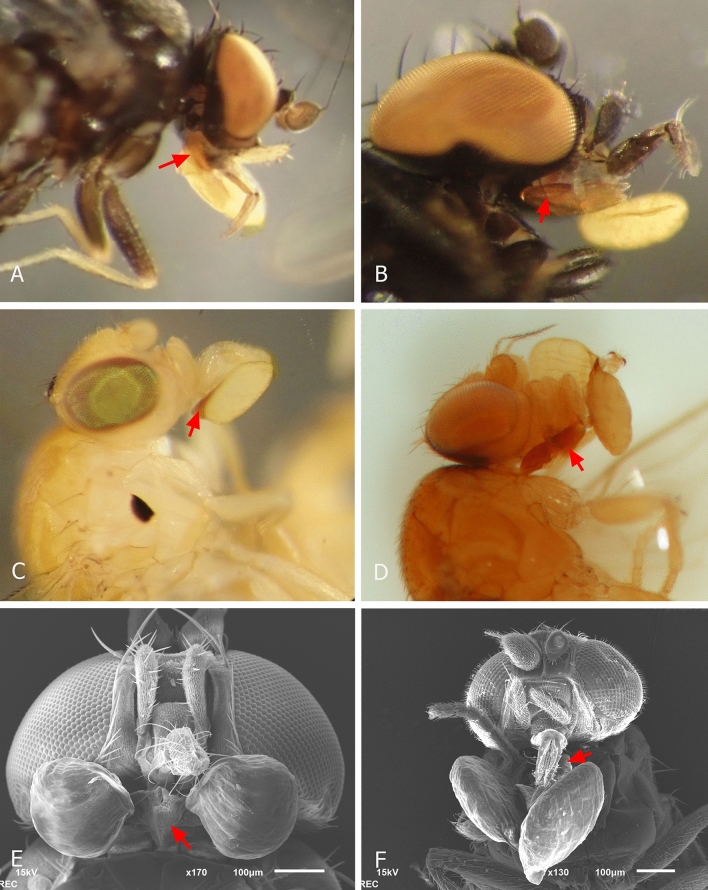
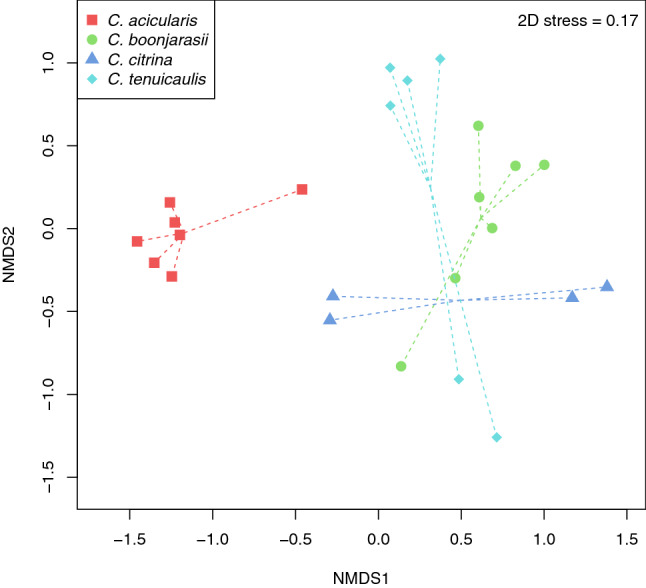
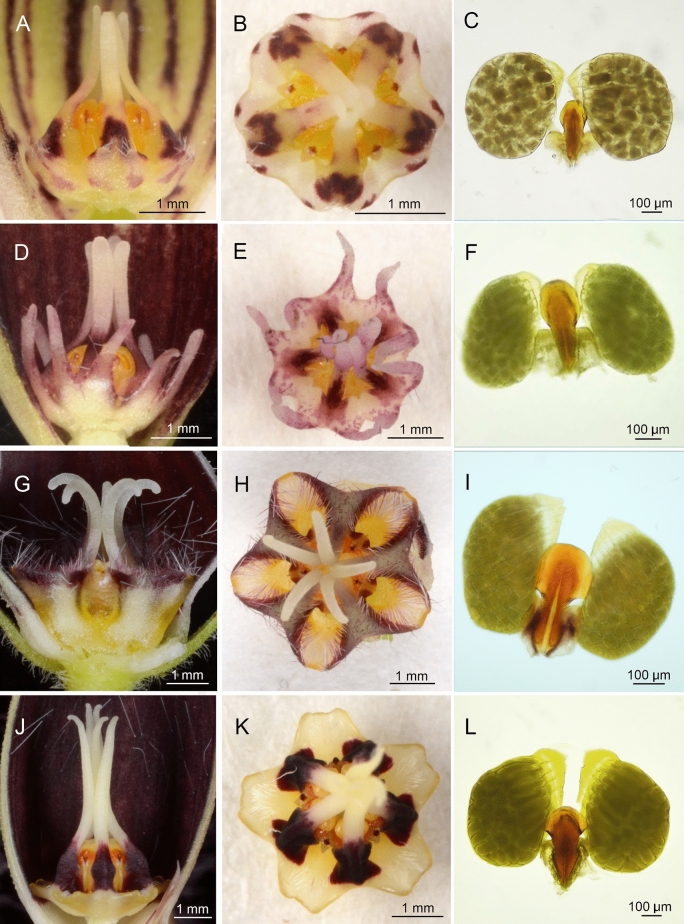
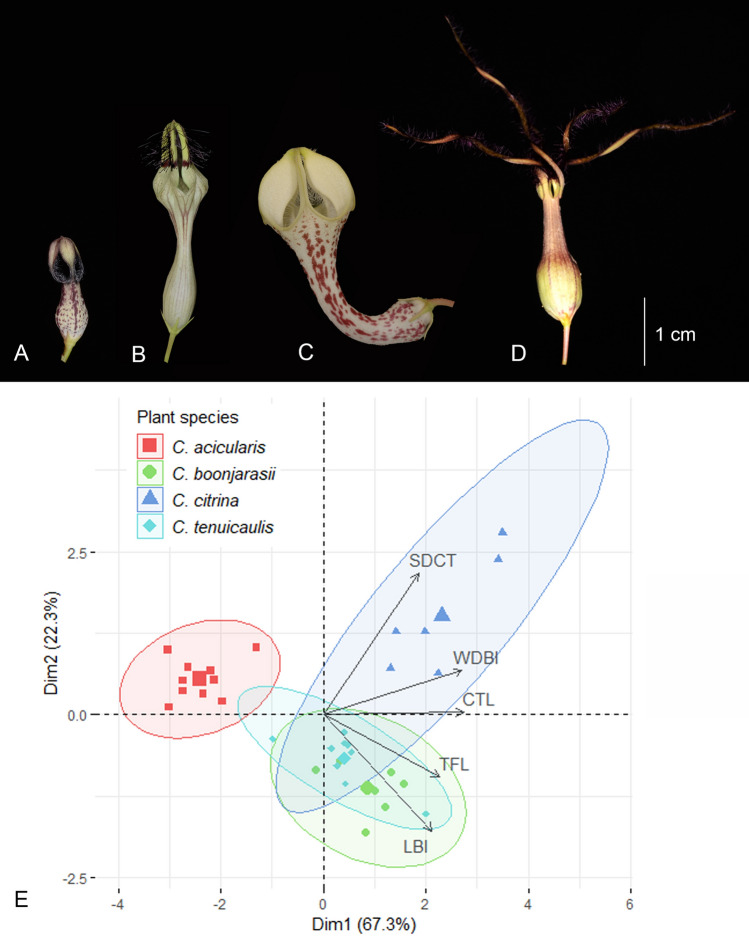
Possession of flowers that trap fly pollinators is a conservative trait within the genus Ceropegia, in which pollination systems can be generalized or highly specialized. However, little is known about the role of plant-pollinator interactions in the maintenance of species boundaries. This study examined the degree of plant-pollinator specialization and identified the parameters responsible for specificity among four co-occurring Ceropegia species with overlapping flowering times. All investigated plant species were functionally specialized on pollination by Chloropidae and/or Milichiidae flies and each Ceropegia species was, in turn, ecologically highly specialized on only two pollinating fly morphospecies, though one plant species appeared more generalist. Species-specific fly attraction was due to the differences between plant species in floral scents, floral morphology, colour patterns, and presence of other functional structures, e.g., vibratile trichomes, which were shown to contribute to pollinator attraction in one study species. The combination of these olfactory and visual cues differentially influenced pollinator preferences and thus hindered heterospecific visitation. Furthermore, a pollinator exchange experiment also highlighted that species integrity is maintained through efficient ethological isolation (pollinator attraction). The mechanical isolation mediated by the fit between floral morphology and size and/or shape of fly pollinators appears less pronounced here, but whether or not the morphological match between male (pollinium) and female (guide rails) reproductive organs can impede hybridization remains to be investigated.
拥有能够吸引蝇类传粉者的花朵是 Ceropegia 属中的一个保守特征,其中传粉系统可以是广义的或高度特化的。然而,关于植物-传粉者相互作用在物种边界维持中的作用知之甚少。本研究考察了植物-传粉者特化的程度,并确定了在具有重叠花期的四个共存 Ceropegia 物种中负责特异性的参数。所有被调查的植物物种都在功能上专门用于由 Chloropidae 和/或 Milichiidae 蝇类授粉,并且每个 Ceropegia 物种都高度特化于仅两种传粉蝇形态种,尽管有一种植物物种似乎更具泛化性。物种特异性的蝇类吸引归因于植物物种在花香味、花形态、颜色模式和其他功能结构(例如,振动毛)方面的差异,这些结构在一项研究物种中被证明有助于传粉者吸引。这些嗅觉和视觉线索的组合不同程度地影响了传粉者的偏好,从而阻碍了异种种群的访问。此外,传粉者交换实验还强调,物种完整性是通过有效的行为隔离(传粉者吸引)来维持的。这里,由花形态和大小以及/或蝇类传粉者形状之间的适应性介导的机械隔离似乎不太明显,但雌雄(花粉)和雌性(导轨)生殖器官之间的形态匹配是否会阻碍杂交仍有待研究。