Genomic Medecine and Molecular Epidemiology Laboratory, Quebec Heart and Lung Institute, Laval University, Quebec, G1V-4G5, Canada.
Department of Molecular Medicine, Laval University, Quebec, Canada.
BMC Genomics. 2022 Aug 13;23(1):588. doi: 10.1186/s12864-022-08811-2.
Heart failure (HF) is a prevalent cause of mortality and morbidity. The molecular drivers of HF are still largely unknown.
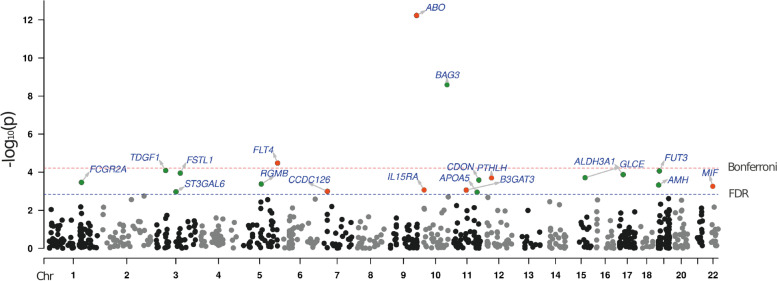
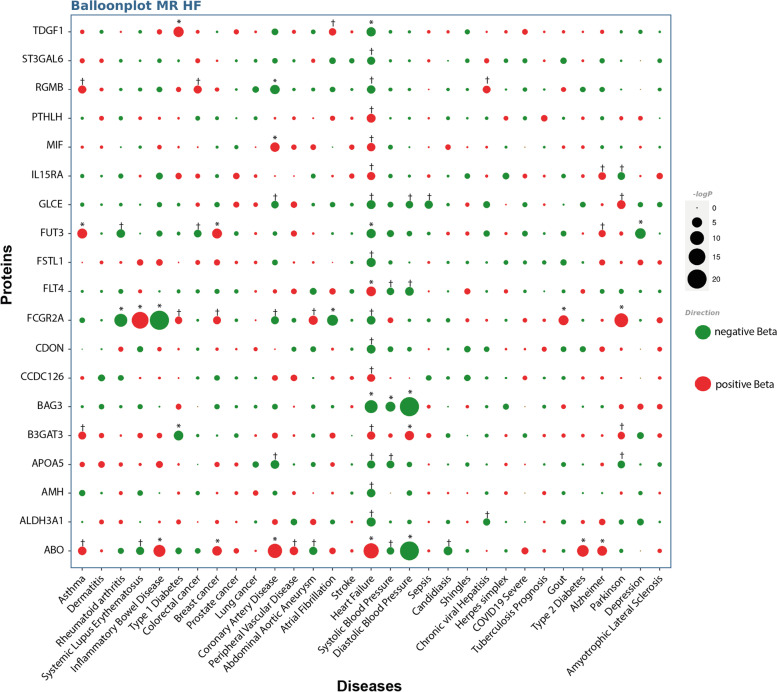
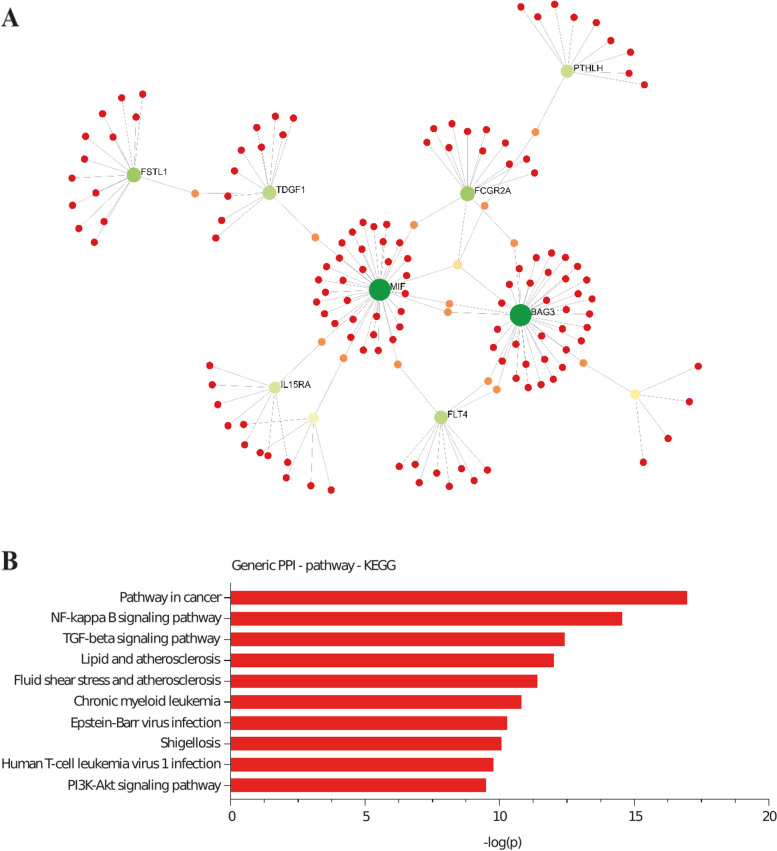
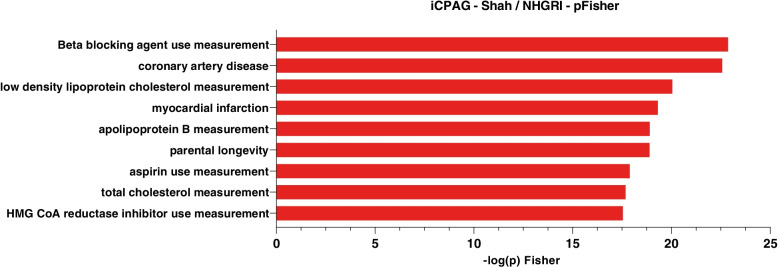
We aimed to identify circulating proteins causally associated with HF by leveraging genome-wide genetic association data for HF including 47,309 cases and 930,014 controls. We performed two-sample Mendelian randomization (MR) with multiple cis instruments as well as network and enrichment analysis using data from blood protein quantitative trait loci (pQTL) (2,965 blood proteins) measured in 3,301 individuals. Nineteen blood proteins were causally associated with HF, were not subject to reverse causality and were enriched in ligand-receptor and glycosylation molecules. Network pathway analysis of the blood proteins showed enrichment in NF-kappa B, TGF beta, lipid in atherosclerosis and fluid shear stress. Cross-phenotype analysis of HF identified genetic overlap with cardiovascular drugs, myocardial infarction, parental longevity and low-density cholesterol. Multi-trait MR identified causal associations between HF-associated blood proteins and cardiovascular outcomes. Multivariable MR showed that association of BAG3, MIF and APOA5 with HF were mediated by the blood pressure and coronary artery disease. According to the directional effect and biological action, 7 blood proteins are targets of existing drugs or are tractable for the development of novel therapeutics. Among the pathways, sialyl Lewis x and the activin type II receptor are potential druggable candidates.
Integrative MR analyses of the blood proteins identified causally-associated proteins with HF and revealed pleiotropy of the blood proteome with cardiovascular risk factors. Some of the proteins or pathway related mechanisms could be targeted as novel treatment approach in HF.
心力衰竭(HF)是死亡和发病的主要原因。HF 的分子驱动因素仍在很大程度上未知。
我们旨在通过利用包括 47309 例病例和 930014 例对照在内的 HF 全基因组遗传关联数据,确定与 HF 因果相关的循环蛋白。我们使用来自 3301 个人的血液蛋白定量性状(pQTL)(2965 种血液蛋白)的数据进行了两样本孟德尔随机化(MR),并使用多个顺式仪器以及网络和富集分析。19 种血液蛋白与 HF 因果相关,不受反向因果关系影响,并且在配体 - 受体和糖基化分子中富集。血液蛋白的网络途径分析显示,NF-kappa B、TGF beta、动脉粥样硬化中的脂质和流体切应力富集。HF 的跨表型分析确定了与心血管药物、心肌梗死、父母长寿和低密度胆固醇的遗传重叠。多表型 MR 确定了 HF 相关血液蛋白与心血管结局之间的因果关系。多变量 MR 表明,BAG3、MIF 和 APOA5 与 HF 的关联是由血压和冠心病介导的。根据定向作用和生物学作用,7 种血液蛋白是现有药物的作用靶点,或者是开发新型治疗方法的可处理靶点。在这些途径中,唾液酸路易斯 x 和激活素 II 型受体是潜在的可用药靶。
血液蛋白的综合 MR 分析确定了与 HF 因果相关的蛋白,并揭示了血液蛋白质与心血管危险因素的多效性。一些蛋白质或途径相关机制可能成为 HF 的新治疗方法的靶点。