Department of Rehabilitation Medicine, The Second Affiliated Hospital of Chongqing Medical University, 74 Linjiang Road, Chongqing, 40010, China.
Trials. 2022 Aug 13;23(1):650. doi: 10.1186/s13063-022-06535-y.
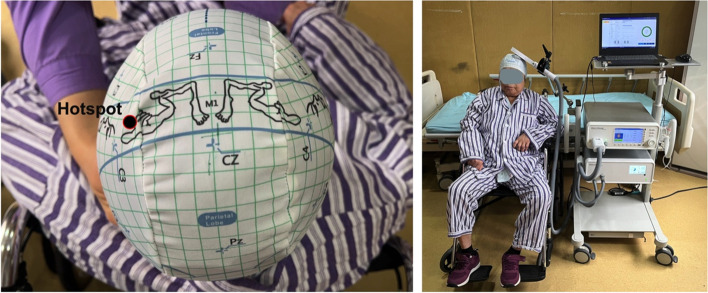
Poststroke urinary incontinence (PSI) is prevalent in stroke survivors, and high-quality evidence is required to guide clinical practice. Previous studies have demonstrated the curative effect of repetitive transcranial magnetic stimulation (rTMS) for urinary incontinence in individuals with multiple sclerosis (MS), Parkinson's disease (PD), and spinal cord injury (SCI). Here, we describe the protocol for a randomized controlled trial to evaluate the efficacy and safety of low-frequency rTMS on the contralesional primary motor cortex (M1) for the treatment of PSI.
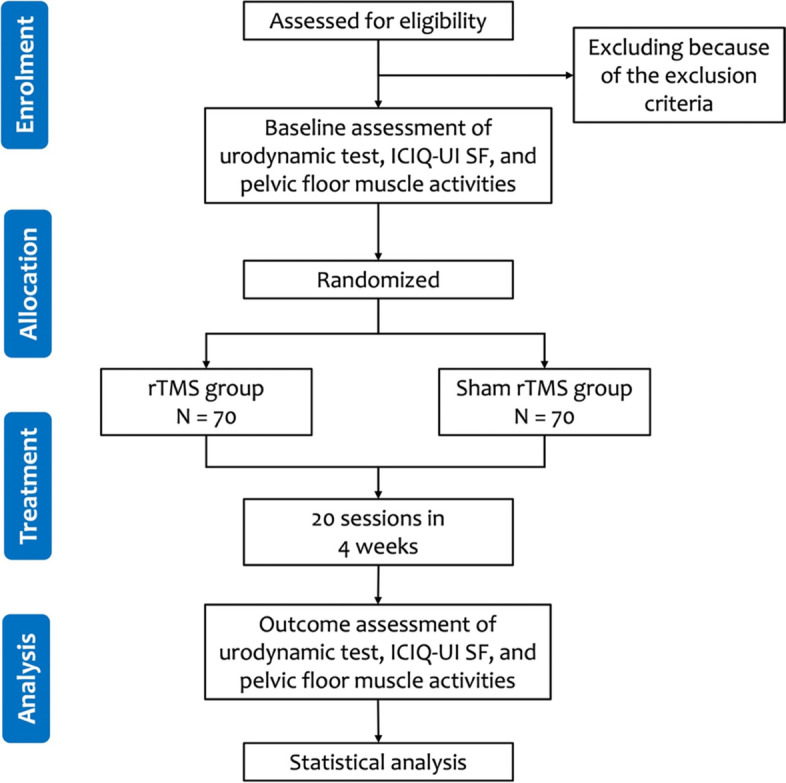
In this single-centre randomized controlled trial for poststroke urinary incontinence, a total of 140 eligible patients will be randomly allocated into two groups. The rTMS group (n = 70) will receive low-frequency rTMS at the M1 along with routine medical care, while the control group will receive sham rTMS along with routine medical care. All participants will undergo 20 treatment sessions, five times a week for 4 weeks. The primary outcome measures will be the changes in the urodynamic test at baseline versus 4 weeks after intervention. The secondary outcomes include the International Consultation on Incontinence Questionnaire Urinary Incontinence Short Form (ICIQ-UI SF), Overactive Bladder Symptom Score (OABSS), and pelvic floor muscle function.
The Institutional Review Board and Hospital Research Ethics Committee of the Second Affiliated Hospital of Chongqing Medical University approved this trial, and the approval number is No. 2020-153. All methods will be carried out in accordance with the principles of the Declaration of Helsinki and relevant ethical guidelines covering informed consent, confidentiality, and data storage. After the study had been thoroughly described to the participants by a physician, all participants will provide written informed consent indicating their willingness to participate. The results will be disseminated to most of the population, including participants, researchers, healthcare providers, and sponsors.
URL: https://www.chictr.org.cn ; Unique identifier: ChiCTR2100042688. Date of Registration: 2021-01-26.
脑卒中后尿失禁(PSI)在脑卒中幸存者中较为常见,需要高质量的证据来指导临床实践。先前的研究已经证明重复经颅磁刺激(rTMS)对多发性硬化症(MS)、帕金森病(PD)和脊髓损伤(SCI)患者的尿失禁有治疗效果。在这里,我们描述了一项随机对照试验的方案,以评估低频 rTMS 对病变对侧初级运动皮层(M1)治疗 PSI 的疗效和安全性。
在这项针对脑卒中后尿失禁的单中心随机对照试验中,将总共 140 名符合条件的患者随机分为两组。rTMS 组(n=70)将在 M1 上接受低频 rTMS 治疗,并辅以常规医疗护理,而对照组将接受假 rTMS 治疗,并辅以常规医疗护理。所有参与者将接受 20 次治疗,每周 5 次,共 4 周。主要结局指标将是干预前后基线时尿动力学测试的变化。次要结局包括国际尿失禁咨询问卷尿失禁简短表(ICIQ-UI SF)、膀胱过度活动症症状评分(OABSS)和盆底肌肉功能。
重庆医科大学第二附属医院机构审查委员会和医院伦理委员会批准了这项试验,批准号为 No. 2020-153。所有方法都将按照《赫尔辛基宣言》和相关伦理准则的原则进行,包括知情同意、保密和数据存储。在医生向参与者详细描述研究后,所有参与者都将提供书面知情同意书,表明他们愿意参与。研究结果将向大多数人群传播,包括参与者、研究人员、医疗保健提供者和赞助商。
网址:https://www.chictr.org.cn;唯一标识符:ChiCTR2100042688。注册日期:2021-01-26。