Zhang Jingchang, Li Renfeng, Huang Shuai
The First Affiliated Hospital of Zhengzhou University, Zhengzhou University, Zhengzhou, China.
Front Oncol. 2022 Jul 28;12:951019. doi: 10.3389/fonc.2022.951019. eCollection 2022.
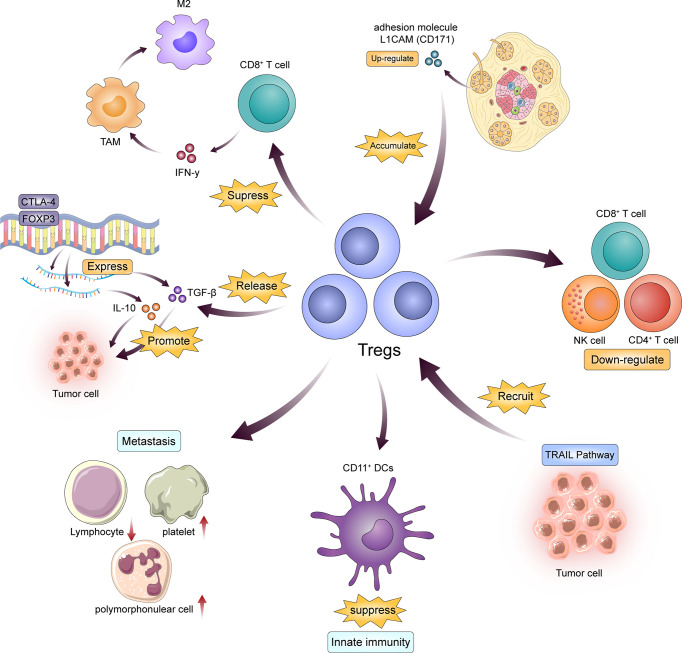
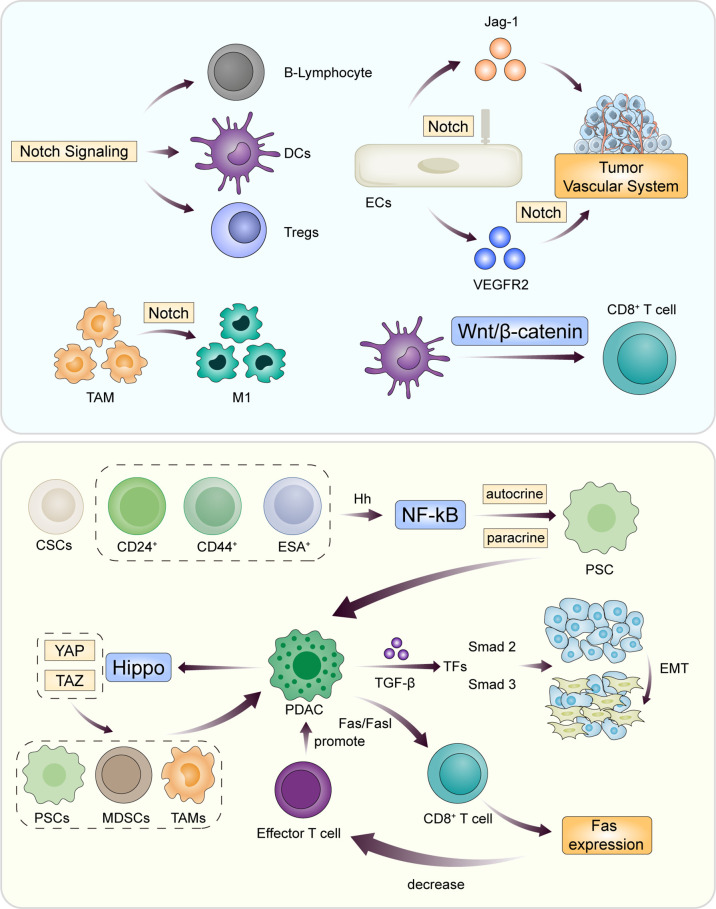
Pancreatic cancer has the seventh highest death rate of all cancers. The absence of any serious symptoms, coupled with a lack of early prognostic and diagnostic markers, makes the disease untreatable in most cases. This leads to a delay in diagnosis and the disease progresses so there is no cure. Only about 20% of cases are diagnosed early. Surgical removal is the preferred treatment for cancer, but chemotherapy is standard for advanced cancer, although patients can eventually develop drug resistance and serious side effects. Chemoresistance is multifactorial because of the interaction among pancreatic cancer cells, cancer stem cells, and the tumor microenvironment (TME). Nevertheless, more pancreatic cancer patients will benefit from precision treatment and targeted drugs. This review focuses on the immune-related components of TME and the interactions between tumor cells and TME during the development and progression of pancreatic cancer, including immunosuppression, tumor dormancy and escape. Finally, we discussed a variety of immune components-oriented immunotargeting drugs in TME from a clinical perspective.
胰腺癌的死亡率在所有癌症中排名第七。由于没有任何严重症状,再加上缺乏早期预后和诊断标志物,该病在大多数情况下无法治疗。这导致诊断延迟,疾病进展,从而无法治愈。只有约20%的病例能早期诊断。手术切除是癌症的首选治疗方法,但化疗是晚期癌症的标准治疗方法,不过患者最终可能会产生耐药性和严重的副作用。由于胰腺癌细胞、癌症干细胞和肿瘤微环境(TME)之间的相互作用,化疗耐药是多因素的。尽管如此,更多的胰腺癌患者将从精准治疗和靶向药物中受益。本综述重点关注TME中与免疫相关的成分以及胰腺癌发生和发展过程中肿瘤细胞与TME之间的相互作用,包括免疫抑制、肿瘤休眠和逃逸。最后,我们从临床角度讨论了TME中多种针对免疫成分的免疫靶向药物。