Guo Haoyue, Wang Qian, Urban Alexander, Artrith Nongnuch
Department of Chemical Engineering, Columbia University, New York, New York 10027, United States.
Columbia Center for Computational Electrochemistry, Columbia University, New York, New York 10027, United States.
Chem Mater. 2022 Aug 9;34(15):6702-6712. doi: 10.1021/acs.chemmater.2c00267. Epub 2022 Jul 20.
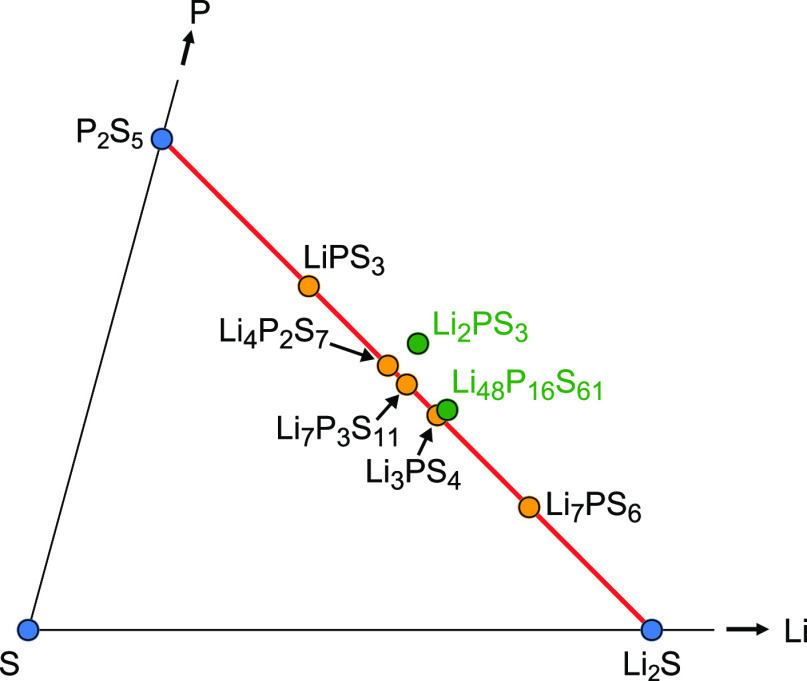
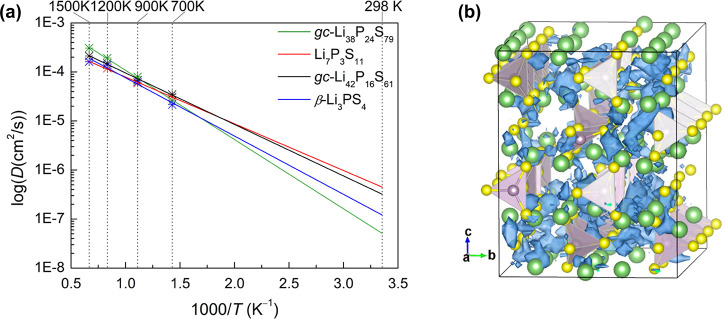
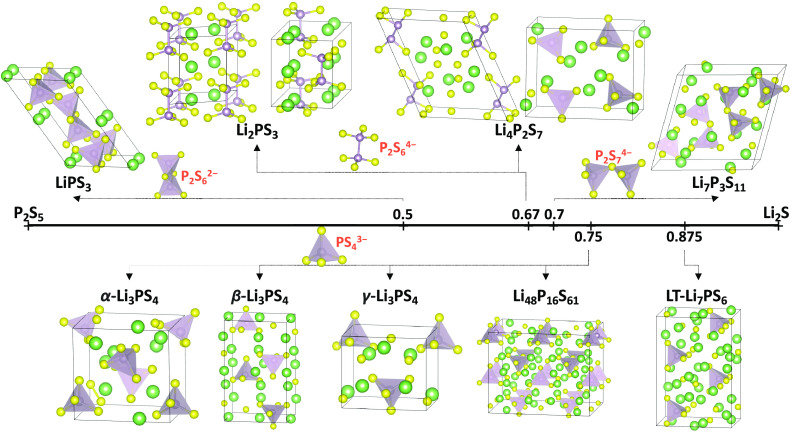
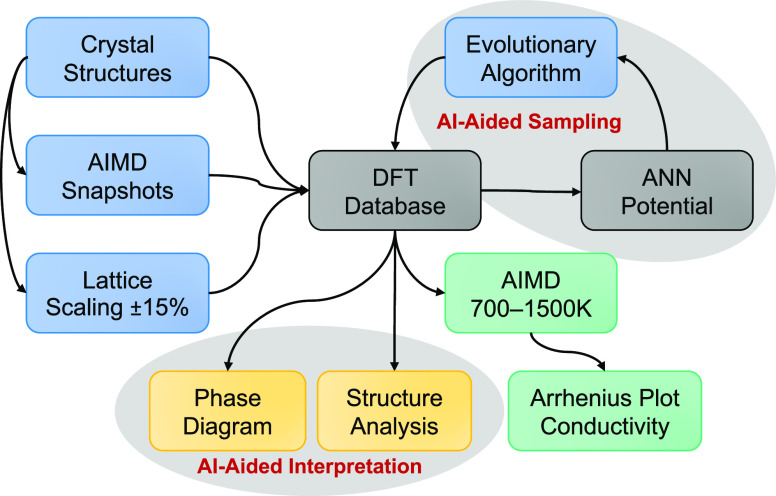
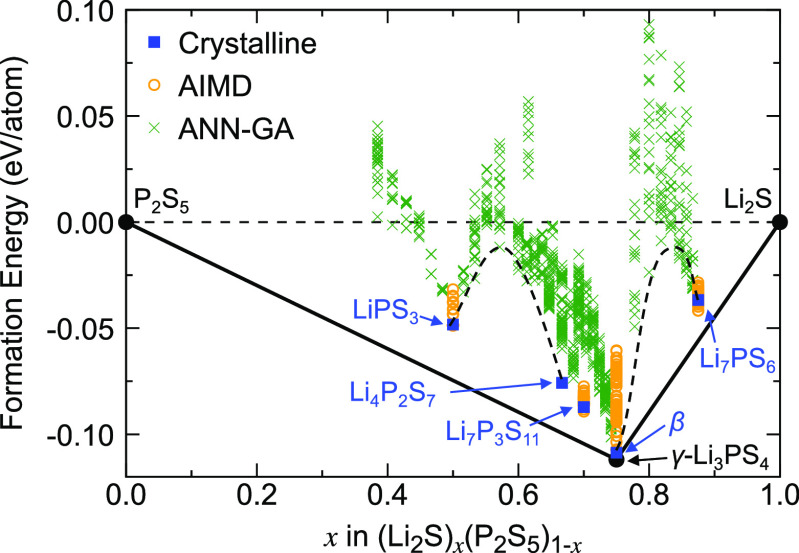
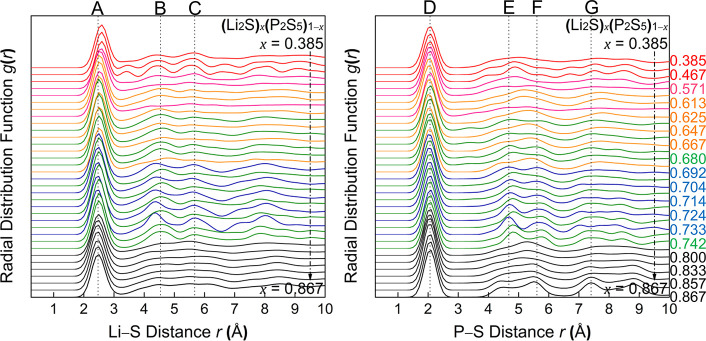
Lithium thiophosphates (LPSs) with the composition (LiS) (PS) are among the most promising prospective electrolyte materials for solid-state batteries (SSBs), owing to their superionic conductivity at room temperature (>10 S cm), soft mechanical properties, and low grain boundary resistance. Several glass-ceramic () LPSs with different compositions and good Li conductivity have been previously reported, but the relationship among composition, atomic structure, stability, and Li conductivity remains unclear due to the challenges in characterizing noncrystalline phases in experiments or simulations. Here, we mapped the LPS phase diagram by combining first-principles and artificial intelligence (AI) methods, integrating density functional theory, artificial neural network potentials, genetic-algorithm sampling, and molecular dynamics simulations. By means of an unsupervised structure-similarity analysis, the glassy/ceramic phases were correlated with the local structural motifs in the known LPS crystal structures, showing that the energetically most favorable Li environment varies with the composition. Based on the discovered trends in the LPS phase diagram, we propose a candidate solid-state electrolyte composition, (LiS) (PS) ( ∼ 0.725), that exhibits high ionic conductivity (>10 S cm) in our simulations, thereby demonstrating a general design strategy for amorphous or glassy/ceramic solid electrolytes with enhanced conductivity and stability.
组成为(LiS) (PS)的硫代磷酸锂(LPSs)是固态电池(SSBs)最具前景的潜在电解质材料之一,这归因于它们在室温下的超离子电导率(>10 S cm)、柔软的机械性能以及低晶界电阻。先前已报道了几种具有不同组成且Li电导率良好的玻璃陶瓷()LPSs,但由于在实验或模拟中表征非晶相存在挑战,组成、原子结构、稳定性和Li电导率之间的关系仍不明确。在此,我们通过结合第一性原理和人工智能(AI)方法绘制了LPS相图,整合了密度泛函理论、人工神经网络势、遗传算法采样和分子动力学模拟。通过无监督结构相似性分析,将玻璃态/陶瓷相与已知LPS晶体结构中的局部结构基序相关联,表明能量上最有利的Li环境随组成而变化。基于在LPS相图中发现的趋势,我们提出了一种候选固态电解质组成(LiS) (PS) (~ 0.725),在我们的模拟中其表现出高离子电导率(>10 S cm),从而展示了一种用于具有增强电导率和稳定性的非晶或玻璃态/陶瓷固态电解质的通用设计策略。