Aldridge Gabriel M, Zarin Tyler A, Brandner Adam J, George Olivier, Gilpin Nicholas W, Repunte-Canonigo Vez, Sanna Pietro P, Koob George F, Vendruscolo Leandro F, Schmeichel Brooke E
Department of Biomedical Sciences, Quillen College of Medicine, East Tennessee State University, Johnson City, TN, 37614, USA.
Integrative Neuroscience Research Branch, Intramural Research Program, National Institute on Drug Abuse, National Institutes of Health, Baltimore, MD, 21224, USA.
Addict Neurosci. 2022 Sep;3. doi: 10.1016/j.addicn.2022.100028. Epub 2022 Jul 3.
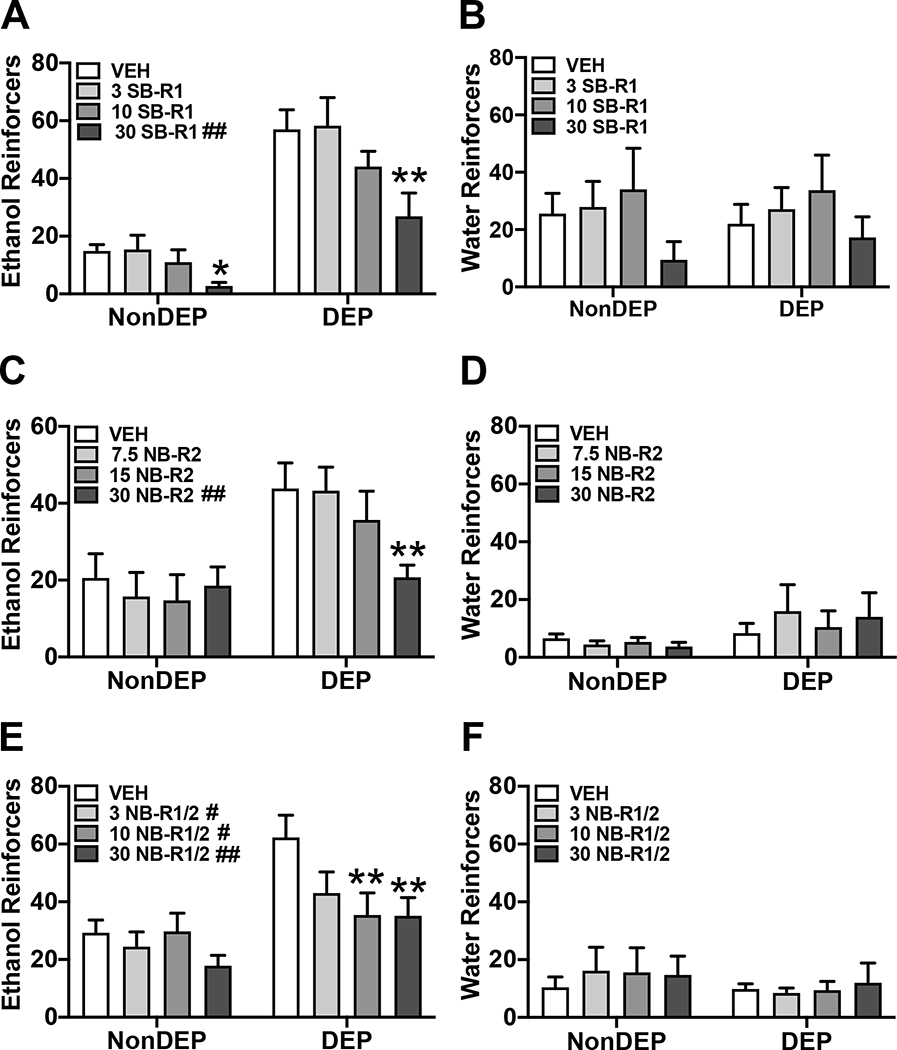
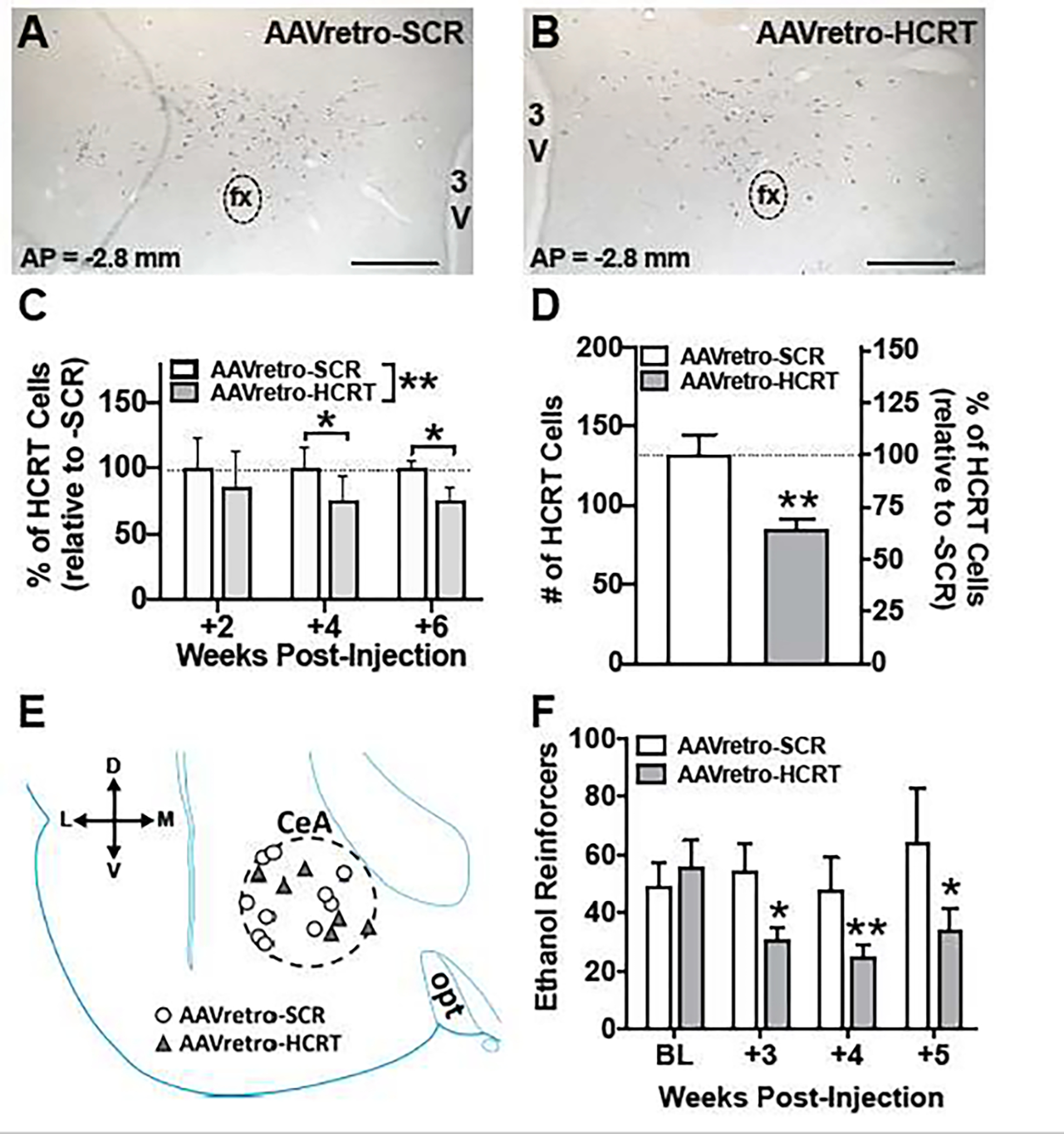
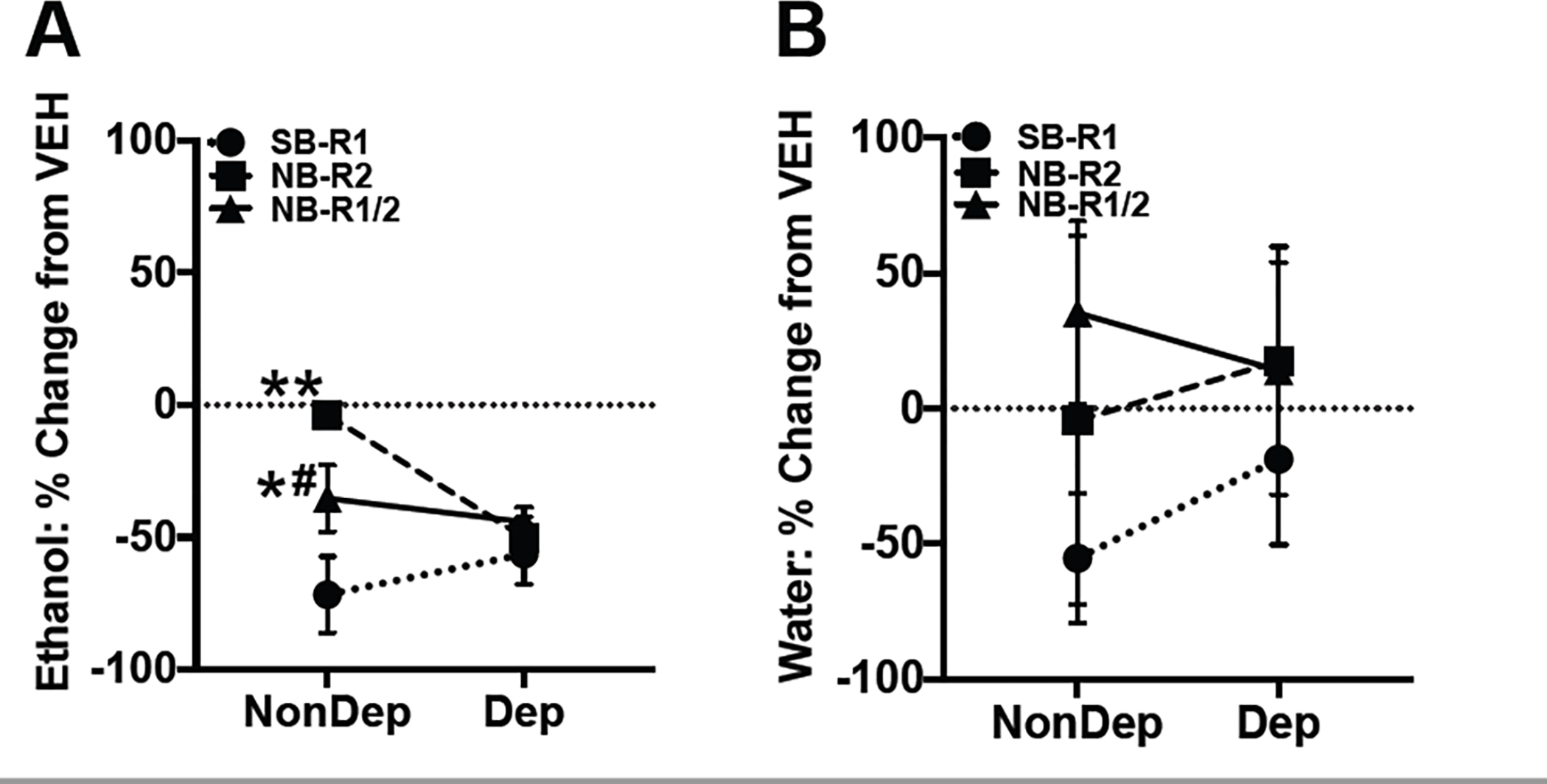
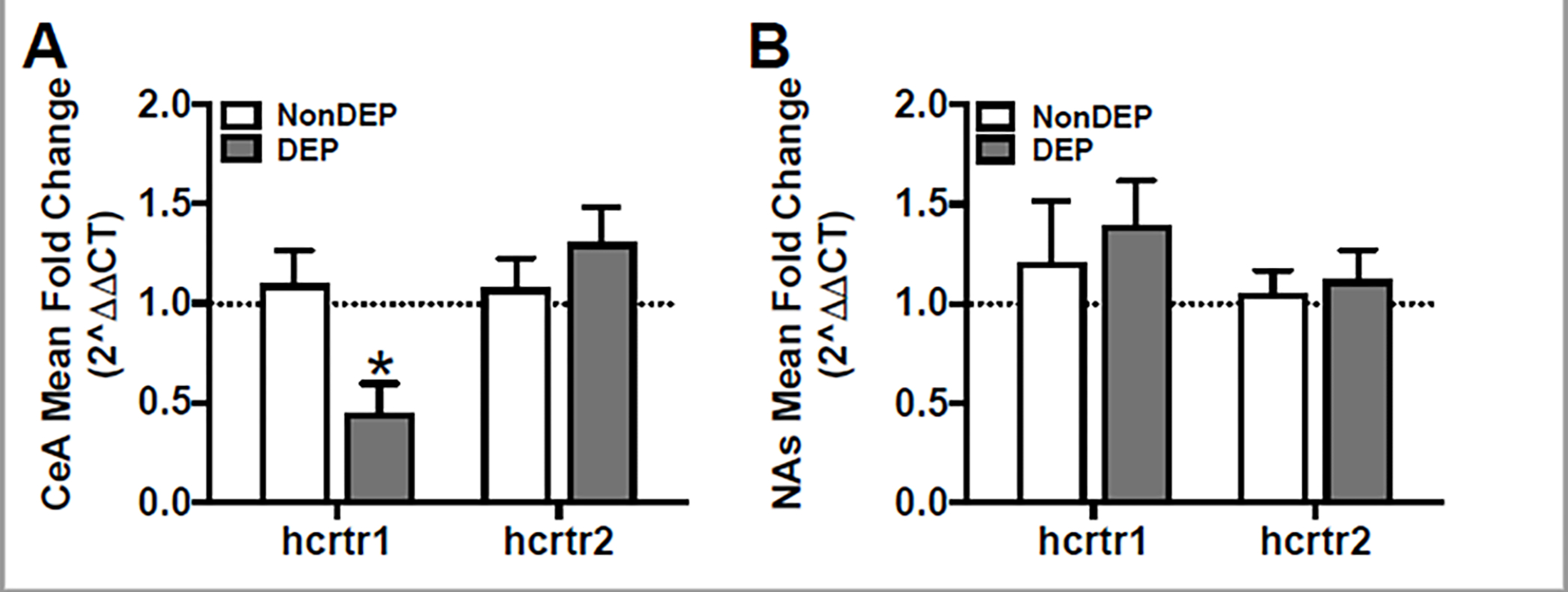
Hypocretin/Orexin (HCRT) is a neuropeptide that is associated with both stress and reward systems in humans and rodents. The different contributions of signaling at hypocretin-receptor 1 (HCRT-R1) and hypocretin-receptor 2 (HCRT-R2) to compulsive alcohol drinking are not yet fully understood. Thus, the current studies used pharmacological and viral-mediated targeting of HCRT to determine participation in compulsive alcohol drinking and measured HCRT-receptor mRNA expression in the extended amygdala of both alcohol-dependent and non-dependent male rats. Rats were made dependent through chronic intermittent exposure to alcohol vapor and were tested for the acute effect of HCRT-R1-selective (SB-408124; SB-R1), HCRT-R2-selective (NBI-80713; NB-R2), or dual HCRT-R1/2 (NBI-87571; NB-R1/2) antagonism on alcohol intake. NB-R2 and NB-R1/2 antagonists each dose-dependently decreased overall alcohol drinking in alcohol-dependent rats, whereas, SB-R1 decreased alcohol drinking in both alcohol-dependent and non-dependent rats at the highest dose (30 mg/kg). SB-R1, NB-R2, and NB-R1/2 treatment did not significantly affect water drinking in either alcohol-dependent or non-dependent rats. Additional PCR analyses revealed a significant decrease in mRNA expression within the central amygdala (CeA) of dependent rats under acute withdrawal conditions compared to nondependent rats. Lastly, a shRNA-encoding adeno-associated viral vector with retrograde function was used to knockdown HCRT in CeA-projecting neurons from the lateral hypothalamus (LH). LH-CeA HCRT knockdown significantly attenuated alcohol self-administration in alcohol-dependent rats. These observations suggest that HCRT signaling in the CeA is necessary for alcohol-seeking behavior during dependence. Together, these data highlight a role for both HCRT-R1 and -R2 in dependent alcohol-seeking behavior.
下丘脑分泌素/食欲素(HCRT)是一种神经肽,与人类和啮齿动物的应激和奖赏系统均相关。目前,对于下丘脑分泌素受体1(HCRT-R1)和下丘脑分泌素受体2(HCRT-R2)信号传导在强迫性饮酒中的不同作用尚未完全了解。因此,本研究采用药理学和病毒介导的HCRT靶向方法,以确定其在强迫性饮酒中的作用,并检测了酒精依赖和非依赖雄性大鼠终纹床核杏仁核扩展区中HCRT受体mRNA的表达。通过慢性间歇性暴露于酒精蒸汽使大鼠产生酒精依赖,并测试HCRT-R1选择性拮抗剂(SB-408124;SB-R1)、HCRT-R2选择性拮抗剂(NBI-80713;NB-R2)或双HCRT-R1/2拮抗剂(NBI-87571;NB-R1/2)对酒精摄入量的急性影响。NB-R2和NB-R1/2拮抗剂均剂量依赖性地降低了酒精依赖大鼠的总体酒精摄入量,而SB-R1在最高剂量(30mg/kg)时降低了酒精依赖和非依赖大鼠的酒精摄入量。SB-R1、NB-R2和NB-R1/2处理对酒精依赖或非依赖大鼠的饮水量均无显著影响。额外的PCR分析显示,与非依赖大鼠相比,依赖大鼠在急性戒断条件下中央杏仁核(CeA)内的mRNA表达显著降低。最后,使用具有逆行功能的编码短发夹RNA(shRNA)的腺相关病毒载体,敲低下丘脑外侧区(LH)投射到CeA的神经元中的HCRT。LH-CeA HCRT敲低显著减弱了酒精依赖大鼠的酒精自我给药行为。这些观察结果表明,CeA中的HCRT信号传导对于依赖期间的觅酒行为是必需的。总之,这些数据突出了HCRT-R1和-R2在依赖的觅酒行为中的作用。