Bennani Fatima Ezzahra, Doudach Latifa, Karrouchi Khalid, El Rhayam Youssef, Rudd Christopher E, Ansar M'hammed, El Abbes Faouzi My
Laboratory of Pharmacology and Toxicology, Bio Pharmaceutical and Toxicological Analysis Research Team, Faculty of Medicine and Pharmacy, Mohammed V University in Rabat, BP6203, Rabat, Morocco.
Laboratory of Analytical Chemistry, Faculty of Medicine and Pharmacy, Mohammed V University in Rabat, BP6203, Rabat, Morocco.
Heliyon. 2022 Jul 19;8(8):e10003. doi: 10.1016/j.heliyon.2022.e10003. eCollection 2022 Aug.
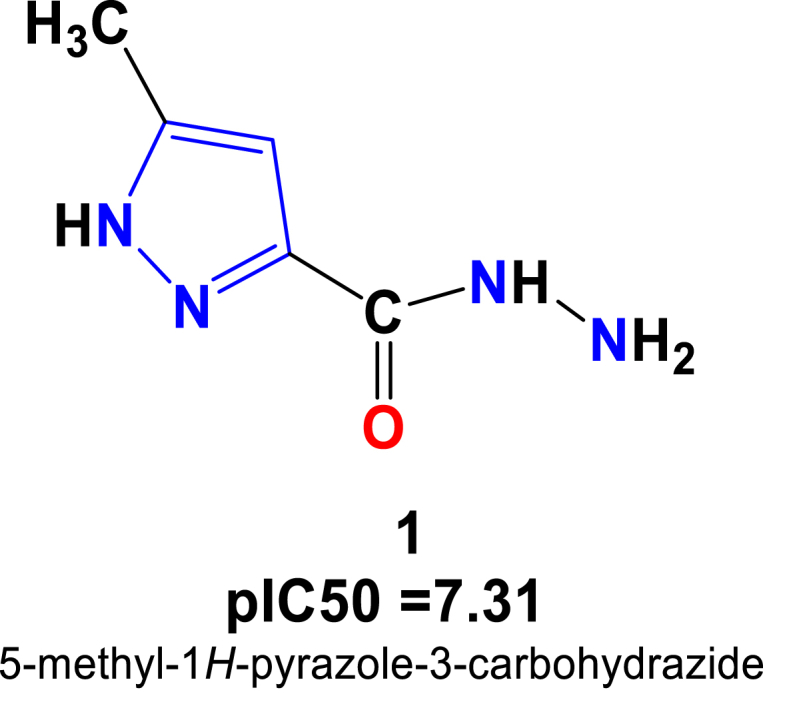
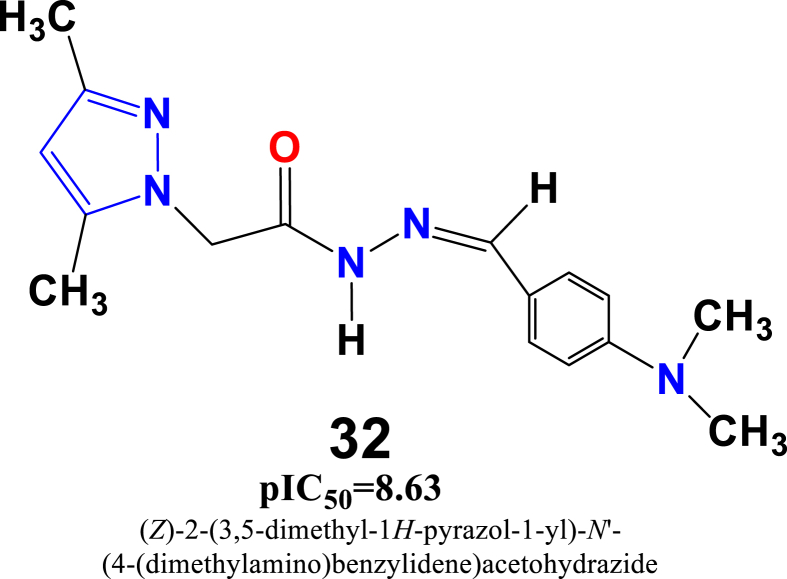
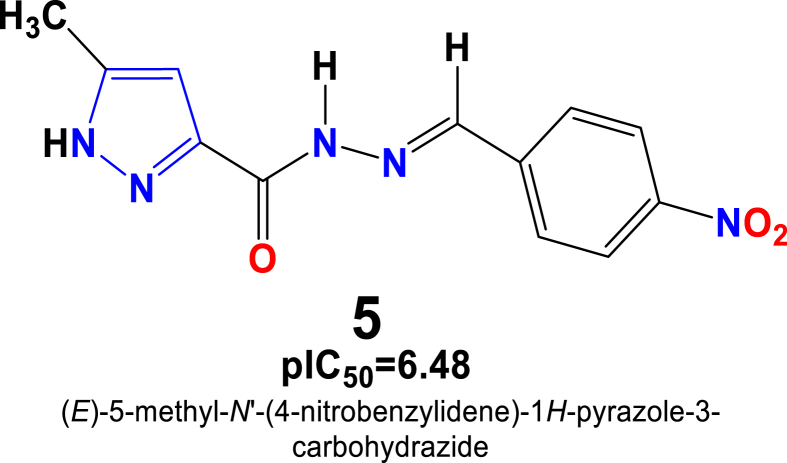
Despite the decades of scientific studies for developing promising new therapies, cancer remains a major cause of illness and mortality, worldwide. Several cancer types are the major topic of research in drug discovery programs due to their global incidence cases and growing frequency. In the present study, using two different statistical approaches PCA (principal component analysis) and PLS (partial least squares), six 2D-QSAR (quantitative structure activity relationship) models have been developed for the set of compounds retrieved against seven cancer cell lines vizPC-3, B16F10, K562, MDA-MB-231, A2780, and ACHN. For the creation and validation of 2D-QSAR models, OECD (Organization for Economic Co-operation and Development) requirements have been strictly followed. All of the generated 2D-QSAR models produce a significant and high correlation coefficient value with several other statistical parameters. Moreover, developed 2D-QSAR models have been used for activity predictions of in-house synthesized 63 pyrazole derivatives compounds. Precisely, most statistically significant and accepted2D-QSAR model generated for each cancer cell line has been used to predict the pIC value (anti-cancer activity) of all 63 synthesized pyrazole derivatives. Furthermore, designing of novel pyrazole derivatives has been carried out by substituting the essential functional groups based on the best derived 2D-QSAR models for each cancer cell line, more precisely, based on the most significant molecular descriptors with enhanced anti-cancer activity. Finally, the prediction of the new designed molecules reveals higher pIC than the standard compounds.
尽管数十年来一直在进行科学研究以开发有前景的新疗法,但癌症仍是全球疾病和死亡的主要原因。由于几种癌症类型的全球发病率和不断增加的频率,它们是药物发现计划中的主要研究课题。在本研究中,使用两种不同的统计方法主成分分析(PCA)和偏最小二乘法(PLS),针对针对七种癌细胞系(即PC-3、B16F10、K562、MDA-MB-231、A2780和ACHN)检索到的化合物集开发了六个二维定量构效关系(2D-QSAR)模型。为了创建和验证2D-QSAR模型,严格遵循了经济合作与发展组织(OECD)的要求。所有生成的2D-QSAR模型都与其他几个统计参数产生了显著且高度相关的系数值。此外,已开发的2D-QSAR模型已用于预测内部合成的63种吡唑衍生物化合物的活性。确切地说,为每个癌细胞系生成的最具统计学意义且可接受的2D-QSAR模型已用于预测所有63种合成吡唑衍生物的pIC值(抗癌活性)。此外,基于每个癌细胞系的最佳衍生2D-QSAR模型,更确切地说,基于具有增强抗癌活性的最显著分子描述符,通过取代必需的官能团来进行新型吡唑衍生物的设计。最后,对新设计分子的预测显示其pIC值高于标准化合物。