Kordalewska Marta, Wawrzyniak Renata, Jacyna Julia, Godzień Joanna, López Gonzálves Ángeles, Raczak-Gutknecht Joanna, Markuszewski Marcin, Gutknecht Piotr, Matuszewski Marcin, Siebert Janusz, Barbas Coral, Markuszewski Michał J
Department of Biopharmaceutics and Pharmacodynamics, Medical University of Gdańsk, Al. Gen. Hallera 107, 80-416, Gdańsk, Poland.
Metabolomics Laboratory, Clinical Research Centre, Medical University of Białystok, ul. Jana Kilińskiego 1, 15-089, Białystok, Poland.
Biochem Biophys Rep. 2022 Aug 4;31:101318. doi: 10.1016/j.bbrep.2022.101318. eCollection 2022 Sep.
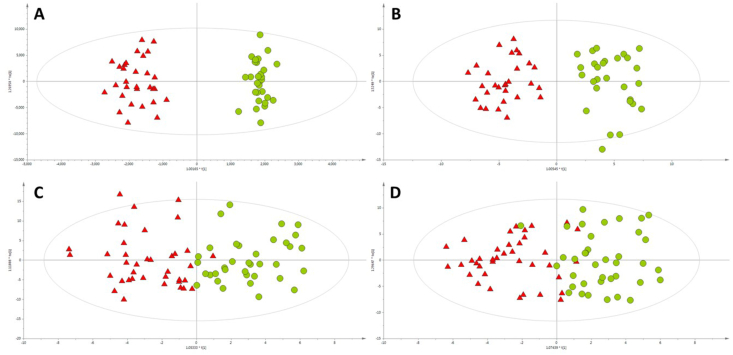
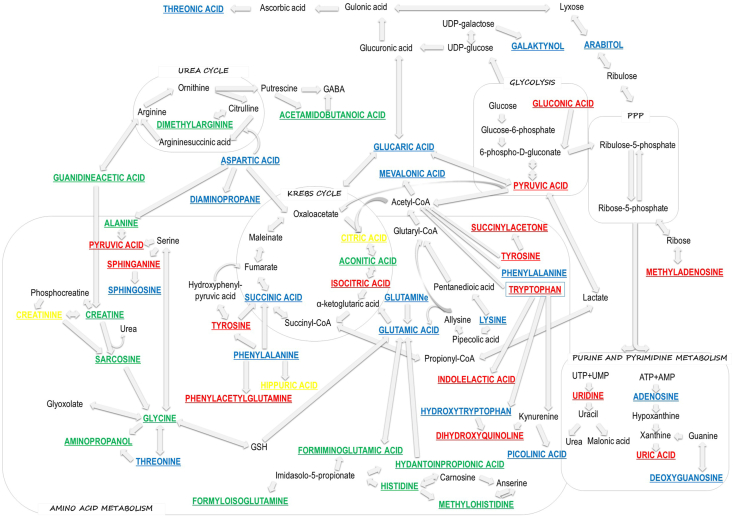
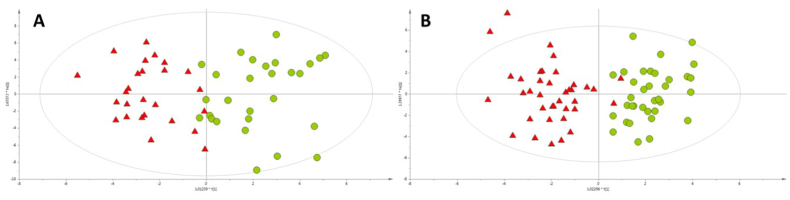
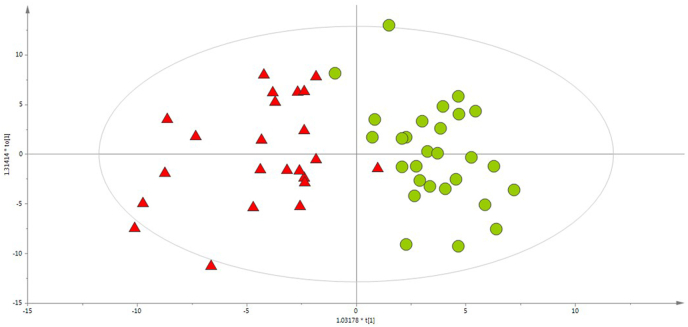
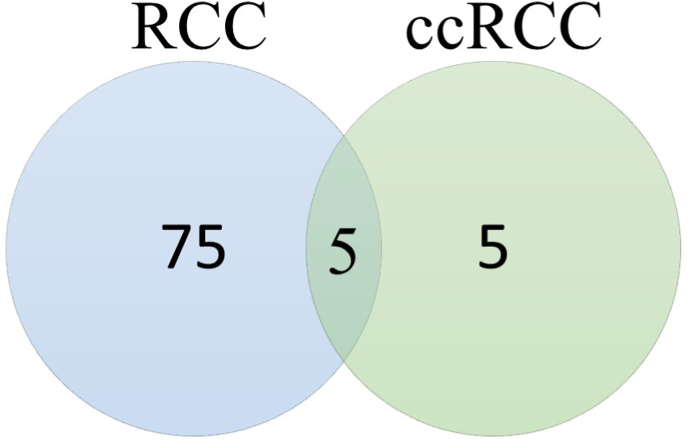
Renal cell carcinoma (RCC) is a disease with no specific diagnostic method or treatment. Thus, the evaluation of novel diagnostic tools or treatment possibilities is essential. In this study, a multiplatform untargeted metabolomics analysis of urine was applied to search for a metabolic pattern specific for RCC, which could enable comprehensive assessment of its biochemical background. Thirty patients with diagnosed RCC and 29 healthy volunteers were involved in the first stage of the study. Initially, the utility of the application of the selected approach was checked for RCC with no differentiation for cancer subtypes. In the second stage, this approach was used to study clear cell renal cell carcinoma (ccRCC) in 38 ccRCC patients and 38 healthy volunteers. Three complementary analytical platforms were used: reversed-phase liquid chromatography coupled with time-of-flight mass spectrometry (RP-HPLC-TOF/MS), capillary electrophoresis coupled with time-of-flight mass spectrometry (CE-TOF/MS), and gas chromatography triple quadrupole mass spectrometry (GC-QqQ/MS). As a result of urine sample analyses, two panels of metabolites specific for RCC and ccRCC were selected. Disruptions in amino acid, lipid, purine, and pyrimidine metabolism, the TCA cycle and energetic processes were observed. The most interesting differences were observed for modified nucleosides. This is the first time that the levels of these compounds were found to be changed in RCC and ccRCC patients, providing a framework for further studies. Moreover, the application of the CE-MS technique enabled the determination of statistically significant changes in symmetric dimethylarginine (SDMA) in RCC.
肾细胞癌(RCC)是一种没有特定诊断方法或治疗手段的疾病。因此,评估新型诊断工具或治疗可能性至关重要。在本研究中,对尿液进行了多平台非靶向代谢组学分析,以寻找RCC特有的代谢模式,从而能够全面评估其生化背景。30例确诊为RCC的患者和29名健康志愿者参与了研究的第一阶段。最初,检查了所选方法对RCC的适用性,未对癌症亚型进行区分。在第二阶段,该方法用于研究38例透明细胞肾细胞癌(ccRCC)患者和38名健康志愿者的透明细胞肾细胞癌(ccRCC)。使用了三个互补的分析平台:反相液相色谱-飞行时间质谱联用(RP-HPLC-TOF/MS)、毛细管电泳-飞行时间质谱联用(CE-TOF/MS)和气相色谱-三重四极杆质谱联用(GC-QqQ/MS)。尿液样本分析结果筛选出了两组分别对RCC和ccRCC具有特异性的代谢物。观察到氨基酸、脂质、嘌呤和嘧啶代谢、三羧酸循环和能量代谢过程存在紊乱。在修饰核苷方面观察到了最有趣的差异。这是首次发现这些化合物的水平在RCC和ccRCC患者中发生变化,为进一步研究提供了框架。此外,CE-MS技术的应用能够确定RCC中对称二甲基精氨酸(SDMA)的统计学显著变化。