Department of Chemistry, University of Nebraska-Lincoln, Lincoln, Nebraska, 68588-0304, USA.
Nebraska Center for Integrated Biomolecular Communication, University of Nebraska-Lincoln, Lincoln, Nebraska, 68588-0304, USA.
Magn Reson Chem. 2023 Dec;61(12):628-653. doi: 10.1002/mrc.5350. Epub 2023 Apr 17.
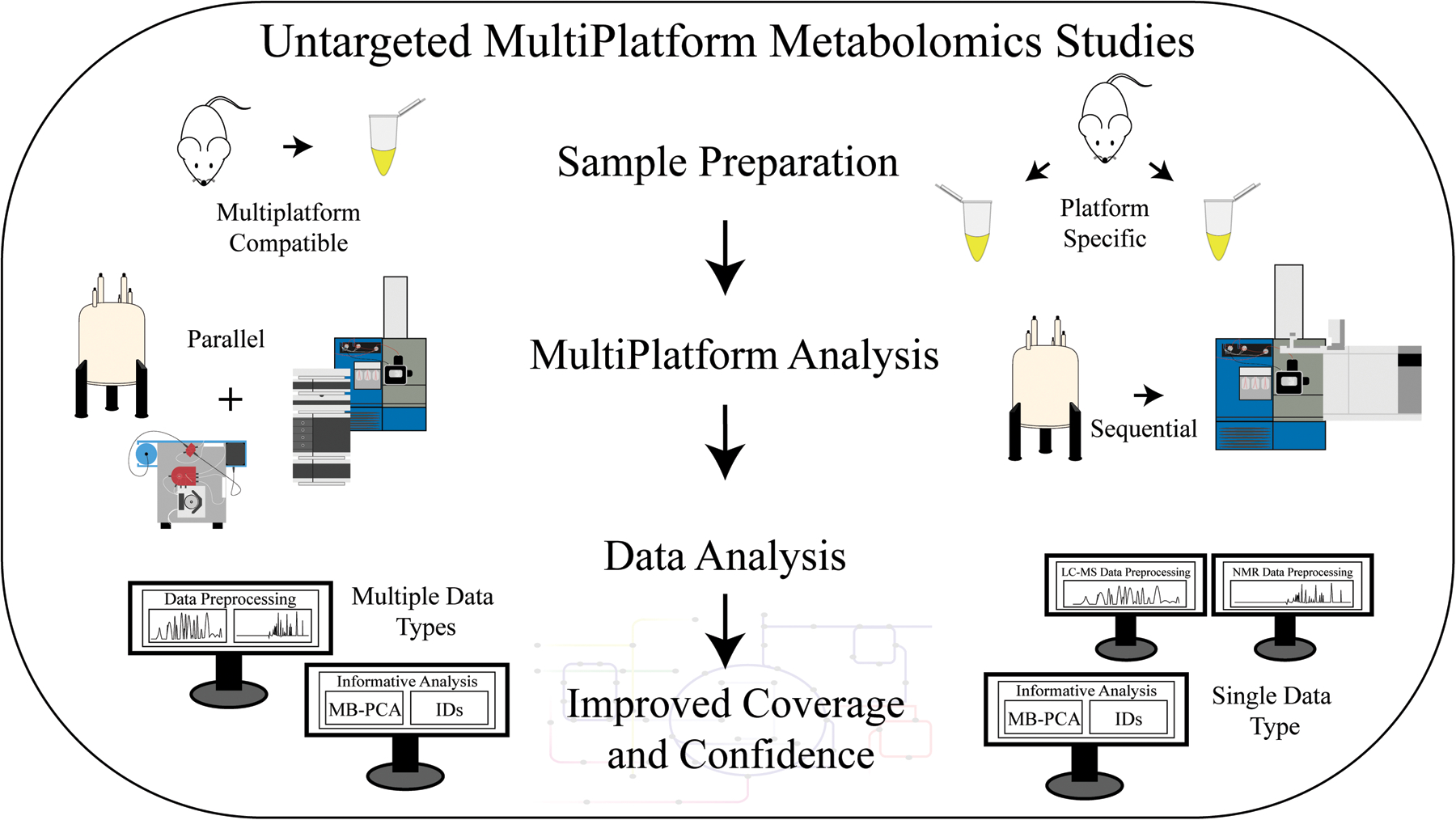
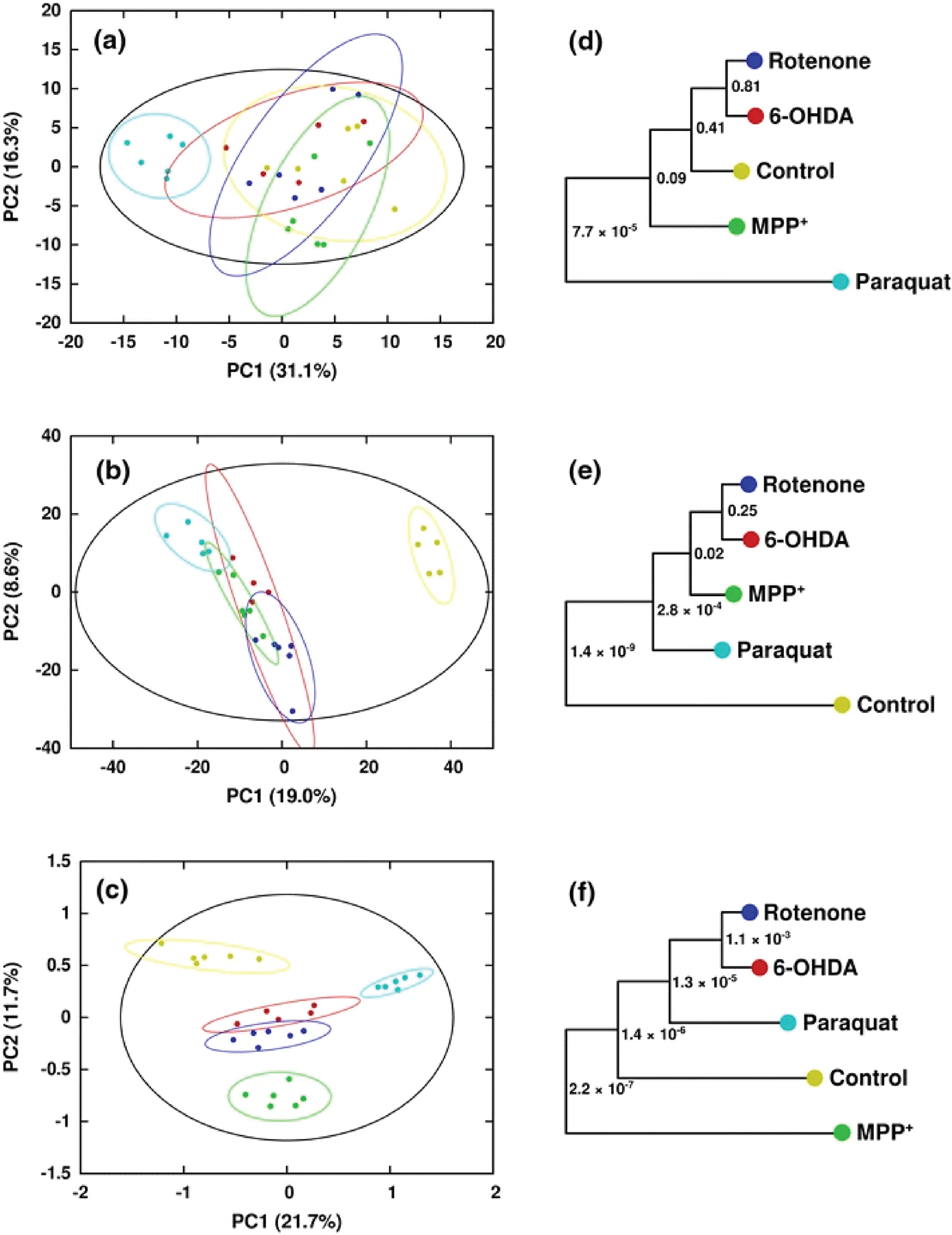
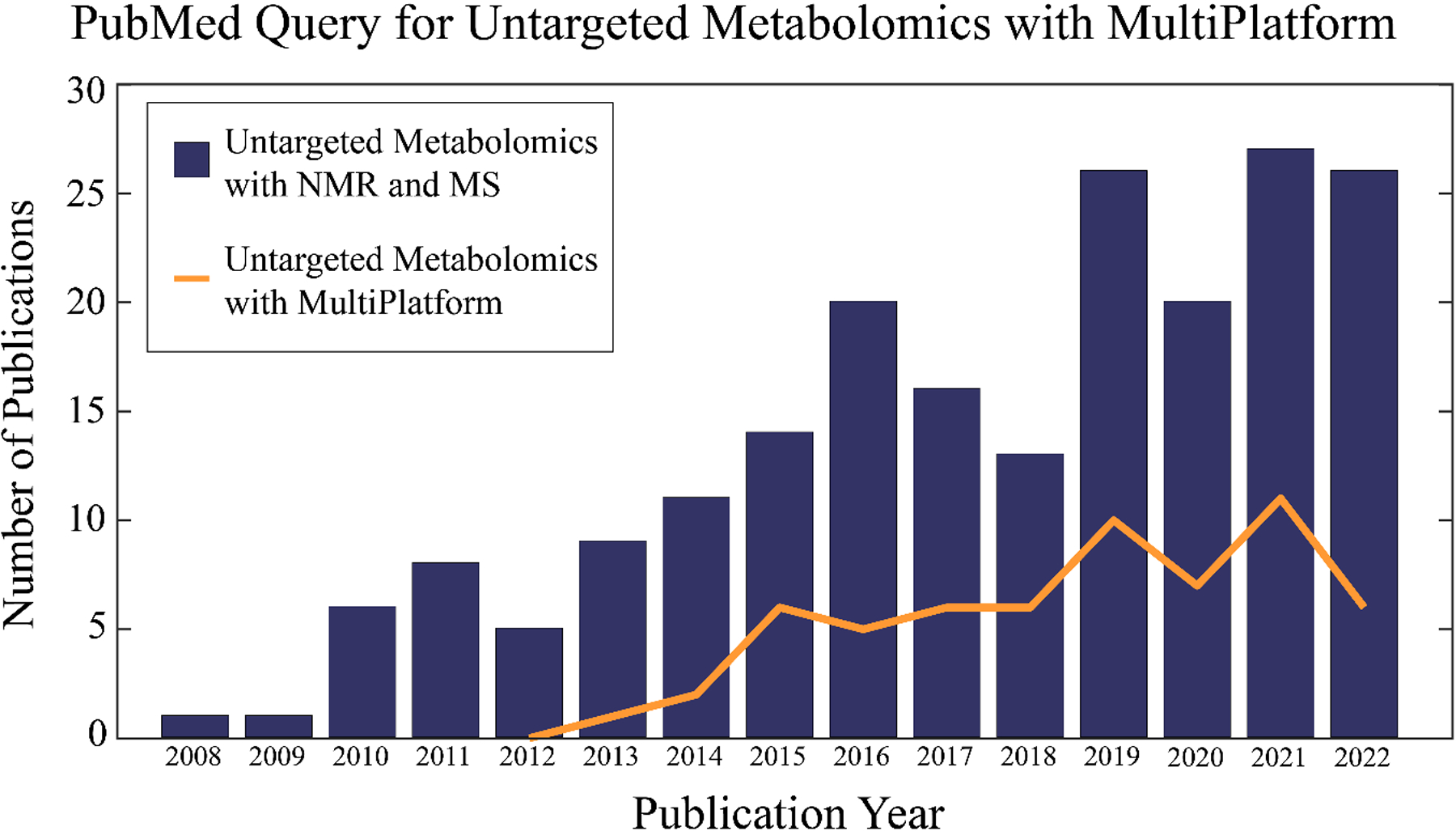
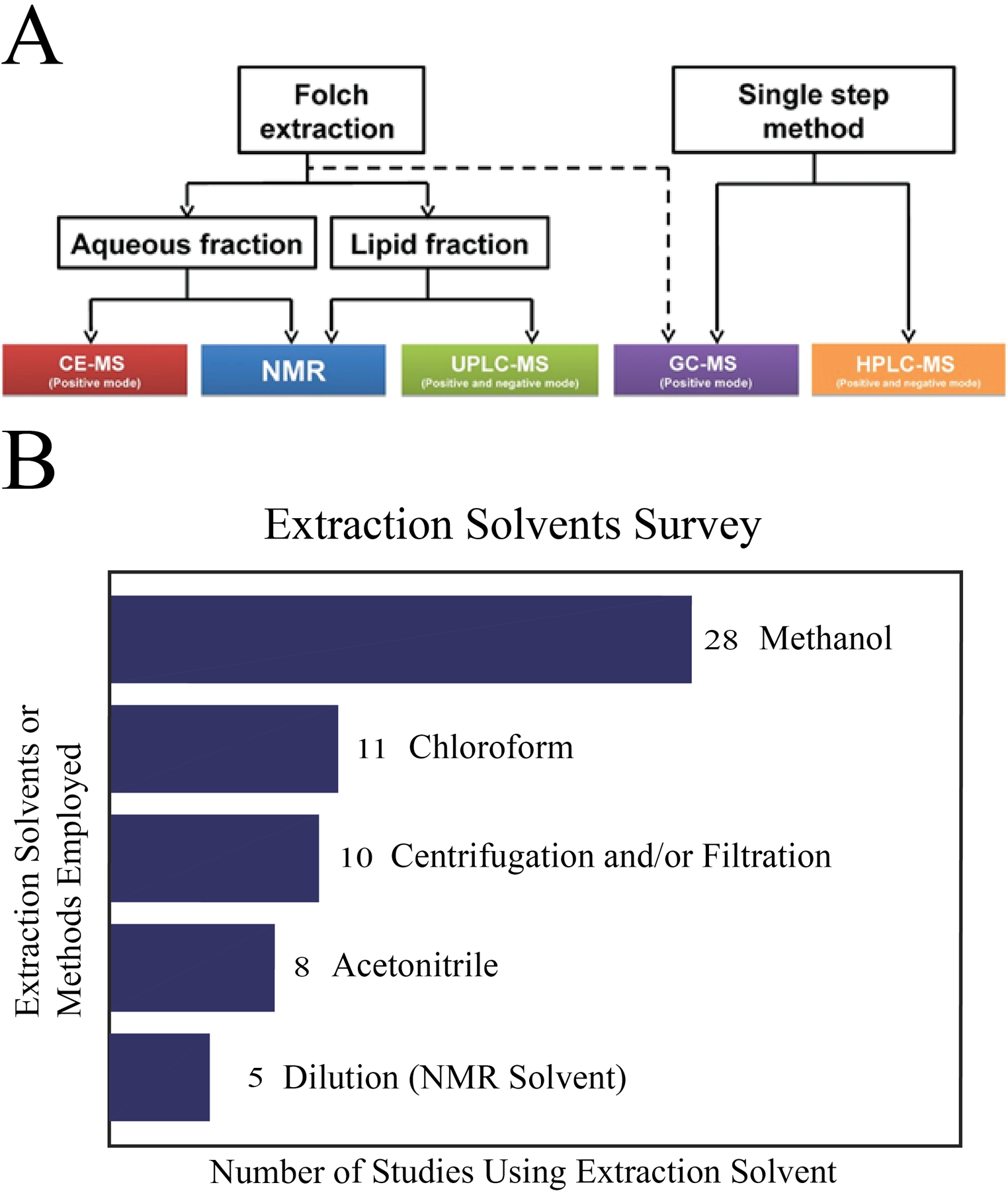
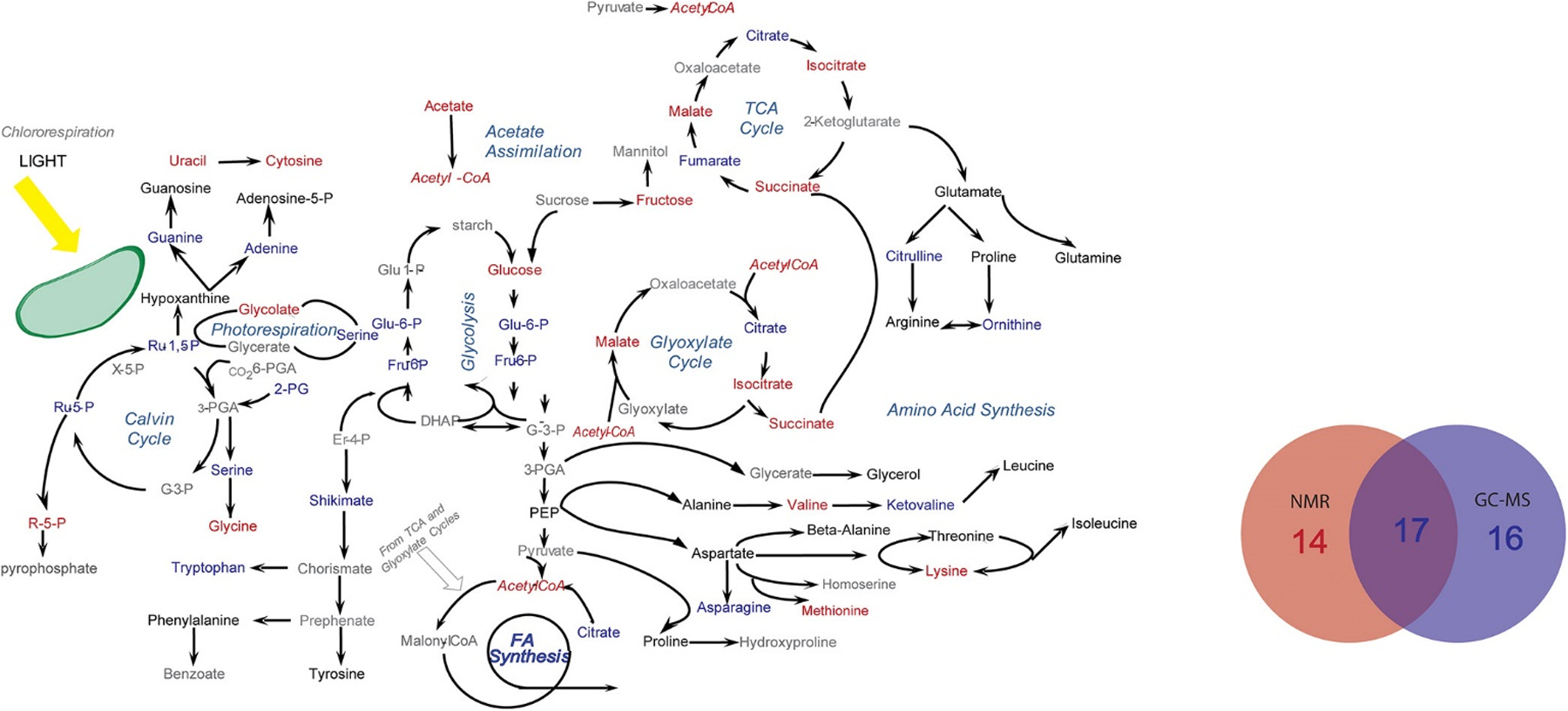
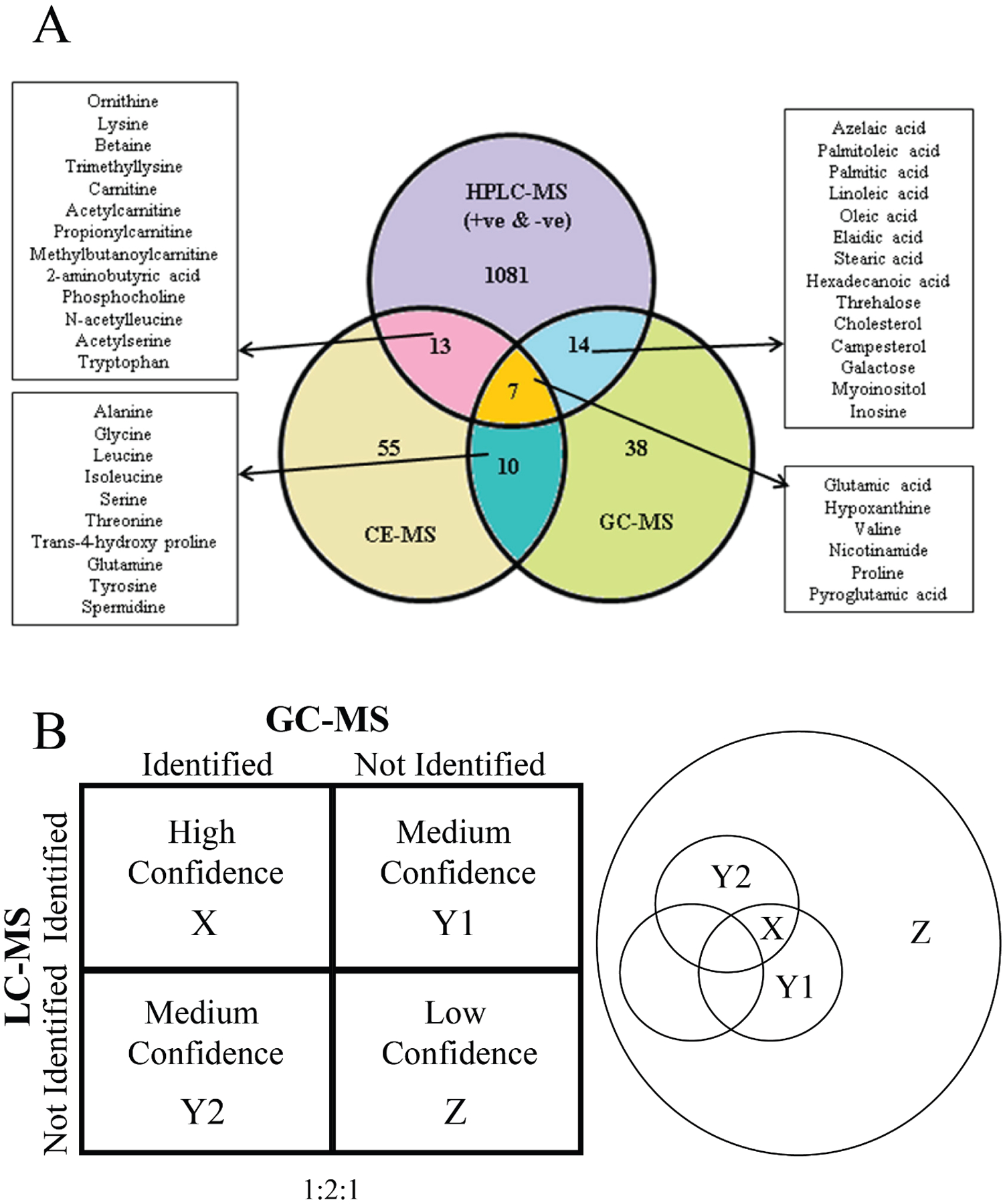
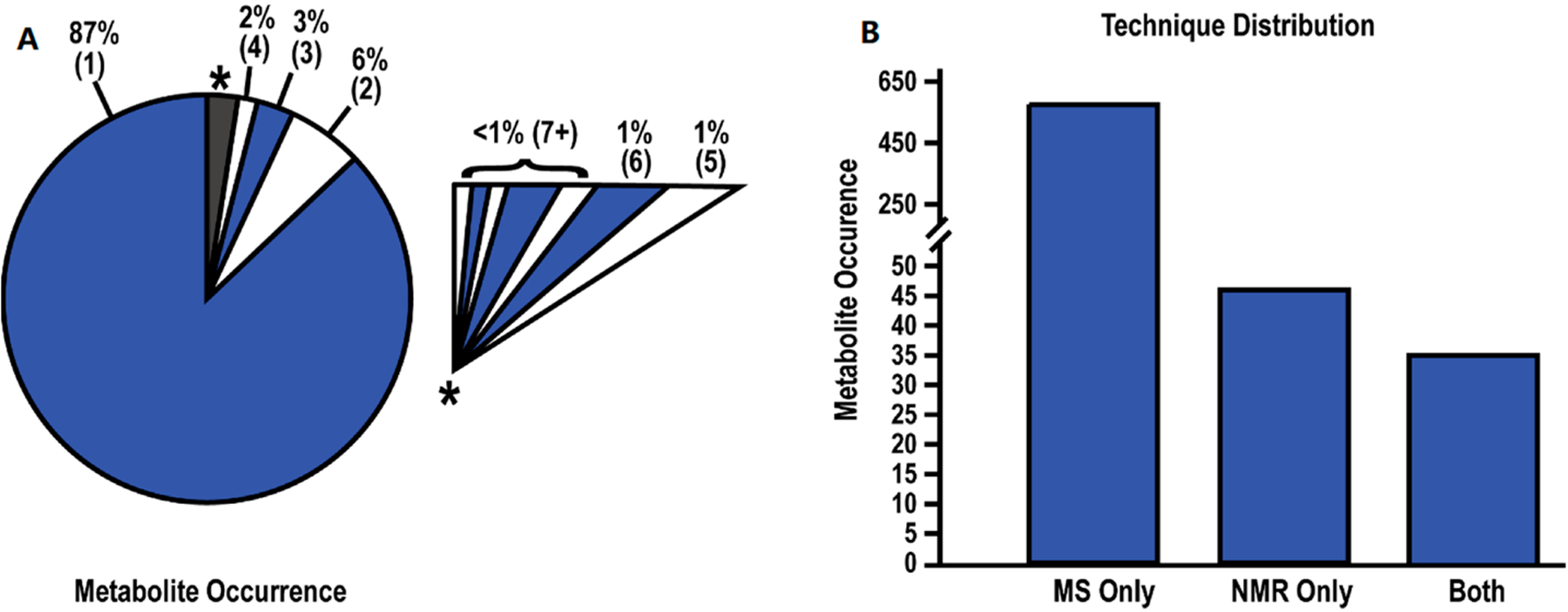
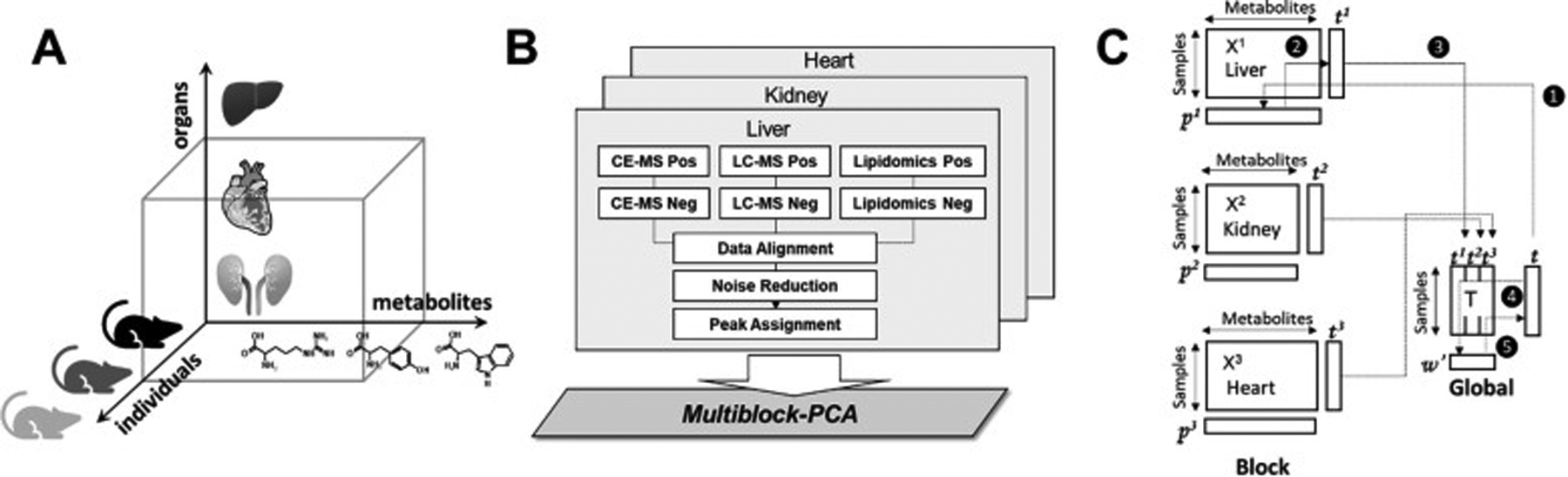
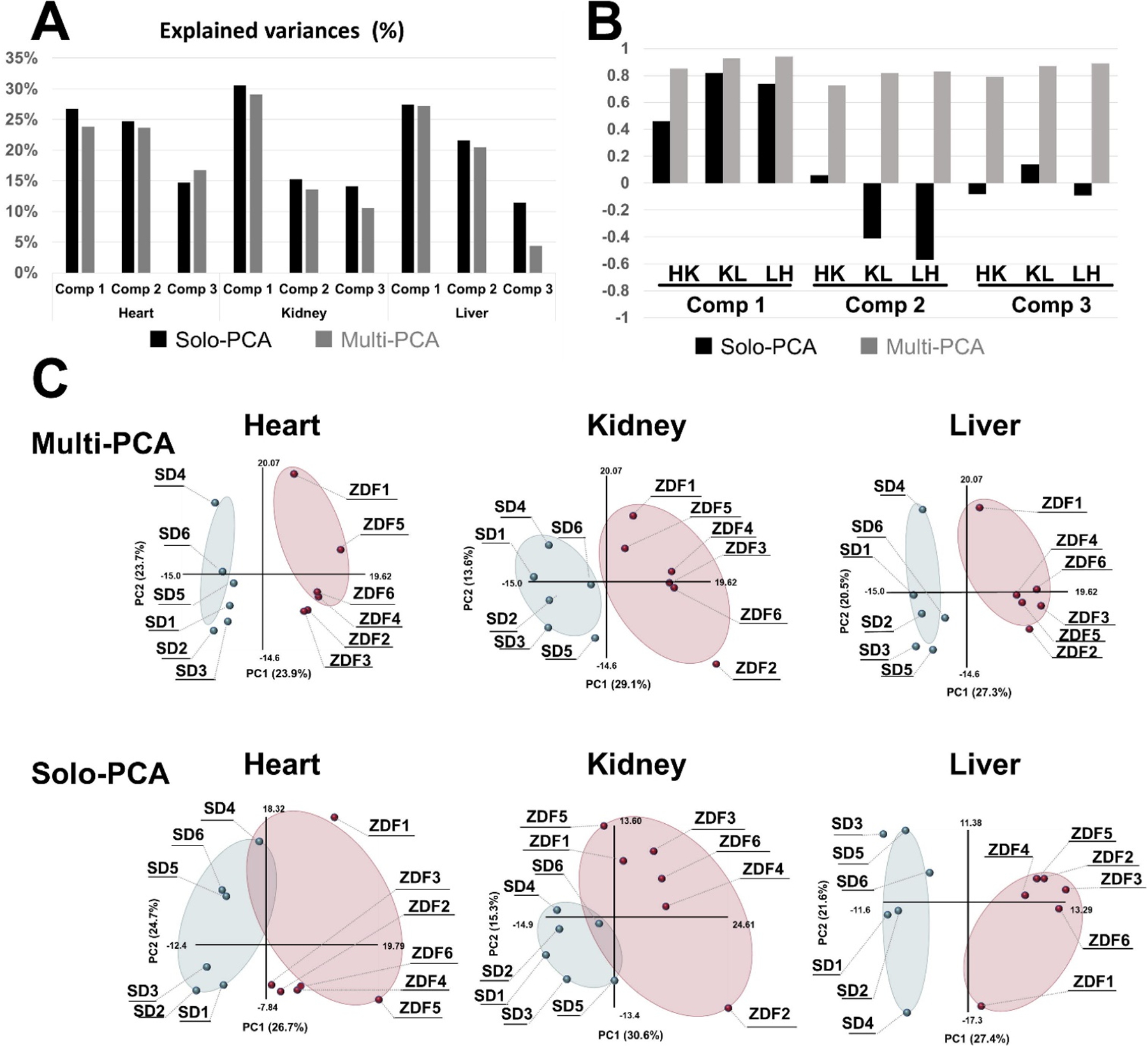
Metabolomics samples like human urine or serum contain upwards of a few thousand metabolites, but individual analytical techniques can only characterize a few hundred metabolites at best. The uncertainty in metabolite identification commonly encountered in untargeted metabolomics adds to this low coverage problem. A multiplatform (multiple analytical techniques) approach can improve upon the number of metabolites reliably detected and correctly assigned. This can be further improved by applying synergistic sample preparation along with the use of combinatorial or sequential non-destructive and destructive techniques. Similarly, peak detection and metabolite identification strategies that employ multiple probabilistic approaches have led to better annotation decisions. Applying these techniques also addresses the issues of reproducibility found in single platform methods. Nevertheless, the analysis of large data sets from disparate analytical techniques presents unique challenges. While the general data processing workflow is similar across multiple platforms, many software packages are only fully capable of processing data types from a single analytical instrument. Traditional statistical methods such as principal component analysis were not designed to handle multiple, distinct data sets. Instead, multivariate analysis requires multiblock or other model types for understanding the contribution from multiple instruments. This review summarizes the advantages, limitations, and recent achievements of a multiplatform approach to untargeted metabolomics.
代谢组学样本,如人类尿液或血清,包含多达几千种代谢物,但单一的分析技术最多只能鉴定几百种代谢物。在非靶向代谢组学中,经常会遇到代谢物鉴定的不确定性,这加剧了这种低覆盖率的问题。多平台(多种分析技术)方法可以提高可靠检测和正确分配的代谢物数量。通过应用协同的样品制备以及组合或顺序的非破坏性和破坏性技术,可以进一步提高这一数量。同样,采用多种概率方法的峰检测和代谢物鉴定策略也导致了更好的注释决策。应用这些技术还解决了单平台方法中存在的可重复性问题。然而,来自不同分析技术的大型数据集的分析提出了独特的挑战。虽然多个平台的一般数据处理工作流程相似,但许多软件包仅能够完全处理来自单个分析仪器的数据类型。传统的统计方法,如主成分分析,并不是为处理多个不同的数据集而设计的。相反,多元分析需要多块或其他模型类型来理解来自多个仪器的贡献。本综述总结了非靶向代谢组学中多平台方法的优势、局限性和最新进展。